
Review · QUEBEC CITY
Walking Tour Through Quebec City’s History
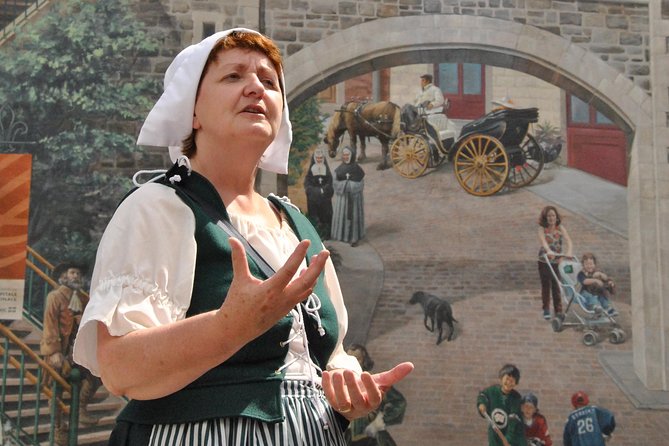
Quebec City reveals its past best on foot, and this tour takes you from the heights of Dufferin Terrace down through the old streets to the place where Samuel de Champlain founded the city. A guide in period costume turns buildings, battles, rulers, and everyday life into a connected story rather than a string of dates.
I like the route for two clear reasons: you see both Upper and Lower Old Quebec, and the small group makes it easier to ask questions. I also like the way guides such as Keven, Mark, Annabelle, Guy, Louise, Chantal, and Gary use humor and character acting to make the past easier to remember.
The main drawback is physical. The walk includes steep hills, cobblestones, and stairs, including the route downhill from the upper terrace to the waterfront. Some people also find street noise makes the guide harder to hear in places.
Key things to know before you book
- A 400-year story on foot: The route connects the founding of Quebec in 1608 with its French and British architectural past.
- A costumed local guide: Guides present history through stories and period characters, sometimes with a dramatic style.
- Upper and Lower Town in one walk: You begin near Dufferin Terrace and finish at Place Royale near the waterfront.
- Breakneck Steps are part of the route: The oldest staircase in Quebec City offers a fine view of rue du Petit-Champlain, but it adds effort.
- About $24.03 for two hours: That is a reasonable price if you want context, orientation, and human storytelling rather than a self-guided stroll.
- Plan for a real walking tour: The group can include up to 20 people, and good shoes are essential.
Why this Old Quebec walk is worth your time
Quebec City is easy to admire and surprisingly easy to misunderstand. You can walk past grand stone buildings, fortified walls, church towers, and narrow lanes without knowing which events shaped them. This tour gives those sights a timeline.
The experience is built around Old Quebec, the only walled city in North America. That distinction matters because the walls are not simply decorative remains. They help explain the city’s military importance and why Quebec developed differently from many other North American cities.
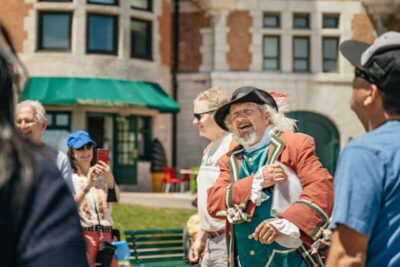
I especially like the use of a period-costumed guide. The presentation is not a quiet academic lecture. It can be theatrical, funny, and direct. Gary, for example, adopted the persona of a historical figure and used that character to explain life in earlier centuries. Another guide brought the past to life through dramatic storytelling, though one person found the acting a little strong at times.
That style will suit you if you remember stories better than lists of dates. If you prefer a calm, formal lecture, the performance may feel overdone in places. Still, the central goal is clear: make the city’s past easier to see while you walk through it.
The tour lasts about two hours and costs $24.03 per person. I consider that good value for an orientation walk, especially early in your stay. You get an overview of the city, a route through its main historic quarters, and a chance to ask questions that a guidebook cannot answer in the moment.
More history-led days in Quebec City:
- Evening Gourmet Tour 5 Course Dinner – History and Food in Old Quebec City
★ 5.0 · 496 reviews - Quebec City: Old Quebec Historical Walking Tour
★ 4.8 · 409 reviews - Combo Historical and Food Tour of Old Quebec
★ 5.0 · 360 reviews
Starting above the river at Dufferin Terrace
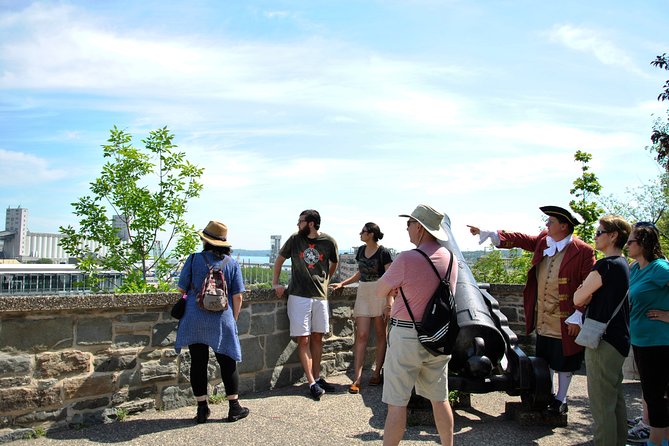
The meeting point is at 12 Rue Sainte-Anne, close to the upper part of Old Quebec. From there, the route reaches Terrasse Dufferin, the long wooden promenade beside the Château Frontenac.
This is a smart place to begin. The terrace gives you a broad view of the St. Lawrence River and the area around Quebec City before you move into tighter streets and smaller squares. It also helps you understand the city’s two levels. The Upper Town sits above the waterfront, while Lower Town spreads below it.
The stop here lasts about 10 minutes, so do not expect a long pause or an extended visit inside the Château Frontenac. The value is the view and the setting. You get your first sense of Quebec’s position on the river, its steep drop toward the waterfront, and the grand scale of the buildings around the terrace.
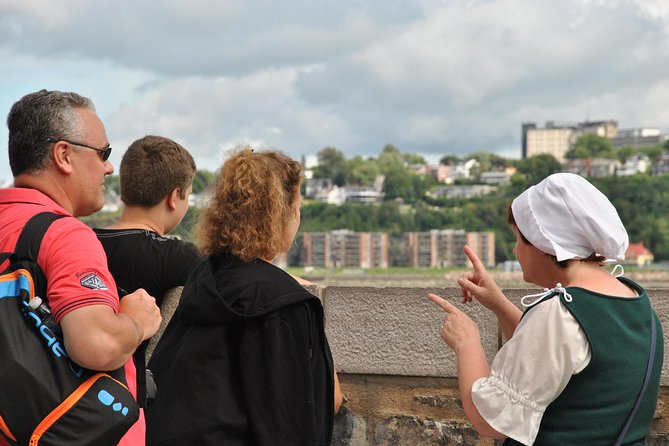
This is also where you should pay attention to the route ahead. The walk eventually descends toward Petit-Champlain and Place Royale. The downhill portion is scenic, but it is not a level promenade.
Notre-Dame de Québec and the city’s religious past
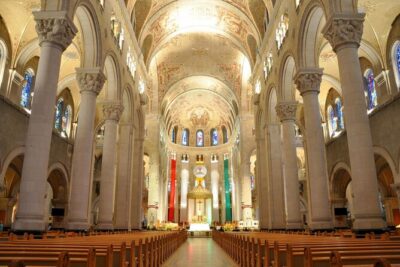
The route also includes the Basilica of Notre-Dame de Québec, a cathedral that has occupied the same location since 1647. It is a Canada National Historic Site because of its architectural value and its role in the story of the city.
Inside, the basilica contains works of art, archival pieces, elaborate decoration, and the tombs of four governors of New France. It also has the burial place of bishops of the Diocese of Quebec and a funerary chapel dedicated to François de Laval. The Holy Door may also be visible, depending on the visit.
You should treat this part as a historic stop rather than assume a full guided interior visit. The tour description includes the basilica, but one departure focused on the exteriors of buildings. That approach can work well because the walk covers a lot of ground, though you may want to return later if you wish to study the church’s interior at your own pace.
The basilica adds an important layer to the tour. Quebec’s story is not only about soldiers, governors, and colonial rivalry. Religious institutions shaped the city’s daily life, education, leadership, and burial traditions. The church gives you a concrete place to connect those themes.
Place Royale, where Quebec began
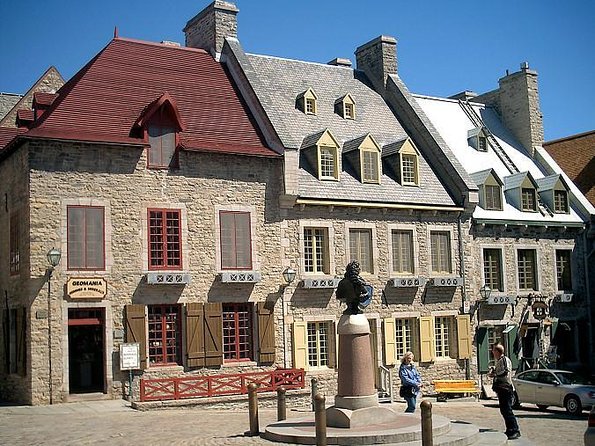
Place Royale is one of the most important stops on the route. Samuel de Champlain founded Quebec here in 1608, making this square a direct link to the city’s earliest colonial period.
The buildings around the square show both French and British influences. That mix gives Place Royale much of its character, but it also points to the changes in power that shaped Quebec over time. Look closely at the architecture as your guide explains it. The square is not just pretty. It is a record of shifting rulers, building traditions, and urban growth.
Place Royale is also home to the oldest stone church in North America. The stop lasts about 15 minutes, enough for an explanation and a look around, but not necessarily enough for a long independent visit.
I like ending the tour here because the guide leaves you at the birthplace of Quebec. Once the formal walk is over, you can stay in the square, explore nearby lanes, or continue toward the waterfront without needing to retrace the route.
More walking tours in Quebec City:
- Quebec City Walking Tour
★ 5.0 · 4,716 reviews - Old Quebec City: Grand Walking Tour with Private Option
★ 4.8 · 2,609 reviews - Old Quebec Classique Walking Tour with Funicular
★ 5.0 · 1,317 reviews - Quebec: Crimes of New France Animated Walking Tour
★ 4.6 · 926 reviews
Petit-Champlain and the lower streets
The Petit-Champlain district receives the longest portion of the tour, about 45 minutes. That makes sense. This is where the city’s history becomes especially visual, with narrow lanes, older stone buildings, small details, and a strong sense of the old waterfront quarter.
The streets around Petit-Champlain and Place Royale invite slow looking. The guide can point out places you might pass without noticing on your own, then explain how the area relates to the founding and growth of Quebec. One of the tour’s strengths is that it does not stay only on the most obvious main streets. Guides have led people through back streets and lanes that are easy to miss during an independent walk.
This section also has a storybook quality, but do not let the charming appearance fool you into expecting an easy stroll. The route is made of old streets, and the descent from Upper Town can be demanding. Wear shoes with a firm grip, especially if the surface is wet or you are visiting in colder weather.
The extended time here gives the guide room to connect architecture with people and events. Several guides have been praised for explaining how Quebec changed under different rulers, while still keeping the presentation lively. That balance is valuable. You get facts, but you also get a sense of how the city developed as a lived-in place.
Breakneck Steps and the downhill challenge

L’Escalier Casse-Cou, or Breakneck Steps, is the oldest staircase in Quebec City. The stop lasts only about five minutes, but it is one of the route’s most memorable viewpoints.
From the steps, you can look toward rue du Petit-Champlain, one of the city’s most photographed streets. It is an excellent spot for pictures, but it also makes the tour’s physical demands clear. The stairs are steep, and the wider route includes several inclines and descents.
You do not need athletic ability for this walk, but you should have moderate physical fitness. Older members of a group may find the steps and descents tiring. If stairs are a concern, ask before booking so you can decide if this route is right for you.
The downhill direction is helpful in one sense, since you are not climbing from the waterfront to the terrace. Still, downhill walking can be hard on knees, and cobblestones require care. The guide may keep the group moving, so take sensible footwear seriously.
The guides make the difference
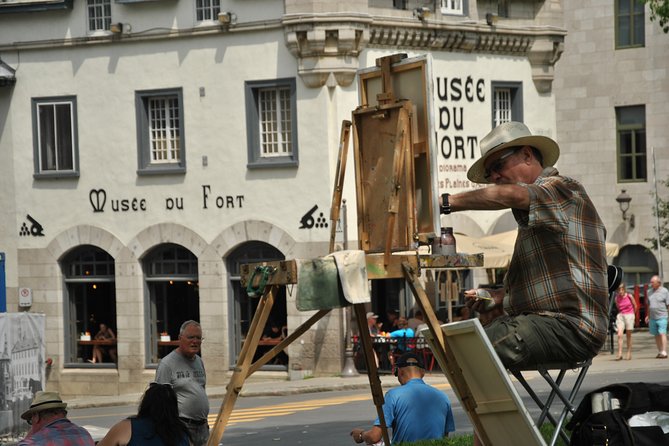
The strongest part of this experience is the guide’s delivery. The names vary by departure, but the style is consistent: local history told through a person, a place, and a story.
Keven has been praised for giving a broad overview while also explaining the city’s people and major events across several centuries. Mark was described as both entertaining and well informed. Annabelle brought energy and humor to the walk. Guy was noted for his excitement and ability to answer questions about Quebec’s importance.
Louise has led people through back streets and lanes with an enthusiastic, charming approach. Chantal used storytelling to explain the city, while Gary presented history through the persona of an earlier resident. These examples suggest that your experience may vary in tone from guide to guide, but the costumed character is a central part of the format.
This is not a tour where you simply trail behind a flag and listen to a memorized script. The group has often been able to ask questions, and the best guides adjust their explanation to the interests of the people around them. That makes the experience useful for first-time visitors who want both facts and practical orientation.
One caution: a dramatic guide can be entertaining, but the style may not suit everyone. The tour is also about two hours of listening. One person felt it would be best for ages 12 and older for that reason. Families with younger children should consider their attention span as well as the hills.
Group size, sound, and practical comfort
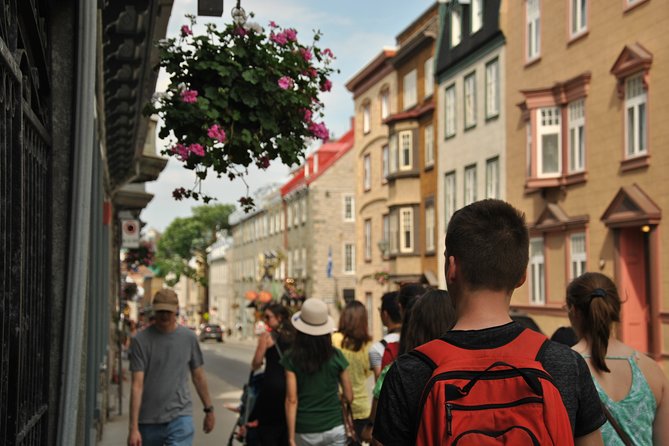
The tour allows a maximum of 20 people. That is small enough to feel more personal than a large city walk, while still being large enough that the guide may need to project their voice.
Street cleaners and garbage collection have made hearing difficult at times. If the group stops near a noisy street, move closer to the guide when possible. This matters more here than on a flat, quiet walking route because you are often moving between active streets and compact public spaces.
The activity is offered in English and includes a local professional guide. A mobile ticket is provided, and the meeting point is near public transportation. Service animals are allowed.
Dress for the day, not just the forecast at the hour you leave. Dufferin Terrace is exposed, and the route includes changing elevations. Comfortable walking shoes are the most important item. You may also want water, since the tour keeps moving and includes stairs.
The tour is generally booked well ahead, with an average booking time of about 24 days before the experience. That does not guarantee that every departure sells out, but it is a good reason to reserve early if your Quebec City dates are fixed.
How the price compares with exploring alone
At $24.03 per person, this is priced as an accessible introduction rather than a luxury experience. You are paying for about two hours of guiding, route planning, local context, and the chance to ask questions while the sights are in front of you.
You can certainly walk through Old Quebec without a guide. The main streets are easy to reach, and many of the buildings are attractive enough to reward a casual stroll. The problem is that the story can become scattered. You may see Place Royale, the basilica, the terrace, and Petit-Champlain without understanding how they fit together.
I think the price earns its keep if you take the tour near the start of your visit. You learn the layout, spot places to return to, and get historical background before exploring on your own. The end point at Place Royale is especially useful because you can continue your afternoon there rather than spending time getting back to the starting point.
The value is lower if you already know Quebec City well or prefer reading at your own pace. It is also less suitable if you want extensive indoor access to every landmark. This is mainly a guided outdoor walk, with the basilica included as a historic point along the route.
Who should book this walking tour
I would choose this tour for a first visit to Quebec City, especially if you want a quick grasp of Old Quebec’s layout and past. It suits couples, families with older children, and friends who enjoy a guide with personality.
It is a good fit for you if:
- You enjoy history presented as stories rather than a formal lecture.
- You want to see Upper Town, Lower Town, Petit-Champlain, and Place Royale in one outing.
- You like asking questions during a small-group walk.
- You are comfortable with stairs, hills, and cobblestones.
- You want a useful orientation near the beginning of your trip.
I would think twice if steep descents are difficult, if two hours of listening feels long, or if you need a fully accessible route. The tour requires moderate physical fitness, and the route is not described as step-free.
Free cancellation is available up to 24 hours before the start time. Changes or cancellations made inside that window are not refunded. The tour depends on good weather and a minimum number of participants, so a cancellation by the operator can result in another date or a full refund.
Should you book it?
Book this walk if you want Quebec City to make sense, not just look attractive. The cost is modest, the route covers the city’s most important historic areas, and the period-character approach gives the guide room to make the past feel human.
Skip it if you want a flat route, a quiet museum-style talk, or guaranteed extended indoor visits. For everyone else, I would schedule it early in your stay, wear good shoes, stay near the guide on noisy streets, and leave yourself time afterward to explore Place Royale and Petit-Champlain at your own pace.
FAQ
How long does the walking tour last?
The tour lasts approximately two hours.
How much does the tour cost?
The listed price is $24.03 per person.
Where does the tour begin?
The meeting point is 12 Rue Sainte-Anne, Québec, QC G1R 3X3, Canada.
Where does the tour finish?
The walk ends at Place Royale in Quebec City. You can continue exploring the area independently after the tour.
Is the tour offered in English?
Yes. The experience is offered in English.
What places does the tour visit?
The route includes Dufferin Terrace, the Basilica of Notre-Dame de Québec, Place Royale, the Petit-Champlain district, and Breakneck Steps.
How many people can join the tour?
The maximum group size is 20 participants.
Is the walk physically demanding?
You should have moderate physical fitness. The route includes hills, cobblestones, and stairs, including the steep Breakneck Steps and a downhill walk from the upper terrace toward the waterfront.
Can I cancel for a full refund?
Yes, if you cancel at least 24 hours before the experience start time. Cancellations or changes made less than 24 hours in advance are not refunded.
Just added around Quebec City
- Stoneham: Nordic spa Thermal Experience★ 4.9 · 20 reviews
- Quebec City’s History in Virtual Reality★ 4.5 · 141 reviews
- Quebec : Old Town Walking Tour With A Local Guide★ 4.5 · 38 reviews
- Quebec: Christmas Interactive Walking Tour of New France★ 4.3 · 7 reviews
- Québec: Fortifications-of-Québec Guided Walking Tour★ 4.7 · 60 reviews
- Quebec Interactive Street Theatre: “Crimes in New France”★ 4.6 · 175 reviews
- Québec City: Weekend River Brunch Cruise★ 4.5 · 116 reviews
- Quebec City: Winter Walking Tour in Old Quebec★ 4.9 · 30 reviews
Quebec City Tours, compared.


Half-Day Trip to Montmorency Falls and Ste-Anne-de-Beaupré from Quebec city
Read our review →
Old Quebec City: Grand Walking Tour with Private Option
Read our review →
Montmorency Falls & Ile d’Orleans Half-Day Tour
Read our review →
Hop-on Hop-off Open-Top Double Decker Bus Tour
Read our review →Browse the lists this tour appears in