
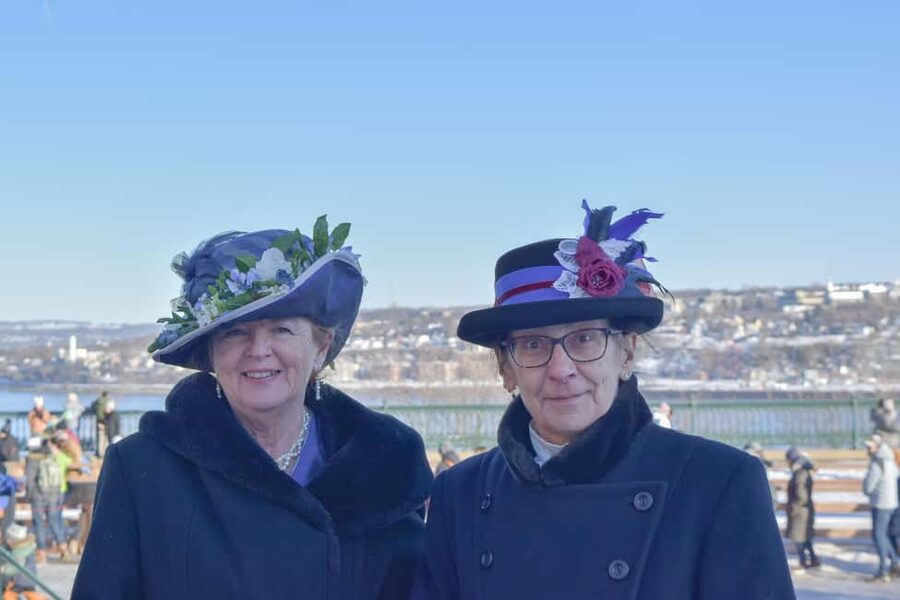
Review · QUEBEC CITY
Quebec City: Winter Walking Tour in Old Quebec
Old Quebec becomes a different place under snow. This 90-minute winter walk links the fortified Upper Town with Lower Town and Petit-Champlain, giving you history, views, and a useful sense of direction in one short outing. I like the stop at Dufferin Terrace and the chance to see both levels of the city, not just the postcard streets around Château Frontenac.
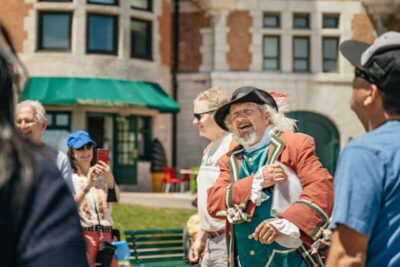
I also like the period costume and storytelling, which give the walk a bit of theater without turning it into a stage show. Guide Chantelle, in particular, is described as jolly, engaging, and easy to enjoy. The main drawback is pace: one participant wanted more time walking through the city, while another found the history a little hard to follow without prior knowledge.
Key points to know before booking
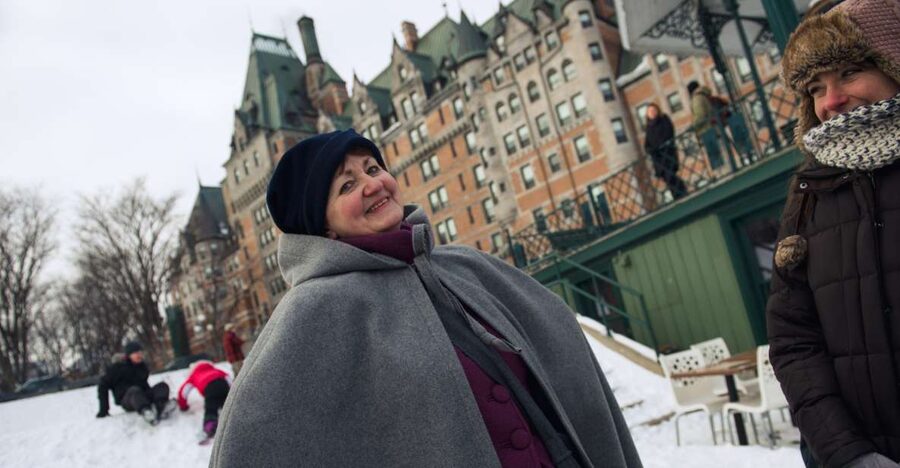
- Upper and Lower Town in one tour: You visit the walled city above and Petit-Champlain below, giving you a useful overview of Old Quebec.
- Dufferin Terrace views: The lookout offers broad views toward the St. Lawrence River and makes a memorable winter stop.
- Costumed local guide: Your guide leads the walk in period dress and explains more than 400 years of Quebec City history.
- Chantelle’s engaging style: Her cheerful, character-based presentation adds warmth and humor to the historical material.
- Winter is part of the subject: You learn how Quebec City’s people and earlier generations adjusted to cold weather.
- Good value at $22: For a live, bilingual, 90-minute introduction to Old Quebec, the price is modest, though the tour is not designed for a long, leisurely exploration.
Why winter gives Old Quebec a different character
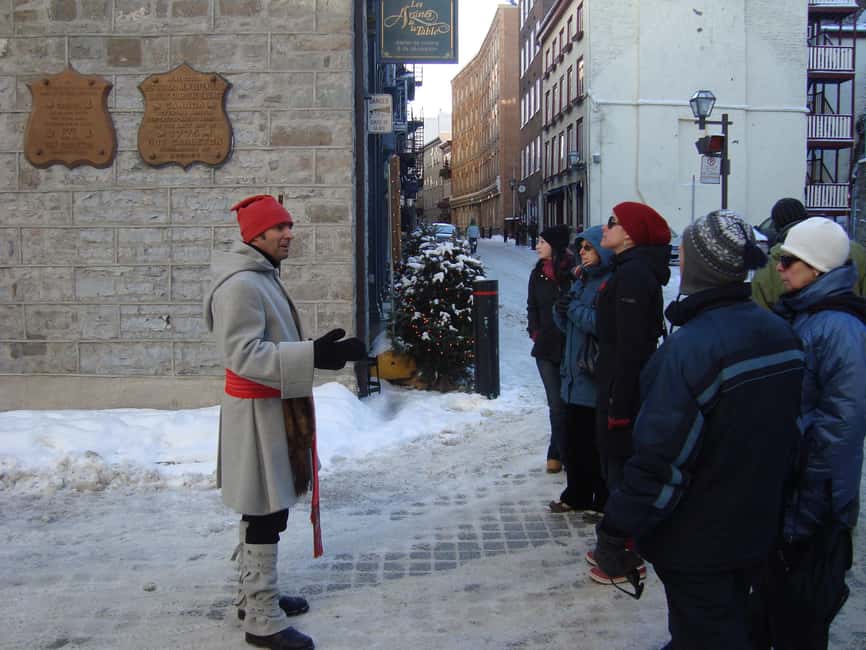
Many walking tours simply use winter as a backdrop. This one makes the season part of the story. Quebec City’s cold, snow, and northern setting help explain how local life developed and how people adapted to difficult weather over the years.
That idea gives the walk more purpose than a standard sightseeing circuit. You are not only looking at stone buildings and monuments. You are also hearing about the practical side of life in Quebec City, where winter affects movement, work, clothing, and daily routines.
The tour takes place rain or shine, so you need to treat the weather as part of the deal. In winter, that means warm clothing, solid footwear, and enough comfort with cold conditions to spend 90 minutes outside. The supplied information does not specify the exact route conditions or how much time is spent indoors, so plan for an outdoor walk throughout.
I would book this early in your visit. The walk covers both Upper and Lower Town, and one of its most useful features is orientation. Afterward, you should have a clearer idea of how the high, fortified section connects with the lower streets by the river.
More walking tours in Quebec City:
- Quebec City Walking Tour
★ 5.0 · 4,716 reviews - Old Quebec City: Grand Walking Tour with Private Option
★ 4.8 · 2,609 reviews - Old Quebec Classique Walking Tour with Funicular
★ 5.0 · 1,317 reviews
Starting above the river in Upper Town
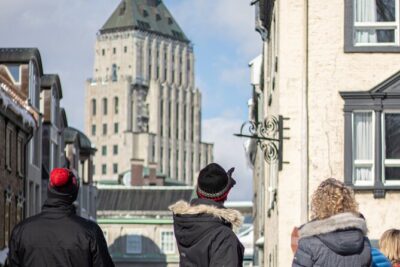
The first part of the route moves through the snowy streets of the walled city. This is the historic center of Quebec City, with public squares, monuments, churches, and the famous Fairmont Le Château Frontenac.
Château Frontenac is an easy landmark to appreciate even if you know nothing about the city. Its grand hotel shape dominates the area and helps you understand the scale of Upper Town. The guide uses the surrounding streets and buildings to place Quebec City’s past in context, rather than simply pointing out a list of famous façades.
The fortifications matter here. You are walking inside and outside Quebec’s defensive walls, so the tour gives you a sense of how the city was organized and protected. That is more useful than seeing the walls as a separate photo stop. You begin to understand the difference between the elevated political and religious center above and the commercial district below.
The route also includes Old Quebec’s public squares and proud monuments. The available description does not name every square or monument, so I would not expect a detailed stop at each one. Instead, think of this section as a connected introduction to the city’s major landmarks and the stories behind them.
Dufferin Terrace and the St. Lawrence view
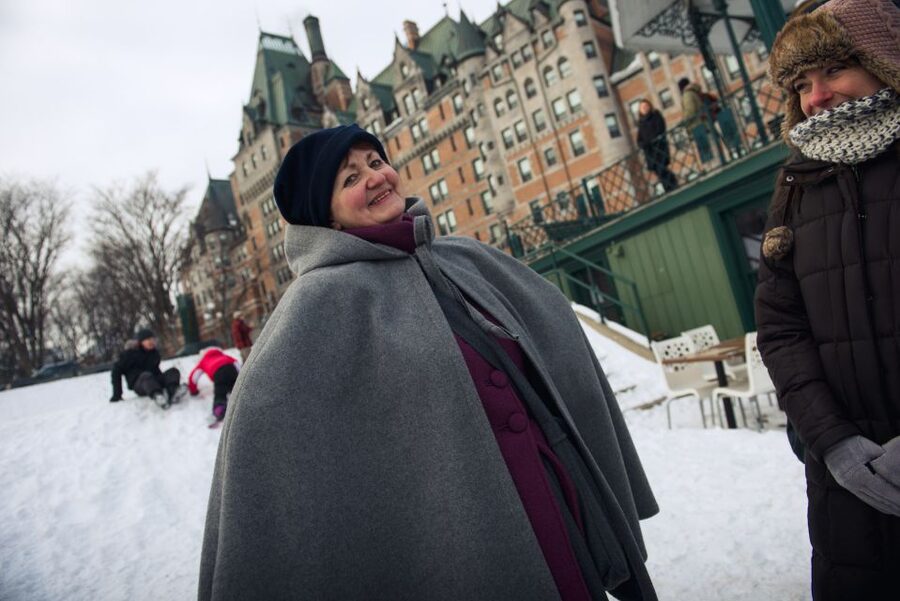
Dufferin Terrace is one of the tour’s best moments. This broad viewpoint beside Château Frontenac looks toward the St. Lawrence River and gives you a chance to pause after walking through the tighter streets of Upper Town.
In winter, the view has extra drama. Snow, cold air, and the open river setting make the city’s northern character clear. The terrace also helps you see why Quebec City’s position mattered. You are looking outward from the fortified heights toward the river, rather than viewing the city only at street level.
The stop is valuable for another reason: it breaks up the historical information. A walking tour can become a stream of dates and names, especially when the subject covers more than 400 years. A scenic pause gives you time to look, take photographs, and let the guide’s stories settle.
Do not expect a long viewpoint session. The complete tour lasts only an hour and a half, and it also includes churches, public squares, the fortifications, Lower Town, and Petit-Champlain. If you want extended time for photographs, plan to return to Dufferin Terrace on your own.
Churches that show Quebec City’s cultural roots
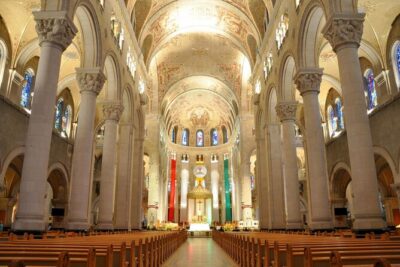
The walk passes the Holy Trinity Cathedral and Notre-Dame-de-Québec Cathedral and Basilica. These buildings help broaden the tour beyond military history and grand hotels.
Holy Trinity Cathedral represents one part of Quebec City’s religious and cultural story, while Notre-Dame-de-Québec Cathedral and Basilica reflects another important layer of the city’s heritage. You do not just see old stone walls. You see how worship, public life, and local identity shaped the Upper Town.
The information provided does not promise interior visits, so you should expect to view these churches as part of the walking route unless your guide says otherwise. That distinction matters in winter. An outside stop can be quick, while an interior visit would allow more time to study architecture and escape the cold.
This is also where the tour may ask more of you. One participant found the material a little difficult to follow without much background in Quebec history. I would pay close attention to the guide’s main themes rather than trying to remember every date. If you already know a little about Quebec City, the stories should be easier to place.
A few more Quebec City half-days to weigh up
- Jacques-Cartier National Park: Skiing Excursion
★ 5.0 · 22 reviews - Athabasca Glacier Snow Trip from Banff
★ 5.0 · 394 reviews - Medicine Trail Snowshoe Tour
★ 5.0 · 279 reviews - Victoria Bites and Sights Walking + Ferry (winter Sat, Sun)
★ 5.0 · 242 reviews
Descending to Petit-Champlain
The walk then heads down to the Petit-Champlain District, described as the cradle of the French presence in North America. This lower section sits closer to the St. Lawrence River and has a very different feel from the high streets around Château Frontenac.
Petit-Champlain is one of the most distinctive parts of Old Quebec. Its narrow streets, older buildings, and lower position make the change in elevation obvious. The route gives you a practical sense of the city’s two-level structure, which is easy to miss if you spend all your time around the hotel and Dufferin Terrace.
This is the part I would especially value for first-time visitors. You are not simply being taken to a famous district. You are learning how Lower Town fits into the wider city and why the area has such a strong connection to Quebec’s French culture.
Winter conditions may affect your pace here. Snow and ice can make a downhill route slower, and the tour promises a fixed 90-minute duration rather than a relaxed half-day wander. Wear footwear with good traction and allow extra time if you want to browse the district afterward.
The supplied details do not specify whether the tour uses stairs, ramps, or a particular route between the two levels. The activity is listed as wheelchair accessible, but you should confirm the route for your chosen departure option if accessibility is important to your plans.
A guide who turns history into a live performance
The guide is presented as a passionate, experienced local who leads the tour in period costume. That choice adds a sense of place and helps separate this walk from a plain lecture.
Chantelle received especially warm praise for being engaging, jolly, and fun while still providing useful information. Her approach appears to use character and personality to make the city’s past easier to follow. For families and visitors who lose interest during long historical explanations, that can make a real difference.
There is a small tradeoff. A costumed presentation may feel playful, while some people want a more formal, academic account of Quebec history. The information also suggests that the material can be difficult for beginners at times. If you prefer a strict chronological lecture, this may not be your ideal format.
The tour is offered in English and French. That is helpful in Quebec City, where language and identity are part of the place you are visiting. If you have a preference, check that your selected departure provides the language you want.
What the $22 price really buys you
At $22 per person, this is a low-cost way to get a guided introduction to Old Quebec. The price includes a live 90-minute walking tour, not transportation, meals, admission tickets, or a private guide.
The value comes from the range covered in a short time. You see Upper Town, the fortifications, Château Frontenac, Dufferin Terrace, churches, public spaces, Lower Town, and Petit-Champlain. Hiring separate guides or trying to connect all those areas yourself would take more planning.
The limit is equally clear: 90 minutes is enough for an overview, not a full study of Old Quebec. You may leave with a better map in your head and several stories to remember, but you will not have long at every landmark. One participant specifically wished for more walking time in the city.
I see the tour as a smart first-day purchase rather than a complete Old Quebec experience. Use it to learn the layout and choose the places you want to revisit. Afterward, you can return to the terrace, churches, squares, or Petit-Champlain at your own pace.
The flexible booking terms add practical value. You can reserve now and pay later, and cancellation is free up to 24 hours before the tour for a full refund. The meeting point can vary by the option booked, so check your confirmation rather than assuming it begins at Château Frontenac.
Who will enjoy this winter walk most
I would recommend this tour to first-time visitors who want a quick introduction before exploring independently. It suits you especially well if you enjoy local stories, historic buildings, and a guide who adds a bit of character to the presentation.
It also works for visitors with limited time. Ninety minutes is short enough to fit around other plans, yet the route covers both levels of the city. The bilingual format makes it a practical choice for English and French speakers.
Families may appreciate the costumed guide and lively tone. The walk is also listed as wheelchair accessible, which broadens its usefulness, though you should confirm the exact route and meeting point if you have specific mobility needs.
I would be more cautious if you dislike cold-weather walking or want a slow photography tour. The activity runs rain or shine, and its compact schedule means the guide must keep moving. You should also consider another option if you want highly detailed history presented in a formal sequence.
How to prepare for the 90-minute route

Dress for standing and walking outdoors. Warm layers, winter footwear, gloves, and a hat will matter more than fashionable clothing once the temperature drops.
Arrive ready to walk between Upper and Lower Town. The route includes the walled city, Dufferin Terrace, and Petit-Champlain, so comfortable shoes with reliable grip are a sensible choice.
Keep your expectations realistic. This is a guided overview, not a full-day exploration. You will get the most from it if you listen for the broad story of Quebec City, note the places you want to revisit, and avoid trying to memorize every historical detail.
Since the meeting point may vary according to the option booked, check the exact instructions before setting out. The tour is available in English and French, and starting times depend on availability.
Should you book the Old Quebec winter walking tour?
Book it if you want a reasonably priced orientation to Quebec City with a local, costumed guide and a clear focus on winter life. The combination of Upper Town, Lower Town, Dufferin Terrace, historic churches, and Petit-Champlain gives you a lot of ground in 90 minutes.
I would especially choose it near the beginning of a Quebec City visit. It can help you get your bearings fast, then leave you free to return to the spots that deserve more time.
Skip it if you want a long, unhurried walk, extensive interior visits, or a highly detailed history lecture. At $22, though, the short format is fair value, and the chance to see both levels of Old Quebec makes it more useful than a simple stroll around the main hotel district.
FAQ
How long does the Quebec City winter walking tour last?
The tour lasts 90 minutes, or one and a half hours.
How much does the tour cost?
The listed price is $22 per person.
Which parts of Old Quebec does the tour visit?
The route includes Upper Town, Lower Town, areas inside and outside Quebec’s fortifications, Dufferin Terrace, and the Petit-Champlain District.
Will I see Château Frontenac?
Yes. The tour includes a visit near the Fairmont Le Château Frontenac.
Does the tour stop at Dufferin Terrace?
Yes. You stop at Dufferin Terrace for views toward the St. Lawrence River.
Which churches are included along the route?
The walk passes Holy Trinity Cathedral and Notre-Dame-de-Québec Cathedral and Basilica.
Is the tour offered in English?
Yes. Live guides are available in English and French.
Is the tour wheelchair accessible?
The activity is listed as wheelchair accessible. Because the meeting point and route may vary by option, confirm the details when booking if you have particular accessibility needs.
What happens if it rains or snows?
The tour operates rain or shine. Dress for winter weather and outdoor walking.
Just added around Quebec City
- Stoneham: Nordic spa Thermal Experience★ 4.9 · 20 reviews
- Quebec City’s History in Virtual Reality★ 4.5 · 141 reviews
- Quebec : Old Town Walking Tour With A Local Guide★ 4.5 · 38 reviews
- Quebec: Christmas Interactive Walking Tour of New France★ 4.3 · 7 reviews
- Québec: Fortifications-of-Québec Guided Walking Tour★ 4.7 · 60 reviews
- Quebec Interactive Street Theatre: “Crimes in New France”★ 4.6 · 175 reviews
- Québec City: Weekend River Brunch Cruise★ 4.5 · 116 reviews
- Quebec City: Sea-Kayaking Tour in Orleans Island★ 4.7 · 15 reviews
Quebec City Tours, compared.

Half-Day Trip to Montmorency Falls and Ste-Anne-de-Beaupré from Quebec city
Read our review →
Old Quebec City: Grand Walking Tour with Private Option
Read our review →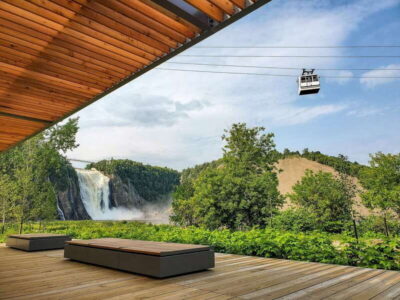
Montmorency Falls & Ile d’Orleans Half-Day Tour
Read our review →
Hop-on Hop-off Open-Top Double Decker Bus Tour
Read our review →Browse the lists this tour appears in