
Review · QUEBEC CITY
Quebec City: Old Quebec Historical Walking Tour
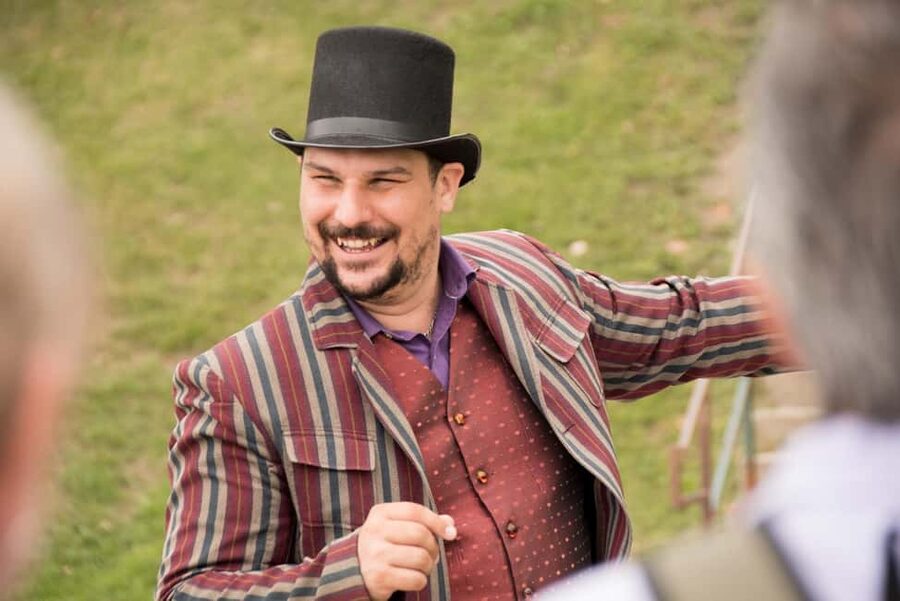
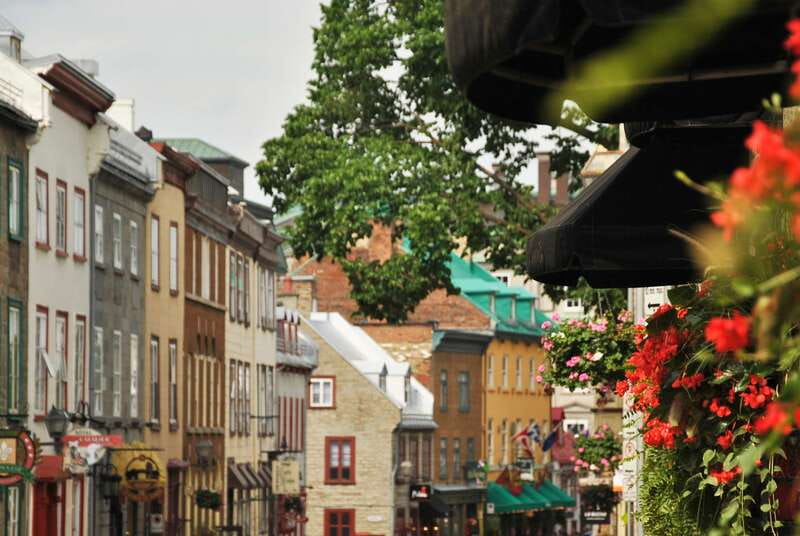
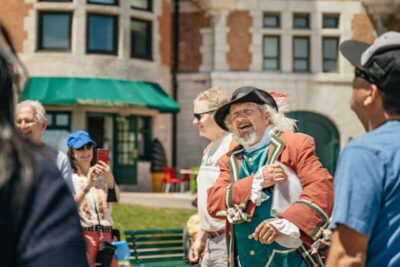
Old Quebec makes its best first impression on foot, where stone walls, sloping streets, and grand religious and civic buildings tell the story better than a passing bus ever could. This tour adds a theatrical touch: your guide appears as a colonial character such as Champlain, Louis Hébert, or Marie-Anne Barbel and leads you through the city’s 400 years.
I like the storytelling approach, which keeps dates and battles from becoming a dry lecture. I also like the chance to see less familiar corners of Old Quebec, not just the postcard views around Château Frontenac and Dufferin Terrace.
The main drawback is the pace and terrain. Two hours covers a lot, but it leaves little time to linger, sit down, or explore the Château Frontenac in depth. Expect hills and some stairs, and wear proper walking shoes.
Key Points to Know Before You Book
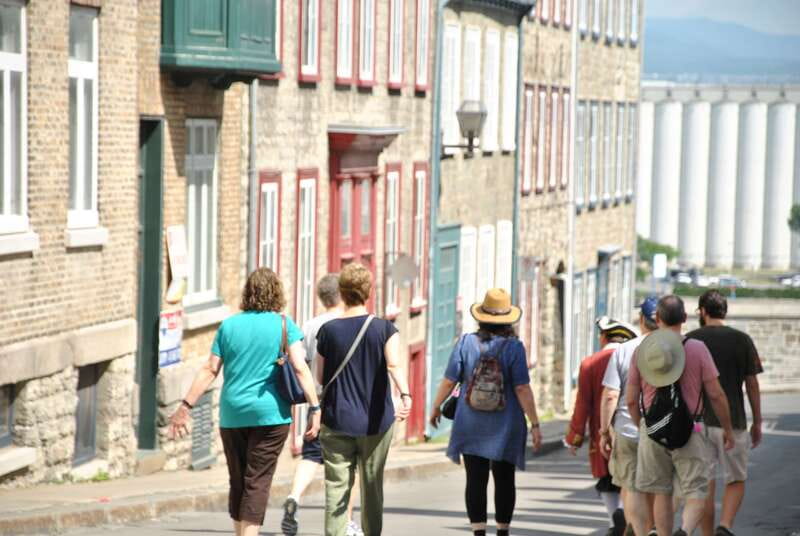
- A costumed guide turns history into a live story, with different guides portraying figures from Quebec’s early settlement.
- The route links Old Quebec’s essential sights, including Place Royale, Notre-Dame de Québec, Dufferin Terrace, and Château Frontenac.
- You get more than a surface-level city walk, with political, religious, Indigenous, geographic, and modern Canadian context included.
- Two hours is a useful introduction, but not enough for a slow, detailed look at every monument or the interior of the Château Frontenac.
- Guides adjust the walk for the group, including avoiding steep stair routes when needed, though the tour is not suitable for wheelchair users.
- The price is $24 per person, a fair rate for a licensed, bilingual walking tour with a small-group option.
Why a Costumed Guide Works So Well in Old Quebec
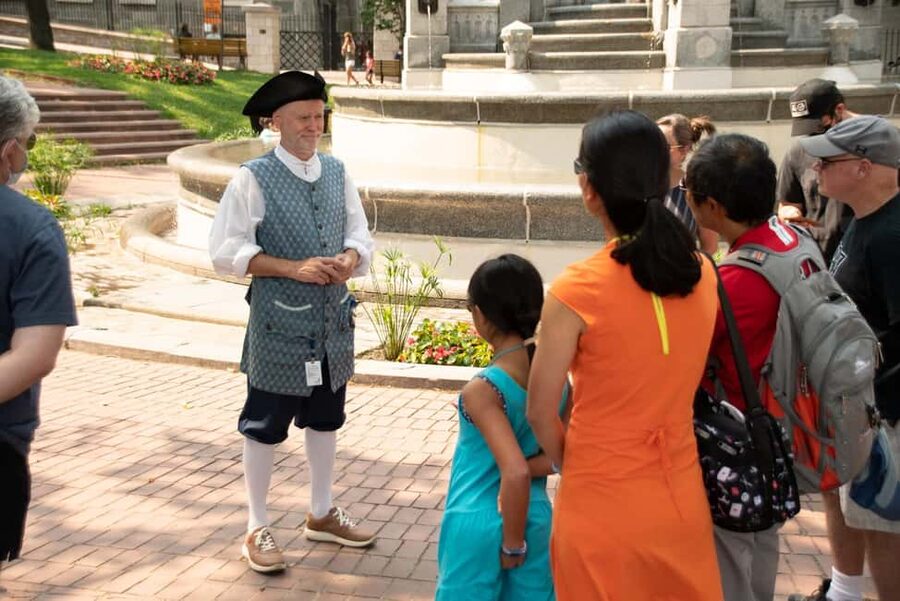
The period costume is not just decoration. It gives the tour a clear point of view and helps turn a long sequence of dates into a human story.
Your guide may introduce himself or herself as a historical figure. Past guides have included Pierre, Louis Hébert, Champlain, Charles, Sylvain, Bernard, and Marie-Anne Barbel. The character names vary, but the goal remains the same: connect the streets beneath your feet with the people who settled, defended, governed, worshiped in, and reshaped Quebec.
I like this format for a first visit because Old Quebec can feel almost too polished at first. The handsome facades and narrow streets are easy to admire without understanding why the city developed as it did. A good guide supplies the missing links, explaining how the colony grew and why particular squares, churches, walls, and public terraces matter.
The best guides also know when to drop the act and answer a modern question directly. Several guides are described as funny, warm, and easy to understand, with a knack for handling questions about current Canada as well as early French settlement. That mix gives the tour energy without turning it into a costume show.
More history-led days in Quebec City:
- Evening Gourmet Tour 5 Course Dinner – History and Food in Old Quebec City
★ 5.0 · 496 reviews - Combo Historical and Food Tour of Old Quebec
★ 5.0 · 360 reviews - Walking Tour Through Quebec City’s History
★ 4.5 · 263 reviews
Starting at the Cicerone Information Centre
The stated check-in point is the Cicerone information centre at 12 Sainte-Anne Street, postal code G1R 3X2. The meeting point can vary with the option booked, so check your confirmation carefully before setting out.
This matters in Old Quebec, where a small address mistake can cost you time. One past customer reported being sent to an incorrect starting address and having to walk another 15 minutes to reach the tour. The practical lesson is simple: verify the meeting point on the day, and arrive with enough time to find Sainte-Anne Street without rushing.
The tour is operated by Cicerone, and the guide is licensed. French and English tours are available. A small group option is also offered, which is worth considering if you prefer to hear every answer and have a better chance to speak with the guide.
The Walled City as Your First History Lesson
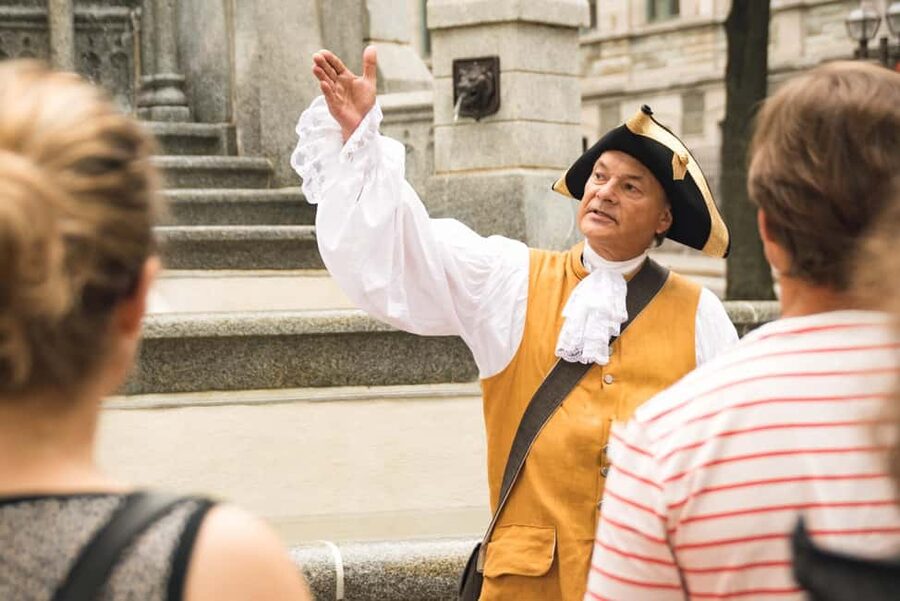
Old Quebec is the only walled city in North America, and the fortifications give the walk a strong sense of place from the start. You are not simply crossing a modern downtown with a few old buildings left behind. The historic core still has a compact street pattern, fortified edges, and a concentration of monuments that make walking the natural way to see it.
Your guide uses that setting to explain the city’s development over roughly four centuries. The tour is not limited to military history. It brings in religious life, settlement, politics, geography, Indigenous perspectives, and the conditions that shaped the colony.
That wider frame is one of the tour’s best qualities. A city can be presented as a string of French and British victories, but Quebec’s story is more complicated than that. The strongest presentations place colonial settlement alongside Indigenous history and current Canadian realities. One guide was especially praised for presenting religious, Indigenous, and modern viewpoints together.
You should expect a broad overview rather than a specialist seminar. The payoff is that you leave with a mental map and enough context to make sense of the city’s buildings on your own.
Château Frontenac and Dufferin Terrace
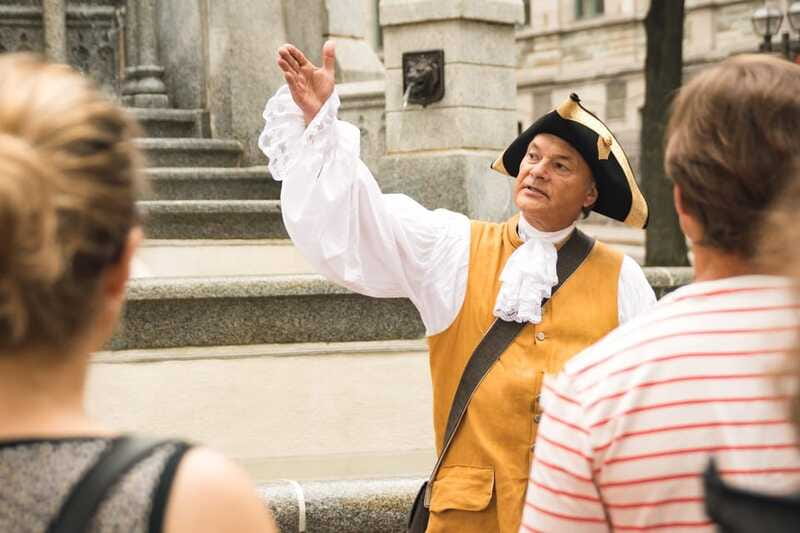
The Château Frontenac is one of Old Quebec’s defining sights, even if you never spend the night there. Its exterior architecture gives the tour a grand visual centerpiece, and the building helps explain the city’s role as a major destination and political center.
The walk also includes Dufferin Terrace, the broad promenade beside the Château. This is one of the city’s best-known public spaces, with a strong connection to the upper town and the river views beyond. Your guide gives the setting meaning rather than leaving you with only a photograph.
There is an important limitation here. The tour information highlights access to exclusive areas of the Château Frontenac, but the exact extent of that access is not spelled out. Do not book this expecting a full hotel tour or a long interior visit. The experience clearly gives the building strong attention, yet some participants wanted more time at the Château and along the boardwalk.
I would treat the Château portion as one part of a larger route. You get the building’s story, architecture, and setting, but the tour is designed to cover Old Quebec as a whole.
More walking tours in Quebec City:
- Quebec City Walking Tour
★ 5.0 · 4,716 reviews - Old Quebec City: Grand Walking Tour with Private Option
★ 4.8 · 2,609 reviews - Old Quebec Classique Walking Tour with Funicular
★ 5.0 · 1,317 reviews - Quebec: Crimes of New France Animated Walking Tour
★ 4.6 · 926 reviews
Notre-Dame de Québec and the Religious Story of the City
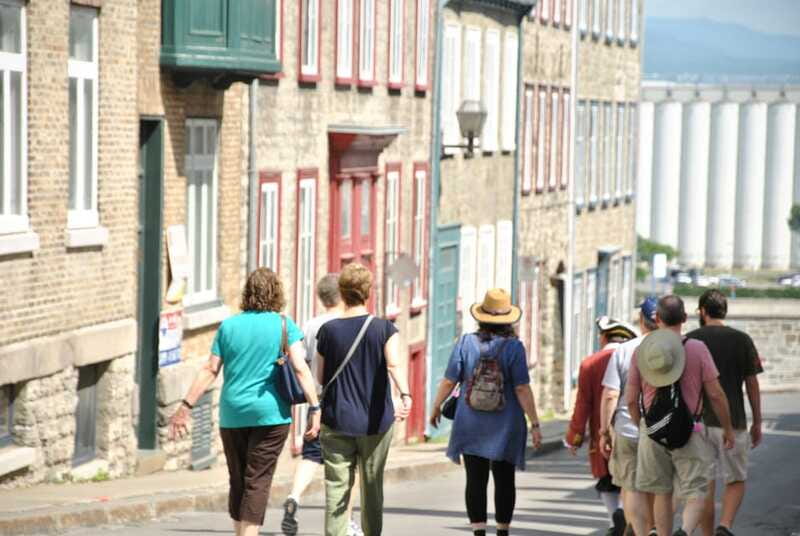
The Basilica of Notre-Dame de Québec adds a different mood to the route. Its presence helps show how central religious institutions were to the growth and identity of the city.
The tour’s value here is not simply architectural. A well-paced explanation can connect the basilica with the people and institutions that shaped daily life in the colony. Guides have been praised for explaining the religious side of Quebec alongside political and Indigenous perspectives, which helps prevent the stop from becoming a quick facade photo.
The supplied details do not promise an interior visit, so plan on learning about and admiring the basilica as part of the walking route rather than assuming you will have a lengthy church tour. If entering the building is important to you, ask the operator what the day’s route includes.
Place Royale, the Cradle of French Civilization in North America
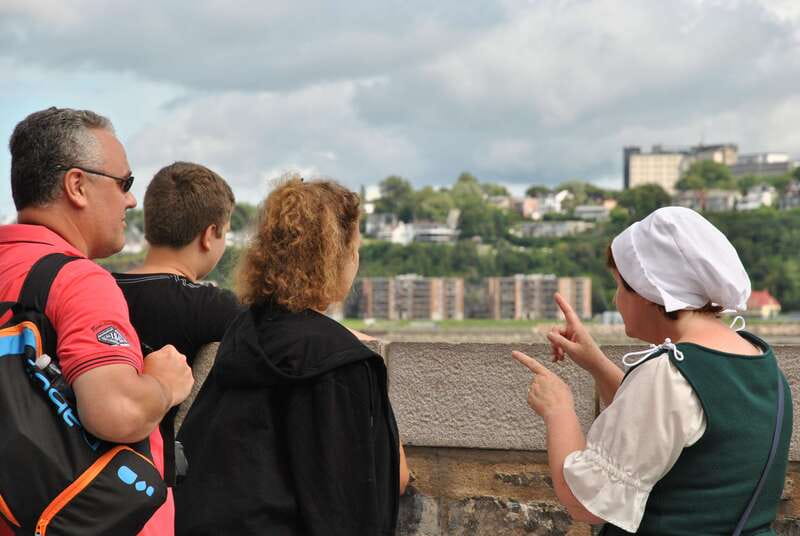
Place Royale is one of the most meaningful stops because it connects the visual charm of Old Quebec with the story of French settlement in North America. The square is described as the cradle of French civilization on the continent, and the guide explains why this particular place carries that weight.
This is where the period character can be especially effective. Instead of seeing a pretty square in isolation, you hear about the people who established communities, worked the land, and helped the colony take root. One past participant particularly valued learning how Quebec was settled by farmers, a useful reminder that the city’s story is not only about soldiers, governors, and grand buildings.
Place Royale also shows why a walking tour should include smaller streets and less obvious viewpoints. The famous sights bring you to Quebec, but the details between them help you understand how the old town fits together.
A Route That Covers Plenty of Ground
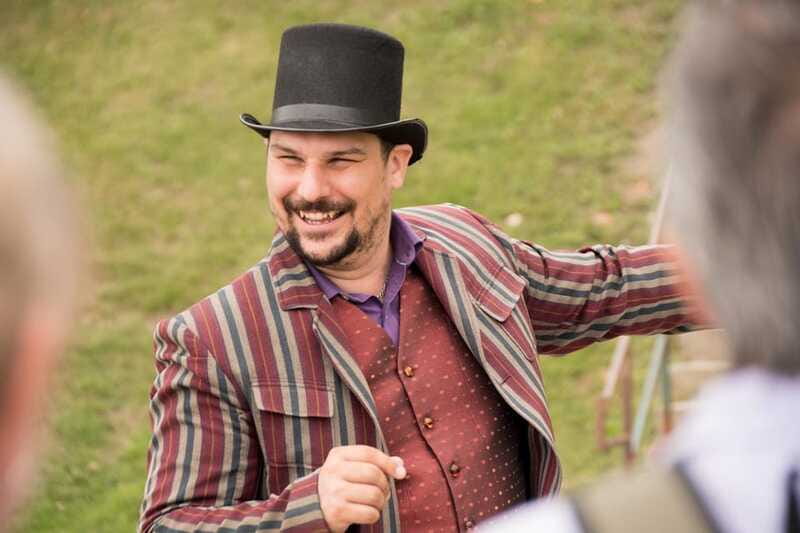
Two hours sounds generous until you consider the number of sights included. The route covers a good portion of Old Quebec, linking upper-town landmarks with the lower part of the city and the streets around Place Royale.
The walk is generally described as manageable, but it is not flat. Old Quebec has slopes, stairs, and uneven stretches. One guide adjusted the route to avoid multiple flights of stairs, using sloping roads instead. That shows useful attention to the group, but it does not remove the physical demands of the setting.
I would rate the walking as moderate rather than strenuous for most people who are comfortable on their feet. Still, you should wear supportive shoes and comfortable clothes. Someone nearing 80 found the final part difficult and wished for more rest stops. That is a fair warning: the tour keeps moving, and there is limited time for tea, shopping, or sitting down.
The tour is not suitable for wheelchair users. If you have limited mobility but can manage hills and occasional steps, contact Cicerone before booking to ask about the route for your date.
What the Guides Do Best
The strongest praise is aimed at the guides, not simply at the route. They are repeatedly described as informed, entertaining, friendly, and good at answering questions.
That combination matters. A guide can know a great deal and still deliver a dull walk. Here, the format encourages storytelling, and past guides have used humor, anecdotes, and character work to hold attention. One guide was described as a minstrel-like storyteller who moved between political, historical, geographic, and modern Canadian subjects. Another tied the entire walk together as one continuous story.
You may meet a guide who plays the part with bold theatrical energy, or one who uses a quieter, more restrained style. Jean-Claude, for example, was praised for being animated without becoming over-the-top. This variation is worth knowing: the character and presentation can differ, but the common thread is an effort to make the past easy to follow.
English and French are both available. One guide was also noted as speaking three languages, though the official activity information confirms only French and English for the tour. If language choice is important, select it when booking rather than assuming every guide offers the same languages.
How Much History Fits Into Two Hours?
The tour promises 400 years, but you should understand what that means. You will not receive a detailed account of every period, building, or conflict. Instead, the guide creates a framework that lets you place the main sights within Quebec City’s long story.
That is exactly what makes this a smart first-day activity. After the walk, you can return to the places that caught your interest, such as Place Royale, the basilica, or the Château Frontenac, with better questions in mind.
The reviews also show that two hours can feel short. One participant wanted much more time with the guide and felt the city could support many additional hours of stories. That is a compliment to the presentation, but it also points to the tour’s limits. If you already know Quebec City well, or if you want a specialist focus on fortifications, architecture, churches, or military events, you may need a longer or more focused experience.
For a first visit, the broad approach is a strength. You see the major sights, hear the main story, and get suggestions for where to spend the rest of your day.
Is $24 a Fair Price?
At $24 per person, this is reasonably priced for a two-hour guided walk in one of Canada’s most historic districts. The cost includes the walking tour and a licensed guide in period costume. Gratuity is not included.
The value comes from the interpretation. You can walk Old Quebec for free, of course, but a self-guided stroll will not automatically explain why Place Royale matters, how the settlement developed, or how the religious, political, and Indigenous strands connect.
The small-group option can improve that value, especially if you like asking questions. The guide’s ability to adapt the route and respond to the group also means you are paying for more than a memorized speech.
I would not choose this tour solely for access to Château Frontenac. The description gives that feature prominence, but the tour remains a city history walk, not a dedicated hotel visit. Book it for the full combination of landmarks, stories, and character-led presentation.
Free cancellation up to 24 hours before the start and reserve-now, pay-later booking make it easier to fit into a changing schedule. Those policies are useful, but the walking conditions should guide your decision more than the booking flexibility.
Who Should Take This Tour?
This is a good match for first-time visitors who want to understand Old Quebec before exploring it independently. It also suits families and mixed-age groups because the humor and character work keep the history moving.
You will get the most from it if you enjoy stories, ask questions, and do not mind walking at a steady pace. The tour also works well early in a Quebec City stay, since the route can help you decide which areas deserve a second look.
It is less suitable if you want a slow architectural study, a long interior visit at the Château Frontenac, or frequent seated breaks. It is also not suitable for wheelchair users, and anyone uneasy with hills or stairs should think carefully before booking.
Practical Tips for a Better Walk
- Wear comfortable walking shoes. Old Quebec’s slopes and stairs are part of the experience.
- Dress for the weather in comfortable clothes, since the activity takes place outdoors for much of its two-hour duration.
- Confirm the meeting point, especially if your booking option lists a location other than 12 Sainte-Anne Street.
- Arrive ready to listen and ask questions. The guides are often willing to connect the history to modern Quebec and to subjects raised by the group.
- Bring patience for a steady route with limited breaks. If you need regular rest stops, ask about the pace before the walk begins.
- Treat the tour as an introduction. Save time afterward for places that deserve a closer look, particularly Place Royale, the basilica, Dufferin Terrace, or the Château Frontenac.
Should You Book the Old Quebec Historical Walking Tour?
Yes, if you want a lively first look at Quebec City’s old town for a modest price. The costumed guide, broad historical coverage, and route through Place Royale, Notre-Dame de Québec, Dufferin Terrace, and Château Frontenac give you a useful foundation in two hours.
Book with realistic expectations. This is a moving overview, not a leisurely hotel tour or a deep study of every landmark. You will walk uphill, cover ground, and have little time for sitting. But if you want Old Quebec to become more than a collection of beautiful streets, Cicerone’s character-led approach is a strong choice.
FAQ
How long is the Old Quebec Historical Walking Tour?
The tour lasts two hours.
How much does the tour cost?
The listed price is $24 per person.
What sights are included on the route?
The route includes Old Quebec landmarks such as Château Frontenac, Dufferin Terrace, the Basilica of Notre-Dame de Québec, and Place Royale.
Is the Château Frontenac included?
The experience includes admiration of the Château Frontenac’s exterior architecture and access to exclusive areas associated with the hotel. The exact extent of that access can vary by option, so check the booking details.
What languages are available?
The tour is offered in English and French.
Is the tour private or in a small group?
A small-group option is available. The specific group arrangement depends on the option booked.
Where does the tour meet?
You should check in at the Cicerone information centre at 12 Sainte-Anne Street, G1R 3X2. The meeting point may vary depending on the option booked.
What should I wear or bring?
Wear comfortable shoes and comfortable clothes. The walk includes hills and may include stairs.
Is the tour suitable for wheelchair users?
No. The activity is listed as not suitable for wheelchair users.
Can I cancel the booking?
You can cancel up to 24 hours in advance for a full refund. Reserve-now, pay-later booking is also available.
Just added around Quebec City
- Stoneham: Nordic spa Thermal Experience★ 4.9 · 20 reviews
- Quebec City’s History in Virtual Reality★ 4.5 · 141 reviews
- Quebec : Old Town Walking Tour With A Local Guide★ 4.5 · 38 reviews
- Quebec: Christmas Interactive Walking Tour of New France★ 4.3 · 7 reviews
- Québec: Fortifications-of-Québec Guided Walking Tour★ 4.7 · 60 reviews
- Quebec Interactive Street Theatre: “Crimes in New France”★ 4.6 · 175 reviews
- Québec City: Weekend River Brunch Cruise★ 4.5 · 116 reviews
- Quebec City: Winter Walking Tour in Old Quebec★ 4.9 · 30 reviews
Quebec City Tours, compared.


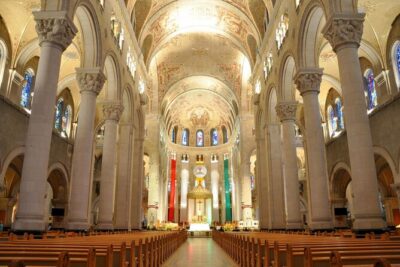
Half-Day Trip to Montmorency Falls and Ste-Anne-de-Beaupré from Quebec city
Read our review →
Old Quebec City: Grand Walking Tour with Private Option
Read our review →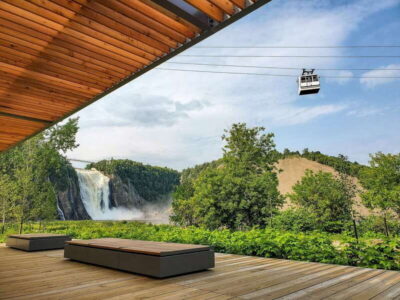
Montmorency Falls & Ile d’Orleans Half-Day Tour
Read our review →
Hop-on Hop-off Open-Top Double Decker Bus Tour
Read our review →Browse the lists this tour appears in