
Review · QUEBEC CITY
Québec City: Saint-Louis-Forts-and-Châteaux visit
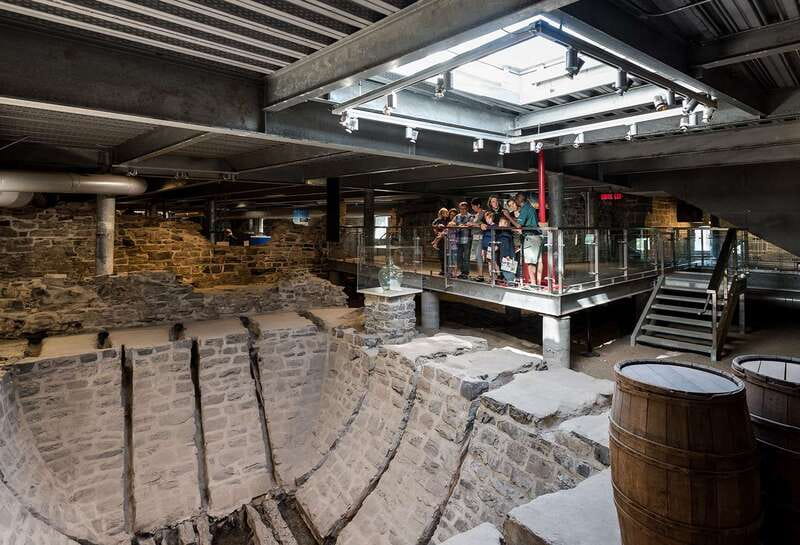
Beneath Québec City’s famous Dufferin Terrace lies the archaeological remains of Château Saint-Louis, the official residence and seat of power for French and British governors from 1620 to 1834. More than 200 years of decisions were made here, from diplomatic alliances to matters that affected the future of North America.
I like two things right away: the excellent $9 price and the way the site brings everyday life into the story. You see the remains, but you also learn how an icebox worked, what grooves in the floor were for, and why women used bottles of ammonia. The main drawback is that the self-guided audio version uses theatrical role-playing, which may not suit you if you prefer a plain historical explanation.
This is a compact visit, lasting about an hour. It is a good choice when you want more than postcard views from Dufferin Terrace, but do note that stairs and uneven areas make it unsuitable for wheelchair users and people with mobility impairments.
Key points before you go
- The ruins sit directly beneath Dufferin Terrace: Begin with St. Lawrence River views, then descend below the boardwalk to the archaeological site.
- The site covers 1620 to 1834: French and British governors used the château as a residence and administrative headquarters.
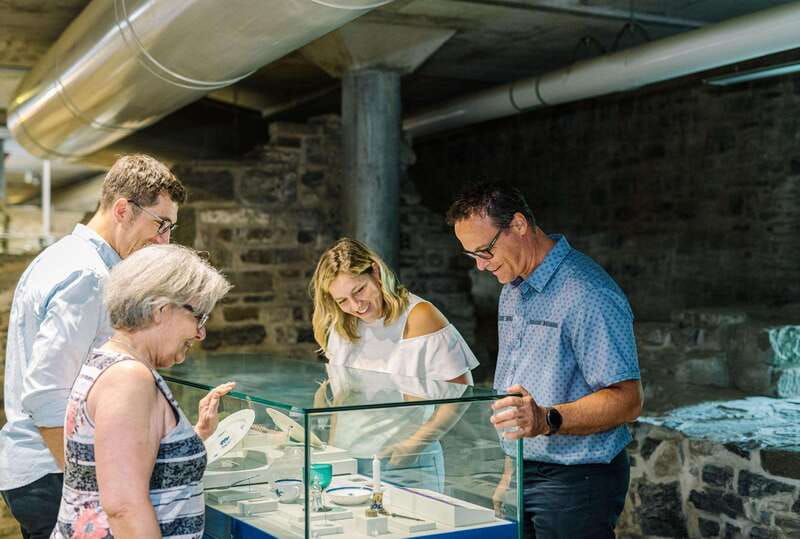
- The artifacts make the past practical: More than 120 objects help explain food storage, household routines, formal events, and the work of servants.
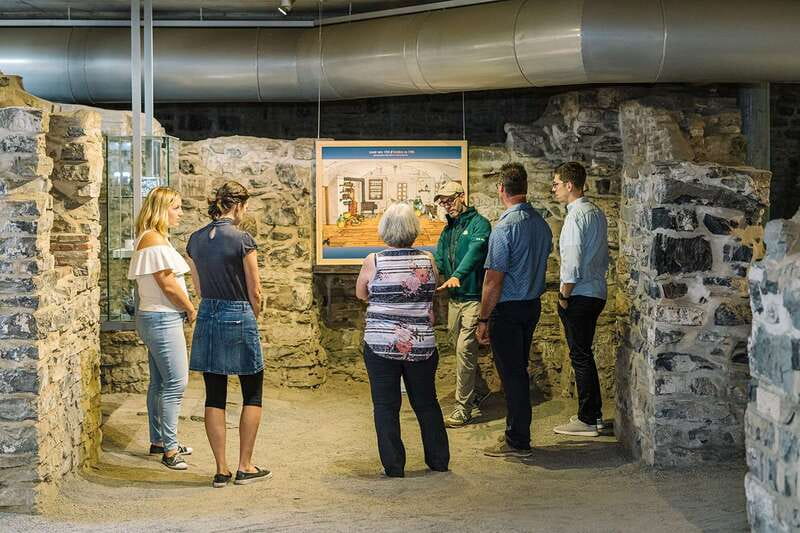
- The Huron-Wendat exhibition adds an important perspective: It explores diplomatic alliances with colonial governors from the Nation’s point of view.
- You can choose a guide or audio tour: Live tours are offered in English, French, Spanish, German, and Chinese, while the downloadable Parks Canada app supports the self-guided visit.
- The $9 admission is easy to justify: For one hour in central Old Québec, you get both an archaeological site and a focused history lesson.
Starting beneath Dufferin Terrace
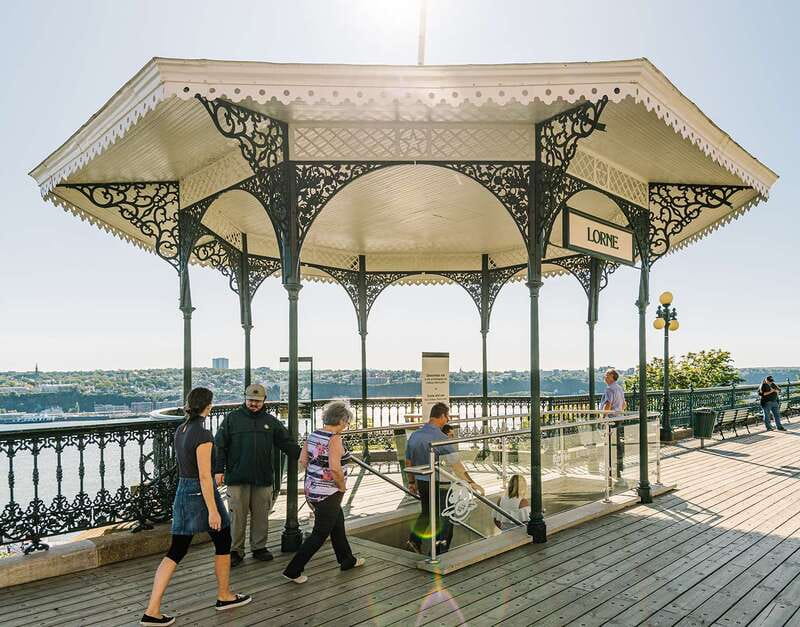
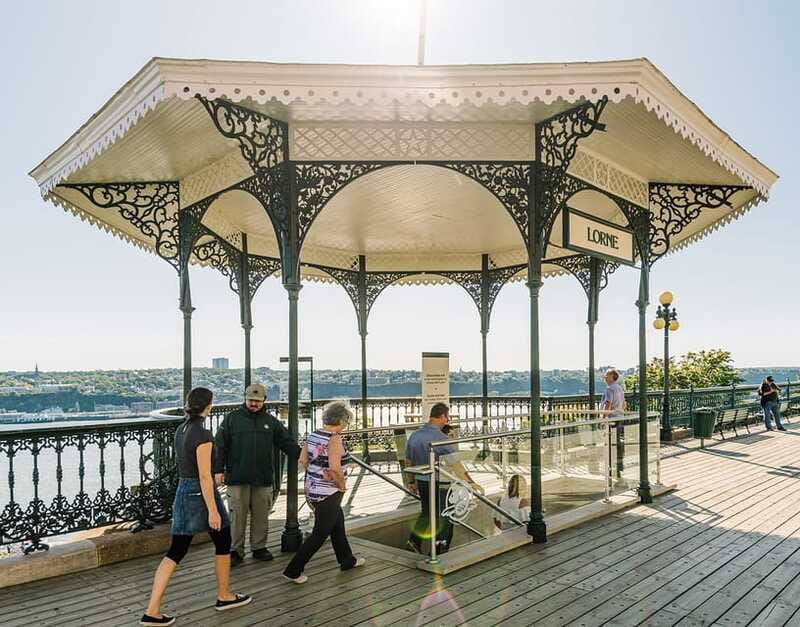
Your visit begins at the start of Dufferin Terrace, near a green and white kiosk marked with a Frontenac sign and a Canadian flag. A heritage guide wears a green and beige uniform, making the meeting point fairly easy to spot in a busy part of Old Québec.
Before going underground, take a moment to look out over the St. Lawrence River. The view helps explain why this ridge mattered. The château was not simply a comfortable home for governors. It was part of the political center of a colony, positioned above the river and close to the fortified core of Québec City.
Then you descend the stairs below the terrace. That change in level is part of the appeal. You move from one of the city’s grandest public viewpoints into a quieter archaeological space where the visible city gives way to foundations, walls, and objects recovered from the ground.
The transition also sets up the central idea of the visit: much of Québec City’s past is still physically present, even when modern streets and buildings cover it. You are not looking at a complete château with furnished rooms. You are reading the remains and using the artifacts and interpretation to picture what once occupied the site.
A few more Quebec City half-days to weigh up
- Quebec City Walking Tour
★ 5.0 · 4,716 reviews - Quebec City: Guided Tour of Fairmont Le Château Frontenac
★ 4.7 · 3,027 reviews - Québec City: Guided Sightseeing River Cruise
★ 4.4 · 3,000 reviews
Reading 200 years of power in the ruins
Château Saint-Louis served as the official residence and seat of power for French and British governors between 1620 and 1834. That long span gives the visit a useful focus. Instead of trying to explain all of Québec City’s history, the tour follows one place through major changes in government, diplomacy, architecture, and daily life.
The remains help you understand how the site developed over time. You can trace the planning and evolution of the fort and château, rather than seeing the building as a single frozen moment. The archaeological evidence lets you picture a complex that changed as its role changed.
This is where a guide can add real value. A good explanation connects a wall or foundation to the people who used it. The strongest guided experiences here are lively and interactive, with historical information presented in a way that keeps the site from feeling like a diagram on the floor.
The self-guided option offers more control, but it may feel less direct. Its audio presentation sometimes places you in roles such as governor or servant. That approach can make the setting more vivid for some people, but if you want straightforward interpretation, the theatrical style may feel distracting.
I would choose the live tour if you enjoy asking questions or want the site explained in a clear sequence. Choose the audio option if you prefer moving at your own speed, pausing when an artifact catches your attention, or fitting the visit around a tight Old Québec schedule.
Artifacts that explain ordinary château life
The most useful part of the collection is not simply its age. It is the way ordinary objects answer small questions about life inside the château.
You might learn how an icebox was used, why grooves were cut into the bottom of an object, or why women used bottles of ammonia. These details turn a broad political story into something you can picture. Governors made major decisions here, but servants also stored food, cleaned rooms, prepared meals, and managed the practical business of keeping a large residence running.
More than 120 artifacts are presented at the site, with archaeological finds helping explain the building’s former occupants. You are not just looking at decorative pieces. The objects offer clues about routines, social rank, household work, and the material culture of the period.
This is also where children and visitors who are less interested in dates may find their way into the story. A question about an icebox is easier to grasp than a long account of colonial administration. Once you understand how the building functioned day to day, the political history becomes easier to picture.
Allow time to look closely rather than rushing from label to label. The visit lasts only an hour, and the guide or audio program supplies the structure, but your attention to the smaller objects will shape how much you take away.
Diplomacy through a Huron-Wendat perspective
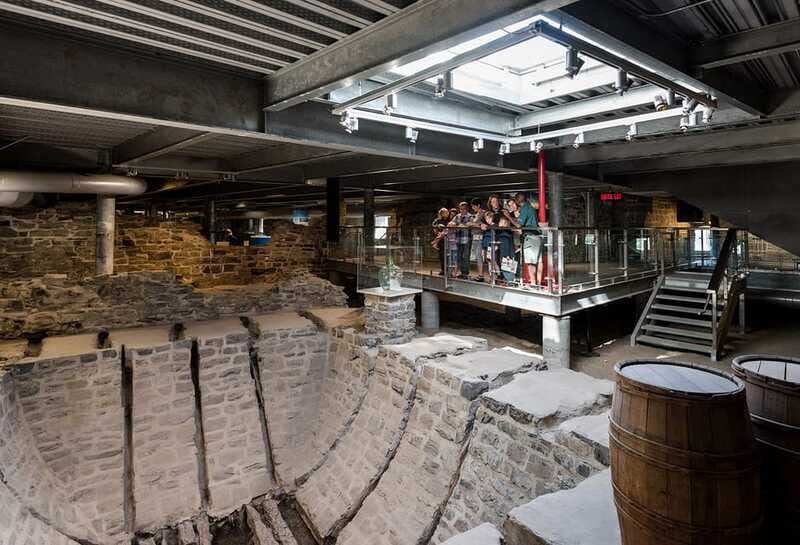
A particularly important part of the visit is the exhibition about alliances between the Huron-Wendat Nation and colonial governors. It was presented in collaboration with the Nation, and it gives the diplomatic story a broader frame than a simple account of French and British officials.
The château was a place where decisions were made, but diplomacy was not a one-sided exchange. Alliances with First Nations shaped colonial relationships and political choices. Hearing about those connections from a Huron-Wendat perspective helps you understand that the site’s story belongs to more than the governors who lived there.
This section adds value because it places the building in a network of relationships. The château was a residence, office, and ceremonial setting, but it was also part of negotiations that involved First Nations leaders and colonial authorities.
Pay attention here even if you came mainly for the ruins. The archaeological remains show where events happened. The Huron-Wendat exhibition helps explain the people and relationships that gave those events meaning.
Same base, a completely different sort of day:
- Half-Day Trip to Montmorency Falls and Ste-Anne-de-Beaupré from Quebec city
★ 4.0 · 2,718 reviews - Old Quebec City: Grand Walking Tour with Private Option
★ 4.8 · 2,609 reviews - Quebec City: Montmorency Falls with Cable Car Ride
★ 4.6 · 2,392 reviews - Quebec City: Montmorency Falls & Ile d’Orleans Half-Day Tour
★ 4.3 · 2,144 reviews
Lavish events and the social side of the château
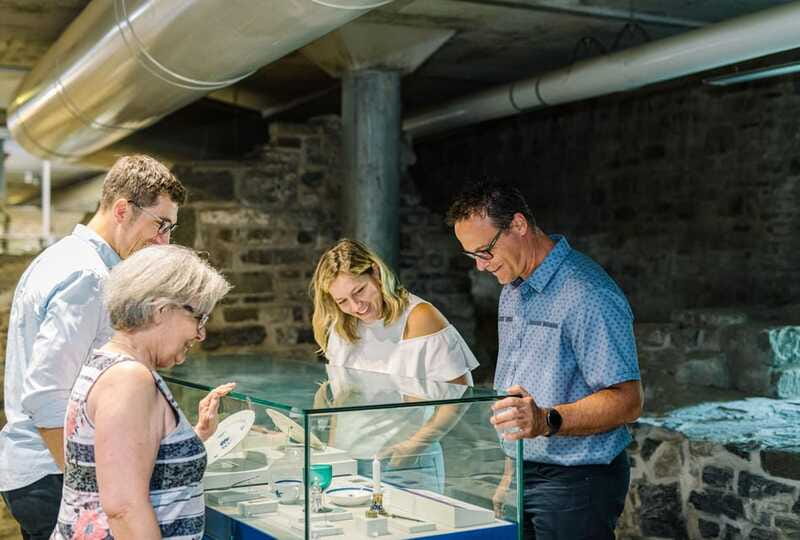
The tour also covers formal and lavish events held at the château. These stories help you picture the building as a working residence with ceremony and display, not merely a military or administrative structure.
You get a sense of the difference between public life and private labor. Governors hosted important visitors and took part in diplomatic occasions, while servants handled the work that made those events possible. The artifacts help connect these two sides of the household.
I like this balance. Political history can feel remote when it is reduced to governors, dates, and treaties. Details about food, storage, cleaning, and social events give the building a human scale.
Still, you should set your expectations correctly. This is an archaeological visit, not a restored palace tour. You will not walk through a complete series of furnished rooms. Much of the experience depends on interpretation, so the guide or audio program matters more here than it would in a fully reconstructed château.
Guided visit or Parks Canada audio tour
The experience offers two main ways to explore the site. A heritage guide can lead you through the remains, or you can use the downloadable Parks Canada app for a self-guided audio circuit.
The live guide is the better fit if you want a sense of conversation and direct explanation. The strongest guide-led visits are animated and interactive, and the available languages include English, French, Spanish, German, and Chinese. A guide can also point out the details that are easy to miss when you are moving alone.
The audio route gives you independence. You can take in the artifacts at your own pace and spend more time with the objects that interest you. It also works well if your group has different levels of interest.
The main caution is tone. The self-guided circuit sometimes asks you to imagine yourself as a governor or servant. If you enjoy historical theater, this may help you picture the setting. If you prefer a calm museum-style narration, it may not be your favorite part.
At $9, either format offers good value. The price is low enough that you do not need to make the visit the centerpiece of your day. It works as a one-hour stop between the terrace, the fortifications, and the rest of Old Québec.
Who will get the most from this one-hour visit
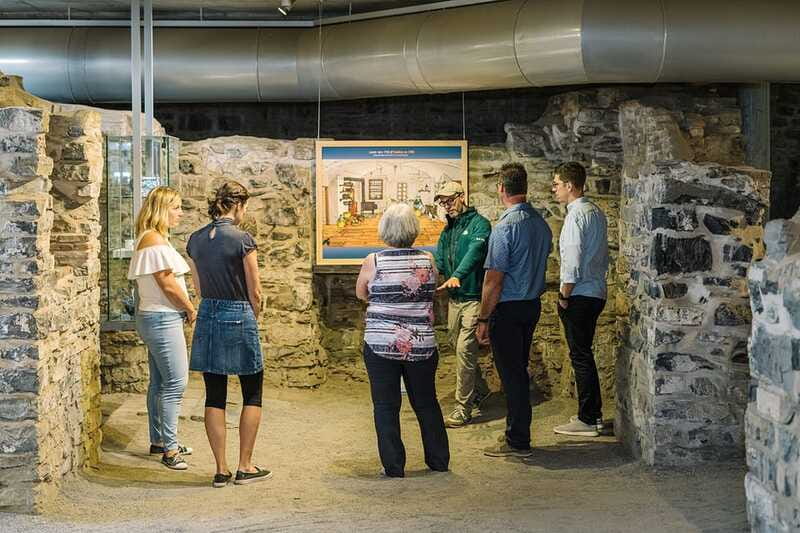
This experience suits you if you want a short historical stop with a clear location and a modest cost. It is especially useful for anyone already walking Dufferin Terrace, since the meeting point and entrance are in the same area.
You will likely enjoy it most if you are curious about how buildings functioned, how archaeological objects reveal daily routines, or how colonial government operated. Families may appreciate the practical questions about household life, although younger children may respond better to a live guide than to a longer audio presentation.
History-minded visitors should pay close attention to the diplomatic material. The Huron-Wendat exhibition adds substance and helps prevent the site from becoming just another colonial governor story.
The visit is less suitable if you dislike enclosed archaeological spaces, need step-free access, or want a large, fully restored château. The site is not suitable for wheelchair users or people with mobility impairments. Strollers and large bags may also be difficult if they fall under the restriction on luggage or large bags, so plan to arrive with only what you need.
Food and drinks are not allowed inside, and pets are not permitted except for assistance dogs. Bare feet are also not allowed, an unusual rule worth noting if you are visiting in very warm weather.
Timing, cost, and practical planning
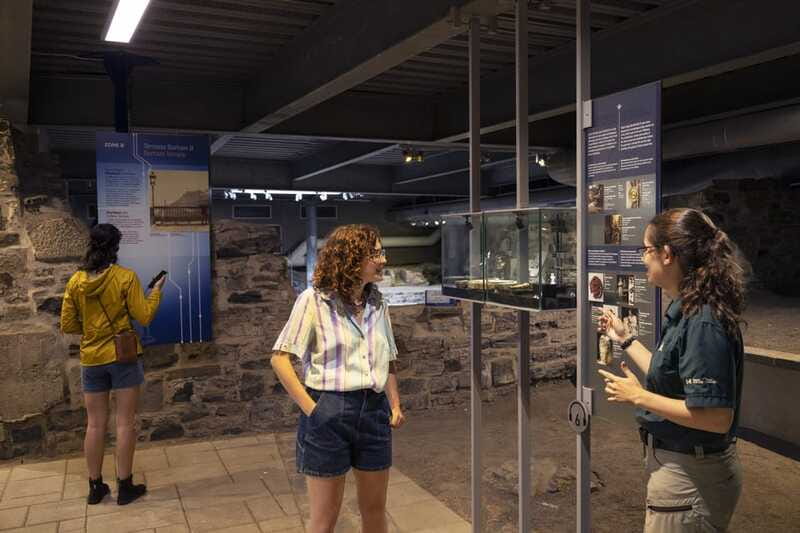
The stated duration is one hour, though you should allow a little extra time to find the green and white kiosk at the beginning of Dufferin Terrace. The site is central, so it fits neatly into a walking day in Old Québec.
The $9 admission is one of the strongest reasons to include it. You receive access to an important archaeological site, an audio option through the Parks Canada app, and the chance to join an on-site heritage guide. For the length of the visit, that is a sensible use of your sightseeing budget.
If you are a member of the Canadian Armed Forces, a Canadian veteran, or an immediate family member, daily admission to Parks Canada sites is free when you present the required Platinum Une FC card or Canadian Veteran Service Card. The guided tour itself is not included in that benefit.
Flexible booking also helps. You can reserve now and pay later, and cancellation is allowed up to 24 hours in advance for a full refund. Check the available start times before planning the rest of your day, since the one-hour duration does not mean the experience begins continuously throughout the day.
My recommendation for Château Saint-Louis
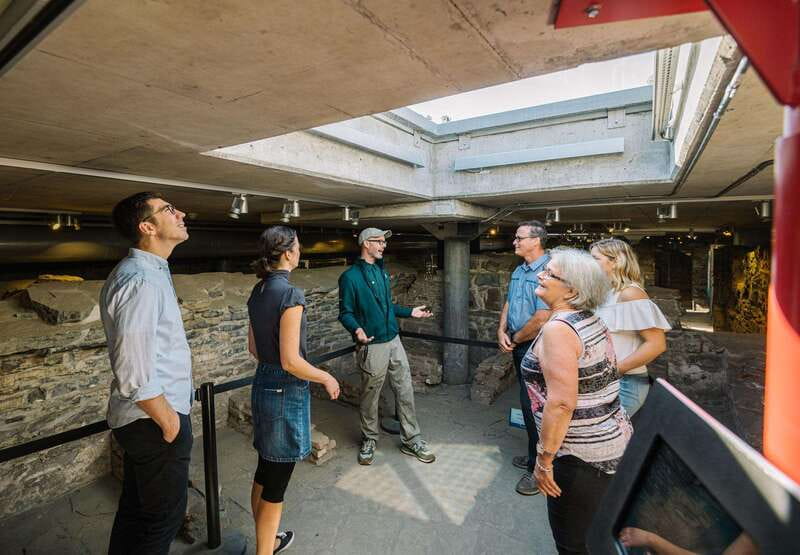
I would book this visit if you want a focused look at Québec City’s political past and prefer a site that gives equal attention to architecture, household life, archaeology, and diplomacy. The artifacts and practical details are the real strength, especially if you enjoy learning why an object was used rather than simply admiring it.
Choose the live guide if you want the clearest explanation and a more animated experience. Choose the audio route if you value independence, but be prepared for the role-playing style.
Skip it if stairs are a serious problem or if your ideal château visit requires intact rooms and grand interiors. For everyone else, the low price, central location, and strong mix of archaeological evidence and human stories make Château Saint-Louis a worthwhile one-hour addition to an Old Québec day.
FAQ
Where does the Saint-Louis Forts and Châteaux visit begin?
Meet at the beginning of Dufferin Terrace, near a green and white kiosk with a Frontenac sign and a Canadian flag.
How long does the visit last?
The experience lasts about one hour.
How much does admission cost?
The stated price is $9 per person.
Is the visit guided or self-guided?
You can join an on-site heritage guide or use the downloadable Parks Canada app for a self-guided audio tour.
What languages are available for the live tour?
Live tours are offered in English, French, Spanish, German, and Chinese.
What can I see at the site?
You can see the archaeological remains of Château Saint-Louis and more than 120 artifacts found during excavations.
What historical period does the site cover?
The château served as the official residence and seat of power for French and British governors from 1620 to 1834.
Does the visit discuss First Nations history?
Yes. An exhibition created in collaboration with the Huron-Wendat Nation explores diplomatic alliances with colonial governors from a Huron-Wendat perspective.
Is the site accessible to wheelchair users?
No. The experience is not suitable for wheelchair users or people with mobility impairments.
Can I cancel or pay later?
You can reserve and pay later, and cancellation is available up to 24 hours before the visit for a full refund.
Just added around Quebec City
- Stoneham: Nordic spa Thermal Experience★ 4.9 · 20 reviews
- Quebec City’s History in Virtual Reality★ 4.5 · 141 reviews
- Quebec : Old Town Walking Tour With A Local Guide★ 4.5 · 38 reviews
- Quebec: Christmas Interactive Walking Tour of New France★ 4.3 · 7 reviews
- Québec: Fortifications-of-Québec Guided Walking Tour★ 4.7 · 60 reviews
- Quebec Interactive Street Theatre: “Crimes in New France”★ 4.6 · 175 reviews
- Québec City: Weekend River Brunch Cruise★ 4.5 · 116 reviews
- Quebec City: Winter Walking Tour in Old Quebec★ 4.9 · 30 reviews
Quebec City Tours, compared.




Half-Day Trip to Montmorency Falls and Ste-Anne-de-Beaupré from Quebec city
Read our review →
Old Quebec City: Grand Walking Tour with Private Option
Read our review →

Montmorency Falls & Ile d’Orleans Half-Day Tour
Read our review →
Hop-on Hop-off Open-Top Double Decker Bus Tour
Read our review →Browse the lists this tour appears in