
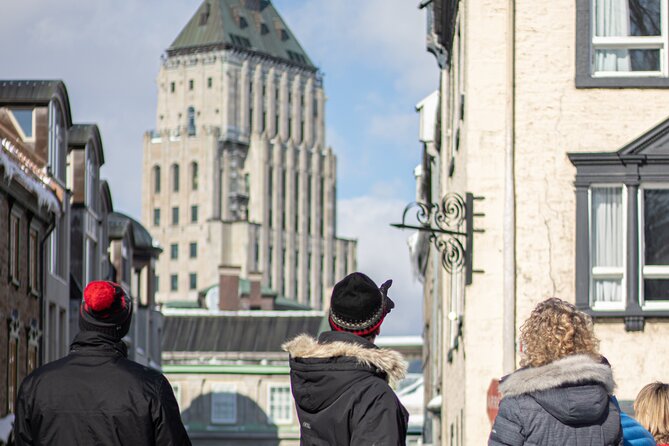
Review · QUEBEC CITY
Quebec City Walking Tour
Québec City’s best introduction is on foot, and this tour puts you right in the middle of the old fortress district. You begin near Château Frontenac, pass through Upper Town, and work downhill toward Place Royale and Petit-Champlain, with stories filling in the gaps between grand buildings and narrow lanes.
I like the small group limit of 15, which makes it easier to hear a guide outdoors and ask questions. I also like the route’s practical shape: you finish near the Old Québec Funicular, so you can continue exploring Lower Town without climbing back up. The main drawback is weather. This is an outdoor walk in a cold city, and winter comfort depends on serious clothing.
Key points at a glance
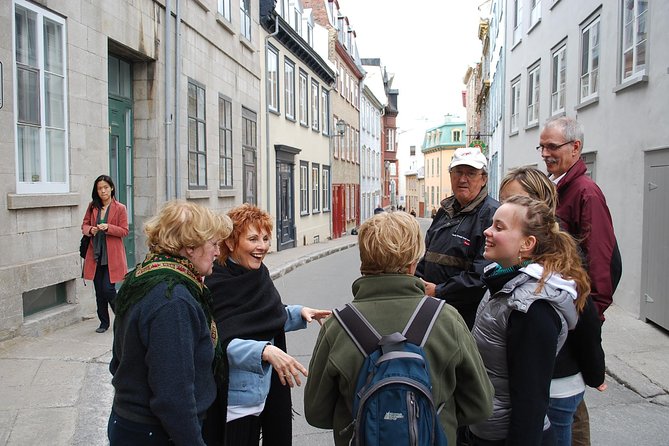
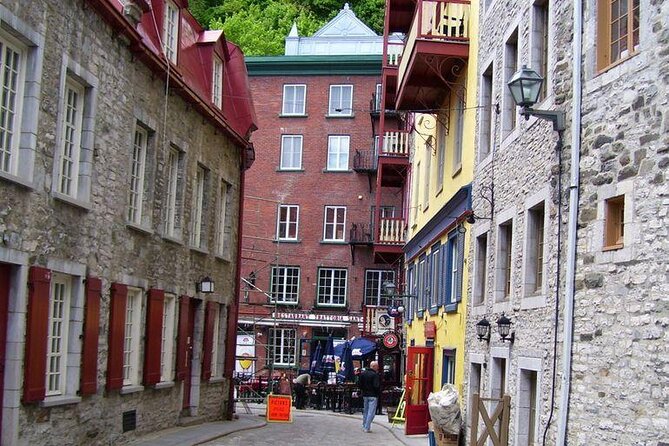
- A downhill route through both towns: Begin in Upper Town and finish near Petit-Champlain in Lower Town.
- A compact history lesson: Follow Québec City’s story from its founding in 1608 through modern life.
- Important sites without admission fees: See the fortifications, Château Frontenac, Place Royale, churches, courtyards, and city squares.
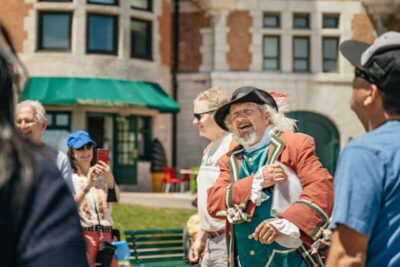
- A guide-led experience: Guides such as Mark, Louise, Robert, Christian, Stefan, and Francis bring history, architecture, humor, and local suggestions into the walk.
- Winter requires planning: The tour operates in all weather, and several people found indoor pauses helpful on very cold days.
- Good orientation for a first day: You can collect ideas for restaurants and later sightseeing while learning how Old Québec fits together.
Why this two-hour walk works so well in Old Québec
Old Québec can look simple on a map, but it is easy to miss the meaning of what you are seeing. A stone wall may be part of a military defense system. A small square may mark the beginning of French settlement in North America. A handsome church may tell you more about the city’s religious and political past than a museum label does.
This walk gives you that framework. Rather than stopping at one major monument and leaving you to connect the dots, the guide keeps talking as the group moves from square to square. You learn about daily life, military defense, religion, architecture, and the changing relationship between French and British traditions.
The route is also a useful first look at Québec City because it covers Upper Town and Lower Town in one outing. The downhill direction helps, though this is still a walking tour over old streets and uneven surfaces. You need a moderate level of fitness and comfortable shoes.
The strongest part of the experience is the human guide. Mark is known for mixing careful historical detail with humor, while Louise has offered restaurant and activity suggestions that can shape the rest of a short visit. Robert, Christian, Stefan, Francis, and Philippe have also been praised for clear explanations, local pride, and an ability to answer questions beyond the formal stops.
At $30.29 per person, I consider this a fair price for a two-hour orientation in one of North America’s most historically layered city centers. You are not paying for entry to a major attraction, but you are getting a licensed guide, local taxes, a planned route, and an explanation of places that would otherwise be easy to view without understanding.
More walking tours in Quebec City:
- Old Quebec City: Grand Walking Tour with Private Option
★ 4.8 · 2,609 reviews - Old Quebec Classique Walking Tour with Funicular
★ 5.0 · 1,317 reviews - Quebec: Crimes of New France Animated Walking Tour
★ 4.6 · 926 reviews
Starting beside Château Frontenac at 12 Rue Sainte-Anne
The meeting point is the Tours Voir Québec sales desk inside the Québec Tourist Information Centre at 12 Rue Sainte-Anne. It is across the park from the highly visible Château Frontenac, so the hotel provides an easy landmark for finding the start.
The opening stop is near the Monument Samuel de Champlain, dedicated to the founder of Québec City. This is a sensible place to begin because the monument introduces the city’s origins before the walk moves into its grander viewpoints and older streets.
Arrive ready to walk rather than expecting a long formal check-in. The activity includes a mobile ticket, and confirmation is provided when you book. There is no hotel pickup or drop-off, so you make your own way to the information center.
Terrasse Dufferin and the Château Frontenac view
From the Samuel de Champlain Monument, the group reaches Terrasse Dufferin, the broad promenade beside Château Frontenac. This is one of Québec City’s essential views, but the guide adds useful context to what you see from the railing.
You will hear about Château Frontenac and the sights visible from the terrace. The stop is fairly short, around 10 minutes, which is enough for an orientation without turning the walk into a long photo session.
The terrace can be windy and exposed. In winter, the cold may affect how long you want to linger, especially if you are standing still while listening. Bring a warm hat and gloves even if the temperature seems manageable elsewhere in the city.
The Ursuline monastery and the Cathedral of the Holy Trinity
The walk continues past the Pôle Culturel du Monastère des Ursulines. The Ursuline Sisters have been in Québec City since 1639, giving this stop a direct link to the city’s early religious and educational life.
If the chapel is open, the tour may include a visit inside. That wording matters: you should not plan on a guaranteed interior visit. The main experience remains an outdoor walking tour, with access depending on conditions at the time.
Next comes the courtyard of the Cathedral of the Holy Trinity, the first Anglican cathedral built outside the British Isles. The courtyard gives you a quieter architectural pause and helps explain how British institutions became part of a city founded under French rule.
These two stops work well together. One points to Québec’s French Catholic roots, while the other reflects the later British presence. The guide’s role is to explain that transition in plain language instead of leaving you to read it from the buildings.
A few more Quebec City half-days to weigh up
- Quebec City: Guided Tour of Fairmont Le Château Frontenac
★ 4.7 · 3,027 reviews - Québec City: Guided Sightseeing River Cruise
★ 4.4 · 3,000 reviews - Half-Day Trip to Montmorency Falls and Ste-Anne-de-Beaupré from Quebec city
★ 4.0 · 2,718 reviews - Quebec City: Montmorency Falls with Cable Car Ride
★ 4.6 · 2,392 reviews
City Hall, Basilica Notre-Dame, and the old streets
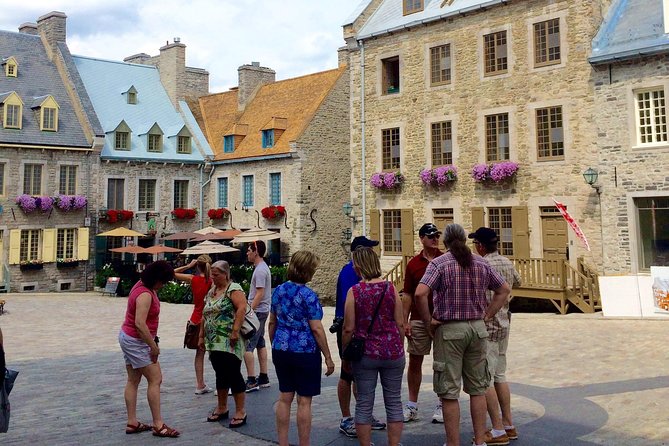
At Québec City Hall, the guide presents the major landmarks around the important city square. This portion helps you understand how the old center functions as a civic space, not just a collection of pretty façades.
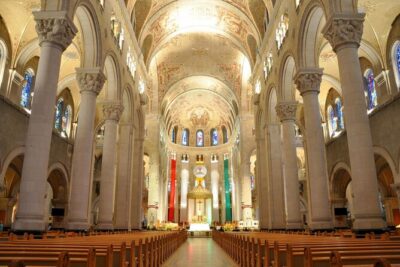
The route also includes the Basilica Notre-Dame and other sights in Old Québec. The exact amount of time at each location can vary, since the walk is guided and group needs can affect the pace. You should expect an overview rather than a full interior tour of every church or landmark.
That is both a strength and a limit. In two hours, you can see a lot and build a mental map, but you will not study every building in detail. I would use the tour to mark places you want to revisit later, then return at your own pace for photographs, services, museums, or longer interior visits.
The Seminary courtyard and the feeling of 18th-century Québec
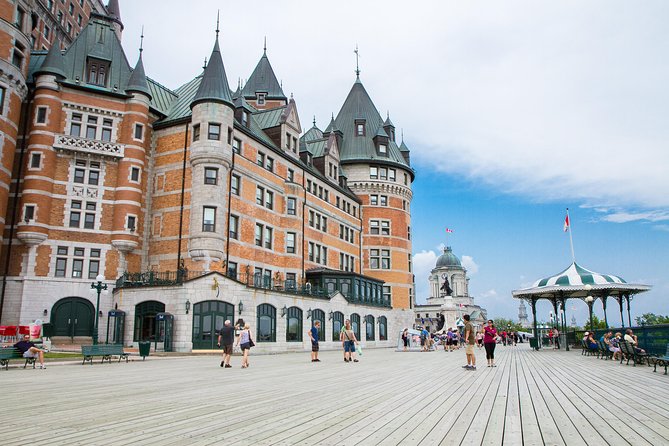
The tour enters the impressive courtyard of the Séminaire de Québec. The setting offers one of the clearest shifts in mood along the route. Instead of a busy public street, you get a contained space that can feel like a step into earlier centuries.
The guide explains why the Seminary matters and points out the architectural details that make the courtyard memorable. This is the kind of stop that benefits from interpretation. Without a guide, you might admire the stonework and move on. With context, the building becomes part of the city’s religious, educational, and civic story.
Indoor or sheltered pauses are especially valuable in winter. Several winter outings have dealt with bitter temperatures, sometimes around 10 to 12 degrees Fahrenheit. Guides have moved groups indoors when possible, but you should still expect to spend much of the two hours outside.
Fortifications, the Citadelle, and Québec’s military role
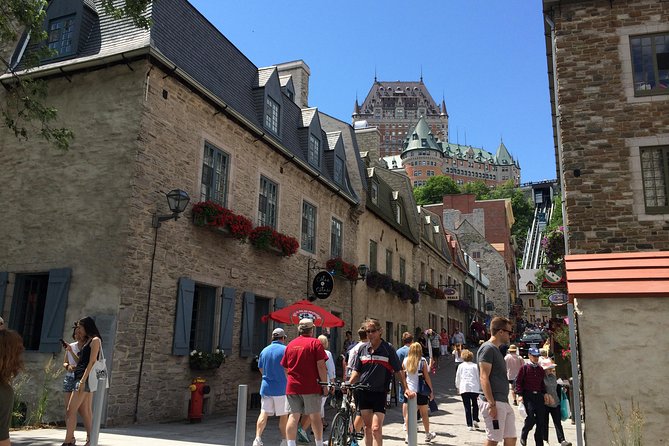
Québec City is the only walled city north of Mexico, and the fortifications are central to understanding why the city developed where it did. The walk explains the walls’ defensive purpose and the military system that protected the settlement over the centuries.
The Citadelle of Québec is also part of the city’s military identity. It remains an active installation and serves as an official residence of the Canadian monarch and the Governor General of Canada. The walking tour provides an introduction to this role and the larger defense story.
Do not confuse this experience with a dedicated Citadelle admission tour. The included activity is a guided walk, and admission tickets to attractions are not listed as part of the price. If you want a more detailed visit inside the Citadelle, you would need to arrange that separately.
Still, the fortification discussion is one of the best reasons to take the walk. It explains why Québec feels different from other Canadian cities and why its Upper Town overlooks the river and Lower Town.
Place Royale and the beginning of French America
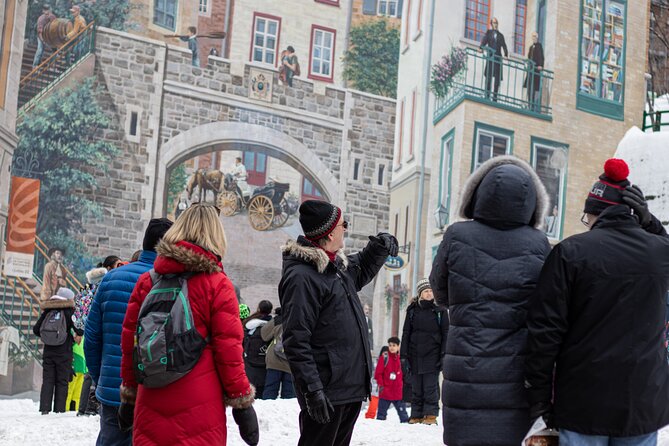
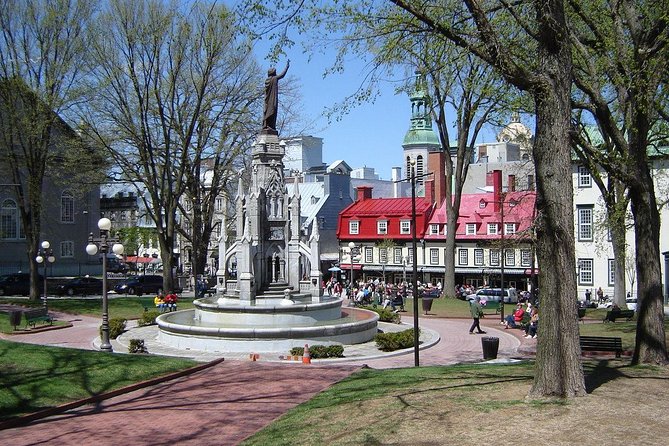
The route eventually reaches Place Royale, one of Québec City’s most important historic squares. It is often described as the birthplace of French America, and the guide uses the area to connect the city’s earliest settlement with the streets you have just crossed.
Notre-Dame-des-Victoires Church is nearby and is one of the oldest stone churches in Canada. It occupies the spot where Québec began, making it more than a photogenic stop. The small scale of the church and surrounding square gives you a sense of how different the original settlement was from the larger city around it.
Place Royale is also a good place to slow down and look at the façades. The tour does not simply rush from one landmark to the next. It gives you a short explanation of the square, then lets you see how the old buildings, church, and public space relate to one another.
Finishing on Petit-Champlain Street
The walk ends on Petit-Champlain Street, one of the most attractive streets in the city and a natural place to continue your afternoon. The Old Québec Funicular is at 16 Rue du Petit Champlain, close to the finish.
Ending downhill is a real practical benefit. Lower Town has its own restaurants, shops, lanes, and waterfront connections, and you can continue exploring without retracing the entire route. If your legs are tired, the funicular offers a way back toward Upper Town, though the ride is not included in the walking tour.
Petit-Champlain is also a good place to pause after the guide leaves. You will have a clearer sense of which streets you want to photograph and which parts of Old Québec deserve a second look.
What the guides add to the experience
The guide can make or break a history walk, and this tour has earned a strong overall record, with a 4.8 rating from 4,716 reviews and recommendation from 96 percent of people who booked it.
The most praised quality is clear, entertaining historical explanation. Mark has been singled out for his humor and command of Québec’s past. Louise has helped people plan the rest of their stay with restaurant and activity ideas. Robert is praised for enthusiasm and practical suggestions, while Christian connects earlier events to present-day Québec culture.
Francis has been described as energetic and willing to go beyond the basic script. Philippe has taken groups inside significant buildings when possible and offered food advice. Stefan is another guide known for combining humor with local stories.
Guide assignments can change, so you should not book on the assumption that one particular person will lead your walk. The useful point is that the company’s guides are licensed and trained, and the experience depends on a person explaining the city rather than an audio recording delivering fixed facts.
Winter clothing and the pace of the walk
The tour operates in all weather conditions. That makes it dependable for scheduling, but it also means you need to prepare for Québec City’s real climate rather than an ideal forecast.
Winter comments are consistent: the history remains interesting, but extreme cold can reduce your enjoyment. Wear an insulated coat, warm layers, gloves, a hat, and winter footwear with good traction. Hand and toe warmers are available for purchase at the check-in desk and can last up to five hours.
The pace is generally relaxed, and guides have worked to keep groups comfortable by using indoor stops when possible. Even so, you may feel cold by the end of two hours if temperatures are severe. Spring, summer, and early fall should be easier for long pauses and photographs.
The tour can also take place in rain or other poor weather. A waterproof outer layer and shoes suited to wet streets are sensible. Since the route includes older streets and slopes, avoid treating it like a flat indoor museum visit.
Who should book this Québec City walk
I would book this tour early in a Québec City stay, ideally near the beginning. The route helps you get your bearings, and guides may suggest places to eat and other activities that fit your interests.
It suits you best if:
- You want a broad introduction rather than a single museum or church visit.
- You enjoy history, architecture, and local stories.
- You prefer a guide who can answer questions in person.
- You have two hours and a moderate level of fitness.
- You want to see both Upper Town and Lower Town in one outing.
- You are comfortable walking outdoors in the season you choose.
It is less suitable if you want extensive time inside attractions, a private guide, hotel transportation, or a fully indoor activity. It may also disappoint if you need a very slow route or have difficulty with slopes and old paving.
The small group size helps keep the experience personal, but you still need to stay close to the guide. One unfortunate outing ended with people separated from the group and missing several stops. Keep the guide in sight, especially at corners, squares, and crowded parts of Old Québec.
Booking details and value
The cost is $30.29 per person for about two hours. That works out to a modest fee for a licensed guide and a planned route through the city center, especially if this is your first visit and you would otherwise spend time trying to make sense of the streets yourself.
The tour is typically booked about 22 days ahead, so popular dates may fill before your arrival. Confirmation comes at booking, and the maximum group size is 15 people. A minimum number of participants applies, so the company can cancel after confirmation if too few people sign up. In that case, you receive an alternative or a full refund.
Free cancellation is available until 24 hours before the start time. Within 24 hours, the payment is not refunded, and changes are not accepted. The cutoff uses Québec City local time.
Should you book it?
Yes, if you want an efficient first look at Old Québec with enough history to make the buildings meaningful. The downhill route, small group, strong guide feedback, and finish near Petit-Champlain give the tour practical value beyond a simple stroll.
Choose a warmer season if cold weather tends to spoil your day outdoors. In winter, book it only if you are prepared with serious layers and winter shoes. For most first-time visitors, I would take this walk early in the stay, then return to the places that caught your interest.
FAQ
How long is the Québec City Walking Tour?
The guided walking tour lasts approximately two hours.
How much does the tour cost?
The listed price is $30.29 per person.
Where does the tour begin?
It begins at the Tours Voir Québec sales desk inside the Québec Tourist Information Centre at 12 Rue Sainte-Anne, across the park from Château Frontenac.
Where does the tour end?
The walk ends near the Old Québec Funicular at 16 Rue du Petit Champlain on Petit-Champlain Street.
Is the tour offered in English?
Yes. The tour is offered in English and includes a mobile ticket.
How large is the group?
The tour has a maximum of 15 people.
Is hotel transportation included?
No. Hotel pickup and drop-off are not included.
Does the tour include admission to the Citadelle or other attractions?
The listed inclusions cover the two-hour guided walk, a licensed professional guide, and local taxes. Admission to the Citadelle or other paid attractions is not included.
Does the tour operate in winter or bad weather?
Yes. It operates in all weather conditions, so you should dress appropriately. Winter visitors should wear very warm clothing and insulated footwear.
Can I cancel for a refund?
You can cancel at least 24 hours before the start time for a full refund. Cancellations or changes made within 24 hours are not accepted for a refund. If the company cancels because the minimum number of people is not met, you are offered another option or a full refund.
Just added around Quebec City
- Stoneham: Nordic spa Thermal Experience★ 4.9 · 20 reviews
- Quebec City’s History in Virtual Reality★ 4.5 · 141 reviews
- Quebec : Old Town Walking Tour With A Local Guide★ 4.5 · 38 reviews
- Quebec: Christmas Interactive Walking Tour of New France★ 4.3 · 7 reviews
- Québec: Fortifications-of-Québec Guided Walking Tour★ 4.7 · 60 reviews
- Quebec Interactive Street Theatre: “Crimes in New France”★ 4.6 · 175 reviews
- Quebec City: Winter Walking Tour in Old Quebec★ 4.9 · 30 reviews
- Québec City: Weekend River Brunch Cruise★ 4.5 · 116 reviews
Quebec City Tours, compared.
Half-Day Trip to Montmorency Falls and Ste-Anne-de-Beaupré from Quebec city
Read our review →
Old Quebec City: Grand Walking Tour with Private Option
Read our review →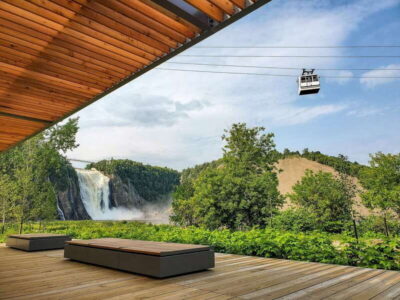
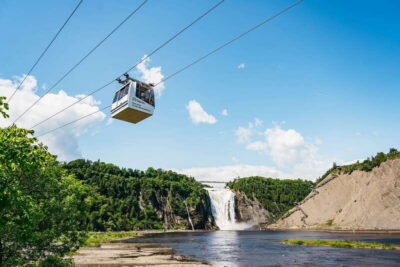
Montmorency Falls & Ile d’Orleans Half-Day Tour
Read our review →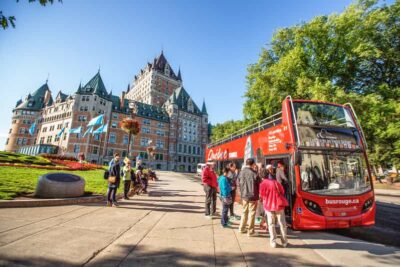
Hop-on Hop-off Open-Top Double Decker Bus Tour
Read our review →
Browse the lists this tour appears in