

Review · QUEBEC CITY
Old Quebec City: Grand Walking Tour with Private Option
Old Quebec’s real pleasure is how quickly the city changes under your feet. In one walk, you move from castle-like City Hall and the broad St. Lawrence views at Dufferin Terrace to the narrow streets of Place Royale and Petit Champlain. The tour gives you the story behind the stone instead of leaving you to guess at it.
I like the route’s range. You see the upper and lower parts of Old Quebec, the fortifications, a chapel, a church, historic squares, and the city’s famous funicular. I also like the practical advice from guides such as Carole, Francis, Yves, Marc, and Robert, who point out places to eat and sights worth saving for later.
The main consideration is the walking itself. This is not a flat stroll. Cobblestones, hills, and occasional steep climbs can make it tiring, and the tour is not suited to wheelchair users or people with mobility limits. The advertised route is often described as downhill, but one recent departure included several uphill stretches, so ask at check-in if the terrain matters to you.
Key points to know before you book
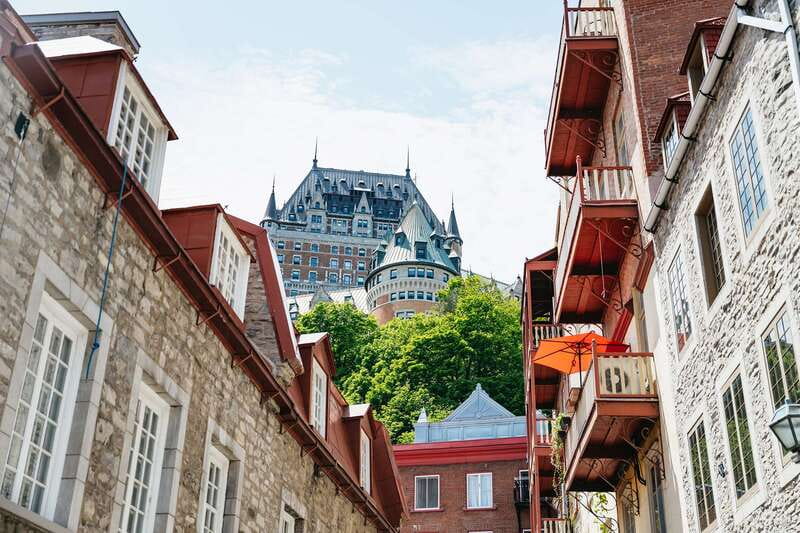
- A full Old Quebec orientation: The walk connects the upper town, fortifications, Place Royale, and Petit Champlain in one outing.
- A guide-led history lesson: English and French guides explain Quebec’s architecture, French and British past, local culture, and major figures.
- Strong guide personalities: Guides including Mark, Yves, Stefan, Carole, Francis, Marc, Robert, and Tommy have been singled out for humor, storytelling, and local advice.
- A useful first-day activity: You finish near the Old Quebec funicular, well placed to continue exploring on your own.
- Good weather preparation matters: The tour runs in rain and snow, with changes to the route if conditions require it.
- Private tours are available: The 2.5-hour private option can focus on history, architecture, food, or less familiar corners of the city.
Why this walk works so well in Old Quebec
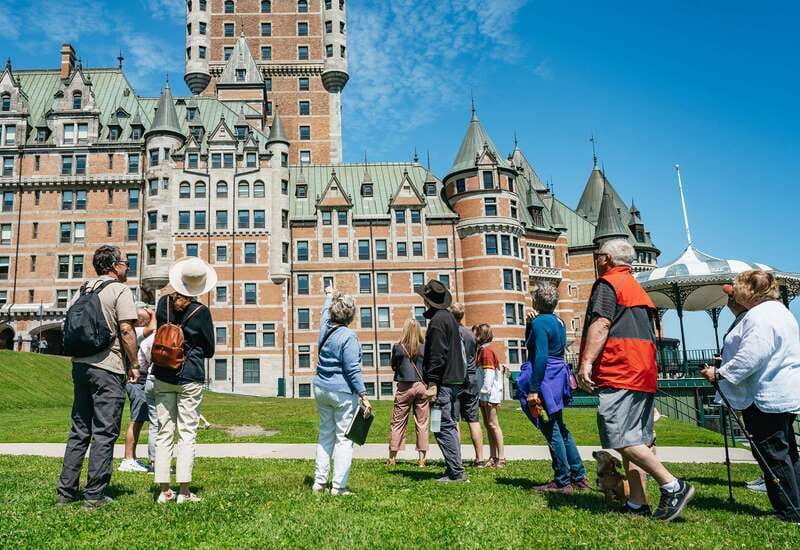
Old Quebec is easy to admire and surprisingly easy to misunderstand. The stone walls, steep streets, churches, and grand hotels can blur into one pretty scene when you walk alone. A good guide gives those places order: this is the upper town, that is the lower town, this square mattered because of its port, and this wall tells you why Quebec developed differently from most North American cities.
This tour is designed as a broad introduction rather than a deep visit inside every landmark. You stop, listen, take photographs, and keep moving. That approach suits a first day in Quebec City because it helps you decide where to return later.
The route takes about two hours, though some departures run to 150 minutes. That extra half-hour matters. It gives the guide room for questions, local stories, and a few pauses without turning the outing into a rushed checklist. One group of about 15 people found the pace comfortable, though a larger group can make it harder to hear in noisy spots.
The $29 group price is reasonable for a guided walk covering both levels of Old Quebec. You are paying for a local interpreter, not admission to a string of attractions. The value is highest if you want context, orientation, and restaurant or sightseeing suggestions early in your stay. If you already know the city well, the private option may make more sense, but its price is not provided here.
More walking tours in Quebec City:
- Quebec City Walking Tour
★ 5.0 · 4,716 reviews - Old Quebec Classique Walking Tour with Funicular
★ 5.0 · 1,317 reviews - Quebec: Crimes of New France Animated Walking Tour
★ 4.6 · 926 reviews
Starting at the Tourist Information Center
Check-in takes place at the Tours Voir Quebec sales desk inside the Tourist Information Center. Do not wait outside the building looking for a guide. The information gives 12 Rue Sainte-Anne as the meeting address, while the route details also list Tours Voir Quebec at 2 Rue Sainte-Anne and note that the exact meeting point can vary by option.
That discrepancy is easy to handle: confirm the address on your booking and check in at the indoor sales counter. Reservations need to be confirmed before you arrive.
Starting near Rue Sainte-Anne puts you close to the heart of the old city. From here, the guide can quickly frame the walk and explain how the upper town relates to the riverfront districts below. I would book this early in your visit, then use the guide’s suggestions to plan the rest of your time.
Dufferin Terrace and the city from above
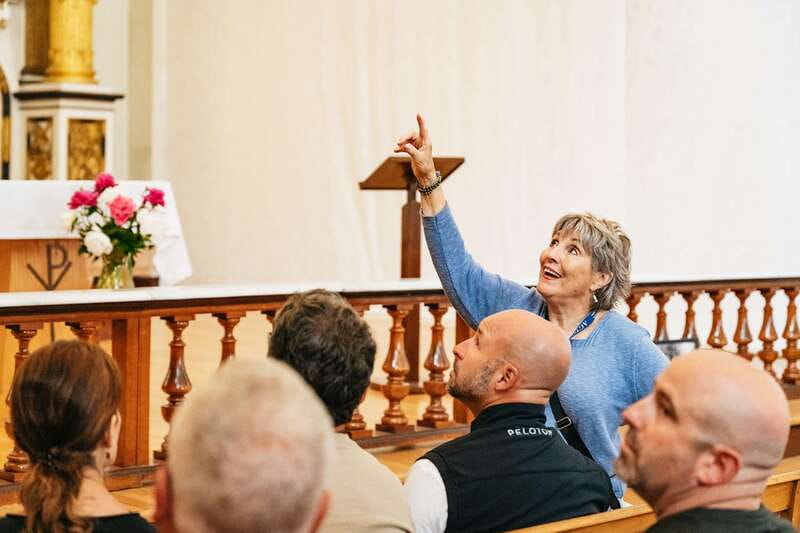
The first major stop is Terrasse Dufferin, the broad promenade beside the Château Frontenac. The draw here is the view. You look out over the St. Lawrence River and the surrounding countryside, then back toward the rooftops, towers, and sloping streets of Old Quebec.
This is a good place for photographs, but the guide’s explanation gives the view more meaning. You begin to see Quebec City as a fortified settlement shaped by its high position above the river. The terrace also gives you an early sense of scale, which helps later when the route drops into the compact streets below.
Bring a warm layer in cold months. The open terrace can feel much colder than a sheltered street, and the tour operates in winter weather. The operator sells hand and toe warmers at the counter during winter, but proper clothing and shoes are still your responsibility.
A nearby viewpoint adds another photo stop and another chance to look across the river and city. The exact amount of time at each stop depends on the guide and group, so do not expect a long period to sit and take in the scene.
Ursulines Chapel and the stories behind the stone
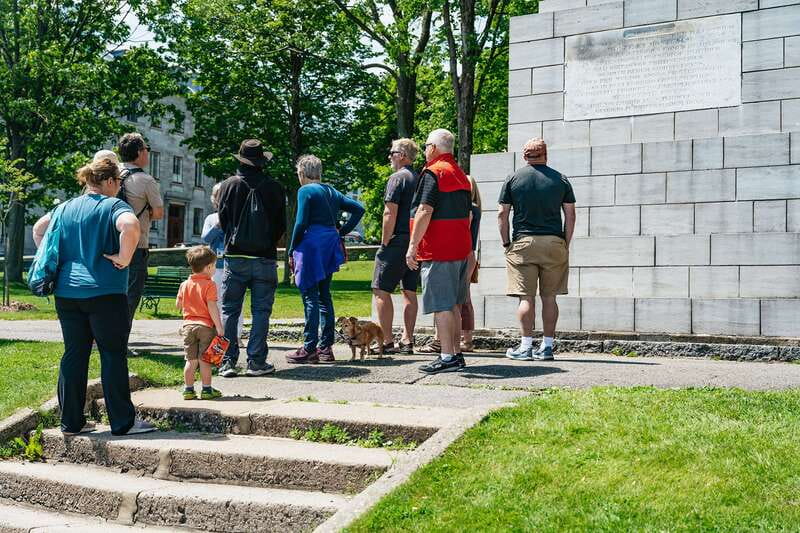
The Ursulines Chapel offers a quieter change of pace after the open terrace. Here, the focus shifts from sweeping views to religious and educational institutions that helped shape Quebec City.
The guide-led explanation is the important part. Several departures have placed attention on women in Quebec’s past, including the Ursuline Sisters and the Filles du Roi, or King’s Daughters. That wider focus is welcome. It keeps the walk from becoming only a parade of military leaders, governors, and battles.
You should see this as an exterior and orientation stop rather than a guaranteed extended interior visit. The supplied details promise guided commentary at the chapel, not a full private viewing or a special religious service. If entering the chapel is especially important to you, ask the guide what is possible on your date.
A few more Quebec City half-days to weigh up
- Quebec City: Guided Tour of Fairmont Le Château Frontenac
★ 4.7 · 3,027 reviews - Québec City: Guided Sightseeing River Cruise
★ 4.4 · 3,000 reviews - Half-Day Trip to Montmorency Falls and Ste-Anne-de-Beaupré from Quebec city
★ 4.0 · 2,718 reviews - Quebec City: Montmorency Falls with Cable Car Ride
★ 4.6 · 2,392 reviews
City Hall, the Seminary, and upper-town Quebec
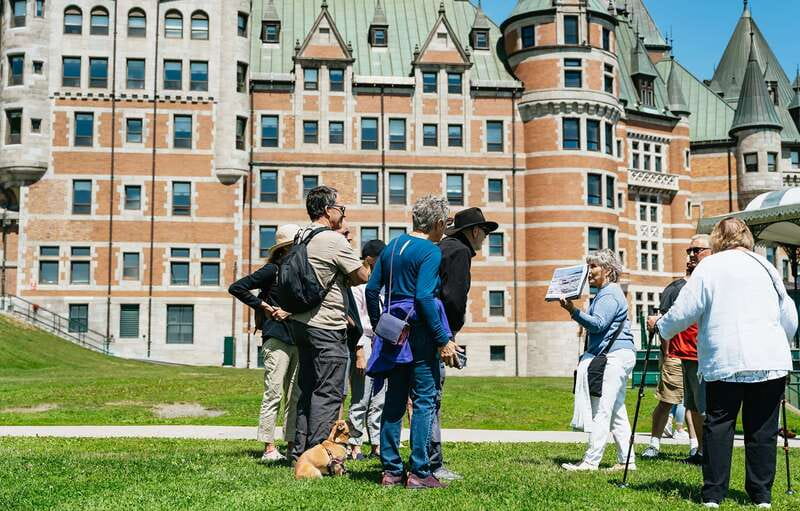
Place de l’Hôtel de Ville brings the city’s civic face into view. Quebec City Hall has a castle-like design that fits the old district so well it can look older than it is. The guide helps separate appearance from function and points out the role of the square in modern city life.
The Seminary of Quebec follows as another important architectural and institutional stop. This is where a guide can turn a facade into a story about education, religion, and the development of French-speaking Quebec. You may find the stop more rewarding if you pay attention to the contrast between formal stone buildings and the smaller streets around them.
The upper town section often includes references to the Citadel, Château Frontenac, founders, and the changing relationship between French and British power. One guide, Stefan, was praised for explaining that relationship through several centuries of local change, while keeping the account light with humor.
That mix is one of the tour’s strongest features. Quebec’s past can become a list of dates and military victories. The better guides connect politics, culture, language, and daily life. Mark, Tommy Byrne, Paul, Louise, Anne, Jocelyn, and Francoise were also praised for making their explanations clear, entertaining, and personal.
Walking the Fortifications of Quebec
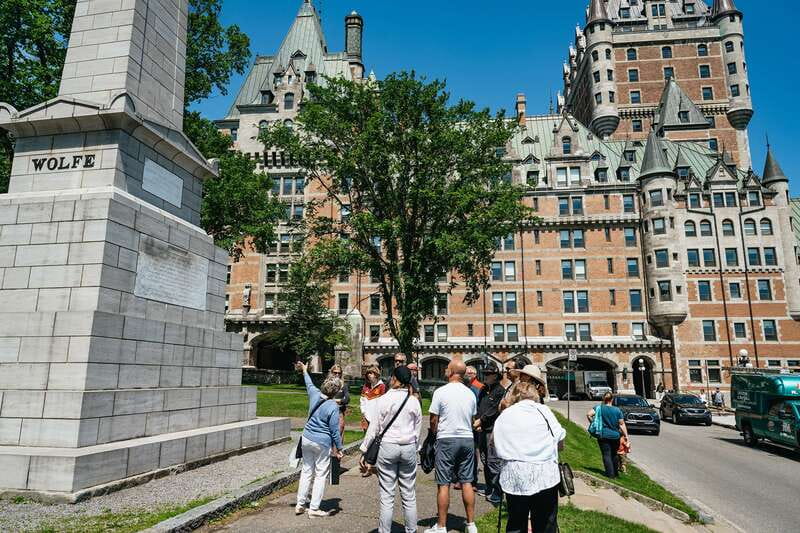
The Fortifications of Quebec National Historic Site is one of the route’s most distinctive stops. Quebec is one of the few remaining walled cities in North America, so the walls are not just decorative remnants. They explain why the city feels different from other Canadian and North American urban centers.
The guide points out how the defenses fit into the city’s layout and military past. You will walk beside stonework, streets, and gates rather than tour a separate museum program. That keeps the pace moving, though visitors who want detailed military architecture may want to return later for a slower look.
This part also reinforces the need for sensible footwear. Old Quebec’s surfaces can be uneven, and the route includes hills and cobbles. One guide was specifically praised for keeping the group together and watching out for people on the inclines. That kind of attention matters more than speed.
Place Royale, the oldest part of Quebec City
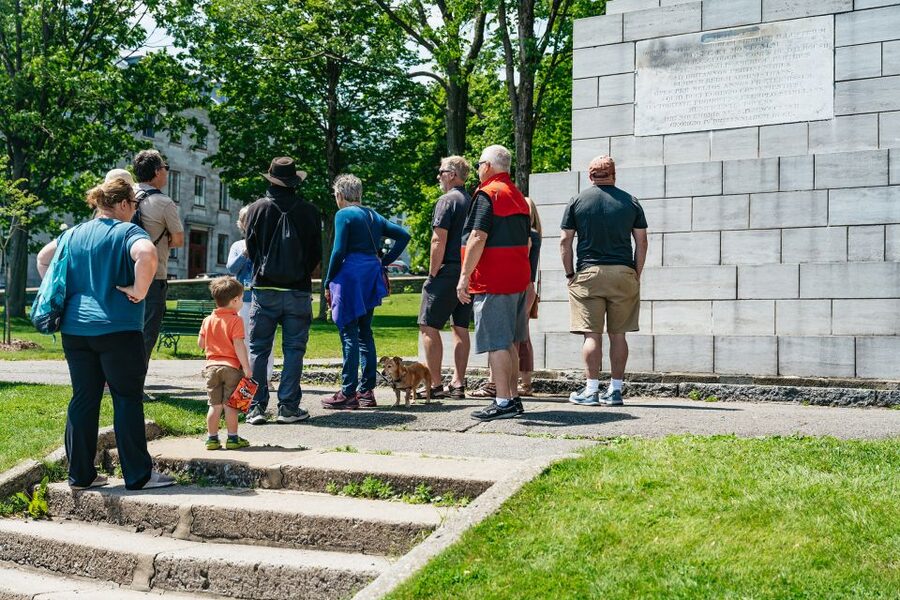
The walk then heads into Place Royale, identified as the oldest part of Quebec City. The mood changes at once. The scale becomes smaller, the streets feel more intimate, and the connection to Quebec’s early commercial and port life becomes easier to picture.
Place Royale is also where the tour’s broad story becomes more tangible. Instead of looking across the city from a terrace, you are surrounded by the buildings and lanes that give Old Quebec its character. The guide can help you notice architectural details that would be easy to pass without explanation.
This is a photo stop and a guided stop, but it is also a useful place to mark on your own map. You may want to return here for a slower walk, a meal, or another look at the streets once the group has moved on. The tour does not include drinks or snacks, so plan to buy anything you need before or after the walk.
Petit Champlain and the finish by the funicular
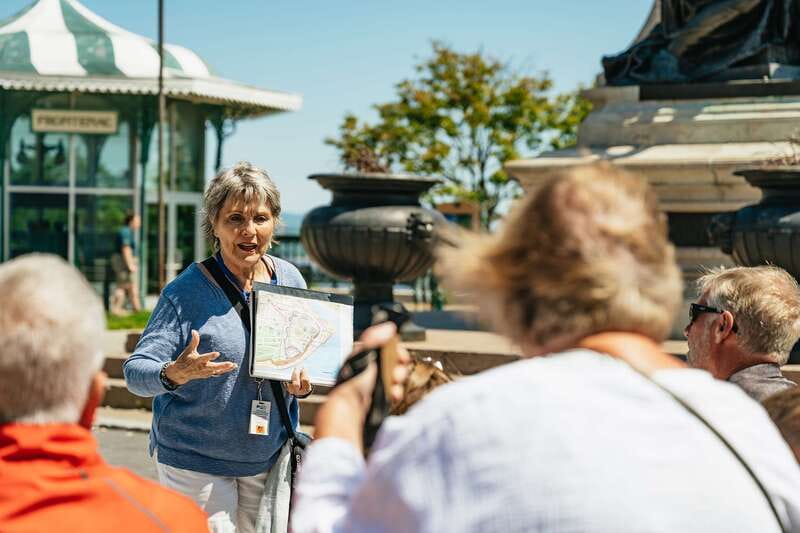
The route continues through Quartier Petit Champlain, one of the most recognizable parts of lower Old Quebec. The district is known for its narrow streets, old buildings, shops, and strong connection to the riverfront side of the city.
The tour ends near the Funiculaire du Vieux-Québec. That is a practical finish. You can use the funicular to move between the lower and upper areas, continue through Petit Champlain, or stop for food and shopping. The funicular itself is listed as the finishing point, not as an included ride, so check the fare and operating details separately if you plan to use it.
Ending here also gives you a better sense of how steep Old Quebec can be. The funicular is useful, but it does not remove all walking from the experience. If you have trouble with hills or uneven ground, consider this route carefully before booking.
What the guides add to the experience
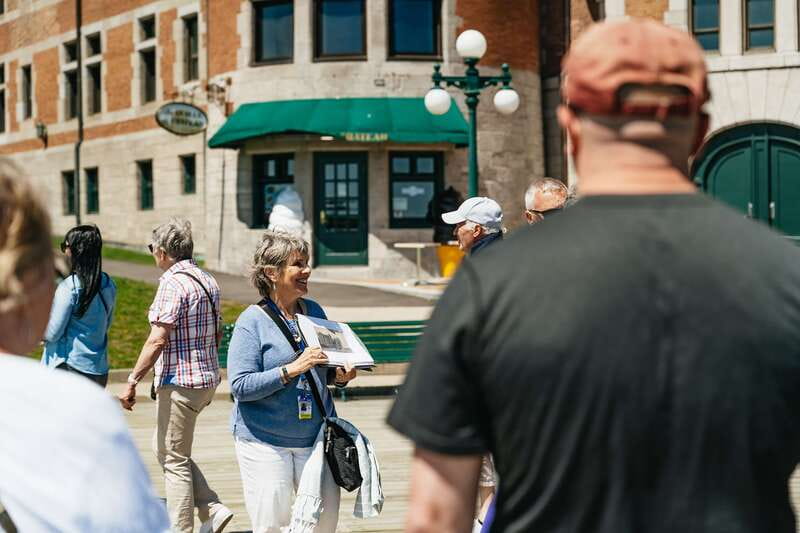
The guide is the make-or-break part of a walking tour, and this one has a strong record of individual personalities. Mark has been praised for balancing history, politics, culture, and humor. Yves is known for clear local commentary and for managing the group safely on hills and cobbles.
Francis has a reputation for lively storytelling, practical shopping and food suggestions, and an easy manner. Carole has been praised for detailed explanations, taking photographs for the group, and recommending places to continue exploring. Marc combines history and culture with an entertaining presentation, while Robert has handled rain with a backup plan and kept the walk worthwhile in poor weather.
You may also encounter guides such as Dominique, Christian, Tommy, Chantal, Louise, Anne, Paul, Stefan, Marie, Yvon, Elizabeth, or Jocelyn. The exact guide cannot be guaranteed, but the repeated praise for different members of the team suggests that the experience is not dependent on one single personality.
Guides speak English or French. They answer questions during the walk, though a group setting means you may need to stay close when the guide is speaking. One group found that hearing became slightly difficult at times with about 15 people. Stand near the guide if you want every detail.
Group tour or private walk?
The standard group tour is the better value for most first-time visitors. At $29 per person, you get a well-rounded introduction to the city and advice that can shape the rest of your stay. You also benefit from the energy of a small group, although the exact group size can vary.
The 2.5-hour private tour costs more, with the price not specified here, but it gives you a guide dedicated to your party. This is the better choice if your group wants to focus on architecture, food, military history, or less familiar places. It may also suit families who want to ask many questions or set a slower pace.
The private option is not a solution for mobility problems. Both versions involve Old Quebec’s hills, stone surfaces, and steps or uneven areas. The activity is not suitable for wheelchair users or people with mobility impairments.
Weather, clothing, and timing
The walk operates in all weather, with route changes possible in difficult conditions. Rain has not stopped guides from completing the experience, and winter departures continue through snow. That said, a weatherproof jacket, warm layers, and shoes with good grip will make a major difference.
Allow more time than the scheduled duration if you plan to stop for food afterward. The walk may last two hours or 150 minutes, and the finish near the funicular puts you in an area where you may want to keep exploring.
Children aged seven and younger may join free with a paying adult. From mid-October through April, a minimum of three people is required per booking. Check availability for starting times, especially if your schedule is tight.
Who should book this Old Quebec walk?
I would recommend it to first-time visitors, history fans, cruise passengers, couples, families with older children, and anyone who wants an efficient introduction before exploring alone. It is particularly useful if you want both upper-town views and lower-town streets in one outing.
You should choose it if you like learning as you walk and enjoy a guide who can add humor, local detail, and restaurant suggestions. You may prefer a private departure if your interests are specific or if you want more control over the pace.
I would not choose it for a flat, effortless stroll. The hills and cobbles are part of Old Quebec’s appeal, but they are also a real physical demand. The route may be called downhill, yet actual departures can include uphill sections, so be realistic about your comfort on uneven streets.
Should you book it?
Yes, if you want a reasonably priced first look at Old Quebec with a local guide who can connect the viewpoints, walls, churches, squares, and lower-town streets. The tour covers enough ground to orient you, then leaves you near the funicular and Petit Champlain with plenty of options for the rest of your day.
Book the group version for value and a broad introduction. Choose private if you want a more tailored focus on food, architecture, history, or local stories. Wear serious walking shoes, confirm the indoor meeting desk and address before arrival, and reserve early in your visit so the advice you receive can guide the rest of your Quebec City stay.
FAQ
How long does the Grand Walking Tour last?
The tour lasts about two hours, with some departures listed as 150 minutes. The private option lasts 2.5 hours.
What languages are available?
The tour is offered in English and French.
Where do I meet the guide?
Check in at the Tours Voir Quebec sales desk inside the Tourist Information Center. The supplied meeting information lists Rue Sainte-Anne addresses that may vary by option, so confirm the exact location with your booking.
Does the tour run in rain and snow?
Yes. The tour operates in all weather, although the route may be adjusted during poor conditions. Wear clothing suitable for the forecast.
Is the tour accessible for wheelchair users?
No. The tour is not suitable for wheelchair users or people with mobility impairments because of hills, cobblestones, and uneven streets.
Can children join the tour?
Children aged seven and younger may participate free with a paying adult. From mid-October through April, at least three people are required per booking.
Just added around Quebec City
- Stoneham: Nordic spa Thermal Experience★ 4.9 · 20 reviews
- Quebec City’s History in Virtual Reality★ 4.5 · 141 reviews
- Quebec : Old Town Walking Tour With A Local Guide★ 4.5 · 38 reviews
- Quebec: Christmas Interactive Walking Tour of New France★ 4.3 · 7 reviews
- Québec: Fortifications-of-Québec Guided Walking Tour★ 4.7 · 60 reviews
- Quebec Interactive Street Theatre: “Crimes in New France”★ 4.6 · 175 reviews
- Québec City: Weekend River Brunch Cruise★ 4.5 · 116 reviews
- Quebec City: Winter Walking Tour in Old Quebec★ 4.9 · 30 reviews
Quebec City Tours, compared.

Half-Day Trip to Montmorency Falls and Ste-Anne-de-Beaupré from Quebec city
Read our review →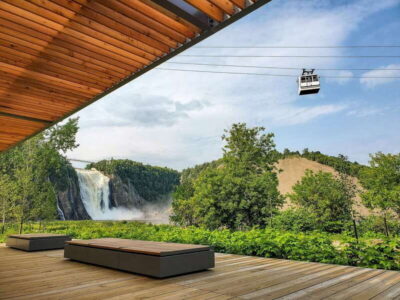
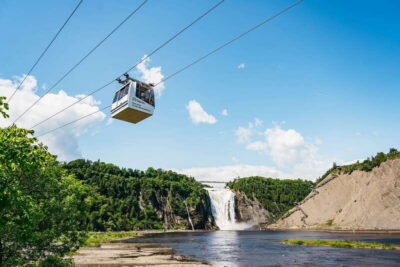
Montmorency Falls & Ile d’Orleans Half-Day Tour
Read our review →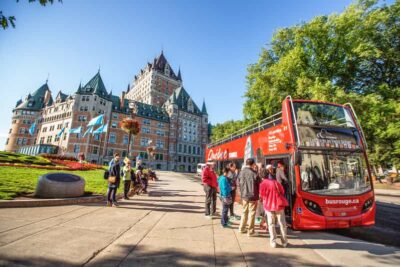
Hop-on Hop-off Open-Top Double Decker Bus Tour
Read our review →
Browse the lists this tour appears in