
Review · OTTAWA
Gatineau: Canadian Museum of History Admission
The Canadian Museum of History packs 15,000 years of Canada’s story into one striking riverfront building. Its biggest draw is the enormous Indigenous gallery, where monumental poles, traditional house fronts, art, and personal stories give far more weight to the country’s first peoples than a quick city museum stop usually allows.
I like the Canadian History Hall, with 1,500 authentic objects, and the fact that one admission also covers the Children’s Museum, special exhibitions, and Ciné+. The main drawback is size: four floors can swallow a full day, so two hours will give you only a brisk sample.
Key points to know before you go

- The monumental poles are the visual centerpiece: See the world’s largest indoor collection of totem poles and six traditional Northwest Coast house fronts.
- The Canadian History Hall covers 15,000 years: Personal stories and 1,500 objects connect national events to everyday lives.
- One ticket covers several attractions: Permanent galleries, special exhibitions, the Canadian Children’s Museum, and Ciné+ are included.
- The building is across from Parliament Hill: You can reach it from downtown Ottawa by foot, bicycle, public transit, car, or summer Aqua-Taxi.
- A $20 ticket can be good value: Plan several hours, since the admission is valid for one day rather than a short timed visit.
- Families get extra value: Children and youth aged 17 and under have free general admission during the Canada Strong Pass period from June 20 to September 2, 2025.
A riverfront museum with a bold Canadian shape

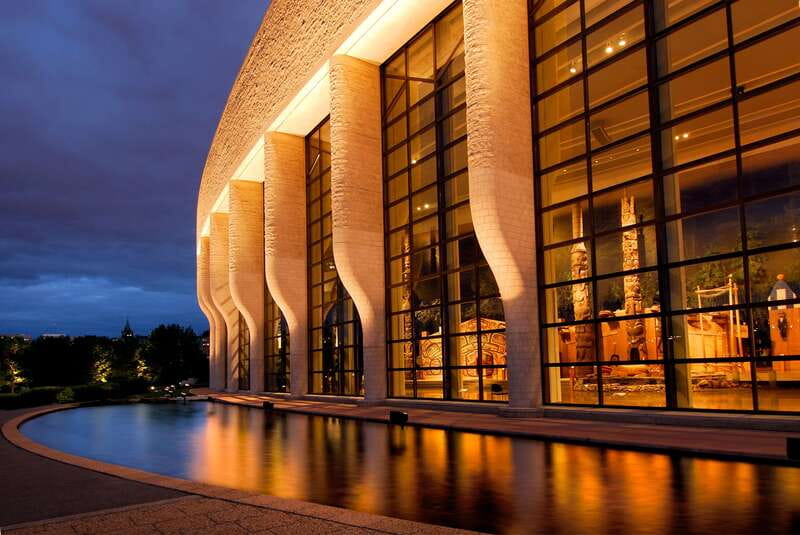
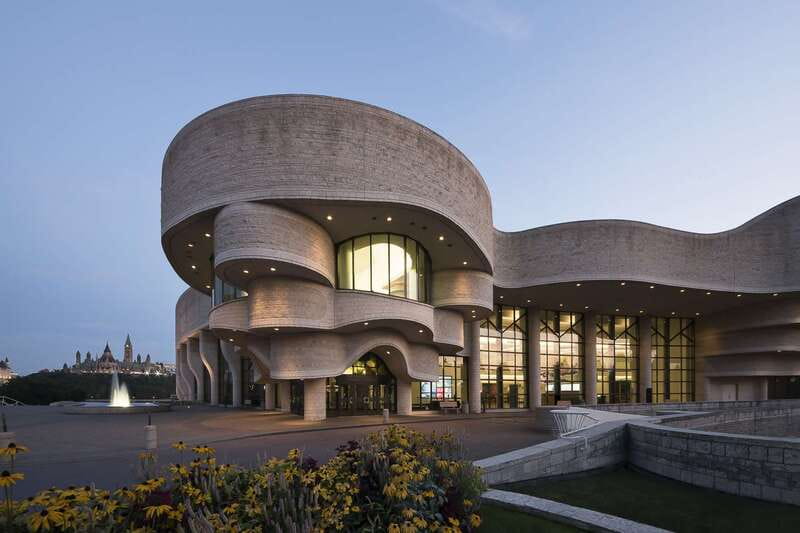
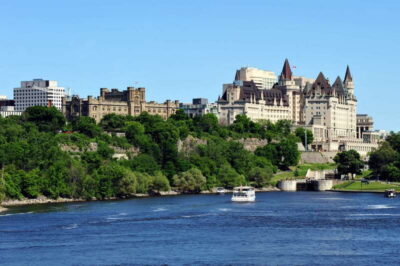
At 100 Rue Laurier in Gatineau, the museum sits directly across the Ottawa River from Parliament Hill. The setting matters. You are not tucked into a quiet side street or an anonymous exhibition hall. The building faces the capital and presents Canadian identity from the Quebec side of the river.
The building was designed by Indigenous architect Douglas Cardinal, whose work gives the museum a broad, sculpted form rather than a box of galleries. Even before you reach the first exhibit, the architecture signals that this is a national institution with a serious role in telling the country’s story.
The museum holds more than 4 million items, including archaeological material, cultural objects, works of art, documents, and audiovisual material. You will not see all of that collection, of course. The useful point is that the exhibitions are built from a very large national record, not from a small collection of decorative pieces.
I would allow at least three hours for the main galleries. If you want to see a special exhibition, watch a film, and give children time in their own museum, set aside most of the day. The admission is valid for one day, so there is no need to race through every room in a single short visit.
More museums and galleries in Ottawa:
- Ottawa: Canadian War Museum Admission
★ 4.7 · 232 reviews - Ottawa: Canadian Museum of Nature Admission
★ 4.6 · 226 reviews - Canadian War Museum Admission
★ 4.5 · 213 reviews
Start with the Indigenous galleries and monumental poles
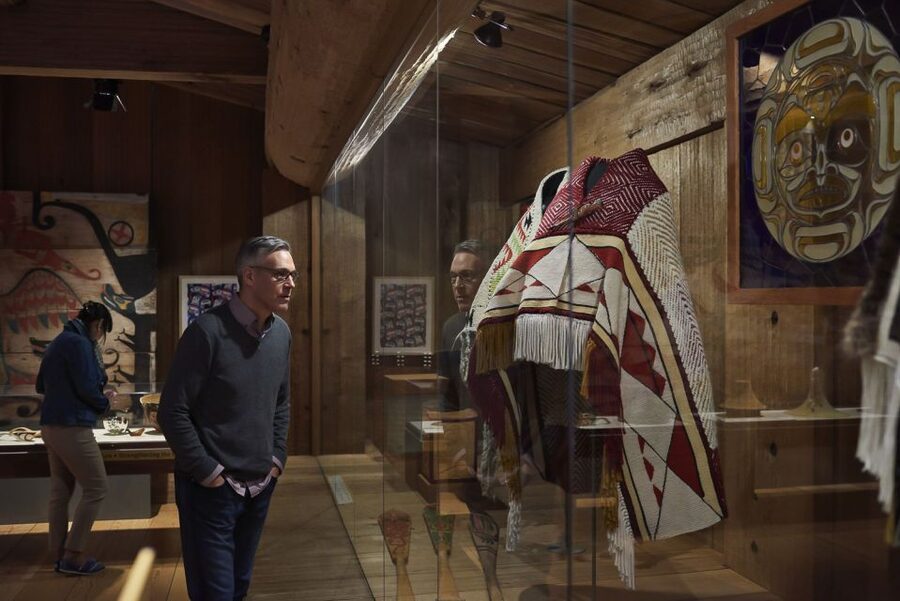
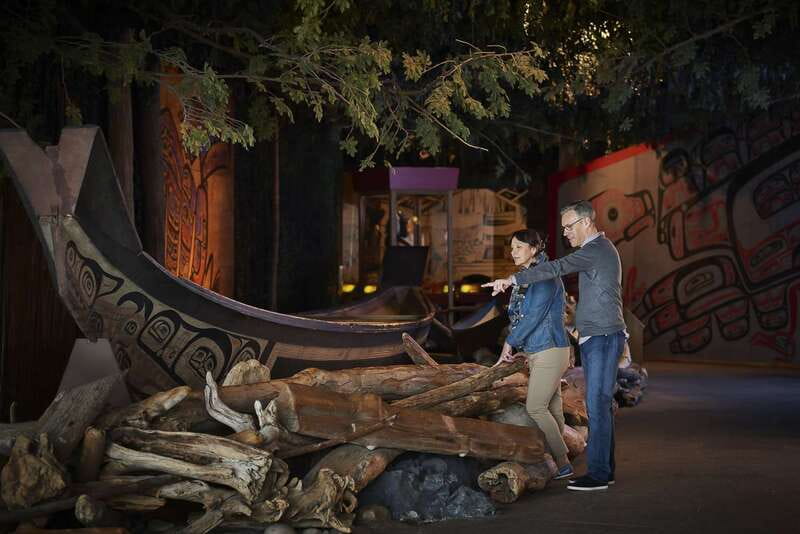
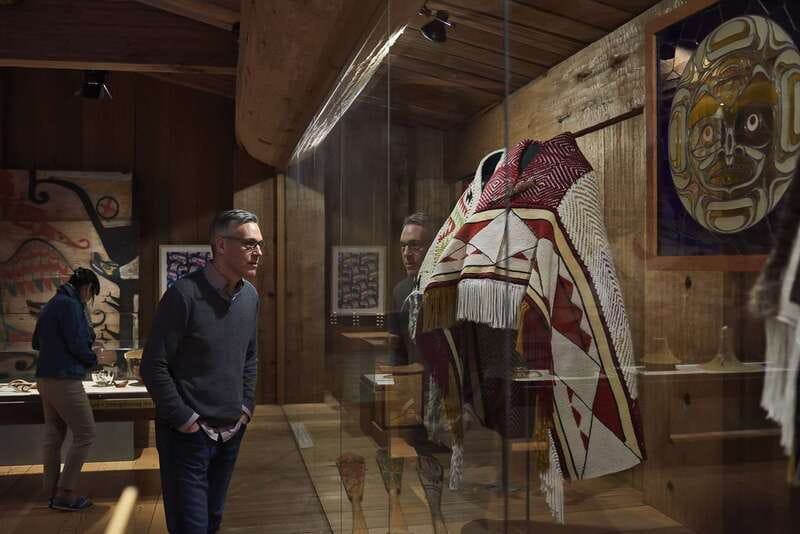
The Indigenous galleries are among the strongest reasons to choose this museum. The displays were developed in collaboration with Indigenous Peoples and focus on the resilience, variety, achievements, traditions, and continuing presence of Indigenous cultures across Canada.
The visual centerpiece is the world’s largest indoor display of monumental poles. These are not small craft objects placed in glass cases. Their scale changes the feel of the room and gives you a sense of the artistic and cultural traditions behind them.
Near the poles, six traditional Native house fronts are arranged like a 19th-century Northwest Coast village. This layout helps you read the objects as part of a community and built setting, rather than as isolated museum pieces. It is one of the places where the museum’s size works in your favor.
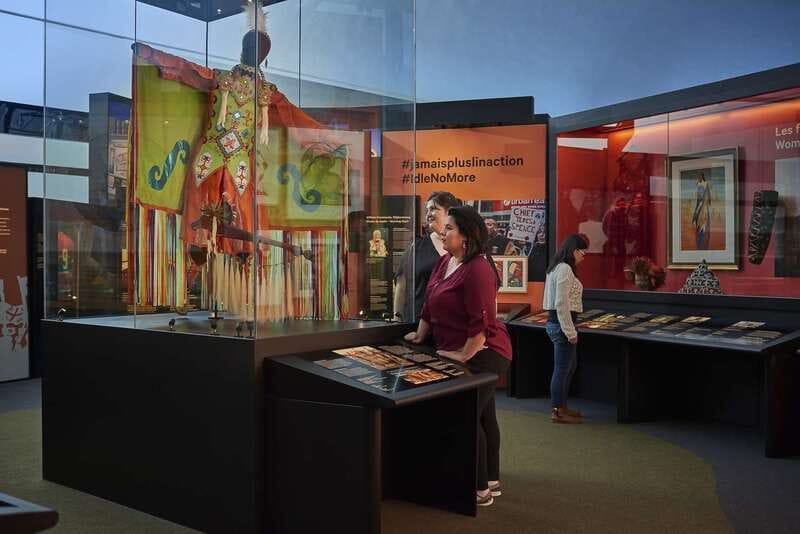
You will also find contemporary Indigenous art and a gallery devoted to the achievements and traditions of Indigenous Peoples. The range is important. The displays are not limited to the distant past, and they do not treat Indigenous cultures as a single group with one shared story.
Give this section time. If you have only two hours, do not spend the entire visit chasing every temporary display before seeing the poles and house fronts. They are the museum’s most distinctive collection and the part most difficult to replace with another Ottawa area attraction.
Follow 15,000 years through the Canadian History Hall
The Canadian History Hall is the museum’s central chronological route. It takes you through 15,000 years of social history using personal stories and 1,500 authentic artifacts, many identified as national treasures.
That approach gives the broad subject a human scale. Instead of treating Canada as a list of dates, the hall connects large events, political change, migration, conflict, work, and daily life to individual experiences. You can move from early societies to French and British colonial periods, then into modern Canada.
This is also where the museum asks you to look at the country with more than simple pride. The displays celebrate Canadian achievements while addressing darker chapters. The treatment of First Nations, French and British colonies, and modern Canada is detailed and reflective rather than purely ceremonial.
You should expect a lot of information. The hall rewards visitors who read labels, but it can feel demanding if you are already tired or traveling with young children. I suggest choosing a few periods to study closely instead of trying to memorize the entire national story.
A visitor with only two hours can still make the hall worthwhile. Move at a steady pace, select the sections that match your interests, and leave time for the Indigenous galleries. A full day gives you room to read more carefully and compare the different voices used throughout the museum.
Special exhibitions add a reason to return

The museum hosts major international exhibitions, often made with well-known institutions from around the world. The exact offering changes, so you should check what is showing on your chosen date before booking.
This changing program can make a return visit worthwhile. The permanent galleries provide the national framework, while the special exhibitions may shift your attention to another culture, historical period, artist, or global issue.
There is one practical tradeoff. A special exhibition can take a large part of your visit, especially if it has a long route or a lot of text. If your main goal is Canadian history, visit the permanent galleries first. If the temporary exhibition is the reason you are coming, plan around it and treat the other galleries as an added benefit.
The ticket includes access to special exhibitions, but food and drinks are not included. Food and drinks are also not allowed inside the museum galleries. Plan a break outside the exhibit areas if you need one during a long visit.
More history-led days in Ottawa:
- Ottawa : Historic Tour of the Ottawa Jail Hostel
★ 4.7 · 78 reviews - Victoria Guided Food and History Tour
★ 5.0 · 2,015 reviews - Gastown Historic Walking Food Tour
★ 5.0 · 1,863 reviews - Vancouver: Gastown Historical Walking Food Tour
★ 4.8 · 539 reviews
Families get a second museum inside the first
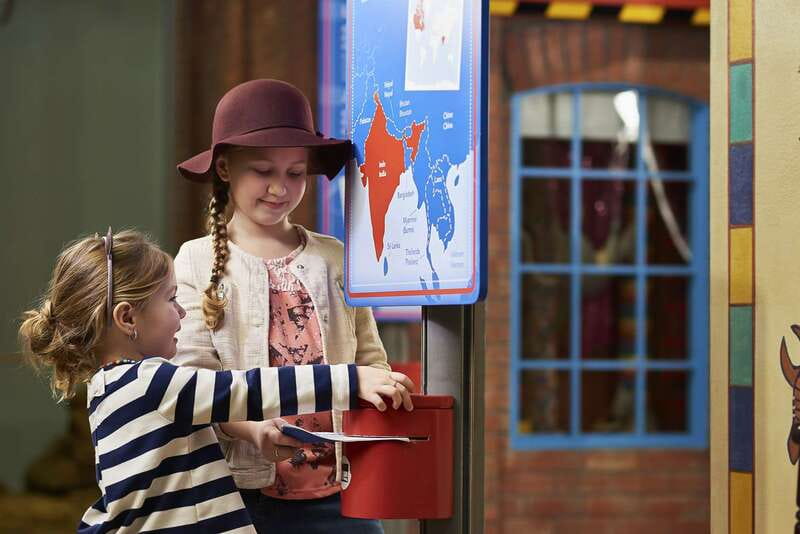
The Canadian Children’s Museum is included with admission, making this a stronger family choice than a standard adult history museum. It lets children explore the world through play while adults spend time with the larger historical displays.
This matters because the main galleries are extensive and text-heavy. A child who has reached their limit with artifacts and historical labels can shift to a more active setting without the family buying another ticket.
Children under 12 need an adult escort, while children aged 12 and older can visit the museum by themselves. The general rule is useful for older children who want some independence, but families should still plan their own meeting arrangements if they split up.
The Canada Strong Pass also affects the price for the stated 2025 summer period. From June 20 through September 2, 2025, children and youth aged 17 and under receive free general admission, and young adults aged 18 to 24 receive 50 percent off. Proof of age may be required. These discounts do not apply to group bookings, summer camps, or birthday parties.
Because this offer has specific dates, do not assume it applies outside that period. For a family visiting during the eligible summer window, it can change the value calculation considerably.
Ciné+ gives your feet a break
Ciné+ is included too, with larger-than-life documentary films. This is more than a small bonus if you are visiting for several hours. A film gives you a seated pause between galleries and can add moving images to subjects that may feel abstract in display cases.
Film schedules can vary, so check the day’s offerings when you arrive. Since the activity information does not specify the film length or start times, I would not build your entire schedule around Ciné+. Think of it as a useful addition rather than the main reason to buy the ticket.
The combination of galleries, children’s activities, and cinema is one of the ticket’s best features. You get several kinds of museum visit in one building, which is especially helpful on a rainy day or when you want an indoor activity with different age groups.
How to plan the visit from Ottawa
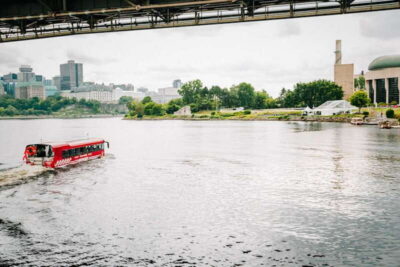
The museum is easy to combine with a day in Ottawa. It is across the river from Parliament Hill, and you can reach it from downtown Ottawa by walking, cycling, public transit, driving, or taking the Aqua-Taxi in summer.
The Aqua-Taxi is seasonal, so do not count on it outside summer. Driving is possible, but parking costs extra and is not included in the $20 admission. If you are already in central Ottawa, compare the parking cost and traffic with public transit or a walk before choosing the car.
The address is 100 Rue Laurier, Gatineau, Quebec. That makes the museum a straightforward stop for visitors staying in Ottawa, but remember that you are crossing into Quebec. The exhibits and the wider setting make the crossing worthwhile, particularly if you are interested in Indigenous cultures, Canadian politics, architecture, or national history.
The museum is open seven days a week and closed on Christmas Day. Exact starting times and availability should be checked for your date, since the ticket is valid for one day and the practical schedule can affect how much you see.
Wear comfortable shoes. The building’s four floors and long gallery route make this simple advice worth following. A complimentary coat check is included, which helps in cold weather and keeps bulky jackets from becoming a nuisance in crowded exhibit spaces.
The museum is wheelchair accessible. Smoking, food, drinks, and pets are not allowed, although assistance dogs are permitted.
Is $20 good value for one day?
At $20 per person, the admission is fairly priced if you use more than one part of the museum. The Canadian History Hall alone can fill a serious visit, and the Indigenous galleries add a collection that is unusual in both scale and presentation.
The value improves for families because the Children’s Museum is included. It improves again if you attend a special exhibition or a Ciné+ film. You are not paying for a short guided walk with a fixed end time. You are buying access for one day and can set your own pace.
The ticket is less attractive if you have only a brief window and mainly want to see one famous object. A two-hour visit is possible, and one person used that amount of time to see the Canadian history exhibition, but you will need to be selective. If you are crossing from Ottawa only to rush through a few rooms before another appointment, the price may feel less impressive.
The free cancellation policy also reduces the risk of booking ahead. You can cancel up to 24 hours in advance for a full refund, and the reserve now, pay later option lets you keep plans flexible. Those terms are practical, but the real value still depends on giving the museum enough time.
Who will get the most from this museum?
I would recommend it first to anyone who wants a serious introduction to Canada rather than a quick collection of famous objects. The Canadian History Hall gives you a broad national route, while the Indigenous galleries add depth and different voices.
It is also a strong choice for families. Children have their own play-focused museum, older children can visit independently from age 12, and Ciné+ offers another way to keep the day varied.
Architecture fans should add it to their list because of Douglas Cardinal’s design. Visitors interested in Indigenous art and culture will find the monumental poles, house fronts, contemporary art, and dedicated gallery especially worthwhile.
The main caution is attention span. If you prefer tiny museums that can be covered in an hour, this may feel too large. The museum asks you to choose priorities. That is not a flaw, but it is something to plan for.
A 4.8 out of 5 rating based on 230 reviews reflects the museum’s broad appeal, and the strongest praise centers on how much there is to learn, from First Nations to French and British colonial periods and modern Canada. That matches the practical experience you should expect: the museum is detailed, serious, and best enjoyed without a tight schedule.
Should you book the Canadian Museum of History?
Book it if you have at least half a day, want context for Canada’s past, or are looking for a family-friendly indoor stop across from Parliament Hill. The Indigenous galleries and monumental poles alone make the visit distinctive, while the Canadian History Hall gives you a clear route through 15,000 years.
Skip it only if your Ottawa schedule leaves you with barely an hour or if you dislike large museums with substantial reading. For everyone else, $20 buys a full day of options, and the ticket becomes especially good value when you add the Children’s Museum, a film, and a special exhibition.
FAQ
Where is the Canadian Museum of History located?
It is at 100 Rue Laurier in Gatineau, Quebec, across the Ottawa River from Parliament Hill.
How much does admission cost?
Admission is $20 per person.
How long is the admission valid?
The admission is valid for one day.
What does the ticket include?
It includes the Canadian Museum of History, permanent galleries, special exhibitions, the Canadian Children’s Museum, Ciné+, the multilingual Museum Guide app, and complimentary coat check.
Is the Canadian Children’s Museum included?
Yes. Access to the Canadian Children’s Museum is included with admission.
Is Ciné+ included?
Yes. The ticket includes access to Ciné+ and its larger-than-life documentary films.
Is the museum open every day?
The museum is open seven days a week and closed on Christmas Day.
Can children visit without an adult?
Children aged 12 and older can visit the museum by themselves. Children under 12 need an adult escort.
Is the museum wheelchair accessible?
Yes. The museum is wheelchair accessible.
Just added around Ottawa
- Ottawa Valley Haunted Tour – Night Trip From Ottawa★ 4.5 · 5 reviews
- Flying Dress Photoshoot Experience in Ottawa★ 5.0 · 11 reviews
- Full-Day Montreal City Tour from Ottawa and optional city cruise★ 4.5 · 7 reviews
- Cycling Ottawa’s 200th Anniversary, self-guided★ 5.0 · 45 reviews
- Ottawa Premium Night Driving Tour with River Cruise★ 4.5 · 25 reviews
- Ottawa Small Group Walking Tour with Cruise and Art Gallery★ 3.5 · 21 reviews
- Guided ByWard Market Food Tour★ 5.0 · 21 reviews
- Best of Ottawa Neighbourhoods & Nature Bike Tour★ 5.0 · 34 reviews
Ottawa Tours, compared.



Browse the lists this tour appears in