
Review · CALGARY
Studio Bell General Admission: Home of the National Music Centre
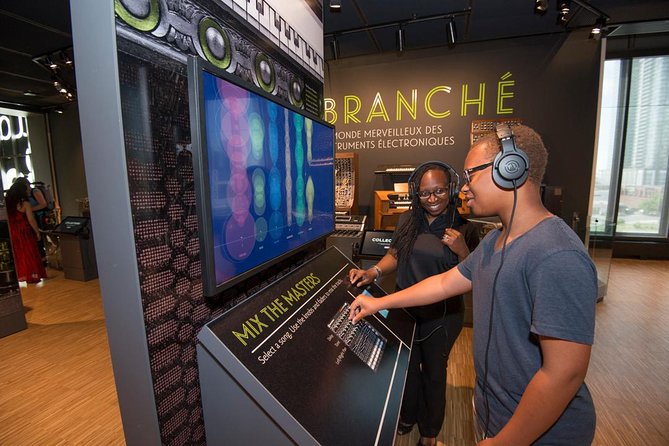
Studio Bell turns Canadian music into something you can hear, touch, and try. Across five accessible floors and 22 exhibition stages, you can test instruments, experiment with sound mixing, sing into interactive displays, and trace Canada’s musical story from its roots to today.
I especially like the chance to discover artists beyond the usual names, plus the striking modern building and its city views. The exhibits also work well for families because children can do more than read labels. The main consideration is time: this is a self-guided cultural attraction, not a tight, led tour, so visitors who prefer a single polished narrative may need to create their own route.
Key points to know before you go

- Five floors of hands-on music: Play instruments, experiment with sound, and take part at your own skill level.
- Four Canadian Halls of Fame: See historic artifacts connected with major Canadian musical achievements.
- A strong Calgary photo stop: The modern architecture and city views add value even if music is not your main interest.
- Rare instruments and demonstrations: Regular tours feature demonstrations with unusual and historic instruments.
- Good for mixed-age groups: Children have interactive activities, while adults can explore memorabilia and Canadian music history.
- Plan for a flexible visit: Admission covers the exhibitions, but food, parking, guided tours, and artist recording spaces cost extra or are not included.
Why Studio Bell feels different from a standard music museum
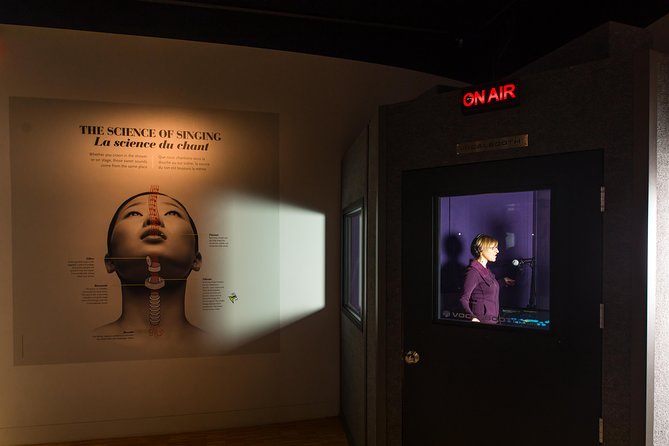
Many music museums ask you to look at instruments behind glass. Studio Bell gives you chances to make noise. That simple change matters. You are not only reading about sound production or famous performers. You can try an instrument, adjust audio, or sing your way through parts of the exhibits.
The National Music Centre’s purpose is to support the love, sharing, and understanding of music in Canada. At Studio Bell, that mission appears in several forms: exhibitions, education programs, performances, artist development, and music preservation. You may come for a short visit and leave with a list of musicians you want to hear later.
The Canadian focus is a major strength. You will find familiar names such as Celine Dion and Gordon Lightfoot, but the displays also point toward artists and musical styles that may be new to you. I like this approach because it avoids treating Canadian music as a short list of international stars. It gives you a wider view of the country’s musical contribution.
The visit is also not limited to one genre. The available material covers Canadian music from its roots to the present, with memorabilia and educational content spread through the galleries. If your taste runs from popular music to older instruments and other styles, you should find several different entry points.
A few more Calgary half-days to weigh up
- Lake Louise, Moraine Lake, Banff Tour from Calgary/Canmore/Banff
★ 5.0 · 2,792 reviews - Calgary: 3-Hour Sightseeing Bus Tour
★ 4.7 · 940 reviews - Explore Banff National Park with Our Premium Day Tour
★ 5.0 · 777 reviews
Entering Studio Bell in Calgary’s East Village
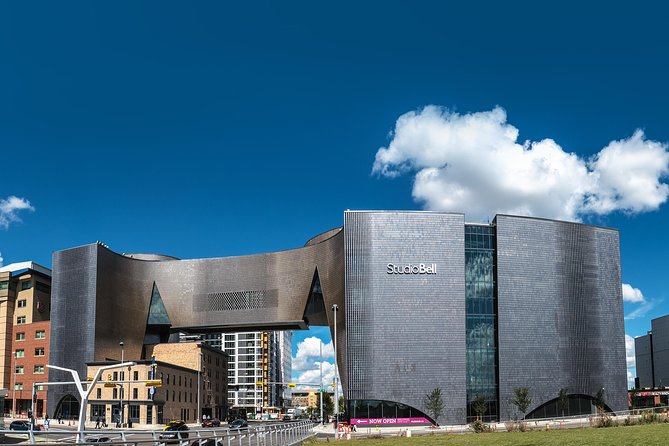
Studio Bell is in Calgary, and the building itself is part of the experience. Its modern architecture is a reason to bring your camera, even before you reach the exhibits. City views add another layer, especially for anyone who enjoys seeing how a cultural building fits into its surroundings.
The attraction is near public transportation, which makes it practical to reach without relying on a car. Parking is not included, so public transit can be the simpler choice if you are building a day around central Calgary attractions. The nearby Calgary Public Library is also noted as a worthwhile architectural subject, giving photographers another nearby point of interest.
Once inside, expect a large attraction rather than a small collection you can finish in 30 minutes. Five floors and 22 individual exhibition stages give you room to set your own pace. You can move quickly through familiar material, then slow down when an instrument or recording catches your attention.
The open-ended layout is both a benefit and a small challenge. There is freedom to follow your interests, but you should not expect a guide to lead you from one display to the next. Take your time at the entrance and decide whether you want a broad first pass or a slower visit focused on particular exhibits.
Five floors built for listening and participation
The galleries are designed for different ages and abilities. That does not mean every activity will appeal equally to every person, but it does make Studio Bell easier to share with a family or mixed group. One person can examine historic artifacts while another tries an interactive station nearby.
You may be able to play an instrument, work with sound mixing, or sing through an exhibit. These activities give children a reason to stay engaged, while adults can use them to understand how music is made rather than simply seeing the finished product.
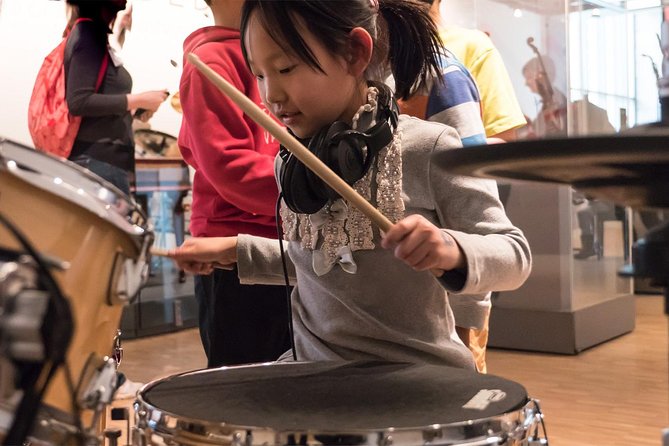
I would allow more time than you think you need if you enjoy hands-on displays. Interactive stations often create small queues within your own group because everyone wants a turn. You do not need to be a musician. The activities are intended for all skill levels, and the point is participation rather than performance.
The galleries also encourage you to listen for unfamiliar sounds. Studio Bell is not only about famous recordings or well-known performers. Its displays can lead you toward new musicians, instruments, and forms of music. Make a note of artists you do not recognize, then follow up with their work after your visit.
That follow-up is part of the attraction’s value. A good music museum gives you more than information for one afternoon. It sends you home with new listening ideas. The Canadian focus makes this especially useful if your knowledge begins and ends with a few major names.
The four Canadian Halls of Fame
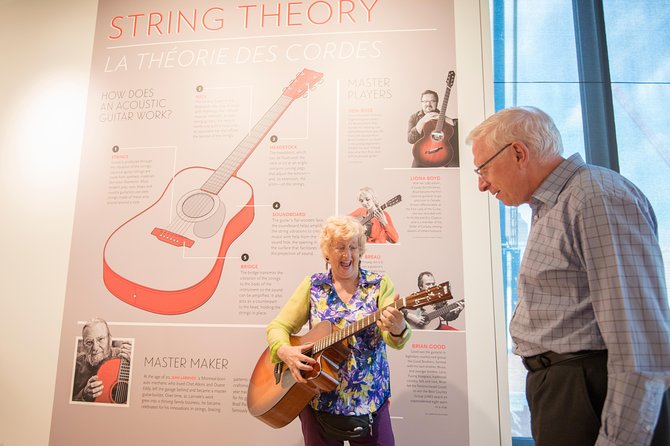
The four Canadian Halls of Fame provide the clearest connection to the country’s celebrated musical figures. You will see historic artifacts and learn how different artists and styles fit into Canada’s larger music story.
These displays work best if you give yourself time to read. The exhibits are laid out to be informative, and the memorabilia gives a physical presence to people whose work you may already know from recordings. For Canadian music fans, this is likely to be one of the most important parts of the visit.
For international visitors, the halls offer helpful context. You may recognize Celine Dion or Gordon Lightfoot, but the displays can introduce you to other names. That is one of the reasons I would not treat Studio Bell as only a local attraction. It presents music as part of Canada’s national identity.
The halls are also useful for families. Children may not know the artists, but the objects and visual material create an opening for conversation. You can explain how music changes across generations, how artists become influential, and why certain recordings remain important.
Do not expect every part of the attraction to feel equally energetic. Hall of Fame displays naturally involve more looking and reading than the sound-based stations. That contrast is useful, but it means the visit has a slower museum side as well as its playful side.
Same base, a completely different sort of day:
- Discover Banff National Park – Premium Day Trip
★ 5.0 · 682 reviews - Lake Louise Moraine Lake Day Trip from Banff Calgary Canmore
★ 5.0 · 650 reviews - Calgary/Canmore: Banff National Park & Lake Louise Day Trip
★ 5.0 · 491 reviews - Lake Louise Moraine Lake Emerald Lake Yoho Banff National Park
★ 5.0 · 408 reviews
Rare instruments and live demonstrations
Studio Bell includes rare instruments and regular tours featuring demonstrations with unusual instruments. The available information does not promise a guided tour with your admission, so check the day’s schedule before you count on a particular demonstration.
A demonstration can change how you understand an object. A historic instrument behind glass is interesting. Hearing what it can do gives you a clearer sense of its purpose, design, and place in music. One particularly praised part of the experience is the Kimball organ performance, which can be a highlight if it is offered during your visit.
Because demonstrations are schedule-dependent, ask about them when you arrive. This is one of the few practical details that can shape your day. If a rare-instrument presentation or organ performance is important to you, plan your gallery time around it rather than wandering without checking.
The distinction between demonstrations and guided tours is worth keeping clear. Admission includes access to the five floors of exhibitions, but guided tours are not included. You may find regular tours or demonstrations available, but the ticket itself should be treated as general admission.
What the visit is like for children and adults
Studio Bell has a useful balance for groups with different interests. Children can experiment with instruments and sound. Adults can spend more time with artifacts, Hall of Fame displays, and the wider story of Canadian music.
The hands-on activities also remove pressure. You do not need to arrive with a strong background in music theory. Someone who has never played an instrument can still take part, while a serious music fan can look more closely at the equipment and exhibits.
I would describe the experience as educational without making it feel like a classroom. The best moments come when information and action meet. You read about a kind of music, then hear a sound or test an activity that makes the idea easier to grasp.
The building adds to the family appeal because there are visual details to notice beyond the displays. The modern design is worth photographing, and the city views provide a natural pause between floors. If children lose interest in a long reading section, a change of setting or an interactive station may help.
Still, very young children may not have the attention for all five floors, and adults who want a quiet museum experience may find the interactive areas lively. The attraction welcomes all ages and abilities, but each visitor will naturally spend more time in different sections.
How much time should you set aside?
The experience is listed as about one day, with opening hours from 10 a.m. to 5 p.m. daily for the stated 2026 season. That gives you a broad window, but you do not have to spend every open hour inside.
A shorter visit can work if you select a few floors, focus on the Halls of Fame, and try several interactive stations. A full visit makes more sense if you want to read the displays, attend a demonstration, photograph the architecture, and allow time for children or companions to choose their own activities.
I would avoid arriving near closing if Studio Bell is a priority. Five floors can take longer than expected, especially when every person in your group wants a turn at the interactive exhibits. A morning arrival gives you the most flexibility and leaves room for another Calgary activity later.
Check nmc.ca/whats-on before visiting for special concerts and event listings. These events may give your day a performance element, but they are separate from the basic general admission experience. Do not assume a concert, artist program, or recording-space visit is part of the ticket.
Value, practical details, and limits
The value depends on how actively you use the building. If you rush through the displays, take a few photographs, and leave without trying the stations, the admission may feel less worthwhile. If you stay for the exhibits, sound activities, historic artifacts, and a demonstration, you get a fuller cultural outing.
I see the strongest value in the range of experiences included: five floors, hands-on activities, Canadian Halls of Fame, rare instruments, and architecture. You are paying for more than a row of cases. You are getting a place where music is presented through objects, sound, performance, and participation.
Food and drinks are not included, so plan those separately. Parking is also not included, and artist recording spaces are not part of general admission. These exclusions are easy to overlook if you assume the whole building is open under one ticket.
The venue is near public transportation, and service animals are allowed. Most people can participate, and the five floors are described as accessible. If you have a specific access need, confirm the details with the National Music Centre before booking, since the available information does not describe every individual exhibit.
The booking terms are friendly if your plans might change. You can cancel at least 24 hours before the local start time for a full refund. A cancellation or change made within 24 hours is not refunded or accepted.
Who should book Studio Bell?
I would recommend Studio Bell to anyone interested in Canadian music, especially visitors who want more than a list of famous names. It is also a smart choice for families, photographers, casual music fans, and people who enjoy trying things rather than only reading about them.
It suits a flexible afternoon or a full day. You can combine it with nearby attractions, use public transportation, and decide how deeply to explore once you arrive. The building and city views give non-musicians a reason to visit, while the instruments and sound stations give music fans plenty to investigate.
I would be more cautious if you want a tightly organized guided tour with a single narrator. General admission is self-directed, and guided tours are not included. You should also check the schedule if the Kimball organ or a rare-instrument demonstration is a major reason for your visit.
With a 4.4 rating and 94 percent recommendation rate, the attraction has a strong record, but the best match is still personal interest. Book it if you want an active, Canadian-focused music museum with room to explore. Skip it if you have only a short Calgary stop and prefer a quick landmark visit with no reading or experimentation.
FAQ
Where is Studio Bell located?
Studio Bell is in Calgary, Alberta, and is home to the National Music Centre. It is near public transportation.
How long does a visit to Studio Bell take?
The experience is listed as approximately one day. Opening hours are 10 a.m. to 5 p.m. daily during the stated 2026 operating period.
What does general admission include?
Admission includes five floors of exhibitions celebrating music in Canada, interactive activities, four Canadian Halls of Fame, rare instruments, and access to the building’s architecture and city views.
Are guided tours included?
No. Guided tours are not included in the general admission experience. Regular tours featuring demonstrations with rare instruments may be available, so check the schedule when you arrive.
Can I play instruments at Studio Bell?
Yes. Interactive activities include opportunities to play an instrument, try sound mixing, and sing. The activities are intended for all ages and skill levels.
Are the exhibits suitable for children?
Yes. The attraction includes interactive music activities and educational material for children. Most people can participate.
Are all five floors accessible?
The experience describes five accessible floors of exhibitions. If you have a specific access question, confirm details with the National Music Centre before visiting.
Is food included with admission?
No. Food and drinks are not included.
Is parking included?
No. Parking is not included. The venue is near public transportation.
Can I visit artist recording spaces?
No. Access to artist recording spaces is not included with general admission.
Can I cancel for a full refund?
Yes. You must cancel at least 24 hours before the experience’s local start time for a full refund. Cancellations or changes made within 24 hours are not refunded.
Just added around Calgary
- Calgary YYC Airport to Jasper, Alberta – Private Shuttle★ 5.0 · 4 reviews
- Transfer to Canmore & Banff: Yamnuska Wolfdog Sanctuary Tour★ 4.5 · 4 reviews
- Airport Shuttle: Calgary Airport <—-> Downtown Calgary★ 5.0 · 19 reviews
- Emerald Lake, Takakkaw Falls, Lake Louise with Banff Explorer★ 5.0 · 18 reviews
- Western Classic – One Way Calgary To Vancouver Rockies Bus Tour★ 5.0 · 9 reviews
- From Calgary to Waterton National Park Nature History and Wonders★ 5.0 · 22 reviews
- Calgary YYC Airport to Lake Louise – Private Shuttle★ 5.0 · 10 reviews
- 1 Hour Shared Winter Sleigh Ride Experience in Kananaskis★ 4.5 · 14 reviews
Calgary Tours, compared.

Lake Louise, Moraine Lake, Banff Tour from Calgary/Canmore/Banff
Read our review →

Explore Banff National Park with Our Premium Day Tour
Read our review →
Discover Banff National Park – Premium Day Trip
Read our review →
Lake Louise Moraine Lake Day Trip from Banff Calgary Canmore
Read our review →
Calgary/Canmore: Banff National Park & Lake Louise Day Trip
Read our review →
Lake Louise Moraine Lake Emerald Lake Yoho Banff National Park
Read our review →
Calgary City Highlights 3 Hour Walking Tour | Gratuity-Based
Read our review →Browse the lists this tour appears in