
Review · SAINT JOHN NEW BRUNSWICK
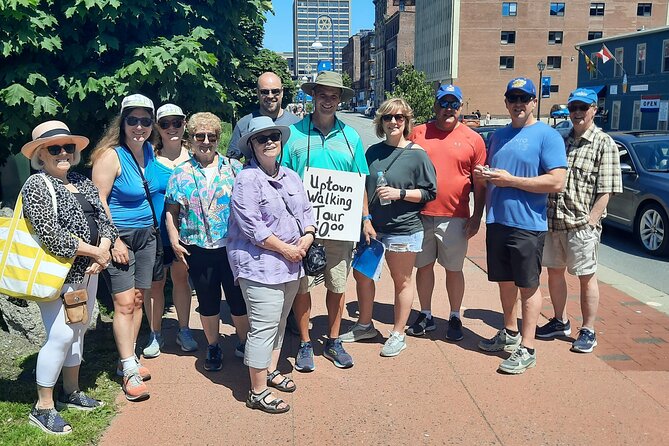
Pete’s Historic Walking Tour
Saint John’s story is told best in small pieces: a mass of metal left by the Great Fire, carved heads on an old bank, a ship model in Market Square, and murals tucked along Charlotte Street. Pete Ferguson connects these details to the city’s past, from the Loyalist Landing in 1783 through the port’s present-day cruise business. I especially like the rare photo copies and Pete’s personal view of the city, shaped by a lifetime here and 35 years owning Pete’s Pub. The main caution is time: this is a talk-heavy 2.5-hour walk, so it suits you if you enjoy stopping to listen more than covering a large area quickly.
I also like the practical route. It visits many central sights without demanding a hard climb, and the group is capped at 20 people. The tour is reasonably priced at $33.80 per person, though some of your time is spent standing outside buildings rather than going inside them.
Key points to know before booking
- Pete Ferguson brings local connections: His personal stories and familiarity with Saint John give the tour a neighborhood feel.
- The walk covers 1783 to the present: You’ll hear about Loyalist settlement, the Great Fire, Irish immigration, business families, theaters, churches, and the cruise port.
- Rare photos add visual context: Copies of old photographs help you picture places that have changed.
- The route is easy for most people: Pedways, escalators, and an elevator can help avoid the steepest hills.
- You visit both famous and easy-to-miss sights: Market Square and Trinity Church share time with murals, carved stone heads, and the Three Sisters Lamp.
- Expect a full 2.5 hours of storytelling: Morning and afternoon departures make it easier to fit into a cruise stop or city visit.
Starting beside Water Street with a local guide
The tour begins at Duke Street and Water Street, near the route toward Market Square. Pete starts with a short stop at Furlongs liquor store, an ordinary-looking place that becomes part of his broader story of Saint John’s streets and local life.
That opening tells you what kind of tour this is. You are not simply moving from one grand monument to another. Pete uses storefronts, corners, old buildings, and personal memories to explain how Saint John developed. His background as the former owner of Pete’s Pub also gives him plenty of stories about sports, entertainment, and the people who helped shape the uptown scene.
The guide’s speaking style matters on a walking tour. Pete is reported to project his voice well, even when people are spread out in the group, and the maximum group size is 20. That is small enough to keep the presentation manageable without making it a private tour.
More history-led days in Saint John New Brunswick:
- Admission 1 person – Visit of the Acadian Historic Village
★ 4.5 · 40 reviews - Mi’kmaq Heritage Path Tour
★ 5.0 · 23 reviews - Family visit to the Acadian Historic Village
★ 4.5 · 7 reviews
Market Square and the city’s defining moments
At Market Square, Pete points out where the Loyalist Landing took place in 1783. This gives you an important starting point for Saint John’s colonial story. He also explains where the Great Fire began and identifies the location connected with the walkabout by Prince Charles and Lady Diana.
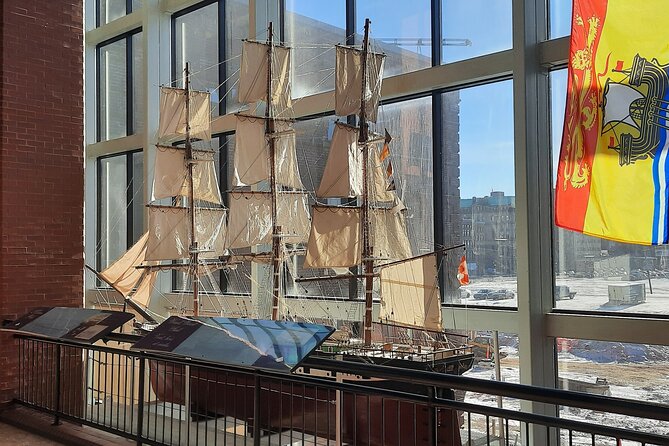
You also see the Marco Polo sailing ship model inside Market Square. Pete explains the ship’s story, adding a maritime thread to the political and civic history covered outside. The model is a compact display, but it works well as a visual aid because it gives you something concrete to study while hearing about Saint John’s connection to the sea.
The stop lasts about 15 minutes. You may have a little time to look around Market Square, but do not expect a long shopping break. If browsing local products is high on your list, plan to return later, especially since market hours can be limited on Sundays.
City Hall and Pete’s own Saint John story
At Saint John City Hall, Pete explains the story of Pete’s Pub, which he owned for 35 years. This is one of the more personal sections of the tour. Instead of hearing only about civic dates and architecture, you get a sense of how Saint John functioned as a real community, where local sports, entertainment, and familiar faces mattered.
This stop lasts about 15 minutes, and it can be especially appealing if you prefer social history to a list of dates. Pete’s connection to the city is one of the tour’s strongest features. He is often recognized by people along the route, which adds a genuine local feel without turning the walk into a staged performance.
The tradeoff is pace. Pete spends time on stories that some people find entertaining and others may consider longer than necessary. If you prefer a brisk sightseeing circuit, this section may feel like more pub history than you need.
Saint John City Market and the Charlotte Street murals

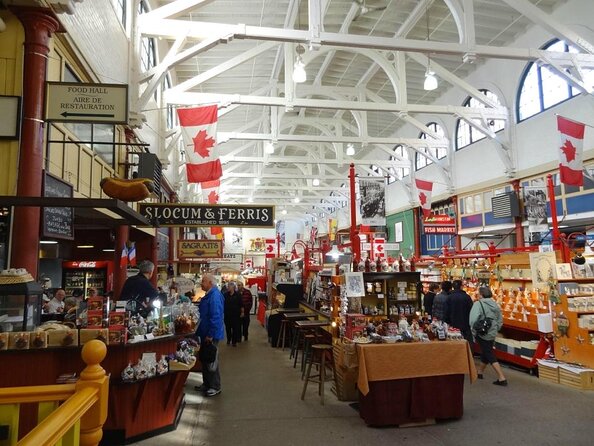
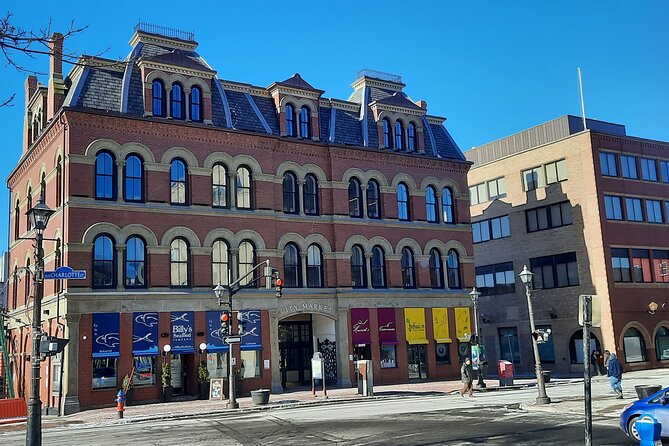
The next stop is Saint John City Market, described as the oldest continuously operating market in Canada. Pete discusses its architectural features and past, then allows a few extra minutes for shopping.
The market is one of the places where the tour’s structure works well. You hear why the building matters, then have a chance to see its interior rather than treating it as a quick photo stop. Still, the time is limited. You will not have room for an extended browse, a meal, and a full walking tour all at once.
After leaving the market, the route turns toward Charlotte Street. Here Pete shows large murals of famous Saint John people, tucked along an alley. This is the sort of stop that can be missed if you explore on your own without knowing where to look. It also breaks up the succession of historic facades with a more recent form of public art.
More walking tours in Saint John New Brunswick:
- Saint John Walking Tour
★ 3.9 · 7 reviews - Quebec City Walking Tour
★ 5.0 · 4,716 reviews - Old Quebec City: Grand Walking Tour with Private Option
★ 4.8 · 2,609 reviews - The Original Old Montréal Walking Tour by Guidatour
★ 4.5 · 2,217 reviews
King’s Square and the marks left by fire
King’s Square, established in 1785, brings together several pieces of Saint John’s public story. Pete points out the William Young statue, the Charles Gorman statue, and the King Edward VII Bandstand.
The most striking detail is a mass of molten metal left by the Great Fire. It is a powerful reminder that the fire is not just an event in a history book. The physical remnant helps you picture the force of the disaster and the way it changed the city.
This is another stop where the guide’s explanation matters more than the object alone. The park has several features, and a first-time visitor could easily walk through without understanding what they represent. Pete gives each one a place in the city’s story.
Irving Oil and the business story of New Brunswick
Across from King’s Square, Pete discusses the Irving Oil headquarters and the Irving family’s role in New Brunswick. The story begins with K.C. Irving in 1899.
The stop is brief, about five minutes, but it adds an important business angle. Saint John’s past is not only about ships, churches, and fires. Family companies and regional industry also shaped the city’s identity and economy. If you like understanding how local businesses affect a place, you will get useful context here.
Since the stop is outside the headquarters, the value comes from Pete’s explanation rather than an interior visit. This is typical of the tour: it uses the streets as an open-air classroom, with the guide supplying the background.
Imperial Theatre and the Admiral Beatty building
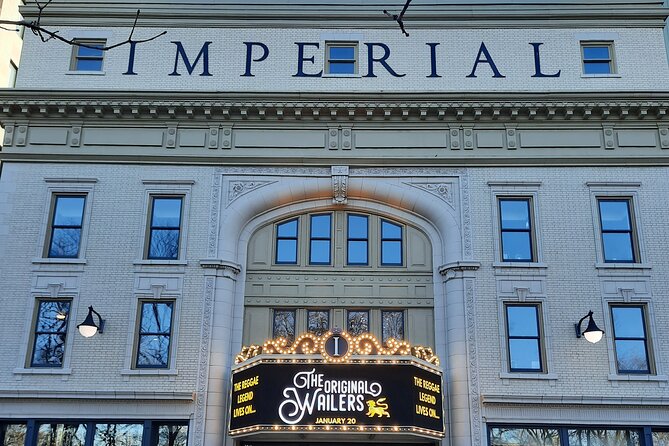
At Imperial Theatre, Pete begins with its opening as a vaudeville theater in 1913. He explains features such as the chandeliers and discusses the building’s restoration.
The theater stop is a good fit for anyone interested in old entertainment venues and architectural details. You are asked to look closely at features that might otherwise blend into the facade. The story also helps place Saint John in the wider era when vaudeville theaters were important public gathering spots.
Beside the theater, the Admiral Beatty building adds a hotel chapter. It began as a luxury hotel in 1925, and Pete points out famous visitors, including Amelia Earhart before her transatlantic flight.
These two stops are close together, but they cover different themes: public entertainment and upscale lodging. Pete’s presentation can be detailed here, so the pair may feel long to someone eager to keep moving. For me, the benefit is that you get more than a quick architectural label. You hear how the buildings were used and why they mattered.
Trinity Church and the Loyalist center of the walk
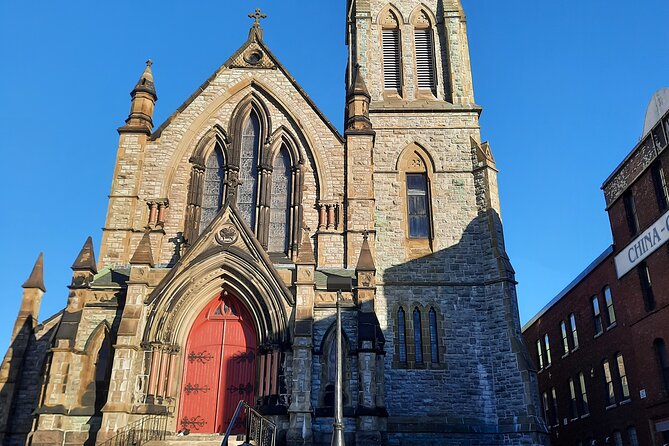
Trinity Church is one of the tour’s more substantial stops, lasting about 15 minutes. Pete explains the church’s Loyalist background, architectural features, and four main artifacts held inside.
This is a key point for understanding Saint John’s early settlement. The Loyalist story introduced at Market Square becomes more tangible here, in a place built around the community that followed the 1783 arrival. The artifacts give the explanation a direct connection to objects rather than dates alone.
The church portion also offers a welcome pause. Several stops involve standing outdoors, but this part gives you a chance to focus on a specific building and its interior details. The supplied information does not promise a full guided interior visit at every departure, so you should think of it mainly as a church history stop rather than a long indoor tour.
Germain and Princess Streets, where preservation meets change
Leaving Trinity Church, the route follows Germain Street, named for Lord George Germain. Pete also discusses the Union Club, a business club dating from 1884, located across from the church.
At the corner of Germain and Princess Streets, he points out how a newer building was designed to conform to preservation standards. Next comes the historic Ritchie building, with its own features explained along the way.
This stretch is useful because it shows Saint John as a living city, not a frozen historic district. Older buildings remain part of the streetscape, while newer construction has to fit a preserved urban setting. You get a practical look at how heritage protection can shape a city block.
The section is relatively short, but the route then turns downhill on Princess Street. If you have mobility concerns, note that the tour has used pedways, escalators, and an elevator to avoid difficult hills when needed. The tour is described as accessible, and one account specifically notes accommodation for a wheelchair user, but it is still wise to mention your needs when booking.
Prince William Street and the Wall Street of Canada
Prince William Street is one of the richest sections of the walk. Pete describes the street as once being known as the Wall Street of Canada, then points out a sequence of major buildings and details.
You see Chubb’s Corner with its carved stone heads, old City Hall, the former post office, the Jarvis building, the Bank of New Brunswick Palatine building, and the Seamen’s Mission. The number of stops in one stretch can make this feel like the architectural heart of the tour.
Across from the Seamen’s Mission is a mural about Partridge Island. Pete explains the island’s role in immigration and quarantine, with special attention to Irish arrivals during the Potato Famine.
This portion adds human weight to the route. Earlier stops deal with settlement, fire, commerce, and public life. Here, the focus shifts to migration, illness, hardship, and the port’s role in receiving people. The mural gives you a visual way to follow the story, while the buildings around it show the financial and maritime forces that shaped the city.
Because Pete stops often to explain details, you may spend more time listening than walking. That is the point for many people, but it is worth knowing before you book. This tour favors explanation over speed.
The Three Sisters Lamp and the waterfront finish
At the foot of Prince William Street, the route reaches the Three Sisters Lamp in St. Patrick Park. Pete explains why it has that name and how the lamps helped save lives.
It is a short stop, about five minutes, but it brings the walk back to practical maritime history. The lamp is not simply a decorative object. Its purpose connects the waterfront, navigation, and the daily risks faced by people moving through the harbor.
The tour finishes at the Marco Polo cruise terminal and Area 506 Waterfront Container Village. Pete explains how Saint John’s cruise industry began and how it developed.
This ending is convenient if you are arriving by cruise ship or continuing your waterfront visit. The tour information also gives the activity end as back at the meeting point, while the detailed route places the final stop at the cruise terminal. Confirm the exact end point for your departure, especially if you have a tight schedule or need to return to a ship.
What the $33.80 price really buys you
At $33.80 per person, the tour offers 2.5 hours with an English-speaking local guide and a maximum of 20 people. There are no extra admission charges listed for the stops, and lunch is not included.
The value is strongest if you want context. You are paying for Pete’s narration, local memories, old photographs, and the ability to connect scattered buildings and objects into one story. A self-guided walk can show you the same streets, but it will not easily explain the Great Fire’s physical remnant, the Union Club, the Partridge Island mural, or why Prince William Street mattered to Canadian finance.
The price is less compelling if you mainly want to browse the market, enter historic buildings at length, or cover more of Saint John. Several stops are outside, and the walk includes plenty of standing. The 2.5-hour length is clearly advertised, but some people may find it a little long.
Who will enjoy Pete’s Historic Walking Tour
I would choose this tour for you if you like local stories, city architecture, and history told by someone with a personal connection to the place. It is especially useful on your first day in Saint John because it gives you geography, key landmarks, and ideas for where to return on your own.
It also fits cruise visitors well. Morning and afternoon departures offer flexibility, and the final waterfront stop puts you close to the cruise terminal. Check the timing carefully if you need to be back on board.
Families can enjoy the humor and visual aids, and special-needs children are free. Pet dogs are welcome, and service animals are allowed. You should have a moderate level of fitness, although the walk is described as easy and can use the pedway system to reduce steep climbs.
I would skip it if you want a quiet, fast-paced walk with little narration. I would also avoid booking it when you have no tolerance for weather exposure or standing outside, since the experience requires good weather and may be canceled or rescheduled in poor conditions.
The tour has free cancellation up to 24 hours before the start time. If weather forces a cancellation, you are offered another date or a full refund.
Should you book Pete’s Historic Walking Tour?
Book it if you want Saint John explained by a hometown guide rather than presented as a checklist of monuments. Pete Ferguson’s humor, strong voice, personal stories, and detailed local knowledge are the main reasons to choose it. The rare photos and the route through less obvious spots add real value.
Go in expecting a talk-centered walk. You will pause often, and the market visit is brief. For $33.80, that is a fair trade if you want history and local character. If you prefer more shopping time or a shorter route, use the tour as an introduction, then return to Market Square and the waterfront on your own.
FAQ
How long is Pete’s Historic Walking Tour?
The tour lasts approximately 2 hours and 30 minutes.
Where does the tour begin?
The listed meeting point is Duke Street and Water Street in Saint John, New Brunswick.
Where does the tour finish?
The detailed route finishes at the Marco Polo cruise terminal and Area 506 Waterfront Container Village. The booking information also describes the activity as ending back at the meeting point, so confirm the exact end point before you go.
What language is the tour offered in?
The tour is offered in English.
Is lunch included?
No. Lunch is not included.
What happens if the weather is poor?
The experience requires good weather. If it is canceled because of poor weather, you are offered a different date or a full refund. You can cancel for a full refund up to 24 hours before the start time.
Just added around Saint John New Brunswick
- Hike & Lunch with Llamas★ 5.0 · 26 reviews
- Astounding Scavenger Hunt: Moncton Canada’s Cultural Hub★ 4.0 · 5 reviews
- Admission 1 person – Visit of the Acadian Historic Village★ 4.5 · 40 reviews
- Kayak the Bay of Fundy Sea Caves★ 5.0 · 20 reviews
- Mi’kmaq Heritage Path Tour★ 5.0 · 23 reviews
- Kings Landing Admission Ticket★ 4.5 · 28 reviews
- Family visit to the Acadian Historic Village★ 4.5 · 7 reviews
- Saint John River: River Relics Kayak Tour★ 5.0 · 7 reviews
Saint John New Brunswick Tours, compared.


Admission 1 person – Visit of the Acadian Historic Village
Read our review →

Saint John Driving Tour With Skywalk, Martello Tower & Fort
Read our review →
Browse the lists this tour appears in