
Review · VANCOUVER ISLAND
Parksville: Half-Day Whale and Wildlife Adventure
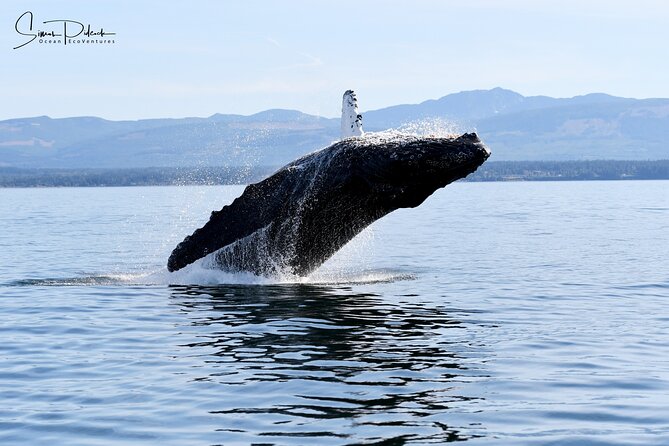
The best part of this Parksville outing is its focus on the whole Salish Sea ecosystem, not just a quick search for one famous whale species. You head into the northern Salish Sea for up to four hours, looking for Biggs killer whales, humpbacks, dolphins, seals, sea lions, and bald eagles while your captain explains what you are seeing. I like the small boats and the strong wildlife focus, though no tour can promise that every species will appear.
I also like the personal scale. Boats hold no more than 12 people, and guides such as Andy and Andi have earned praise for clear explanations, good humor, and a real interest in current marine research. The main drawback is the exposure: you need to dress for changing weather, and the trip is not suitable for children under four, pregnant women, or people with back problems or recent surgery.
Key points to know before you book
- Up to four hours on the Salish Sea: The longer outing gives the crew more time to search across several areas instead of rushing back after a short viewing window.
- Small boats with a maximum of 12 people: You get a better chance at seeing the water and hearing the guide than on a large sightseeing vessel.
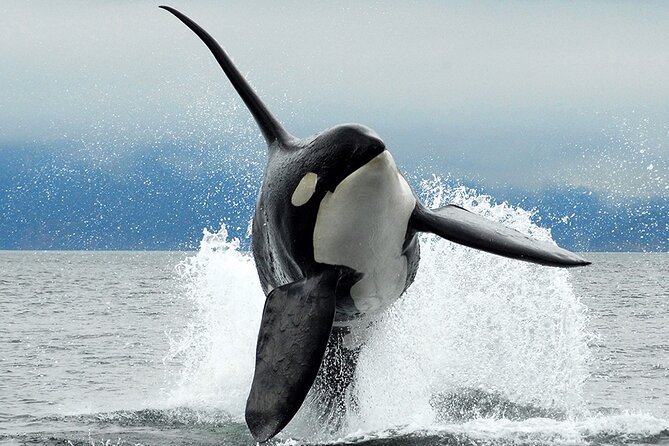
- Species can include Biggs orcas and humpback whales: Pacific white-sided dolphins, sea lions, harbor seals, bald eagles, and other marine life are also part of the search.
- Experienced guides and marine photography help: The crew shares whale research and helps you make practical use of your camera.
- Cold-weather gear is provided: Flotation suits, goggles, gloves, and toques are included, but you still need layers, water, sunscreen, and a jacket.
- Whale sightings are guaranteed, not a particular species: You may see humpbacks without seeing orcas, as one October outing showed.
Leaving Parksville for the northern Salish Sea
Your meeting point is at 1055 Lee Road, beside a white portable office with a whale watching sign. Look for the Ocean Ecoventures sign and the wildlife mural. Check in 30 minutes before departure, which gives the crew time to organize clothing and prepare the boat.
The tour lasts about 210 minutes, with the published operating time described as 3.5 to 4 hours. That matters on a whale trip. Wildlife does not gather beside the dock on a schedule, so an outing with extra time can reach more promising water and wait for an animal to surface again.
From Parksville, you head into the Salish Sea and the waters around the nearby islands. The setting is part of the experience. You are not simply watching animals in open water. You are also seeing the broad coastal setting, island shorelines, changing weather, and the busy natural life that supports whales farther up the food chain.
The exact route depends on where the animals are found. That is a good thing, but it means the trip does not work like a sightseeing bus with fixed stops. You may spend time moving between areas, slowing down to watch activity, or waiting for a whale to surface. Bring patience along with your camera.
A few more Vancouver Island half-days to weigh up
- Victoria Whale and Wildlife Cruise
★ 5.0 · 1,729 reviews - Cowichan Bay Half Day Whale & Wildlife Adventure
★ 5.0 · 393 reviews - Vancouver Island Half-Day Whale Watching Tour – Telegraph Cove
★ 5.0 · 333 reviews
Why the small boat changes the experience
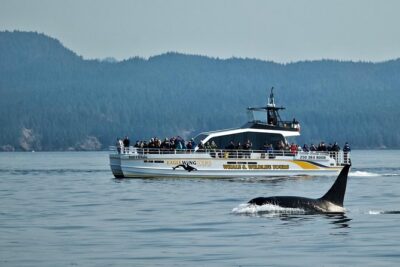
With a maximum of 12 people in each boat, this is designed as a personal trip rather than a crowd scene. A small group usually makes it easier to follow the guide’s commentary and move your view from one side of the boat to the other. If your party is larger than 12, it will be split between two boats.
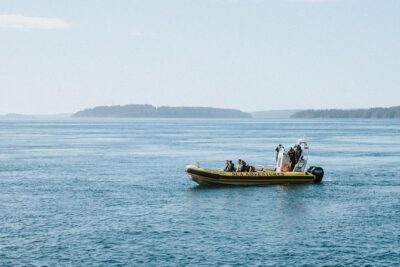
The boat ride itself is part of the appeal. Feedback about the RIB-style rides points to a lively trip across the water, rather than a quiet cruise on a large enclosed vessel. That can put you closer to the feel of the sea, but it also means you should take the clothing advice seriously. Wind and spray can make the temperature feel much lower than it does on land.
Flotation suits, goggles, gloves, and toques are supplied. You should still wear comfortable clothes and several layers, and take a jacket, hat, sunglasses, sunscreen, and water. A camera is welcome, but protect it from spray and keep your attention on the water. The best sight can last only a few seconds.
Smoking, vaping, alcohol, drugs, and intoxication are not allowed. Those rules are sensible on a fast boat where safety and clear instructions matter.
Searching for Biggs orcas and humpback whales
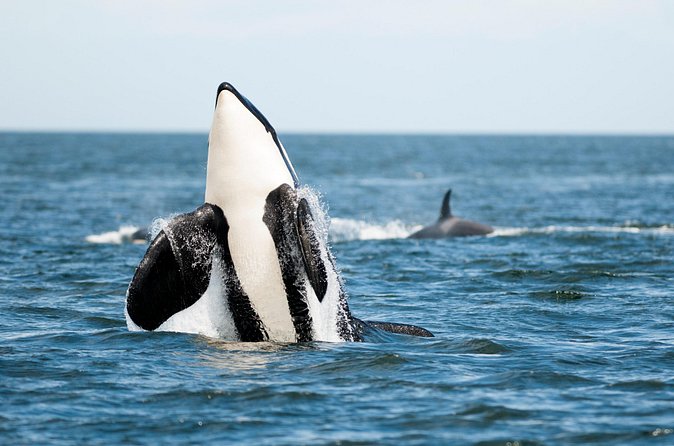
The main target animals are Biggs killer whales, also called orcas, and humpback whales. Biggs orcas are the whale-watching stars of this region, but you should not book on the assumption that an orca sighting is automatic. The experience promises whale sightings, yet the species and number can change with the day and season.
That distinction is important. One October trip produced many humpbacks but no orcas. Other outings in September saw both orcas and humpbacks, including one trip that reached three separate areas. You may see several whales, one whale, or whales at a distance. The crew’s job is to give you the best possible chance, not to control the animals.
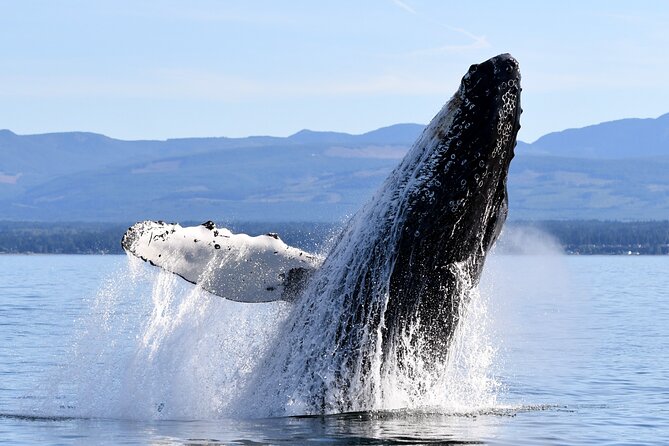
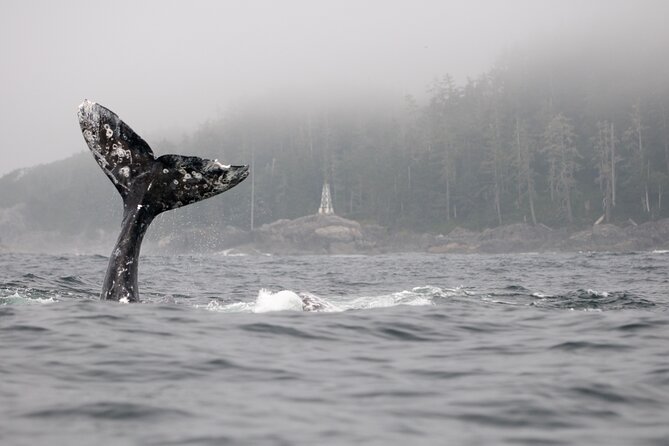
Humpbacks can be especially rewarding because their surfacing behavior gives you repeated chances to watch and photograph them. A single sighting may turn into a longer encounter if the whale remains in the area. One trip even stayed out an extra hour because whale activity was so good. That extra time is not something you should treat as guaranteed, but it shows why a flexible schedule helps.
The guides focus on current whale research, not just species names. You can expect explanations about what the crew is observing and how the animals fit into the larger marine system. The experience is better for this. You are not only waiting for a fin or spout. You are learning how to read the water and understand the animals’ place in it.
Dolphins, seals, sea lions, and bald eagles
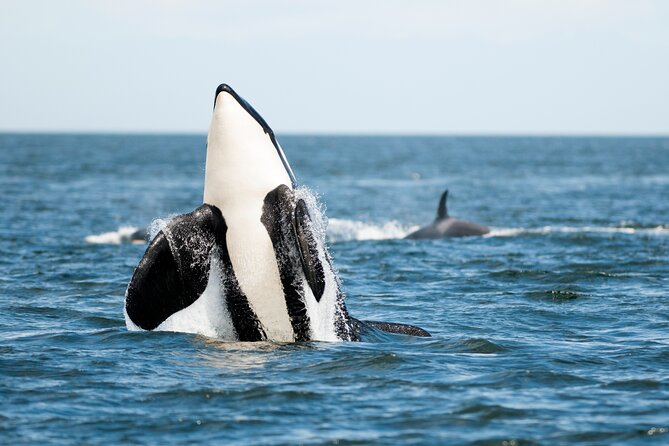
Whales are the headline, but the supporting cast can make the trip worthwhile even during a quieter whale search. Pacific white-sided dolphins are among the possible sightings. If a group appears, the viewing can feel fast and energetic as the animals move through the water.
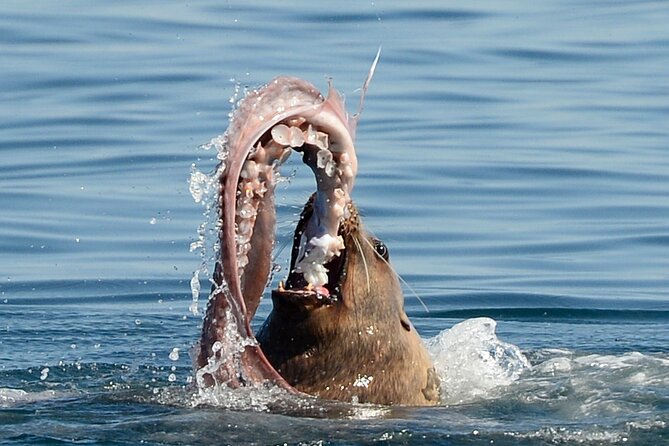
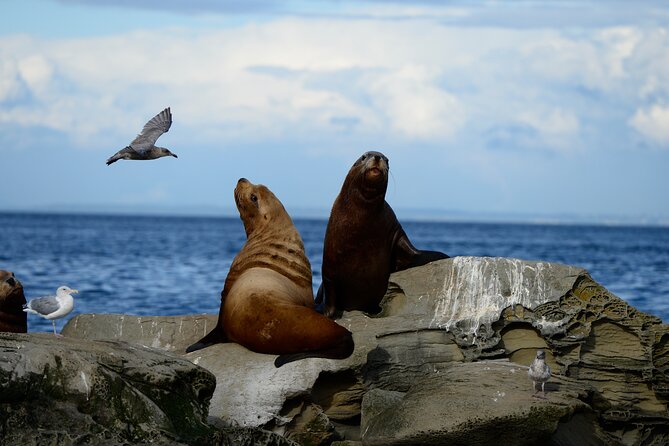
Pacific harbor seals and sea lions offer a different kind of encounter. They may be seen resting, moving through the water, or gathering near coastal areas. The supplied information does not promise a set location or behavior, so keep your expectations open rather than planning around one exact sighting.
Bald eagles add a useful reminder that this is a full wildlife trip. Look up as well as out across the sea. The crew’s focus on the wider ecosystem helps tie these sightings together, from birds and marine mammals to the coastal waters that support them.
This broad approach is one of my favorite features. If the orcas do not appear, you still have several kinds of wildlife to look for. That does not remove the natural uncertainty, but it gives the outing more depth than a narrow species checklist.
More wildlife days around Vancouver Island:
- Victoria Marine Wildlife Tour
★ 5.0 · 267 reviews - Campbell River: Whale & Wildlife Discovery Cruise
★ 4.8 · 143 reviews - Campbell River: 4 Hour Whale & Wildlife Zodiac Boat Tour
★ 4.7 · 133 reviews - Campbell River: Whale Watching and Wildlife Viewing Day Tour
★ 4.9 · 23 reviews
The guides make the difference
The strongest praise is directed at the captains and guides. Andy is singled out for being funny, professional, and full of useful facts. Andi is also praised for being friendly, clear, and passionate about the animals. The names and availability of individual guides can change, but the pattern is clear: expect the crew to play a major role in the experience.
A good wildlife guide needs to do more than point at a fin. You want someone who can explain what you are seeing, keep the group safe, and make sensible decisions about where to search next. The company has operated marine wildlife tours in the Salish Sea for 18 years and emphasizes certified captains and a strong safety record.
The photography focus is another useful touch. A marine wildlife photography specialist can help you think about timing, position, and patience. Still, do not expect a formal photography class. The key benefit is having a crew that understands how quickly wildlife appears and how to give you a better chance at a clear image.
If you care more about learning than collecting a perfect photograph, you should be well served. The guides share recent whale and wildlife research in plain language, turning the ride into an outdoor lesson without making it feel like a classroom.
What the 3.5-hour itinerary feels like
The trip has one main activity, a boat cruise through the Salish Sea, but the rhythm changes throughout the outing. You first leave the Parksville meeting point, get settled in your protective gear, and travel toward areas where marine life may be active.
The middle portion is the search. The captain may move between different areas, slow the boat, and pause when wildlife is spotted. You could spend much of this time scanning the water, so binoculars are not listed as an included item. If you own a pair, you may find them useful, but the official essentials are simpler: camera, sunglasses, hat, sunscreen, water, jacket, and layered clothing.
When whales appear, expect the guide to manage the viewing carefully. The goal is an intimate encounter while respecting the animals and the wider ecosystem. The provided details do not specify a fixed viewing distance or exact route, so you should not expect a scripted sequence of close approaches.
Finally, the boat returns to 1055 Lee Road. The full outing is long enough to feel like a major part of your day. Plan around it rather than squeezing it between two tightly timed activities.
Is $155 a fair price?
At $155 per person, this is not a bargain-basement boat ride. I think the price makes more sense if you value a small group, a longer search period, supplied cold-weather gear, and guides who explain the marine environment rather than simply transport you offshore.
The 3.5 to 4-hour length is central to the value. A shorter trip might cost less, but it gives the crew less time to search when whales are spread out or conditions change. Here, the extra time can improve your chances and may allow the captain to visit more than one area.
You are also paying for the boat operation, certified crew, safety preparation, and specialized wildlife knowledge. Food and drinks are not included, so eat before departure and bring water. That small bit of planning keeps the price from creeping higher during the day.
The value is weaker if you need a guaranteed orca sighting, a calm indoor boat, or a quick activity with no weather exposure. It is stronger if you are happy to treat the outing as a wildlife search and appreciate several possible species.
Who should book this Parksville whale trip?
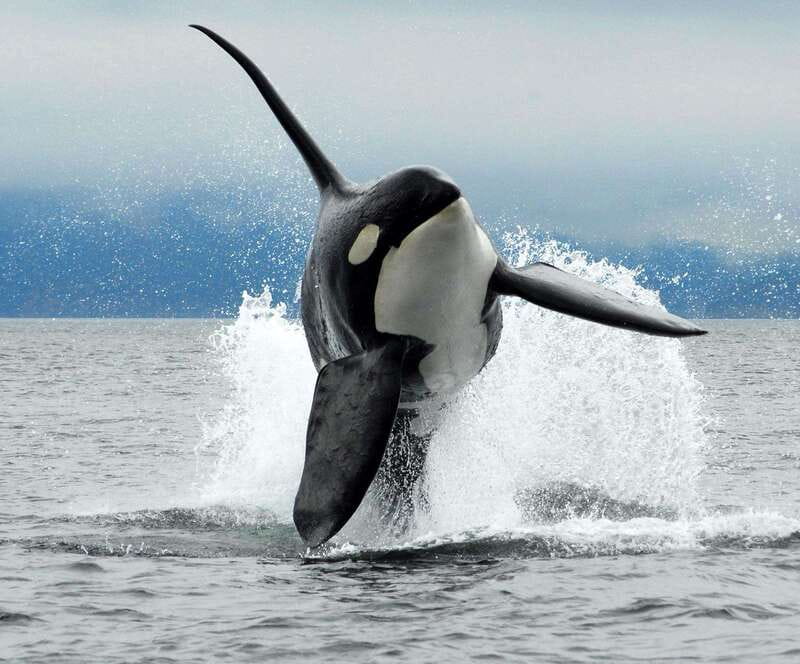
This suits adults and older children who enjoy nature, open water, photography, and a little uncertainty. It is particularly good for you if you want a small boat and direct contact with a guide rather than a large, standardized cruise.
You should be comfortable with changing weather and the physical conditions of a boat trip. The experience is not suitable for children under four, pregnant women, people with back problems, or people who have had recent surgery. If any of those concerns apply, ask the operator before booking.
It also works well for visitors who want to understand the Salish Sea as an ecosystem. You may see an orca, but you may just as easily remember a humpback, a group of dolphins, a bald eagle, or a useful explanation about marine life.
The tour is conducted in English with a live guide. If you need another language, this experience may not be the right match.
Practical preparation for a better outing
Arrive 30 minutes early at the Lee Road meeting point. Wear layers rather than one heavy coat, since conditions can shift once you leave shore. Put sunscreen on even when the sky looks gray, because glare from the water can catch you by surprise.
Bring water and a camera, but keep your hands free when the boat is moving. Sunglasses and a hat help with glare. Comfortable clothes matter more than dressing up, and the provided gloves, toque, goggles, and flotation suit add useful protection.
Do not plan around a particular animal. The advertised whale guarantee is helpful, but it does not mean an orca, humpback, or dolphin will appear on cue. I would book this with the mindset of a patient wildlife outing, where a good day can bring several species and a quieter day still gives you scenery and marine education.
Cancellation is flexible up to 24 hours before departure for a full refund, and you can reserve now and pay later. Check the available starting time when booking, since the exact departure schedule can vary.
Should you book it?
I would book the Parksville Whale and Wildlife Adventure if you want a small-group marine wildlife trip with real time for searching and a guide-led focus on the Salish Sea. The repeated praise for Andy and Andi, the chance to spend up to four hours on the water, and the broad list of possible wildlife make this more than a quick whale checklist.
I would pause if your only goal is seeing an orca. Humpbacks may be the main success of your day, and even a strong outing cannot make wild animals follow a schedule. At $155, the trip earns its price through time, equipment, small numbers, and guide expertise, not through a guaranteed species.
For the best match, book it as a full coastal wildlife experience. Bring layers, allow plenty of time, and keep your eyes moving from the horizon to the water and sky.
FAQ
Where does the Parksville whale tour meet?
The meeting point is at 1055 Lee Road. Look for the white portable office with a whale watching sign, the Ocean Ecoventures whale watching sign, and the wildlife mural.
How long does the whale and wildlife adventure last?
The outing lasts about 210 minutes, or 3.5 hours. The activity information also describes the trip as lasting 3.5 to 4 hours.
What animals might I see?
Possible sightings include Biggs killer whales, humpback whales, Pacific white-sided dolphins, sea lions, Pacific harbor seals, bald eagles, and other marine life.
Are whale sightings guaranteed?
Whale sightings are guaranteed, but a specific species is not. You may see humpbacks without seeing orcas, as conditions and animal movements vary.
What should I bring?
Bring sunglasses, a hat, a camera, sunscreen, water, a jacket, and comfortable layered clothing. Flotation suits, goggles, gloves, and toques are provided.
Who cannot take this tour?
The experience is not suitable for children under four, pregnant women, people with back problems, or people with recent surgeries. Smoking, vaping, alcohol, drugs, and intoxication are not allowed.
More Half-Day in Vancouver Island
- Cowichan Bay: Half-Day Whale & Wildlife Adventure
★ 4.7 · 12 reviews - Telegraph Cove: Half-Day Kayaking Tour
★ 4.7 · 9 reviews - Vancouver Half-Day Whale Watching Adventure with Free Photos
★ 5.0 · 5,000 reviews - Half-Day Trip to Montmorency Falls and Ste-Anne-de-Beaupré from Quebec city
★ 4.0 · 2,718 reviews
Just added around Vancouver Island
- Tofino: Whale Watching Tour with Nature Guide★ 4.7 · 30 reviews
- Tofino: Bear Watching Boat Tour with Nature Guide★ 4.6 · 23 reviews
- Telegraph Cove: Half-Day Kayaking Tour★ 4.7 · 9 reviews
- Telegraph Cove: 3-Hour Whale Watching Tour in a Zodiac Boat★ 4.8 · 109 reviews
- Port Hardy: Sea Otter and Whale Watching★ 5.0 · 19 reviews
- Parksville: Sunset Whale and Wildlife Adventure★ 4.9 · 10 reviews
- Nanaimo: Whale Watching Open Boat Tour★ 4.8 · 85 reviews
- Campbell River: Whale Watching and Wildlife Viewing Day Tour★ 4.9 · 23 reviews
Vancouver Island Tours, compared.
Cowichan Bay Half Day Whale & Wildlife Adventure
Read our review →
Great Bears of Bute: Grizzly Bear Viewing & Indigenous Cultural Tour
Read our review →
Vancouver Island Half-Day Whale Watching Tour – Telegraph Cove
Read our review →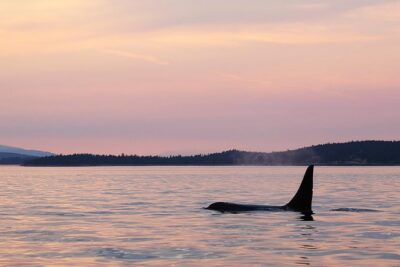
Vancouver Island Zodiac Whale Watching Adventure – Telegraph Cove
Read our review →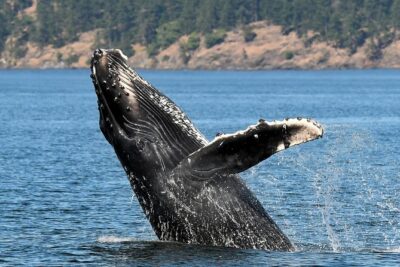
Browse the lists this tour appears in