
Review · MONTREAL
Montreal Queerstory Tour
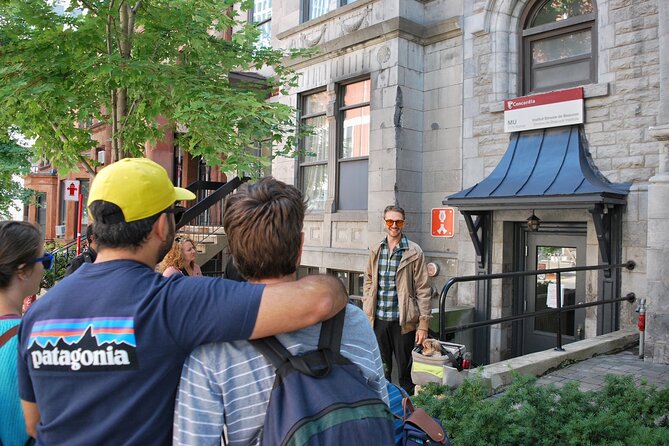
Montreal’s Queerstory Tour does more than point out places on a map. It uses true stories, interviews, and personal memories to show how LGBTQI+ people shaped the city, fought discrimination, and made daily life easier for those who followed. The route focuses on the west end of downtown and an older LGBTQ2+ neighborhood whose significance is easy to miss if you walk through it alone.
I like two things right away: guide Thom’s personal storytelling and the tour’s broad view of queer life, including gay men, lesbians, trans people, and Two-Spirit people. The 15-person limit should also keep the walk fairly personal. The main consideration is that this is a serious history tour, not a light sightseeing stroll, and its outdoor format depends on decent weather.
Key points to know before booking
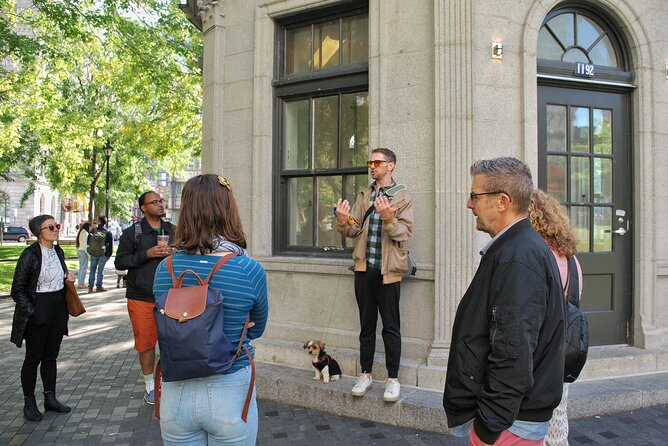
- Personal stories lead the tour: Thom has researched the people and events behind Montreal’s queer past and has interviewed some of those who took part.
- The route covers old LGBTQ2+ Montreal: You walk through the west end of downtown and finish near Beaver Hall Hill.
- The tour looks beyond one community: Stories include gay men, lesbians, trans people, and Two-Spirit people.
- The group is capped at 15: That is a useful size for a walking tour built around discussion and storytelling.
- The experience lasts about two and a half hours: Wear practical shoes and plan to stay outdoors.
- The price is $54.33 per person: For a small, research-based specialty tour, the cost is reasonable if queer history is important to you.
Why this Montreal walk is different
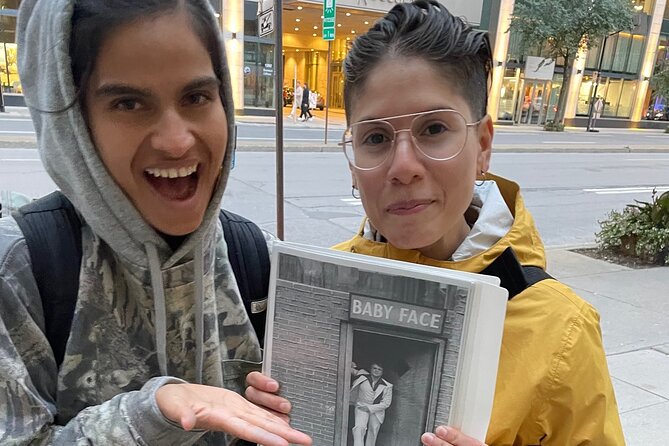
Many city tours treat LGBTQI+ history as a short aside during a general Montreal walk. This one makes it the subject from beginning to end. That focus matters because queer history is often less visible than churches, monuments, and grand public buildings. The places may look ordinary today, but the stories attached to them can change how you read the street.
Thom’s approach is personal rather than purely academic. He shares the lives of people who led, organized, resisted, and helped change public attitudes. The strongest part of the experience is likely to be the connection between private memory and public change. You are not only learning what happened. You are hearing how those events affected real people.
The tour also places Montreal inside a larger story. The struggle for LGBTQ rights did not happen in one city or in one community. Local events connect to Canadian and international changes, so you get a better sense of how a neighborhood’s past fits into the wider fight for equality.
I would not book this expecting a standard sightseeing route packed with famous landmarks. The appeal is the interpretation. You are paying for context, research, and a guide who cares deeply about the subject.
A few more Montreal half-days to weigh up
- Montreal: Guided Bus Tour
★ 4.4 · 3,064 reviews - Montreal: Hop-On Hop-Off Double-Decker Bus Tour
★ 4.1 · 2,760 reviews - From Montreal: Quebec City and Montmorency Falls Day Trip
★ 4.5 · 2,669 reviews
Starting at 1801 Maisonneuve Boulevard West
The tour begins at 2:00 p.m. at 1801 Maisonneuve Boulevard West, office 600. Check the address carefully before setting out, since a downtown office location can be easy to confuse with a street-level landmark or a transit stop.
The starting point is near public transportation, which makes it practical to reach without a car. Give yourself enough time to arrive, especially if you are unfamiliar with Montreal’s downtown layout. The tour is conducted in English, so you should be comfortable following a detailed spoken discussion in that language.
There is no listed transportation between the start and finish. Treat this as a walking experience from the moment you meet the guide. Service animals are allowed, and most people can take part, but the supplied information does not promise that every section is suitable for every mobility need. If that matters to you, ask Tours Montréal about the walking surface and route before booking.
Walking through the old LGBTQ2+ neighborhood
The central part of the tour takes you through Montreal’s former LGBTQ2+ neighborhood. The guide brings long-gone venues, meeting places, and other locations back into the story, even when the original businesses or gathering spots no longer exist.
That is a major strength. A tour based only on places that survive can leave you with a distorted picture of the past. Queer neighborhoods change, businesses close, and communities move. By telling the story of places that are gone but still important, Thom shows you how the city has shifted over time.
You should expect the route to mix physical locations with explanation rather than a series of formal museum stops. Some points may be marked by a building, intersection, or stretch of street, while the meaning comes from the story told there. That format rewards attention. If you prefer a tour with frequent interior visits, displays, and clearly preserved sites, this may feel less tangible.
The walk’s west-end setting also gives the tour a useful contrast. You are not confined to a single attraction or a modern entertainment district. You see how queer life was connected to the wider downtown city, and how communities claimed space in places that were not always welcoming.
Stories of struggle, organizing, and change
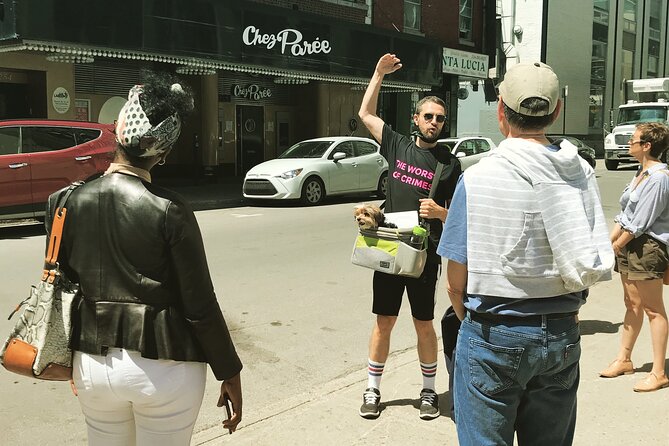
The tour’s subject is not only celebration. It includes the difficult parts of LGBTQI+ life in Montreal, along with the people who pushed back against unfair laws, social pressure, and exclusion.
That balance is important. A polished story of progress can make rights seem inevitable, as if society simply became more accepting with time. Thom’s storytelling instead shows the work behind that change. People had to speak up, organize, build community, support one another, and take risks.
The stories also cover several parts of the LGBTQI+ community. You hear about gay men and lesbians, as well as trans people and Two-Spirit people. This wider scope helps avoid the common problem of telling queer history as if one group experienced it for everyone.
I especially like that the tour connects people to events. It is easier to remember a change in law or public attitude when you understand who pushed for it and what those efforts cost. The guide’s research and interviews with people involved in Montreal’s queer past add a primary-source element that a basic date-and-fact tour cannot offer.
The emotional tone may be strong at times. Personal accounts can be moving, and the subject includes discrimination and hardship. That is part of the tour’s value, but you should choose it because you want an honest account, not only an upbeat afternoon activity.
Same base, a completely different sort of day:
- Montreal Mile End Authentic Food Tour with 7 Delicacies Tastings
★ 5.0 · 2,598 reviews - Quebec City and Montmorency Falls Day Trip from Montreal
★ 4.0 · 2,437 reviews - The Original Old Montréal Walking Tour by Guidatour
★ 4.5 · 2,217 reviews - Old Montreal Small-Group Walking Tour | Max 10 | by MTL Detours
★ 5.0 · 2,088 reviews
Thom’s role as guide and storyteller
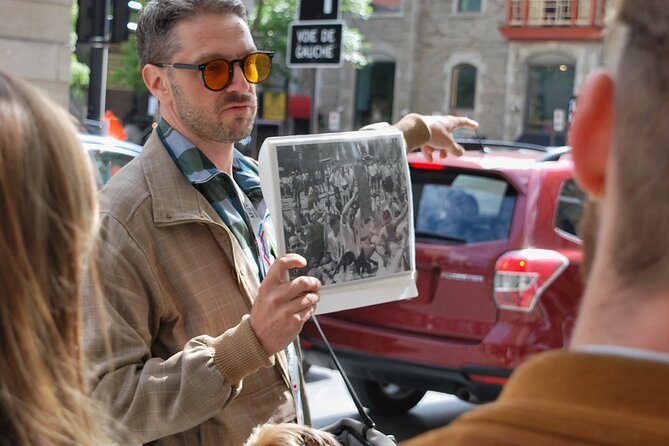
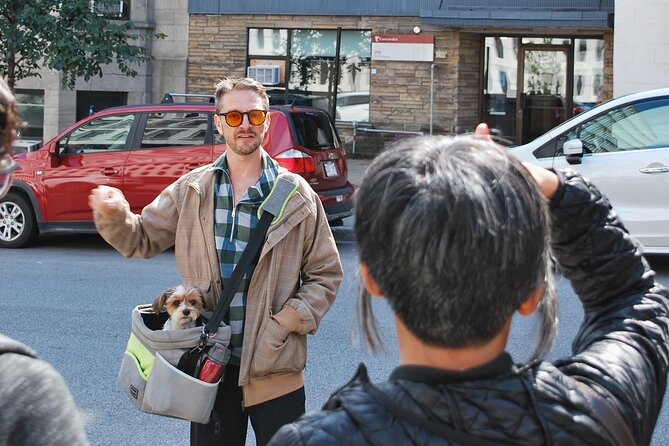
The guide can make or break a history walk, and Thom appears to be the heart of this one. His role is not simply to recite information. He has researched key figures, spoken with some participants, and developed a way of explaining both the public events and the personalities behind them.
That gives the tour a human scale. Instead of hearing only that a protest happened or a community formed, you learn what motivated people to act and how their personalities shaped their choices. A good guide makes you care about the people involved, and that seems to be Thom’s particular strength.
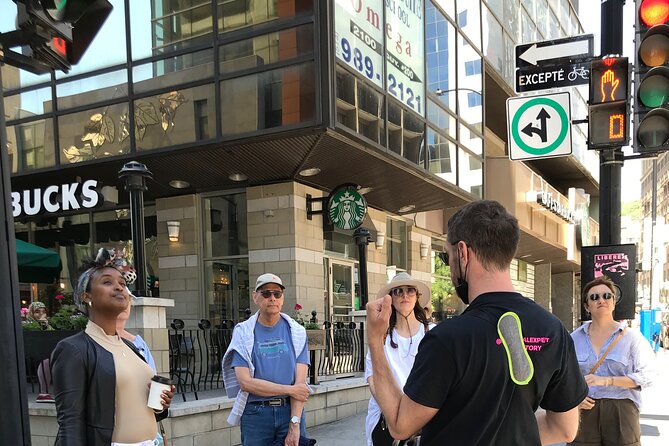
The personal approach also helps create an open setting. The tour is built for discussion, and the small group limit gives you a better chance to hear the guide clearly and ask questions than you would on a large city walk. With a maximum of 15 people, it should feel more like a guided conversation than a crowd following a flag.
Still, small groups are not guaranteed at every departure. The maximum is 15, not a promise of a private tour. If you want a one-on-one experience, this is not described as private.
The route to Beaver Hall Hill
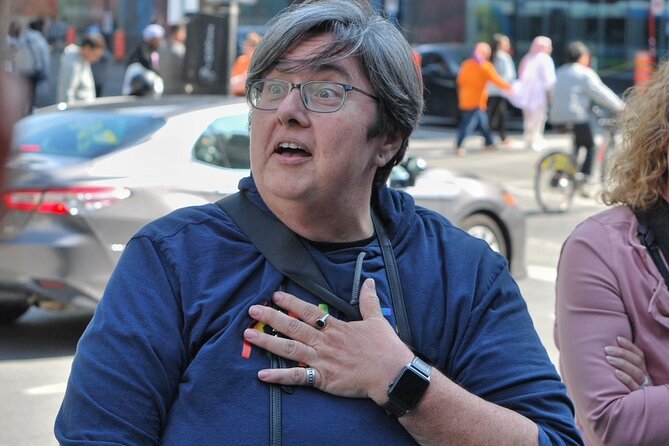
The tour ends near Beaver Hall Hill in downtown Montreal. This gives the experience a clear finish in a central area, but it also means you should think about what comes next before you begin.
The end point is not the same as the starting point, so do not leave a car or other essential belongings at the meeting location unless you are comfortable returning there afterward. Since the tour finishes near Beaver Hall Hill, you can continue exploring downtown from there, use public transportation, or make your way to another appointment.
The route details do not list every stop or street. That may be intentional. The main attraction is the story attached to the old neighborhood, not a checklist of named buildings. Still, anyone who likes to plan around exact landmarks should know that the published details give the start and end points but not a full stop-by-stop map.
For the best experience, keep your schedule flexible after 4:30 p.m. The advertised duration is about two hours and thirty minutes, and a storytelling walk can run slightly differently depending on questions and the pace of the group.
Is $54.33 a fair price?
At $54.33 per person, this is not the cheapest way to spend an afternoon in Montreal. It is also not priced like a large, fast-moving city walk. The group limit, specialist subject, original research, interviews, and guide-led storytelling all make the price easier to justify.
The tour works out to roughly $22 per person per hour. That calculation does not tell the whole story, but it helps show what you are buying: not transportation, meals, admission tickets, or a major attraction, but two and a half hours of focused interpretation.
I see the value most clearly for three types of visitor:
- You want to understand Montreal beyond its standard tourist sights.
- You have a strong interest in LGBTQI+ history or social movements.
- You value a local guide’s research and personal connection more than a polished attraction with exhibits.
The price may feel high if you are looking for casual entertainment or a general introduction to Montreal. You could walk downtown for free, but you would miss the connections between the streets, the people, and the political changes. This tour earns its cost through information and perspective rather than physical access to a ticketed site.
The tour also supports local LGBTQI+ businesses, which adds a practical community benefit. The supplied details do not specify exactly which businesses you visit or how purchases work, so do not assume that food, drinks, or shopping are included.
Who should book this tour?
I would recommend it most strongly to people who want a more complete account of Montreal. First-time visitors can use it to see the city through a less familiar lens, while repeat visitors may get the most from it because they already know the downtown streets and can notice how much history is usually overlooked.
It is also a good choice for couples, families with older children, and friends who enjoy discussing social history after a tour. One account describes the experience as leading to several days of conversation, which is a useful sign of its lasting value.
You do not need to identify as LGBTQI+ to find the tour worthwhile. The subject is part of Montreal’s civic history, and the tour shows how one community’s fight for safety and recognition affected Canadian rights more broadly.
I would think twice if you want a quick, cheerful overview of Montreal or if two and a half hours of serious discussion sounds tiring. The walk asks you to listen closely. Its reward is a fuller understanding of the city, not a long list of photo stops.
Timing, group size, and weather
The 2:00 p.m. start gives you time for a morning activity before the tour. Since the walk lasts about two and a half hours, you finish around 4:30 p.m., though the exact timing can depend on the group.
The tour requires good weather. If poor weather forces cancellation, you can choose another date or receive a full refund. A minimum number of participants is also required, and if that number is not reached, the operator offers another date or experience, or a full refund.
You can cancel for a full refund up to 24 hours before the start time. Changes or cancellations made inside that 24-hour window are not accepted for a refund, and the cut-off follows Montreal local time.
Wear comfortable shoes and bring clothing suited to the forecast. That is simple advice, but it matters more here than on a coach tour because the story unfolds on foot and the weather can affect your concentration.
What makes the praise so strong
The main praise centers on Thom’s enthusiasm, personal approach, and ability to make complex history easy to follow. That is more useful to you than praise for scenery, since the guide is the main product.
The tour has a current rating of 5 out of 5 from 16 ratings, with 100 percent recommending it. Those numbers are based on a small sample, so I would not treat them as a guarantee. Still, the same themes appear repeatedly: meaningful personal stories, careful research, emotional depth, and a welcoming tone.
The strongest detail is the use of primary sources. Thom has interviewed some people connected to the history, allowing him to share more than secondhand facts. That can give the walk a sense of immediacy, especially when discussing people who helped lead change.
The other strong point is inclusion. The material does not reduce Montreal’s queer past to one group or one neighborhood. By including gay, lesbian, trans, and Two-Spirit experiences, the tour gives you a broader account of who formed these communities and how their experiences differed.
Should you book the Montreal Queerstory Tour?
Book it if you want a focused, human account of Montreal’s LGBTQI+ past and are happy to spend an afternoon walking outdoors. Thom’s storytelling and original research are the main reasons to choose it, while the small group size should make the experience easier to follow and more personal.
Skip it if you want major attractions, indoor exhibits, or a light general city tour. The $54.33 price is fair for a specialist walking tour, but only if the subject matters to you. For anyone curious about how communities shape a city, this is a thoughtful way to see Montreal’s downtown with fresh eyes.
FAQ
Where does the Montreal Queerstory Tour begin?
It begins at 1801 Maisonneuve Boulevard West, office 600, Montreal, Quebec H3H 1J9.
Where does the tour end?
The tour ends near Beaver Hall Hill in Montreal.
What time does the tour start?
The scheduled start time is 2:00 p.m.
How long does the tour last?
The walking experience lasts approximately two hours and thirty minutes.
What language is the tour offered in?
The tour is offered in English.
How many people can join the tour?
The maximum group size is 15 travelers.
Is the tour accessible by public transportation?
The meeting area is near public transportation.
Can I cancel for a full refund?
Yes. You can cancel at least 24 hours before the experience start time for a full refund. Cancellations or changes made less than 24 hours before the start time are not accepted for a refund.
Just added around Montreal
- Winter Express: Old Montreal Highlights Walking Tour★ 5.0 · 119 reviews
- Under the Surface of Montreal’s Chinatown: Guided Food Walking Tour★ 5.0 · 23 reviews
- Full Day Family Bike Rental★ 5.0 · 17 reviews
- Montreal Premium Driving Tour with River Cruise and Notre Dame★ 4.5 · 164 reviews
- Immersive Virtual Reality Game Activity★ 5.0 · 19 reviews
- Montréal Downtown and Underground City Private Walking Tour★ 5.0 · 47 reviews
- Day at Mont-Tremblant National Park★ 4.0 · 5 reviews
- In the Shadow of the Mountain: Montreal Jewish History Walking Tour★ 4.5 · 33 reviews
Montreal Tours, compared.

Montreal Mile End Authentic Food Tour with 7 Delicacies Tastings
Read our review →
Quebec City and Montmorency Falls Day Trip from Montreal
Read our review →
The Original Old Montréal Walking Tour by Guidatour
Read our review →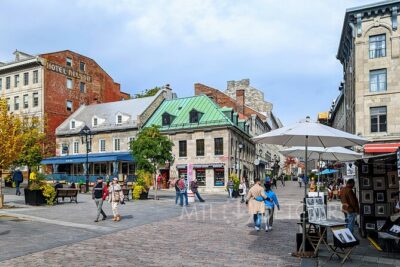
Old Montreal Small-Group Walking Tour | Max 10 | by MTL Detours
Read our review →
Montreal City Sightseeing Tour with Live Commentary
Read our review →
Browse the lists this tour appears in