
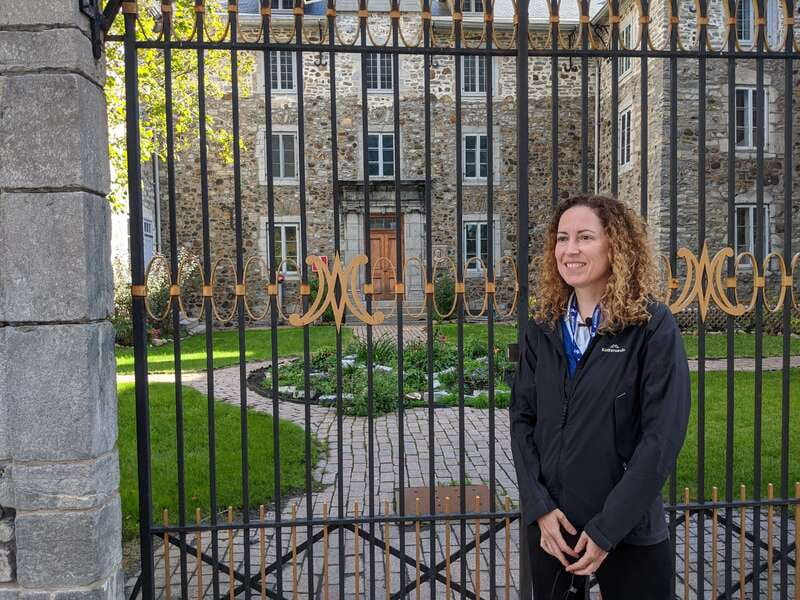
Review · MONTREAL
Montreal: Private Customizable Walking Tour of Old Montreal
Montreal’s story begins in the narrow streets of Old Montreal, where a two-hour private walk connects the city’s 1642 foundation with its present-day identity. You’ll see major landmarks, public squares, and former commercial streets while your guide explains how this small French settlement grew into a major Canadian city.
I like the private format, which gives your group room to ask questions and adjust the emphasis. I also like the choice between a standard route and a custom program, especially if you care more about architecture, religious sites, public art, or the Old Port.
The main consideration is that this is a brisk walking tour in an old district, with uneven streets and no wheelchair access. The major churches and landmarks are viewed from outside, so you’ll need a separate visit if you want to see their interiors.
Key points at a glance

- Start with Montreal’s 1642 origin: Follow the story from Fort Ville-Marie and the first hospital site to the modern city.
- Choose your focus: Ask for more architecture, public squares, religious buildings, commerce, or Old Port history when arranging your tour.
- See the grand exteriors: Notre-Dame Basilica, City Hall, Bonsecours Market, the courthouses, Château Ramezay, and Notre-Dame-de-Bon-Secours Chapel are all part of the route.
- Keep it truly private: One group of up to 15 people receives its own French, English, or Spanish-speaking guide.
- Expect a personal guiding style: Guides named Carole, Pierre, Stacey, Thomas, and others have been praised for clear explanations, friendly conversation, and responding well to questions.
- Plan for real walking: Wear comfortable shoes, and remember that the tour operates rain or shine.
Why Old Montreal works so well in two hours
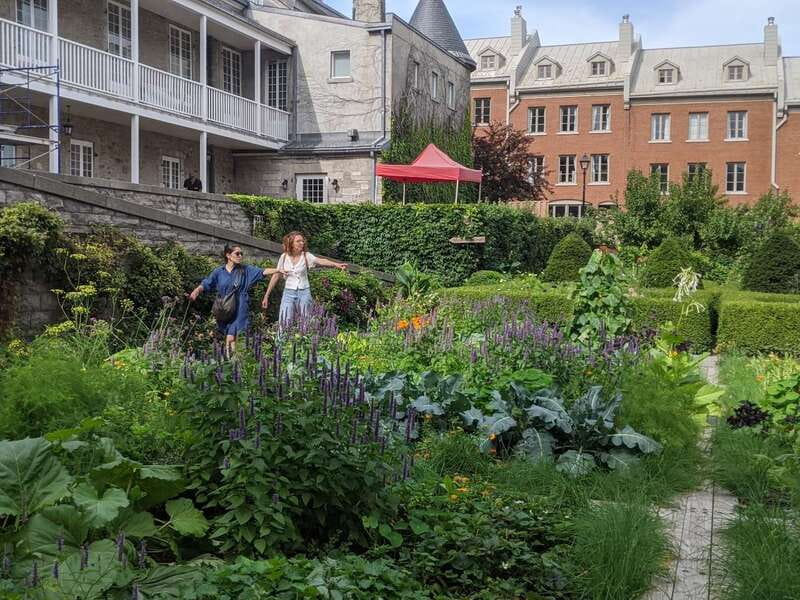
Old Montreal is compact, but it carries several distinct chapters of the city’s past. Within a short walk, you can move from the original settlement to the grand civic architecture of the 19th century, then toward the Old Port and the modern city beyond it.
That compact setting is the strength of this tour. You are not spending half the time on a bus or moving between distant sights. Instead, you get a continuous street-level view of the city, with the guide tying together buildings, squares, monuments, and former workplaces.
The private arrangement matters here. A public group tour has to follow one pace and one subject list. With this experience, you can ask why a building matters, pause over a monument, or spend less time on a topic that does not interest your group. The tour lasts only two hours, so the ability to shape the content helps you use that time well.
You should still keep your expectations realistic. This is an introduction to Old Montreal, not a full-day study of every church, museum, and port building. It gives you a strong sense of place and enough historical background to make later independent walks more rewarding.
More Old Montreal walks:
- Old Montreal Small-Group Walking Tour | Max 10 | by MTL Detours
★ 5.0 · 2,088 reviews - Old Montreal: Traditional Ghost Walk of the Haunted City
★ 4.7 · 746 reviews - Old Montreal Ghost Walking Tour
★ 4.5 · 726 reviews
Place d’Armes and the grand entrance to the old city
Place d’Armes is one of the natural starting points for understanding Old Montreal. The square brings several periods of the city together, making it a useful first lesson in how Montreal changed over time.
Here, you can look at monuments and public art while your guide explains the role of the square in the city’s development. The setting also gives you one of the best exterior views of Notre-Dame Basilica, whose Gothic Revival design is among Old Montreal’s most recognizable sights.
The important detail is that the basilica is visited from the outside on this tour. Your guide can explain the building and point out architectural features, but admission to the interior is not part of the stated experience. If seeing the famous interior is high on your list, plan that separately.
Place d’Armes can also be a good place to ask for an architecture-focused explanation. The surrounding buildings do not all belong to the same period, and the contrast helps you see that Old Montreal is not a frozen colonial set. It is a working district shaped by several generations of construction and commerce.
Place Royale and the city’s first chapter
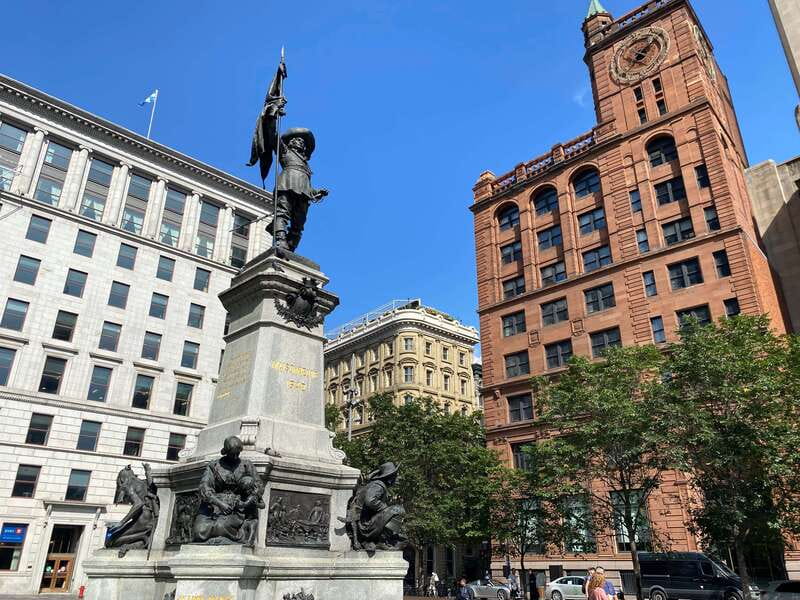
Place Royale takes you closer to the origins of Montreal. This is where the tour can connect the modern streets around you with the foundation of Fort Ville-Marie in 1642.
The guide’s job here is not just to supply dates. A good explanation helps you understand why this location mattered and how a settlement at the edge of the St. Lawrence became the beginning of a major city. The tour’s larger historical arc runs from that first foundation to Montreal today.
I like this part of the route because it gives the walk a clear anchor. Instead of hearing disconnected facts about old buildings, you can place them within the story of a city that developed around trade, civic institutions, religion, and the river.
Place Royale is also a reminder that Old Montreal is about more than attractive stone facades. The streets carry the memory of decisions and daily work that shaped the city. Ask your guide to spend extra time on the settlement’s early years if that is the part of Montreal’s past you most want to understand.
Place Jacques-Cartier and public life in Old Montreal
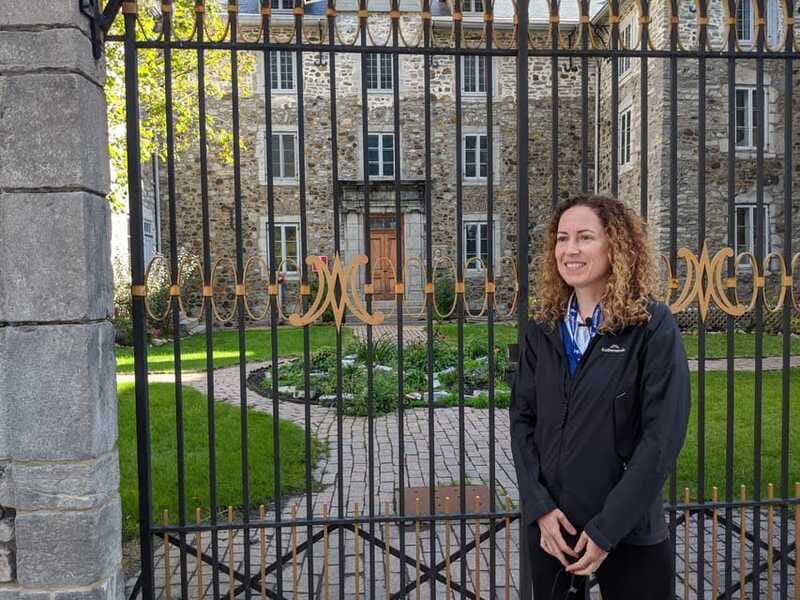
Place Jacques-Cartier adds a more open, social setting to the route. Along with Place d’Armes and Place Royale, it gives you a useful trio of public squares, each with monuments and works of art to examine.
Because the program can be customized, you can ask your guide to focus on the square’s public art, its civic role, or the buildings that frame it. The information provided does not promise a specific performance, market, or seasonal event, so think of this stop as a place for interpretation rather than a scheduled show.
The square also helps break up the older, narrower streets. A private guide can point out details that are easy to miss when you are simply following a map, then move on when you feel you have seen enough.
If you are taking the tour with a mixed-age group, this type of stop can be useful. One booking described a guide adjusting well to a broad range of ages and abilities. That does not remove the physical demands of the walk, but it suggests that the conversation itself can be adapted to your group.
More walking tours in Montreal:
- The Original Old Montréal Walking Tour by Guidatour
★ 4.5 · 2,217 reviews - Montréal: The Original Old Montréal Walking Tour
★ 4.8 · 911 reviews - The Essential 101 Non-Touristy Walking Tour by Spade & Palacio
★ 5.0 · 716 reviews - Montreal: Top Rated Small Group Old Montreal Walking Tour
★ 4.9 · 611 reviews
Notre-Dame Basilica, City Hall, and landmark exteriors
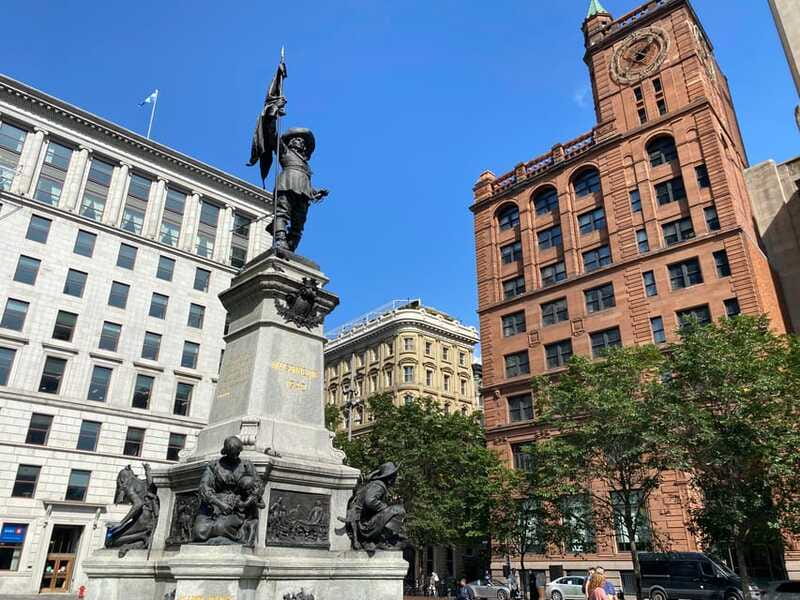
Several of the tour’s most familiar buildings are viewed from outside. Along with Notre-Dame Basilica, the route can include Montreal City Hall, the three courthouses, Château Ramezay, Bonsecours Market, and Notre-Dame-de-Bon-Secours Chapel.
This exterior approach keeps the tour moving and allows you to cover more of the district in two hours. It also makes the experience a better fit if your main goal is to understand the layout and character of Old Montreal rather than spend long periods indoors.
City Hall offers a civic counterpoint to the churches and historic residences. Château Ramezay and Bonsecours Market add another layer, showing how the old district served public, commercial, and cultural purposes. The courthouses continue that civic story.
Notre-Dame-de-Bon-Secours Chapel gives the route another religious landmark, but again, the stated visit is to the exterior. You can ask the guide about the buildings you see, then decide which ones deserve a separate indoor visit later.
I find this format particularly helpful on a first morning in Montreal. You get an orientation to the district before choosing where to return. The drawback is simple: anyone who wants detailed interior architecture or a long museum visit will find the two-hour walk too limited.
St-Jacques Street and the former Wall Street of Canada
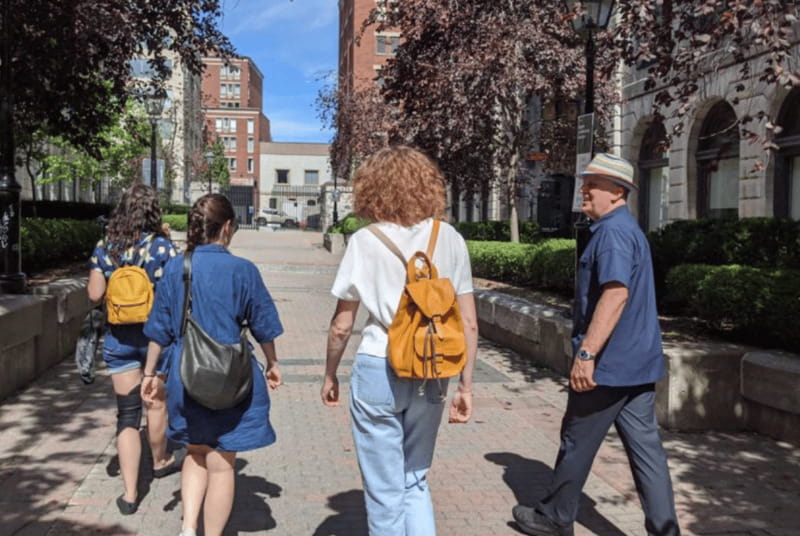
St-Jacques Street supplies one of the tour’s most useful connections between architecture and business. It was once known as the Wall Street of Canada, and walking along it gives you a chance to hear how Montreal’s financial life helped shape Old Montreal.
This is the kind of detail that makes a walking tour more valuable than a quick photo stop. A building can look impressive, but its story becomes clearer when you know what work took place there and why the street mattered to the city.
The route does not promise entry into former financial buildings, so the value here lies in the guide’s explanation and the street-level view. If you have a strong interest in banking, commerce, or urban development, mention that when customizing the tour.
St-Jacques also helps balance the religious and political sights. By the time you reach this part of the walk, you have seen how Old Montreal functioned as a settlement and civic center. This street adds the business chapter.
Cours Le Royer and the first hospital site

Cours Le Royer is a quieter historical point in the route. It marks the foundation site of Hôtel Dieu, the city’s first hospital.
This stop gives the tour a more human scale. Grand squares and government buildings tell you about power and public display. A hospital site points instead to care, survival, and the practical needs of a growing settlement.
The site may not have the visual impact of Notre-Dame Basilica or City Hall, but that is precisely why a guide helps. Without context, you could easily pass through the area without understanding its place in Montreal’s early story.
If your group wants the tour to concentrate on social history, ask for more time here. The private format makes that request possible, though the two-hour limit means the guide may need to shorten another stop.
Sulpician Seminary and the oldest historic-district building
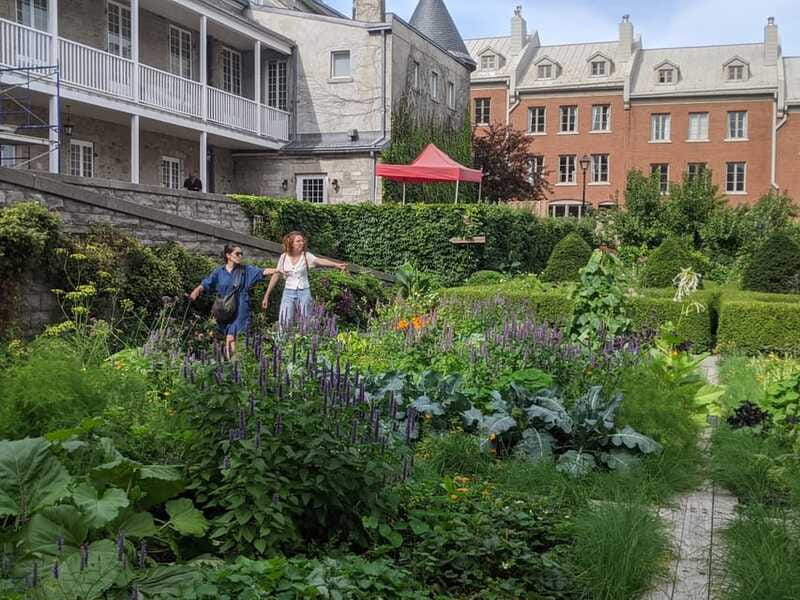
The Sulpician Seminary is identified as the oldest building in Old Montreal’s historic district. It gives you a chance to consider the role of religious institutions in the city’s early development.
The building is important not only because of its age, but because it helps explain why Old Montreal contains such a strong concentration of religious and civic structures. Your guide can place the seminary alongside the churches, chapels, hospital site, and public squares you have already seen.
This is another exterior stop, so do not book the tour expecting a room-by-room visit. Its appeal is the combination of age, architecture, and historical setting, viewed as part of a larger walk through the district.
For me, this is the sort of stop that rewards a guide’s storytelling. A short explanation can turn an old facade into a marker of Montreal’s early institutions. Without that context, it is simply another handsome building.
The Old Port and the modern edge of the district
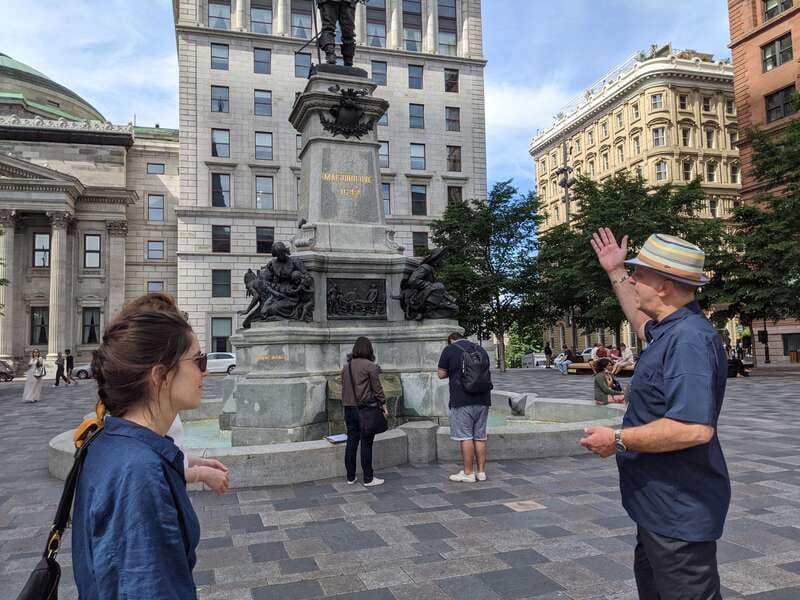
The Old Port gives the tour a final change of scale. After narrow streets, compact squares, and closely packed historic buildings, you reach the area connected with Montreal’s riverfront identity.
The tour uses the Old Port as part of the wider story of the city, linking the historic center to the modern metropolis. The supplied details do not specify a particular pier, building, or river view, so the exact emphasis may depend on your guide and the route you choose.
This is a good place to ask for an explanation of how the old city relates to Montreal today. You can also use the end of the walk to decide what to explore next on your own.
Because the route and finish can be customized, confirm the meeting point and planned ending when booking. The meeting point may vary by option, and the route is not fixed in every case.
What the private format is really worth
The listed price is $164 per group of up to 15 people. For a full group, that works out to about $11 per person. For four people, it is about $41 each, and for two people, the cost is $82 each.
That makes the tour a particularly solid deal for a family or group of friends. You receive a dedicated guide rather than joining strangers, and you can shape the discussion around shared interests. For a couple, the price is harder to justify unless you place a high value on privacy and personal questions.
A private guide can also make the experience more efficient. You do not need to wait for a large group to gather, listen to subjects that do not interest you, or hold back questions because the schedule is too tight. The two-hour length remains fixed in practice, but the content can be more relevant to your group.
The tradeoff is that the price does not include a longer visit or indoor admissions. Think of it as a focused orientation walk. If you want a full day of museums and interiors, you will need to add those plans and costs separately.
Guides, languages, and the feel of the walk
The tour is offered in French, Spanish, and English. The guide names associated with recent bookings include Carole, Pierre, Stacey, and Thomas.
The strongest pattern in the feedback is the guiding style. Carole was described as kind and willing to answer questions. Pierre’s tour was called friendly, interesting, and playful. Stacey was praised for clear information, responsiveness, and an enjoyable manner, while Thomas was described as engaging and passionate.
Those details matter because a history walk depends on communication. You want a guide who can answer questions without losing the thread, explain old buildings in plain language, and adjust the tone for your group. The overall rating is 4.9 from 19 reviews, with the highest praise focused on the guides rather than on a single landmark.
You can also request a subject emphasis. The available choices include history from the 17th century to today, public squares, architecture, religious sites, commerce, the first hospital, and the Old Port. Tell the operator what your group cares about before the walk, since customization works best when the guide has a clear sense of your priorities.
Walking conditions and who should book
Bring comfortable shoes. The tour takes place rain or shine, and Old Montreal’s historic streets can make a two-hour walk feel more demanding than the time suggests.
The experience is not suitable for people with mobility impairments or wheelchair users. The private structure may allow conversation to be tailored to different ages and abilities, but it does not change the stated accessibility limits.
I would recommend this tour to first-time visitors who want a clear introduction to Old Montreal, families who prefer a private pace, and small groups with different interests. It also suits anyone who wants a historical framework before returning to the basilica, markets, public squares, or Old Port independently.
You may want a different plan if your priority is entering several buildings, visiting museums, or covering the district at a slow photographic pace. Two hours gives you a useful sweep, but not an exhaustive visit.
Should you book the Old Montreal private walk?
Book it if you want Old Montreal explained as a connected story rather than a string of pretty facades. The strongest reasons are the private guide, flexible content, compact route, and clear progression from Fort Ville-Marie in 1642 to the city you see today.
It is best value for groups of four or more, though couples who value a personal guide may still find the format worthwhile. Ask for your preferred language and interests in advance, wear good shoes, and remember that the major buildings are seen from outside.
Skip it if you need wheelchair access or want extensive interior visits. For everyone else, this is a practical first look at Montreal’s historic core, with enough flexibility to make the two-hour walk feel like your group’s own tour.
FAQ
How long is the Old Montreal private walking tour?
The tour lasts two hours. Starting times depend on availability.
How many people can join the private group?
The maximum recommended group size is 15 people.
Which languages are available?
You can take the tour with a live guide in French, Spanish, or English.
Can I customize the route and content?
Yes. The departure time, duration, route, and content can be customized according to your group’s needs and interests. The exact meeting point may vary depending on the option booked.
Does the tour operate in bad weather?
Yes. The tour takes place rain or shine, so bring suitable clothing and comfortable shoes.
Is the tour accessible for wheelchair users?
No. The experience is not suitable for wheelchair users or people with mobility impairments.
Just added around Montreal
- Winter Express: Old Montreal Highlights Walking Tour★ 5.0 · 119 reviews
- Under the Surface of Montreal’s Chinatown: Guided Food Walking Tour★ 5.0 · 23 reviews
- Full Day Family Bike Rental★ 5.0 · 17 reviews
- Montreal Premium Driving Tour with River Cruise and Notre Dame★ 4.5 · 164 reviews
- Immersive Virtual Reality Game Activity★ 5.0 · 19 reviews
- Montréal Downtown and Underground City Private Walking Tour★ 5.0 · 47 reviews
- Day at Mont-Tremblant National Park★ 4.0 · 5 reviews
- In the Shadow of the Mountain: Montreal Jewish History Walking Tour★ 4.5 · 33 reviews
Montreal Tours, compared.


Montreal Mile End Authentic Food Tour with 7 Delicacies Tastings
Read our review →
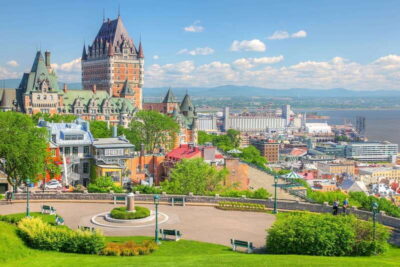
Quebec City and Montmorency Falls Day Trip from Montreal
Read our review →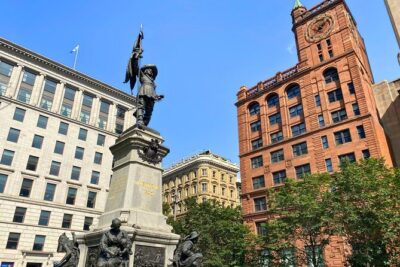
The Original Old Montréal Walking Tour by Guidatour
Read our review →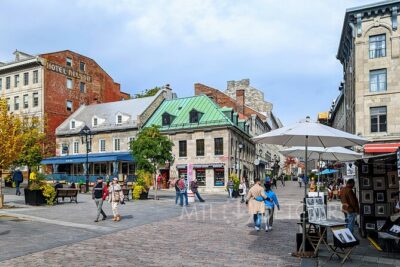
Old Montreal Small-Group Walking Tour | Max 10 | by MTL Detours
Read our review →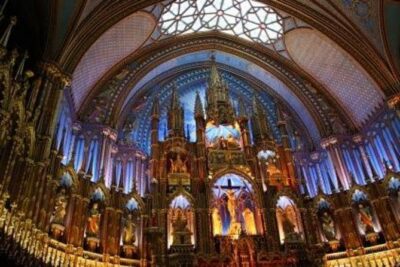
Montreal City Sightseeing Tour with Live Commentary
Read our review →
Browse the lists this tour appears in