
Review · MONTREAL
Montreal: Museum of Illusions Entry Ticket
Montreal’s Museum of Illusions turns a simple hour indoors into a lively test of your senses. More than 70 exhibits play tricks with light, reflection, perspective, balance, and depth, so the fun comes from trying to work out why your eyes and body disagree. The tilted room, infinity tunnel, holograms, stereograms, and vortex tunnel give you plenty to try without needing a guide to lead you from one display to the next.
I like the self-paced format, since you can linger over a puzzle or move quickly past an exhibit that does not grab you. I also like the strong photo appeal. Many displays are designed for you to take creative pictures, and one useful tip is to visit with someone else, since several illusions make more sense when you can compare what each person sees or record one another.
The main drawback is the short one-hour duration and the warning for people with vertigo. The museum offers a lot to see, but some rooms can unsettle your balance or visual sense, so this is not the best pick if spinning effects or tilted spaces make you uncomfortable.
Key points to know before you go
- More than 70 exhibits: Expect holograms, stereograms, puzzles, reflective effects, and rooms built around visual confusion.
- The tilted room tests your balance: Your body may feel off-kilter even while your feet remain firmly on the floor.
- The infinity tunnel changes your sense of space: Reflections and light create the feeling of a much larger passage.
- Visit with a companion for better photos: Some exhibits are more enjoyable when someone else films or shares the effect with you.
- One hour is the planned visit length: It works well as a compact indoor stop rather than a full afternoon outing.
- Wheelchair accessible and English supported: The activity is suitable for all ages, though people with vertigo should skip it.
What the Montreal Museum of Illusions actually offers
This is not a traditional museum filled with paintings, artifacts, or long written displays. It is an interactive attraction built around one question: can you trust what your eyes are telling you?
You move from exhibit to exhibit, trying effects that alter your sense of scale, direction, distance, and motion. Some displays ask you to look closely. Others ask you to stand in a room, walk through a passage, or pose for a picture. The appeal is immediate: you do not simply read about an optical illusion, you become part of it.
The collection includes more than 70 exhibits, which gives the visit enough variety to keep it from feeling like one repeated trick. Holograms and stereograms focus on how images are formed and interpreted. The larger rooms create physical effects, letting you test balance and spatial judgment with your whole body.
The museum is especially easy to understand if you enjoy learning through trial and error. You can look at an illusion, make a guess, try it yourself, and then read or think through the reason it works. I find that more memorable than being handed a technical explanation first.
More museums and galleries in Montreal:
- Museum of Illusions Montreal – 70+ Illusions to Explore
★ 4.0 · 103 reviews - Montreal: Art Center and Museum Audio Guided Tour
★ 4.3 · 18 reviews - McCord Stewart Museum – Admission
★ 4.5 · 17 reviews
Starting with light, reflection, and perspective
The early displays introduce the basic ideas behind the museum. Light, reflection, and perspective can make a flat image seem three-dimensional, make a room appear distorted, or make objects look different from their true size.
Holograms are a good example of the museum’s approach. They appear to have depth or presence, yet the effect depends on how light reaches your eyes and how your brain interprets the image. Take a moment instead of rushing past. A quick glance can show you the subject, but a slower look helps you notice how the image changes as you move.
Stereograms require a different kind of patience. These images can hide a three-dimensional form within a flat pattern, and not everyone sees the effect at once. If you struggle, do not treat it as a test you have failed. The point is to notice how vision works differently from person to person.
These displays make the visit more than a series of silly photo tricks. They introduce the science of perception in a plain, hands-on way. You do not need any background in physics or psychology, and the English-language presentation keeps the basic explanations accessible.
Losing your balance in the tilted room

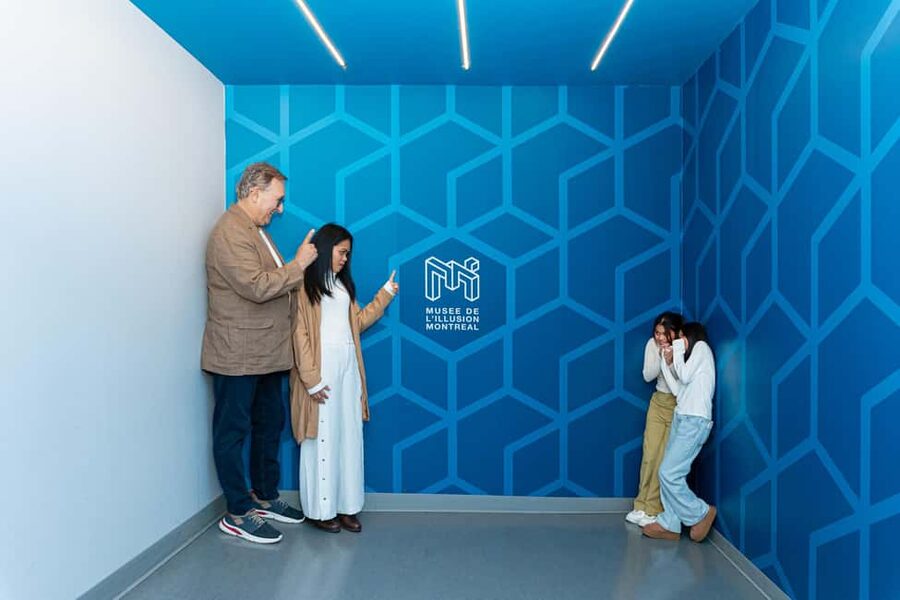
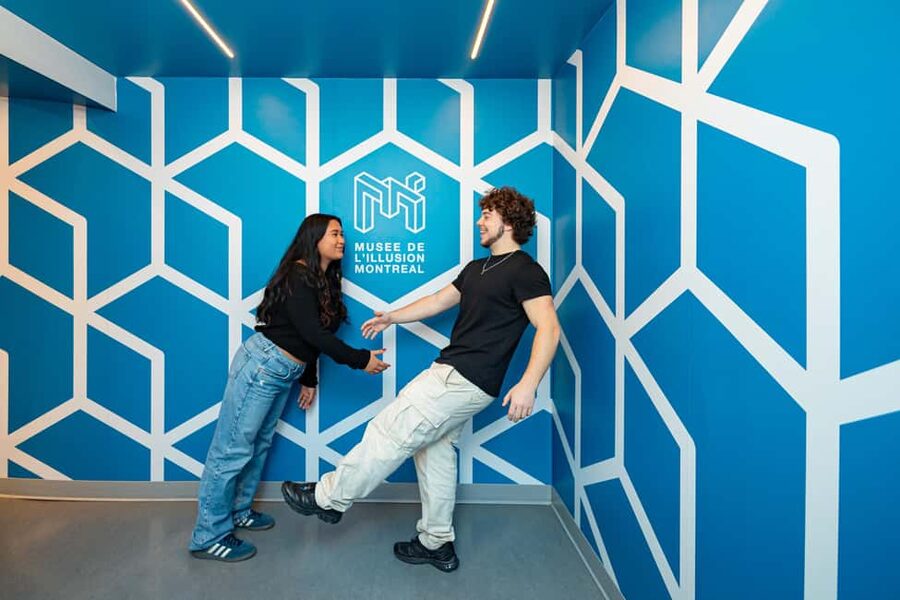
The tilted room is one of the clearest physical challenges in the museum. The room appears ordinary at first, but the angle changes your sense of balance and direction. Your eyes send one message while your body responds to another.
This exhibit is fun in a group because everyone can compare how the room feels and how it looks in a picture. A camera can make the effect even stronger, especially when the frame makes an ordinary pose look impossible. It is also a good reason to wear comfortable shoes, as recommended for the visit.
Do not expect a demanding physical activity. The point is the confusion, not athletic skill. Still, if you have vertigo or feel uneasy in tilted or moving spaces, this may be the exhibit to approach cautiously or skip. The attraction specifically lists people with vertigo as unsuitable, and that warning is worth taking seriously.
The infinity tunnel and vortex tunnel

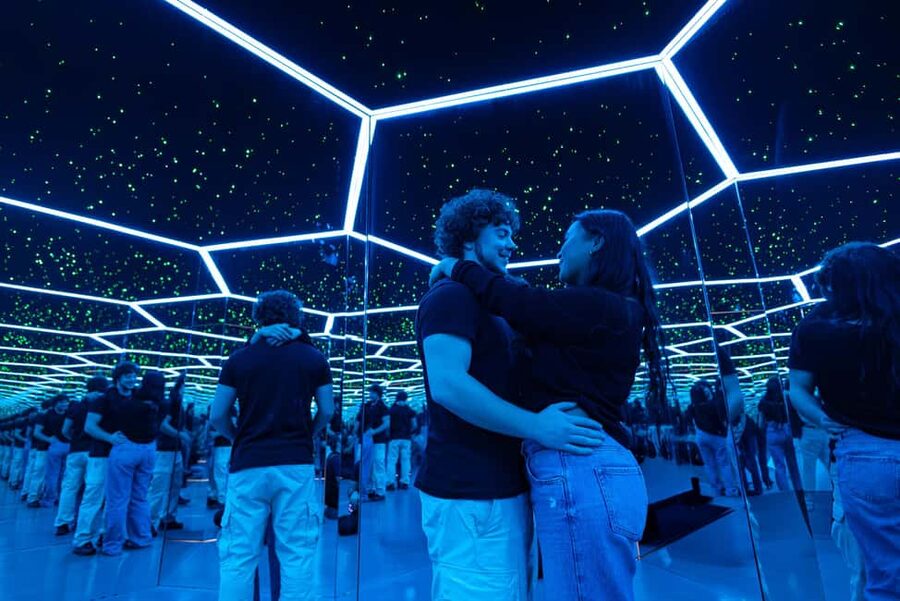
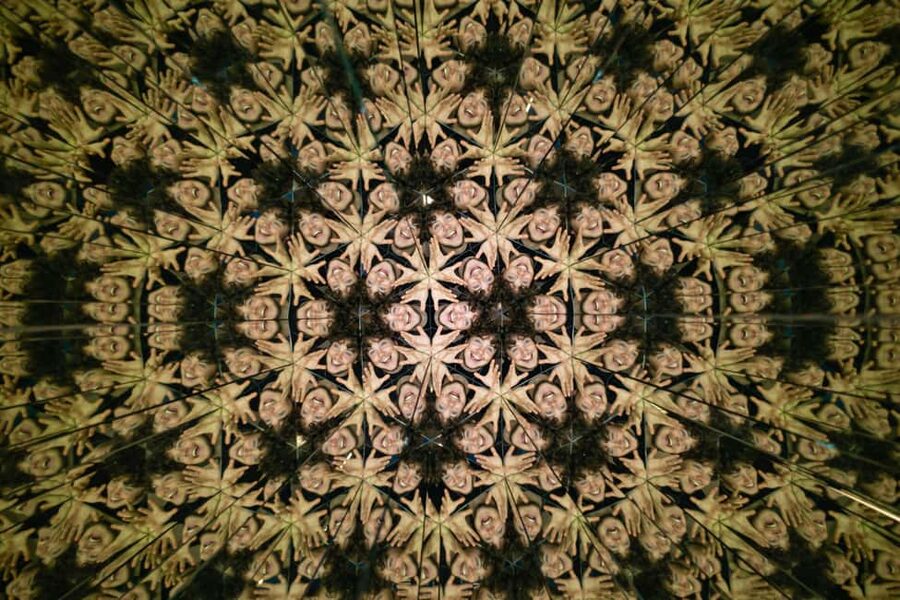
The infinity tunnel changes your sense of distance and space. Reflections and repeated lights can make the passage seem to continue far beyond its actual size. It is the kind of exhibit that works best when you pause and look around rather than simply walk through.
The visual effect also makes this a strong photo stop. A companion can capture you inside the tunnel, giving the picture a scale and setting that a standard portrait cannot. If you are visiting alone, you can still enjoy the exhibit, but you lose some of the shared reaction and photo fun.
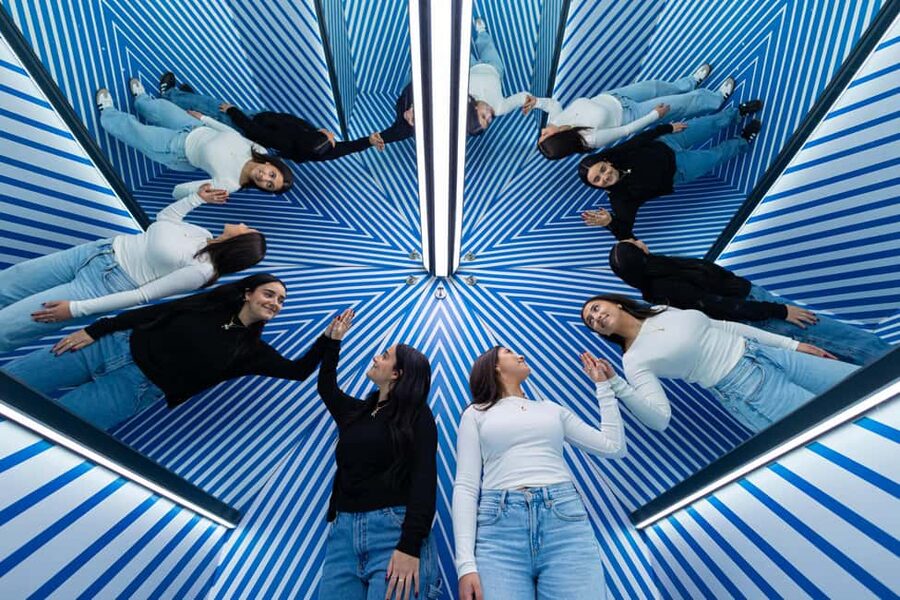
The vortex tunnel adds another challenge. It is designed to make you feel as if the floor or surroundings are shifting, even though the structure itself is fixed. The result can be entertaining, but it may also be uncomfortable for anyone sensitive to spinning sensations. You should not force yourself through it just to complete every exhibit.
Together, these tunnels show why the museum suits people who like active attractions. You are not only looking at an object behind glass. You are testing how your body reacts to a carefully controlled visual setting.
A few more Montreal half-days to weigh up
- Montreal: Guided Bus Tour
★ 4.4 · 3,064 reviews - Montreal: Hop-On Hop-Off Double-Decker Bus Tour
★ 4.1 · 2,760 reviews - From Montreal: Quebec City and Montmorency Falls Day Trip
★ 4.5 · 2,669 reviews - Montreal Mile End Authentic Food Tour with 7 Delicacies Tastings
★ 5.0 · 2,598 reviews
Puzzles that make you slow down
Not every display depends on a dramatic room or a camera-ready pose. The museum also includes puzzles and smaller visual challenges that ask you to inspect details, spot changes, and rethink an obvious answer.
I like this mix because it gives the visit a different rhythm. After a large room that gets everyone laughing, a puzzle lets you stop and concentrate. It also gives children and adults different ways to take part. A child may enjoy the physical surprise, while an adult may spend longer trying to explain the trick.
The self-paced arrangement matters here. You can take your time with an exhibit that interests you instead of being moved along by a scheduled group. The listed duration is one hour, but the quality of that hour depends on how much effort you put into each display. If you rush through every room for pictures, the visit may feel brief. If you test each illusion and read the explanations, the time feels fuller.
Why a companion improves the visit
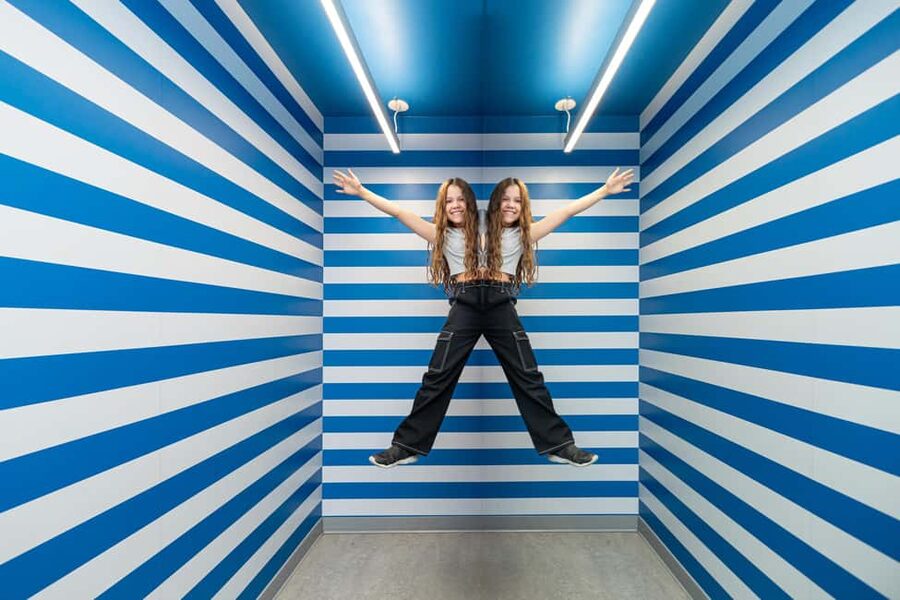
The museum is open to solo visitors, but I would choose a friend or family member if possible. Several illusions are better when one person stands inside the effect while another takes a photo or records a short video.
A companion also gives you someone to compare perceptions with. One person may see a hidden form in a stereogram quickly, while another sees only a pattern. A room may look tilted from one angle and less strange from another. Those small disagreements are part of the entertainment.
The available booking information describes the group as limited to four participants. That keeps the visit relatively small, though the attraction itself is self-paced rather than a private guided session. An English-speaking host or greeter is available, but no named guide is provided, so you should expect to explore the exhibits on your own rather than follow a personal lecture.
If you are alone, bring your camera and enjoy the displays at your own speed. You may need to rely on other people for some photos, but the puzzles, holograms, and stereograms still work as solo activities.
Is one hour enough?
For most people, one hour is a sensible target. The exhibits are compact, and you can see a broad range of effects without committing half a day to the attraction. It fits well before or after another Montreal activity, especially if you want an indoor stop.
The time can feel short if you want to study every explanation, repeat several photo setups, and solve each puzzle carefully. Families may also need extra patience, since children often want to repeat the most surprising rooms.
I would treat the one-hour duration as a benefit if your schedule is tight. You get a contained activity with a clear finish, rather than a large museum that demands a long visit. Just keep your expectations realistic: this is a playful attraction about perception, not a major cultural institution with extensive galleries.
Is the $25 price a fair deal?
At $25 per person, the value depends on what you want from a Montreal outing. If you are looking for historic objects, serious art, or a long educational visit, this price may feel high for an attraction lasting about an hour.
If you want an interactive activity with many photo opportunities, the price is easier to justify. More than 70 exhibits provide variety, and the ticket includes entry to the full museum rather than a single display. You are paying for the chance to take part, test your balance, and create pictures, not just observe a collection.
The best value comes when you use the museum actively. Try the exhibits more than once, read the explanations, and take time to understand the effect. A quick walk through followed by a few snapshots will give you less for your money.
Flexible booking also helps protect the purchase. You can reserve now and pay later, and cancellation is allowed up to 24 hours before the activity for a full refund. Availability and starting times should still be checked before booking, since the listed duration is one hour rather than an open-ended visit.
Who should book this attraction?
This museum suits families, friends, couples, and anyone who likes hands-on activities. It is also a useful rainy-day choice because the visit is indoors, compact, and easy to fit into a wider Montreal plan.
Children can enjoy the surprising rooms and puzzles, while adults may appreciate the simple science behind the illusions. It works well for people who like taking photos, but you do not need to post anything online to enjoy the displays.
I would think twice if you have vertigo or strong discomfort with tilted, spinning, or visually confusing spaces. The museum is designed to challenge your senses, so the central feature can become a genuine drawback for some people.
The attraction is wheelchair accessible, which makes it more practical for many visitors. Still, the supplied details do not describe the exact layout of every exhibit, so you may want to confirm access for specific displays if that matters to your visit.
My call: book it for playful indoor fun
Book the Museum of Illusions if you want a short, social attraction where you can laugh, take unusual photos, and learn why your eyes can be fooled. The strongest reasons to go are the variety of more than 70 exhibits, the freedom to explore at your own pace, and the mix of large rooms with smaller puzzles and holograms.
Visit with at least one other person if you can. The attraction is still worthwhile alone, but the tilted room, tunnels, and photo setups are more engaging when you can compare reactions and share the results.
Skip it if you want a quiet art museum or if vertigo makes visual tricks unpleasant. For everyone else, $25 is a reasonable price for a focused one-hour activity, especially when you need a flexible indoor break in Montreal.
FAQ
How long does the Museum of Illusions visit last?
The stated duration is one hour. You can explore the exhibits at your own pace during that time.
How many exhibits are at the museum?
The museum has more than 70 exhibits, including holograms, stereograms, puzzles, and rooms that challenge your balance and sense of space.
Is the Museum of Illusions suitable for children?
Yes. The activity is described as ideal for all ages.
Is the museum wheelchair accessible?
Yes, the activity is listed as wheelchair accessible.
Is the experience suitable for people with vertigo?
No. People with vertigo are specifically listed as unsuitable because some exhibits use tilted, vortex, and other visually disorienting effects.
Can I cancel my booking for a refund?
Yes. You can cancel up to 24 hours in advance for a full refund. You can also reserve now and pay later.
Just added around Montreal
- Winter Express: Old Montreal Highlights Walking Tour★ 5.0 · 119 reviews
- Under the Surface of Montreal’s Chinatown: Guided Food Walking Tour★ 5.0 · 23 reviews
- Full Day Family Bike Rental★ 5.0 · 17 reviews
- Montreal Premium Driving Tour with River Cruise and Notre Dame★ 4.5 · 164 reviews
- Immersive Virtual Reality Game Activity★ 5.0 · 19 reviews
- Montréal Downtown and Underground City Private Walking Tour★ 5.0 · 47 reviews
- Day at Mont-Tremblant National Park★ 4.0 · 5 reviews
- In the Shadow of the Mountain: Montreal Jewish History Walking Tour★ 4.5 · 33 reviews
Montreal Tours, compared.



Montreal Mile End Authentic Food Tour with 7 Delicacies Tastings
Read our review →
Quebec City and Montmorency Falls Day Trip from Montreal
Read our review →
The Original Old Montréal Walking Tour by Guidatour
Read our review →
Old Montreal Small-Group Walking Tour | Max 10 | by MTL Detours
Read our review →
Montreal City Sightseeing Tour with Live Commentary
Read our review →
Browse the lists this tour appears in