
Review · MONTREAL
Montreal: Discover Reso – The Underground City
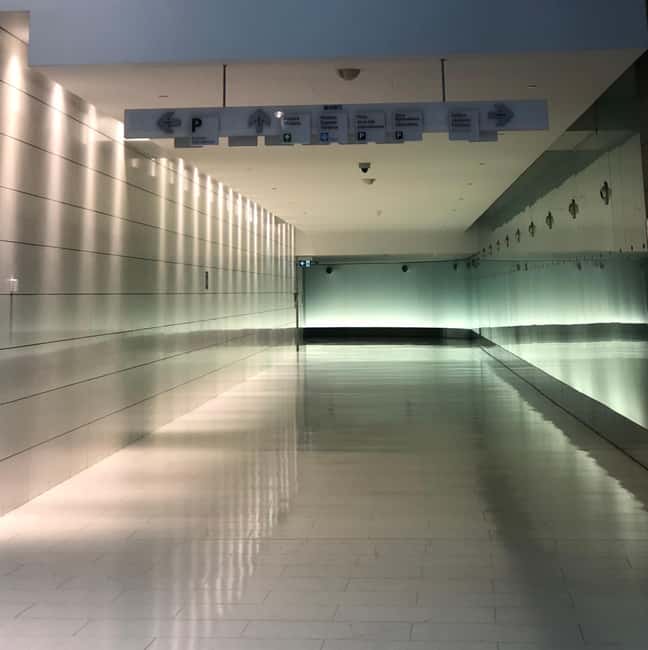
Montreal’s RESO is not one underground room but a stitched-together network of malls, stations, offices, restaurants, galleries, and passageways. This two-hour walk with Misha, a Montreal native, helps you see the logic behind a place that can feel baffling at first. You’ll move from Complexe Desjardins to Central Station, the World Trade Centre, Les Cours Mont-Royal, and several other downtown stops.
I like two things here. First, the tour gives you practical Metro basics, including a short ride, so you can use Montreal’s transit system with more confidence afterward. Second, Misha adds plenty of photo stops, from the Berlin Wall fragment and the God of the Sea statue to The Ring and the Barbie Expo. The main consideration is simple: this is an active walking tour with stairs, and the pace may feel brisk if you have low fitness or prefer a relaxed indoor visit.
Key points at a glance
- Start at the Complexe Desjardins fountain: An easy indoor meeting point with food, coffee, and restrooms nearby.
- Learn the RESO by walking through it: The route links major downtown buildings, shops, transit hubs, and public spaces.
- Ride the Metro with guidance: A short Metro 101 lesson is useful if you have never used Montreal’s system.
- Expect unusual photo stops: The Berlin Wall, The Ring, Barbie Expo, and the year-round ice rink add variety.
- Small group, bilingual guide: The tour is limited to 10 people and runs in English or French.
- Best for first-time visitors: You’ll gain a practical map of the underground network early in your stay.
Why Montreal’s RESO Is Worth Understanding
Montreal’s Underground City, known locally as the RESO, is often described as a 33-kilometre indoor network. That figure can sound like a single giant attraction, but the reality is more useful and more complicated. The RESO connects parts of downtown through linked buildings and passageways, yet it does not always feel like one clearly marked route.
That is why a guided walk can make sense. You are not simply looking at one landmark. You are learning how several buildings fit together and how to move between shopping areas, restaurants, offices, hotels, and transit stations without repeatedly going outdoors.
I would not book this expecting a polished museum tour with one grand underground hall. The appeal is the changing character of the route. One moment you are in a bright atrium, then looking at public art, then crossing a shopping centre, then standing beside a railway station or Metro entrance.
The network is especially handy during Montreal’s cold winter days, heavy rain, or summer heat. You can still need to step outside briefly, and indoor temperatures vary from building to building, but much of the route keeps you out of the weather.
A few more Montreal half-days to weigh up
- Montreal: Guided Bus Tour
★ 4.4 · 3,064 reviews - Montreal: Hop-On Hop-Off Double-Decker Bus Tour
★ 4.1 · 2,760 reviews - From Montreal: Quebec City and Montmorency Falls Day Trip
★ 4.5 · 2,669 reviews
Meeting Misha at Complexe Desjardins
The tour begins inside Complexe Desjardins at 175 René-Lévesque Boulevard West. Once inside, head downstairs to the main atrium and look for the large circular fountain. Misha waits near the benches beside it.
This is a sensible meeting point. The fountain is a strong visual marker, and the atrium has coffee shops, a food court, and restrooms. In fall and winter, starting indoors is a real comfort. You do not have to wait on a downtown sidewalk while trying to identify a guide or building entrance.
Take a moment to arrive early enough to find the fountain. One person had some confusion with the meeting point, so it is worth checking the building address and heading downstairs rather than waiting near the street entrance.
Complexe Desjardins also gives you an early taste of the RESO’s scale. It is not merely a tunnel. These indoor spaces function as part of daily city life, with shopping, food, public seating, and routes to other downtown buildings.
From a Historic Bank to the World Trade Centre
One early stop is a former bank that has been converted into a café. This kind of change helps explain the character of Montreal’s underground network. The spaces are not all purpose-built passageways. Some occupy older commercial or civic buildings, while newer construction ties them into the wider system.
You then reach the World Trade Centre of Montreal, where two memorable sights are on the route: a piece of the Berlin Wall and the God of the Sea statue. The Berlin Wall fragment gives the tour a strong historical note, while the statue provides a very different visual moment.
These stops are useful because they break up the walking. You are not staring at identical corridors for two hours. The route keeps changing in scale and mood, which is also good for photography.
Misha’s approach is personal rather than institutional. She shares stories and observations shaped by living in Montreal, and her role is to help you understand how the city works from a local point of view. She has led this experience for more than six years and is currently enrolling in the city’s recommended certification program.
Metro 101 and the Short Train Ride
A quick Metro lesson is one of the most practical parts of the experience. Montreal’s underground passages and transit stations can be confusing when you first arrive, particularly when a sign points toward a building rather than a familiar street.
Misha explains the basics and then takes the group on a short Metro ride. This is not a full public-transit tour, but it gives you a chance to learn the system while someone is there to show you how it works.
That lesson can pay off for the rest of your stay. Several people used the tour to gain confidence with the Metro and later used day passes to reach places such as the botanical garden and insectarium instead of relying on taxis or ride-hailing services.
I especially like this part for visitors who usually avoid urban transit. You are not only seeing the RESO. You are learning one of the city’s most useful tools. If you already know Montreal’s Metro well, this section may feel basic, but first-time users should find it worthwhile.
Same base, a completely different sort of day:
- Montreal Mile End Authentic Food Tour with 7 Delicacies Tastings
★ 5.0 · 2,598 reviews - Quebec City and Montmorency Falls Day Trip from Montreal
★ 4.0 · 2,437 reviews - The Original Old Montréal Walking Tour by Guidatour
★ 4.5 · 2,217 reviews - Old Montreal Small-Group Walking Tour | Max 10 | by MTL Detours
★ 5.0 · 2,088 reviews
1000 de la Gauchetière and Central Station
The route includes 1000 de la Gauchetière, home to an indoor ice rink that operates year-round. The rink adds a distinctly Montreal touch to the itinerary. Depending on the schedule, you may see skating activity, but check in advance if this is a major reason for booking. The tour includes a visit to the rink area, not a guaranteed skating session with equipment provided.
From there, you continue toward Central Station, Montreal’s major transit hub. This stop helps connect the RESO to the city above ground. The Underground City is not an isolated attraction. It links directly with the places people use to arrive, shop, work, eat, and transfer between forms of transport.
The walking can include stairs and a fair amount of ground. One participant specifically noted the climbing, and that is useful advice to take seriously. Wear comfortable shoes and avoid bringing a heavy bag.
Cathcart Terrace and the Food Stops
Cathcart Terrace restaurant and Biergarten is another stop on the route. It is a stylish place to pause and see how dining fits into the RESO’s indoor network.
You should treat this as an orientation stop rather than a meal included in the tour. Meals and most personal drinks are not covered in the price. Food and drinks are available for purchase at various points, so you can return later if one of the places catches your eye.
The route also includes a brief espresso or fresh juice stop to recharge. Since the details specify that meals and drinks are generally extra unless stated, bring a card or budget for anything you want to buy. The value here is not a free lunch. It is the chance to learn where you might eat during your own downtown wanderings.
The Ring and a Change of Scenery Above Ground
At some point, the tour steps outside to see The Ring, a large circular installation that frames more than 200 years of downtown history. This is an important detail for anyone booking the tour as a weather escape: most of the experience is indoors, but it is not guaranteed to remain underground every minute.
The Ring also changes the rhythm of the walk. After spending time in linked buildings and corridors, you get a clear visual connection to the city above. It is a strong photo opportunity and a reminder that the RESO is part of downtown Montreal, not a separate city below it.
Bring a light outer layer even in warmer months. Indoor spaces may feel cool, while the outdoor section can be hot, rainy, or cold depending on the day. The tour description specifically warns you to prepare for changing temperatures.
Les Cours Mont-Royal, Place Montreal Trust, and Eaton Centre
The walk continues through several major shopping and commercial areas, including Les Cours Mont-Royal, Place Montreal Trust, and the Eaton Centre, now associated with Time Out Market Montreal.
Les Cours Mont-Royal is known for elegant architecture, so it offers more than a practical shopping route. It is one of the places where the RESO feels polished and grand rather than merely functional.
Place Montreal Trust and the Eaton Centre show another side of the network. Here, the passageways are useful for shopping, food, and getting across downtown without dealing with traffic or weather. Misha provides a shopping route map and instructions, which can help you return later without starting from scratch.
Do not expect every shopping centre to feel unique. Some parts are commercial and familiar, and the route can occasionally feel like a long walk between malls. The benefit is orientation. By the end, you should have a better sense of which buildings connect and where you might want to spend more time.
Barbie Expo and the Photo-Friendly Side of the Tour
The Barbie Expo is one of the most playful stops. It is designed for photos, with displays that give the tour a lighter finish than the more historical or transit-focused sections.
If you enjoy taking pictures, this experience gives you plenty to work with. Misha actively helps with photo angles and captures memories during the walk. That personal attention is a meaningful part of the experience, especially for solo visitors or couples who otherwise have to rely on quick phone shots.
The photo focus does shape the tour. If you want a strict architectural or historical study of the RESO, some stops may feel more entertaining than scholarly. If you like unusual interiors, public art, fashion displays, and memorable city details, the mix works well.
Bring a camera or make sure your phone has room for pictures. The itinerary covers a lot in two hours, so you may want to mark the places you would like to revisit rather than trying to study every display in detail.
Group Size, Pace, and What the Price Buys
The tour costs $29 per person and lasts about two hours, with groups capped at 10 people. For that price, you are paying less for admission to a single attraction and more for local orientation, navigation help, photo assistance, and access to a carefully linked route.
That is good value if you are new to Montreal or have already tried to find the RESO on your own. A map can show connections, but it cannot easily explain which building entrance to use, how the spaces relate to one another, or where the more unusual sights are located.
The small group matters. With 10 people or fewer, Misha can answer questions, keep the group together, and help individuals with photos or Metro instructions. The experience is offered in English and French.
The pace is not punishing, but you cover a lot of ground. Expect walking, stairs, and some time spent moving between stops. It is not suitable for wheelchair users, children under five, unaccompanied minors, or anyone with a low level of fitness. Baby strollers, luggage, and large bags are not allowed.
Free cancellation up to 24 hours before the start and reserve-now, pay-later booking add flexibility. Still, the most useful planning tip is to schedule this early in your Montreal visit. You can use the route map, Metro lesson, restaurant ideas, and shopping suggestions during the rest of your stay.
Who Will Get the Most From This Experience
I would recommend this for first-time Montreal visitors, winter visitors, people arriving during rainy weather, and anyone who wants help using public transit. It is also a good fit if you enjoy taking photos and prefer a local host to a large group with a scripted presentation.
Misha’s energy is a key part of the experience. She is described as friendly, funny, patient, and proud of Montreal, and she makes an effort to include the whole group. The bilingual format is helpful for English and French speakers, though you should confirm the language arrangement when booking if that matters to you.
You may want to skip it if you already know the downtown network well, dislike shopping-centre interiors, or want a slow-paced tour with little walking. It is also not the right choice if you need step-free access or plan to bring luggage.
FAQ
Where does the Montreal Underground City tour meet?
Meet inside Complexe Desjardins at 175 René-Lévesque Boulevard West. Go downstairs to the main atrium and wait near the large circular fountain and benches.
How long does the tour last?
The experience lasts about two hours, although the walking route covers many stops and may feel full for the time available.
What languages does Misha speak during the tour?
The tour is offered in English and French.
Is the Metro ride included?
Yes. The experience includes a short Metro 101 lesson followed by a ride on the Metro.
Is food included in the price?
No. Meals and drinks are not generally included. Food, espresso, juice, and other drinks are available to purchase at stops along the route.
Is the tour suitable for children or wheelchair users?
The experience is not suitable for children under five, unaccompanied minors, or wheelchair users. It also involves substantial walking and stairs, so it is not a good fit for people with low fitness.
Should You Book the Discover RESO Tour?
Book it if you want to understand Montreal’s underground network instead of wandering through disconnected malls and corridors. The strongest reasons are the small group, Misha’s local guidance, the short Metro lesson, and the unusual mix of sights, from the Berlin Wall fragment to the ice rink and Barbie Expo.
At $29, it is a sensible early-trip expense for a first visit. Go with comfortable shoes, a camera, and a willingness to walk. If you want a quiet architectural tour or need an accessible route, choose another activity. Otherwise, this is a practical and entertaining way to get your bearings before exploring Montreal on your own.
Just added around Montreal
- Winter Express: Old Montreal Highlights Walking Tour★ 5.0 · 119 reviews
- Full Day Family Bike Rental★ 5.0 · 17 reviews
- Under the Surface of Montreal’s Chinatown: Guided Food Walking Tour★ 5.0 · 23 reviews
- Montreal Premium Driving Tour with River Cruise and Notre Dame★ 4.5 · 164 reviews
- Immersive Virtual Reality Game Activity★ 5.0 · 19 reviews
- Montréal Downtown and Underground City Private Walking Tour★ 5.0 · 47 reviews
- Day at Mont-Tremblant National Park★ 4.0 · 5 reviews
- In the Shadow of the Mountain: Montreal Jewish History Walking Tour★ 4.5 · 33 reviews
Montreal Tours, compared.



Montreal Mile End Authentic Food Tour with 7 Delicacies Tastings
Read our review →
Quebec City and Montmorency Falls Day Trip from Montreal
Read our review →
The Original Old Montréal Walking Tour by Guidatour
Read our review →
Old Montreal Small-Group Walking Tour | Max 10 | by MTL Detours
Read our review →
Montreal City Sightseeing Tour with Live Commentary
Read our review →
Browse the lists this tour appears in