
Review · VICTORIA
Iconic & Obscure Victoria Walking Tour
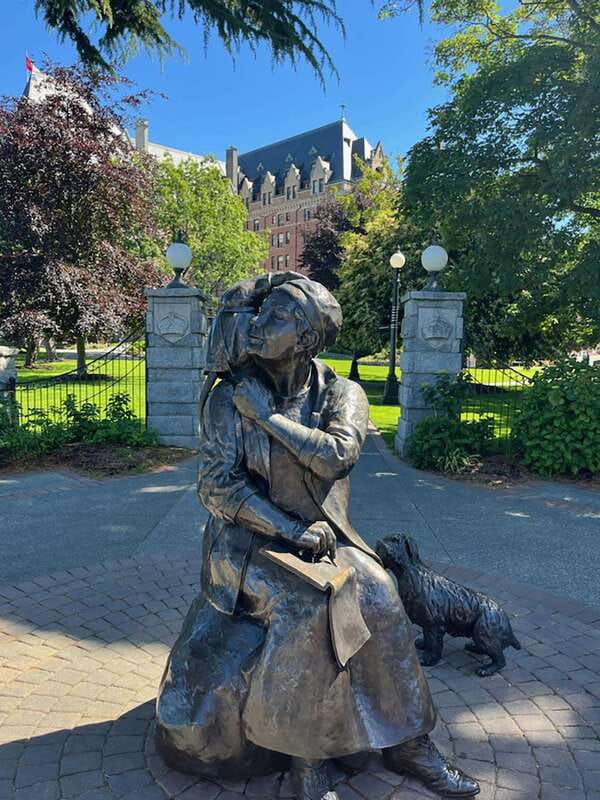
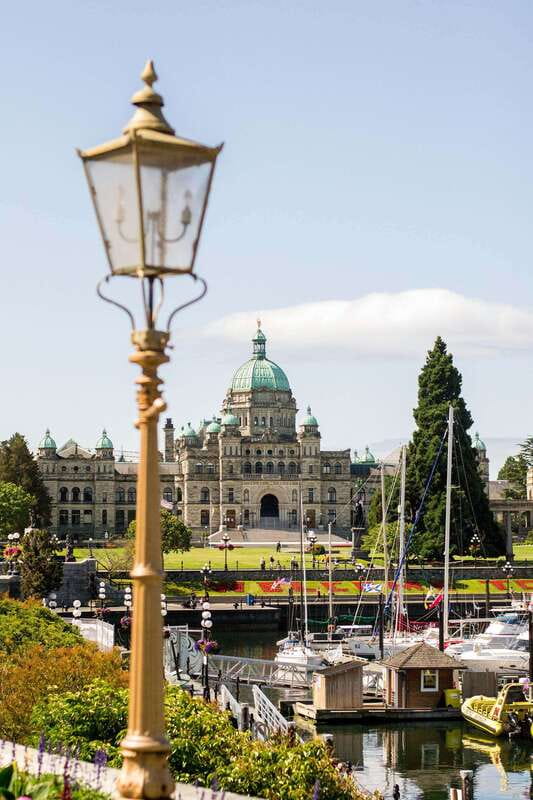
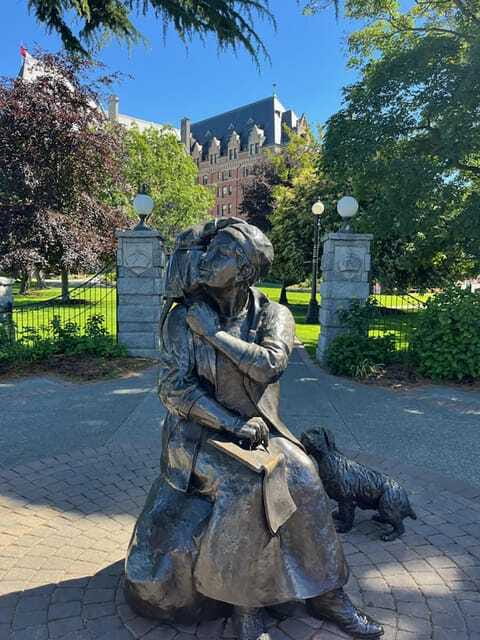
Victoria’s most revealing stories begin beside a woman with a monkey on her shoulder. The Emily Carr statue gives this two-hour walk an odd, memorable start, with the grand Empress Hotel behind you and a local guide ready to explain how an artist can be both iconic and obscure. From there, the route moves through downtown, Bastion Square, and Chinatown, mixing famous sights with less obvious details.
I like the way the tour connects people to places. You hear about Emily Carr, Gold Rush characters, Chinatown’s illegal past, Indigenous traditions, and reconciliation in Canada, all while walking the streets where those stories unfolded. I also like the practical local help at the end: restaurant ideas, event tips, activity suggestions, and a map to help you get oriented.
The main consideration is pace and weather. You cover the route on foot for two hours, and the tour runs rain or shine. Wear proper walking shoes and a weatherproof layer, and remember that the $16 price does not include a gratuity for your guide.
Key points to know before you go
- The Emily Carr statue is the meeting point: Find the woman with the monkey on the corner of Government Street and Belleville Street, on the Empress Hotel side.
- The route finishes in Chinatown: You walk from the waterfront and downtown core toward Victoria’s Chinatown National Historic Site.
- The stories go beyond postcard Victoria: Expect Gold Rush hardship, illicit Chinatown activity, local artists, Indigenous culture, and present-day reconciliation.
- Guide personality shapes the experience: David, Sarah, Bernie, Fish, Michael, and others have led this walk, with a strong focus on humor, questions, and local detail.
- Two hours gives you a useful first look: You will see several central districts without giving up a full day of sightseeing.
- The price is unusually easy on the budget: At $16 per person, the tour offers a low-cost way to get context before exploring Victoria on your own.
Starting with Emily Carr and a monkey
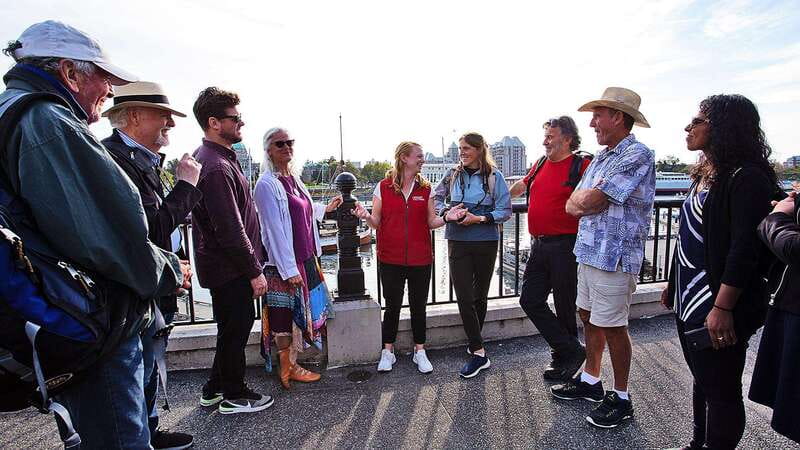
Meet at the Emily Carr statue, at the corner of Government Street and Belleville Street. Look for the statue of a woman with a monkey on her shoulder, on the Empress Hotel side of the intersection. Your guide wears a red vest, which makes the meeting point easier to spot in a busy central area.
This is a smart opening. Emily Carr is one of the best-known names connected with Victoria, yet many people arrive knowing little beyond her reputation as an artist and writer. The statue gives the guide a natural way to discuss her life, work, and the less tidy parts of her story.
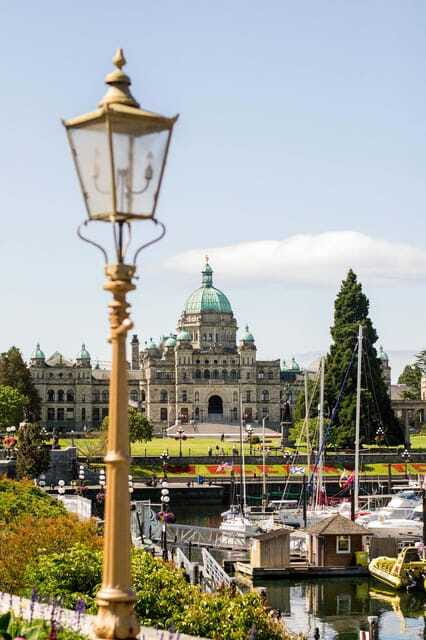
The contrast is part of the fun. Behind you sits the elegant Empress Hotel, one of Victoria’s most recognizable buildings. In front of you begins a walk about people and events that do not always fit the city’s polished image. The monkey adds a touch of strangeness, too. It is hard to forget a meeting point like this.
Arrive ready to listen rather than simply pose for a photo. The guide uses the first stop to set up the larger idea of the tour: Victoria has a refined public face, but its past includes eccentric personalities, hard living, unfair systems, and questionable behavior.
More walking tours in Victoria:
- Ghostly Walking Tour in Victoria
★ 5.0 · 816 reviews - Victoria Bites and Sights Walking + Ferry (winter Sat, Sun)
★ 5.0 · 242 reviews - Quebec City Walking Tour
★ 5.0 · 4,716 reviews
Downtown Victoria, read street by street
The downtown portion is not just a march between major sights. Your guide uses the streets as evidence, pointing out details that are easy to miss when you are walking alone. The goal is to help you see familiar buildings and public spaces with more context.
That approach suits Victoria. The central area is compact, so a walking tour can cover a lot without requiring transport. You move through the city at a human pace, with time to stop, listen, ask questions, and look around.
The strongest guides appear to adjust their delivery to the group. Sarah has been praised for making the tour personal and tailoring it to people’s interests. Other guides, including David, Michael, Bernie, and Fish, have been described as entertaining, friendly, and easy to listen to.
That variety matters. This is not a recorded audio walk with a fixed voice and fixed timing. The guide in front of you will shape the mood. One may focus more on archaeology, another on First Nations culture, another on odd local characters or current events. The common thread is a desire to explain Victoria as a real place rather than a collection of pretty façades.
Bastion Square and the rough edge of the Gold Rush
Bastion Square brings the tour into one of Victoria’s less genteel chapters. The city’s Gold Rush era was not simply a story of sudden opportunity and tidy prosperity. Your guide explains the rough conditions and difficult behavior that came with a fast-growing settlement.
This stop works because it adds needed friction to the usual Victoria picture. Visitors often see gardens, heritage buildings, afternoon tea, and the harbor. Bastion Square helps you consider the labor, conflict, and disorder behind the city’s early growth.
You should expect stories rather than a formal museum presentation. The guide shares selected tales about people and events, then links them to the location under your feet. That makes the square easier to remember later, especially when you walk through it again on your own.
The drawback is that two hours can only sketch this period. If you want a full account of Gold Rush economics, colonial policy, or the development of Vancouver Island, this walk will not replace a museum visit or a longer history program. Its value is in giving you a clear framework and a few memorable details.
Chinatown’s lanes and illegal dealings
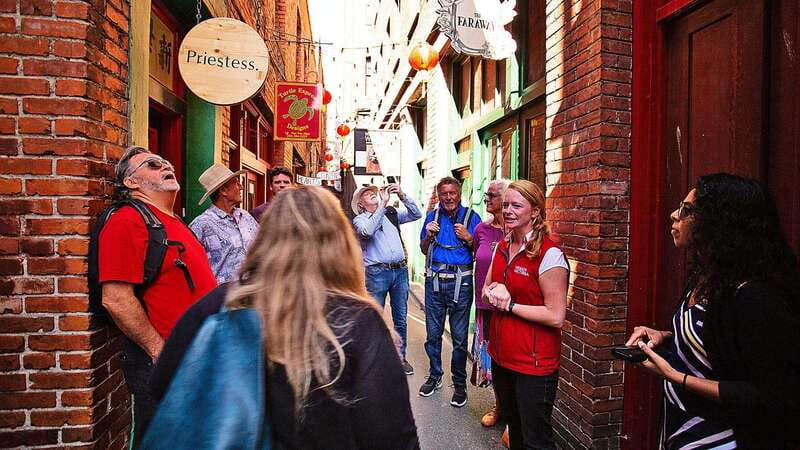
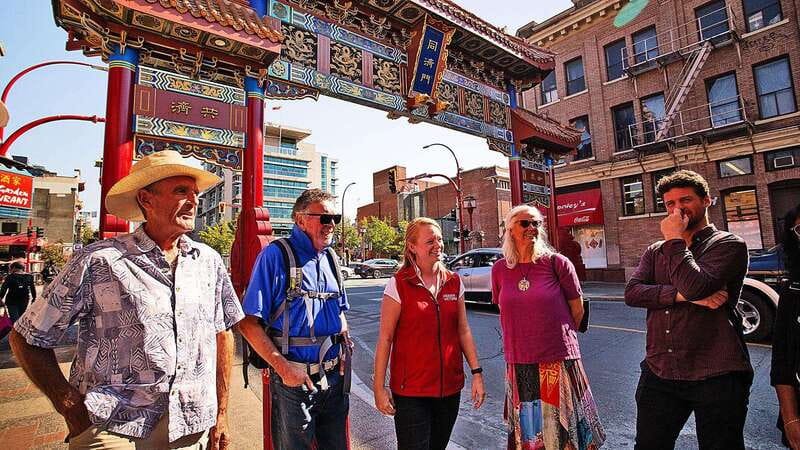
The walk finishes at Victoria’s Chinatown National Historic Site, a useful endpoint because Chinatown adds another layer to the city’s story. The route includes narrow alleyways and accounts of illegal activity, showing a side of the district that is easy to miss if you only look at its shops and decorative entrances.
The point is not to turn Chinatown into a collection of sensational stories. A good guide places those events within the conditions of the time and shows how law, commerce, immigration, and prejudice shaped daily life. The supplied tour description specifically promises the less visible side of Chinatown, and this is one of the reasons the walk feels different from a basic city highlights tour.
Finishing here also gives you a practical advantage. After the guide says goodbye, you are already in an area worth exploring at your own speed. The tour does not include a separate Chinatown attraction ticket, and it should not be confused with an admission-based museum visit. You are walking through the district with interpretation from the guide.
Ask questions if you want more detail about the alleys or the people connected to them. The best use of this stop is to look closely, then keep exploring after the formal tour ends.
A few more Victoria half-days to weigh up
- Victoria Half-Day Whale Watching Adventure with Free Photos
★ 5.0 · 2,259 reviews - Victoria Guided Food and History Tour
★ 5.0 · 2,015 reviews - Victoria Zodiac Boat Whale Watching Adventure
★ 5.0 · 916 reviews - Victoria: 3-Hour Zodiac Whale-Watching Tour
★ 4.6 · 651 reviews
Indigenous culture and reconciliation
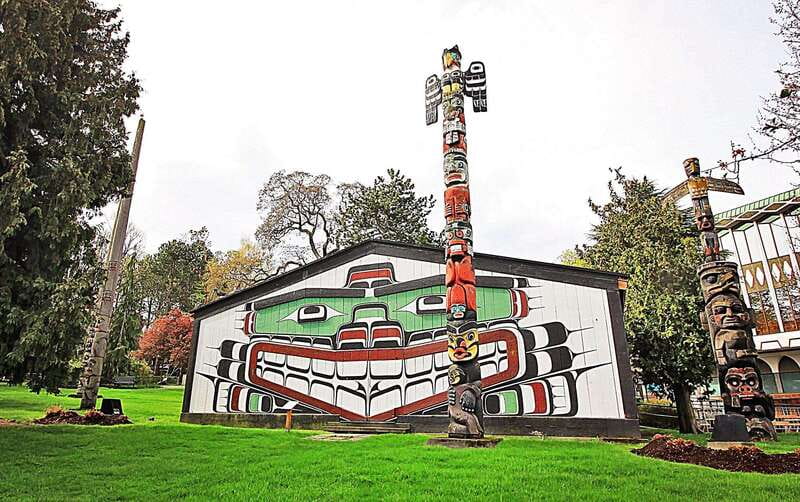
One of the most important parts of the route is its attention to local Indigenous culture. The guides discuss traditions that existed thousands of years before European settlement, along with reconciliation taking place across Canada.
This gives the tour a broader time frame than a standard downtown walk. You are not starting Victoria’s story with the Gold Rush or a British colonial landmark. You are being reminded that the city occupies a place with a much older Indigenous history.
The quality of this section depends heavily on the guide. A guide with a background in archaeology, for example, can offer useful context about how people understand the past and what evidence can tell us. One guide, David, has that kind of background, and another walk led by a guide described as especially focused on First Nations subjects was praised for being informative and enlightening.
You should listen for how the guide connects history with the present. Reconciliation is not presented as a finished subject. The tour introduces the issue in a short city walk, so it cannot cover every community, policy, or debate. Still, including it makes the experience more responsible and more useful than a tour that treats Victoria as if its story began with European arrival.
What the guides do best
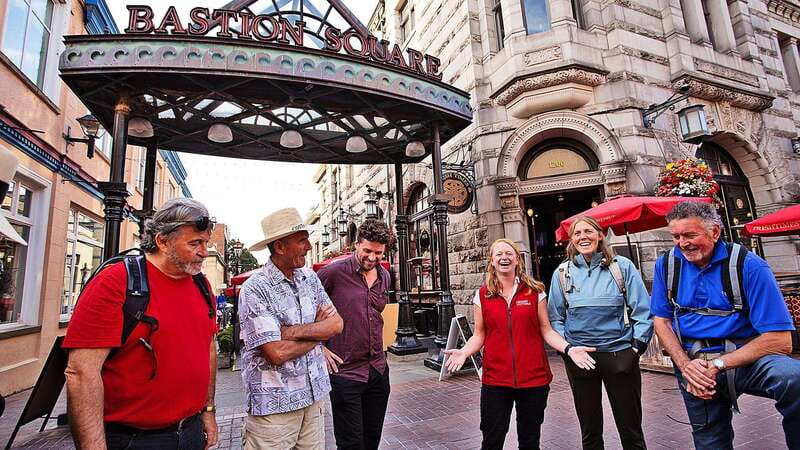
The most consistent strength is guide delivery. The tour promises an enthusiastic, English-speaking local guide, and the strongest accounts point to guides who keep the walk lively without losing the facts.
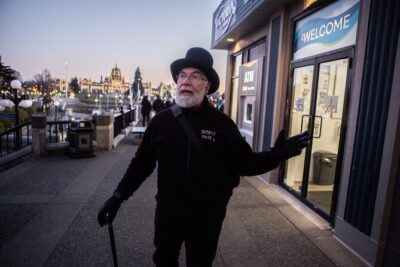
David appears often among the praised guides. He has been described as entertaining, full of local information, and particularly good at pointing out details visitors might otherwise miss. Sarah has been noted for her personal style and ability to shape the tour around the group. Bernie and Fish have also been singled out for being fun and informative, while Michael was appreciated for answering questions clearly.
Do not expect every guide to tell the same story in exactly the same way. That is part of the appeal, but it also means your experience will have a personal element. If you prefer a strict, scripted lecture, this may feel loose. If you enjoy asking questions and hearing a local explain why a place matters, it should suit you well.
The walk also appears to be well paced. One participant specifically appreciated seeing many sights on a personal list without feeling rushed. Two hours is enough time for a useful orientation, but short enough to fit around a harbor visit, museum stop, meal, or other booking.
Is $16 good value?
At $16 per person, this is a strong value for a central Victoria introduction. You get two hours with a live guide, local stories, recommendations for restaurants and activities, advice about events, and a map for finding your way around afterward.
The price is especially attractive if this is your first time in Victoria. A self-guided walk costs less in cash, of course, but you would need to research the route, select the stories, and work out which details deserve your attention. Here, the guide does that sorting for you.
It is also a good deal for repeat visitors. One person who had visited Victoria many times still learned a great deal from the walk. That suggests the experience is not limited to first-time sightseeing, especially if the guide emphasizes overlooked corners, local personalities, and current city life.
Keep the gratuity in your budget. It is not included, and a tip is the usual way to recognize a guide who gives you a lively, useful tour. The booking terms also make the commitment fairly easy: you can cancel up to 24 hours in advance for a full refund, and you can reserve now while paying later.
Who should book this walk?
I would point this tour toward first-time visitors who want a quick orientation before making their own plans. The route covers enough central Victoria to help you understand where the main districts sit, and the map and local suggestions can save time during the rest of your stay.
It also suits history-minded people who prefer stories about real personalities and hard subjects over a list of building dates. Emily Carr, Gold Rush life, Chinatown’s illegal past, Indigenous traditions, and reconciliation give the walk a wider range than a basic highlights route.
Repeat visitors can benefit, too. If you have already seen the Empress Hotel, harbor, and downtown streets, the guide’s local details may give familiar places new meaning. The walk is also a practical choice for people who want restaurant or event suggestions from someone who lives and works in the city.
Families and mixed groups should consider the two-hour length. It is long enough to feel substantial, but not an all-day commitment. The content includes difficult parts of the past, so parents may want to decide if that tone suits younger children.
Practical advice for a comfortable walk
Wear comfortable walking shoes. The route includes downtown streets, Bastion Square, alleyways, and Chinatown, and standing still for explanations can be tiring in poor footwear.
The tour runs rain or shine. Victoria weather can change, so bring clothing that handles rain and wind rather than assuming a dry forecast will hold. There is no point saving a few dollars on outdoor clothing and then spending two hours distracted by wet socks.
Find the Emily Carr statue before the start time. The exact meeting point is on the Empress Hotel side of the Government Street and Belleville Street corner. The red vest identifies the guide.
English is the tour language. You should be comfortable following a live spoken explanation, since the experience depends on stories, questions, and discussion rather than printed text.
At the end, do not rush away. The guide provides recommendations for more activities, restaurants, and events, along with a map. This is one of the most useful moments for asking what fits your interests and how to spend the rest of your time in Victoria.
My verdict: book it for context, not just landmarks
Book this tour if you want Victoria’s popular sights explained through people, conflict, culture, and local life. The $16 price is modest, the two-hour length is practical, and the route ends in Chinatown, where you can continue exploring independently.
The best reason to go is the range of subjects packed into a short walk. You begin with Emily Carr and her unusual statue, pass through Gold Rush-era history, hear about Chinatown’s less public past, and consider Indigenous culture and reconciliation. The guides add personality, with David, Sarah, Bernie, Fish, and Michael each bringing a different style.
Skip it if you want a quiet, self-directed stroll with no set pace, or if you need an indoor activity for wet weather. Otherwise, this is an inexpensive way to get your bearings and leave Victoria with more than photographs. You will have a map, a list of local ideas, and a better sense of why the city is more complicated than its postcard image.
FAQ
How long is the Iconic & Obscure Victoria Walking Tour?
The tour lasts two hours.
What is the price?
The listed price is $16 per person.
Where does the tour begin?
It begins at the Emily Carr statue on the corner of Government Street and Belleville Street, on the Empress Hotel side.
How do I identify the guide?
The guide will be wearing a red vest.
Where does the tour finish?
The tour finishes at Victoria’s Chinatown National Historic Site.
What language is the tour conducted in?
The live tour is conducted in English.
What subjects does the tour cover?
It covers Emily Carr, notable people from Victoria, Gold Rush life, Chinatown’s alleyways and illegal activity, Indigenous culture, and reconciliation in Canada.
Does the tour run in bad weather?
Yes. The tour runs rain or shine, so you should dress for the weather.
Is gratuity included?
No. Guide gratuity is not included in the price.
Just added around Victoria
- Telegraph Cove: Whale Watching Adventure with Free Photos★ 4.6 · 130 reviews
- Royal B.C. Museum in Victoria: Full-Day Admission Ticket★ 4.3 · 17 reviews
- Pickle Pub Crawl: Ferry Rides and Appetizers★ 4.7 · 52 reviews
- From Victoria: Whale Watching Marine Wildlife Excursion★ 4.7 · 19 reviews
- Brentwood Bay: Bioluminescence Tour★ 4.8 · 20 reviews
- 6-Hour Victoria to Cowichan Wine Tour★ 4.4 · 21 reviews
- Victoria: City Highlights and Butchart Gardens Tour★ 4.6 · 148 reviews
- Vancouver to Victoria Seaplane Day Trip + Butchart Gardens★ 4.7 · 141 reviews
Victoria Tours, compared.

Victoria Half-Day Whale Watching Adventure with Free Photos
Read our review →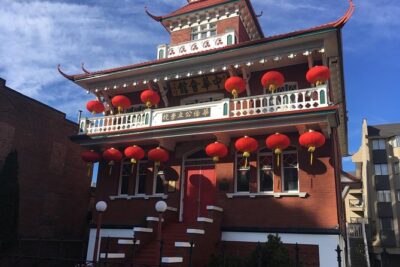

The Butchart Gardens Express Shuttle from Downtown Victoria
Read our review →
Victoria Whale Watching Tour on a Covered Vessel
Read our review →
Browse the lists this tour appears in