
Review · MONTREAL
Exclusive Tour of the Montreal Olympic Games by MTL76
Montreal’s 1976 Olympics were far more complicated than a collection of track medals and opening ceremonies. This 90-minute walk uses the park itself to explain the Games’ political tension, Montreal mayor Jean Drapeau’s campaign to bring them here, and the Olympic Stadium’s famously difficult construction. I like the small maximum of 10 people and the clear route between the cauldron, athletes’ village, stadium, and Nadia Comaneci Square.
I also like that guide Marc-Élie brings strong Olympic enthusiasm to the presentation, with special attention to the sporting moments and behind-the-scenes stories. The main limitation is important: stadium renovations mean you cannot go inside, so this is an outdoor history walk rather than a stadium tour.
Key points before you book
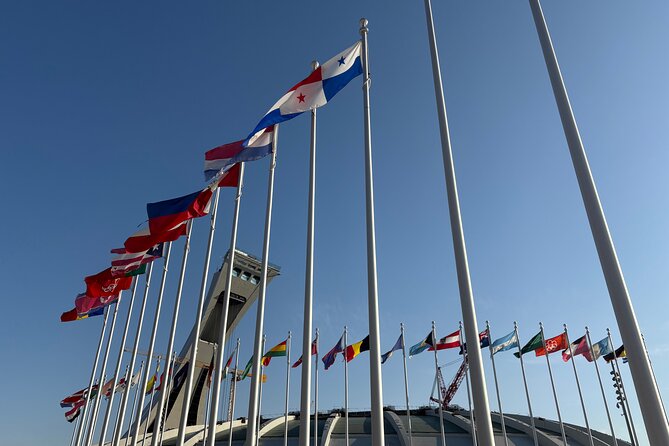
- The tour begins at the Olympic cauldron and rings, giving you an immediate visual link to the 1976 Games.
- Marc-Élie focuses on both politics and sport, including Jean Drapeau’s role in winning the bid for Montreal.
- The former athletes’ village adds useful context about the unusual setting and pressures surrounding these Olympics.
- The Olympic Stadium is viewed from outside, with construction stories and legacy issues replacing an interior visit.
- Nadia Comaneci Square brings the athletic drama into focus, especially the performances that defined the Games.
- The group is limited to 10 people, and the guide can direct you to the metro or escort you back toward the starting point.
Why Montreal’s 1976 Olympics still make a good walking tour
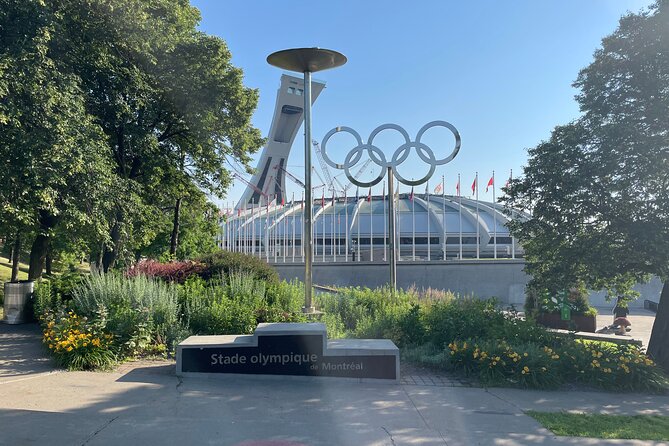
The Olympic Park is a powerful place to study how sport, politics, architecture, and city pride can collide. Montreal wanted the world’s attention, and Mayor Jean Drapeau worked to secure the Games for the city. The result was a major international event with enormous ambition, complicated politics, and structures that still shape the eastern part of Montreal.
I like this tour because it does not treat the Olympics as a simple victory parade. You hear about the ancient origins of the Games and their modern development, then move quickly into the specific story of Montreal. That gives you enough background to understand the symbols without turning the walk into a lecture about every Olympic edition.
The price is $22.41 per person, with admission and taxes included. For roughly an hour and a half with a specialist guide, that is a reasonable cost if you already plan to visit Olympic Park. The value comes from interpretation. You can walk around the cauldron and stadium on your own, but you will miss the political context, construction stories, and links between the various sites.
The tone should suit anyone who prefers a focused outdoor walk to a large museum visit. The group size of 10 is especially helpful here. Olympic Park covers broad open spaces, and a small group makes it easier to hear the guide and ask a question without fighting through a crowd.
A few more Montreal half-days to weigh up
- Montreal: Guided Bus Tour
★ 4.4 · 3,064 reviews - Montreal: Hop-On Hop-Off Double-Decker Bus Tour
★ 4.1 · 2,760 reviews - From Montreal: Quebec City and Montmorency Falls Day Trip
★ 4.5 · 2,669 reviews
Starting beside the cauldron and Olympic rings
The walk begins at 2705 Boulevard Pie-IX, beside the Olympic cauldron and rings. This is a sensible starting point because the symbols immediately establish the subject of the tour, and the guide can use them to explain how the Games grew from ancient contests into the modern international event you know today.
You will likely spend a short time getting the basic framework before moving across the Esplanade of the Olympic Park. The opening does not seem designed as a long academic lesson. Instead, it gives you the background needed to follow the rest of the walk.
The cauldron and rings also provide one of the clearest photo opportunities of the route. Since the tour ends at the rings as well, you get another chance for pictures after hearing the full story. That closing return to the starting symbol gives the walk a tidy shape.
If you care about Olympic design and symbolism, this opening is more than a photo stop. It sets up the contrast between the idealism of the Olympic movement and the practical problems that followed in Montreal.
Jean Drapeau and the campaign for Montreal
On the Esplanade, Marc-Élie explains how Montreal secured the Games and the role played by Mayor Jean Drapeau. This part matters because the Olympic Park was not an accidental collection of buildings. It grew from a civic project meant to put Montreal on the international stage.
You will hear about the effort to win the event and the city’s hopes for what the Olympics could bring. The story also creates a useful warning about big sporting events. Winning the right to host one can be easier than managing the cost, construction, and expectations that follow.
This is one of the tour’s strongest elements for visitors who want more than sports trivia. The 1976 Games are a case study in city planning and public ambition. The open Esplanade gives the guide room to connect the political decision to the physical place around you.
The walk is offered in English, which makes it accessible to English-speaking visitors who want a focused account without needing to decode museum labels or read large amounts of text. Confirmation arrives at booking, and the activity is near public transportation, so it can fit into a day spent around the Olympic Park.
The former athletes’ village and the pressure around the Games
The next major stop is in front of the former athletes’ village. Here, the focus shifts from city politics to the specific setting of the 1976 Olympics, including political stakes and unexpected turns.
This stop is valuable because athletes’ villages are usually treated as background scenery. In fact, they help explain how the Games functioned. The village was where athletes lived within the highly charged setting of an international event, and its location gives you a more human angle than the grand stadium alone.
The 1976 Olympics took place during a tense period in international sport. This tour presents that context as part of the story rather than isolating the Games from world events. You should expect discussion of politics and sporting pressures, not only a list of winners.
For me, this is where the tour earns its modest price. A casual walk around the park may show you impressive structures, but it will not necessarily explain why this particular Olympics felt unusual. The guide’s job here is to connect the buildings with the forces acting on the event.
Same base, a completely different sort of day:
- Montreal Mile End Authentic Food Tour with 7 Delicacies Tastings
★ 5.0 · 2,598 reviews - Quebec City and Montmorency Falls Day Trip from Montreal
★ 4.0 · 2,437 reviews - The Original Old Montréal Walking Tour by Guidatour
★ 4.5 · 2,217 reviews - Old Montreal Small-Group Walking Tour | Max 10 | by MTL Detours
★ 5.0 · 2,088 reviews
The Olympic Stadium from the outside
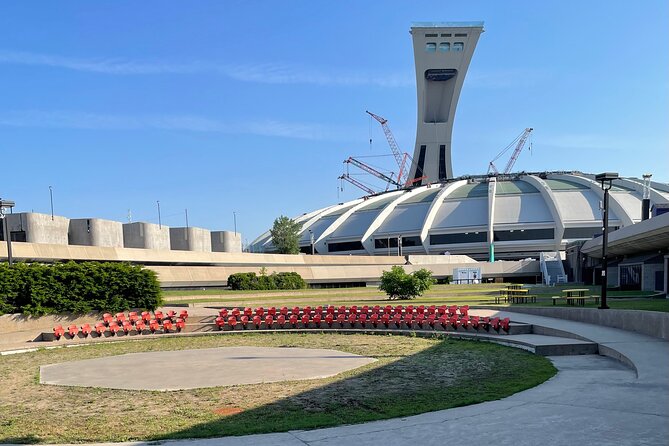
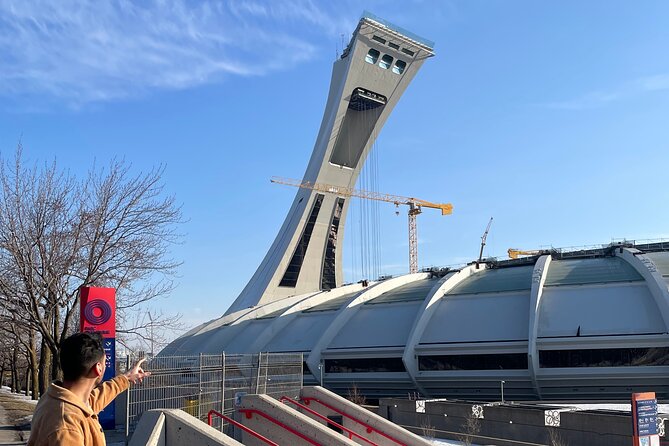
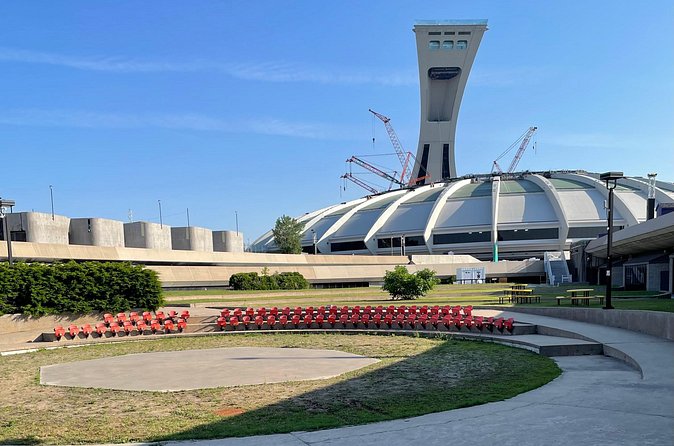
At the foot of the Olympic Stadium, the tour turns to one of Montreal’s most recognizable and controversial structures. The guide explains the bold design, the complex construction, and the stadium’s lasting effect on the city.
The stadium is visually striking even when approached from ground level. Its tower and unusual form are easy to recognize, and the broad setting gives you a useful sense of its scale. This is also the point where you should remember the tour’s biggest restriction: you cannot enter the stadium because significant renovations are under way.
That exclusion will matter if your main goal is to see the interior. This experience does not provide stadium admission, an indoor seating view, or access to facilities behind the public exterior. You are paying for the story of the structure and its place in Montreal, not for an architectural tour inside the building.
Still, an outside stop can be worthwhile when the explanation is strong. Construction problems and long-term maintenance are central to the Olympic Stadium’s story. The guide can show you the building while explaining why it became such a famous example of ambitious Olympic construction.
I would set your expectations correctly before booking. If you want a detailed look at the stadium’s exterior and an account of how it came together, this walk fits. If you want to sit inside the stadium or explore its interior, wait until renovations no longer prevent entry, then check what a separate admission offers.
Nadia Comaneci Square and the athletic story
Nadia Comaneci Square gives the tour a human face. Here, the emphasis is on the performances that made the Montreal Games memorable, including the achievements associated with Nadia Comaneci.
This stop helps keep the tour from becoming only a story about budgets and concrete. The Olympics are also about exceptional athletic moments, and the square provides a natural place to recall the competitors who captured international attention.
The guide’s strong interest in Olympic sport should be useful here. One especially positive detail about Marc-Élie is his enthusiasm for all things Olympic, paired with an informative presentation. That combination matters. A guide who enjoys the subject can bring energy to names and events that might otherwise feel like a dated timeline.
You do not need to be an expert in gymnastics or Olympic history to benefit from this stop. The tour is built to explain why certain performances mattered and how they helped define the Games. If you already follow Olympic sport closely, you may appreciate the chance to connect those performances to the exact setting in Montreal.
Ending at the rings with practical help afterward
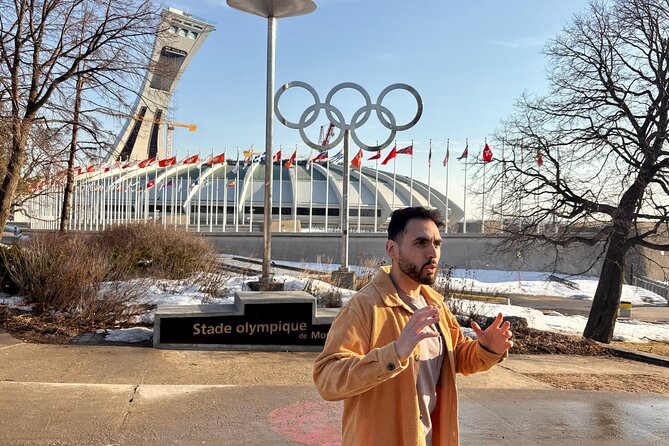
The route finishes back in front of the Olympic rings, where you can take photos and close the loop on the visit. Ending at a familiar symbol is a good choice, especially after moving through the more complicated stories of politics, construction, and athletic achievement.
The official end point is listed as Aréna Maurice-Richard, 2800 Rue Viau. The guide can escort you back toward the original meeting point, take you toward the nearest metro station, or point you in the direction of your next activity. That flexibility is useful because the tour begins and ends at different listed locations.
You should allow a little extra time after the scheduled 90 minutes if you want photos or need help getting oriented. The activity itself is approximately an hour and a half, but the final picture stop and onward directions may add a few minutes.
The route is near public transportation, and most people can participate. Service animals are allowed. The available details do not promise a fully accessible route or describe the surface and walking conditions, so if you have specific mobility needs, ask before booking rather than assuming.
What the $22.41 price really gets you
At $22.41, this is not an expensive Montreal activity. The cost includes the tour, admission to the activity, and all fees and taxes. There is no separate charge for the outdoor Olympic Park stops.
The better question is how much help you want making sense of the park. If you are content to take photos and read signs on your own, you may prefer a free self-guided walk. If you want the political story, the athletes’ village context, stadium construction details, and Olympic anecdotes in one compact visit, the fee is fair.
The 10-person limit improves the value. A small group means the guide can maintain a personal pace and answer questions without addressing a large crowd. It also makes the experience feel more like a guided conversation than a standard city tour.
This is not a full-day activity, and that helps with planning. You can place it alongside other Montreal activities without giving up most of your day. The 90-minute length also suits visitors who want to see Olympic Park but do not want a long, highly specialized excursion.
The free cancellation policy adds some flexibility. You can cancel for a full refund up to 24 hours before the local start time. Changes or cancellations made inside that window are not accepted for a refund, so keep the cutoff in mind when your schedule is uncertain.
Who will get the most from this experience
I would recommend this walk to you if you enjoy the stories behind major buildings and events. It is particularly well suited to Olympic fans, architecture followers, Montreal first-time visitors, and anyone curious about how cities handle the pressure of hosting a global sporting event.
Families may also find the route manageable because it lasts about 90 minutes and moves between recognizable landmarks. The athletic stories at Nadia Comaneci Square can give younger visitors a clear hook, while the cauldron and rings offer easy photo stops.
It is also a good choice if you have already seen Montreal’s main central sights and want to understand a different part of the city. Olympic Park is not simply another photo backdrop. With the right explanation, it becomes a lesson in public ambition, urban design, sport, and difficult planning decisions.
I would be more cautious if you need an indoor activity, dislike walking outdoors, or specifically want to enter the Olympic Stadium. Renovations prevent stadium entry, and the tour’s value depends on your interest in listening to the guide as you move through the park.
Tips for making the walk work well
Wear shoes suitable for a 90-minute outdoor walk. The supplied details do not specify the route surface, but the experience takes place around a large sports complex rather than inside a single building, so practical footwear is the sensible choice.
Arrive at 2705 Boulevard Pie-IX, Montréal, in time for the start. The booking confirmation is supplied at the time of reservation, and the mobile ticket means you do not need a printed ticket.
Keep your phone ready at the rings and cauldron. The final stop is specifically intended for photos, and the guide can help you get your bearings for the next part of your day.
If the stadium interior is essential to your plans, do not treat this tour as a substitute. Renovation work rules out entry, and the experience clearly centers on the outside sites and the stories connected to them.
Finally, remember that the tour is offered in English. If you prefer a different language, confirm availability before paying, since the stated language is English.
Should you book the Montreal Olympic Park tour?
Book it if you want a compact, personal account of Montreal’s 1976 Olympics and you value explanation more than entry tickets. At $22.41, the small group, 90-minute route, and Olympic-focused guide make it a sensible add-on for a visit to the park.
The strongest reasons to choose it are Marc-Élie’s clear enthusiasm, the balance between political and sporting stories, and the range of stops. The main reason to skip it is equally clear: you cannot enter the Olympic Stadium during renovations.
For a first visit to Olympic Park, I think the guided walk adds enough context to justify the cost. You leave with more than photographs of the rings. You understand why Montreal pursued the Games, how the event was shaped by world politics, why the stadium became such a complicated project, and which athletic moments still define the 1976 Olympics.
FAQ
Where does the Montreal Olympic Park tour begin?
The tour begins next to the Olympic cauldron and rings at 2705 Boulevard Pie-IX, Montréal, QC H1V 2E8, Canada.
Where does the tour end?
The listed end point is Aréna Maurice-Richard at 2800 Rue Viau, Montréal, QC H1V 3V4, Canada.
How long does the experience last?
The tour lasts approximately 1 hour and 30 minutes.
What language is the tour offered in?
The tour is offered in English.
Can I enter the Olympic Stadium?
No. The Olympic Stadium is undergoing significant renovations, so the tour does not include entry.
What is included in the price?
The activity includes the guided tour, admission to the activity, and all fees and taxes.
How many people can join the tour?
The tour has a maximum of 10 participants.
Is the experience suitable for most people?
Most people can participate, and service animals are allowed. The activity is also near public transportation.
Can I cancel for a full refund?
Yes. You can cancel at least 24 hours before the experience start time for a full refund. Cancellations or changes made less than 24 hours before the start are not accepted for a refund.
Just added around Montreal
- Winter Express: Old Montreal Highlights Walking Tour★ 5.0 · 119 reviews
- Under the Surface of Montreal’s Chinatown: Guided Food Walking Tour★ 5.0 · 23 reviews
- Full Day Family Bike Rental★ 5.0 · 17 reviews
- Montreal Premium Driving Tour with River Cruise and Notre Dame★ 4.5 · 164 reviews
- Immersive Virtual Reality Game Activity★ 5.0 · 19 reviews
- Montréal Downtown and Underground City Private Walking Tour★ 5.0 · 47 reviews
- Day at Mont-Tremblant National Park★ 4.0 · 5 reviews
- In the Shadow of the Mountain: Montreal Jewish History Walking Tour★ 4.5 · 33 reviews
Montreal Tours, compared.

Montreal Mile End Authentic Food Tour with 7 Delicacies Tastings
Read our review →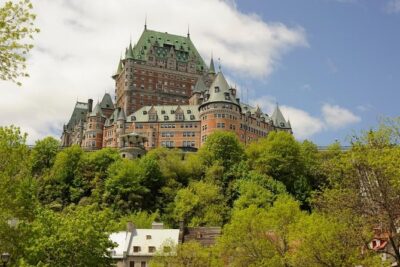
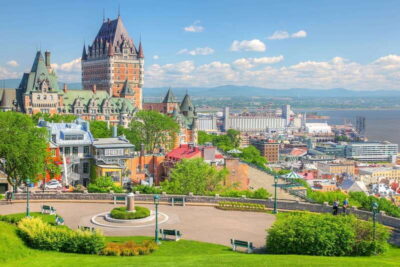
Quebec City and Montmorency Falls Day Trip from Montreal
Read our review →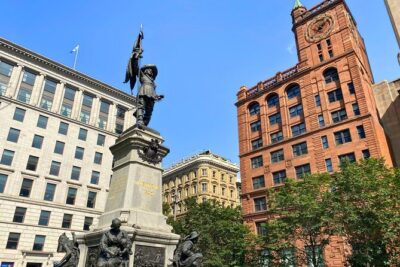
The Original Old Montréal Walking Tour by Guidatour
Read our review →
Old Montreal Small-Group Walking Tour | Max 10 | by MTL Detours
Read our review →
Montreal City Sightseeing Tour with Live Commentary
Read our review →
Browse the lists this tour appears in