
Review · TORONTO
E-bike through Toronto’s Dynamic Neighbourhoods
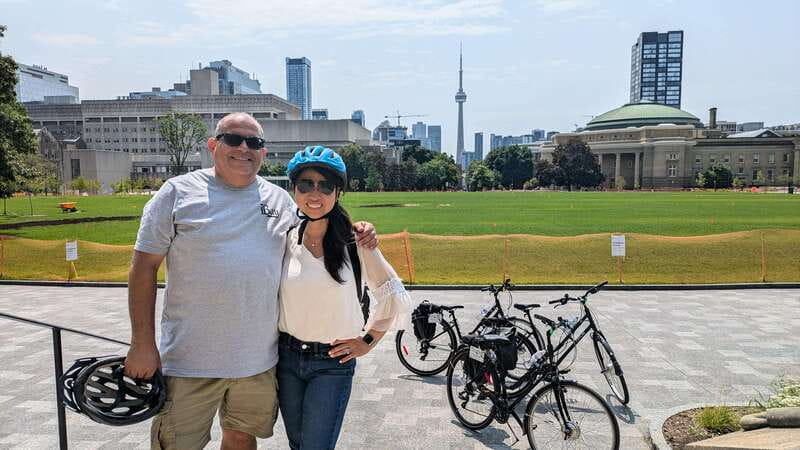
Toronto makes more sense when you move between its neighborhoods instead of staying around the CN Tower and waterfront core. This 210-minute e-bike tour links trendy streets, social projects, green spaces, art districts, and wealthy enclaves, giving you a useful look at how the city works and changes.
I like the small group of eight and the way an electric bike lets you cover a wide stretch of Toronto without turning the day into a workout. I also like the range of stops, from Graffiti Alley to St. James Town and Ontario Place. The main caution is practical: you must already know how to ride a bike, and a last-minute cancellation could disrupt a tightly planned visit.
Key points to know before booking
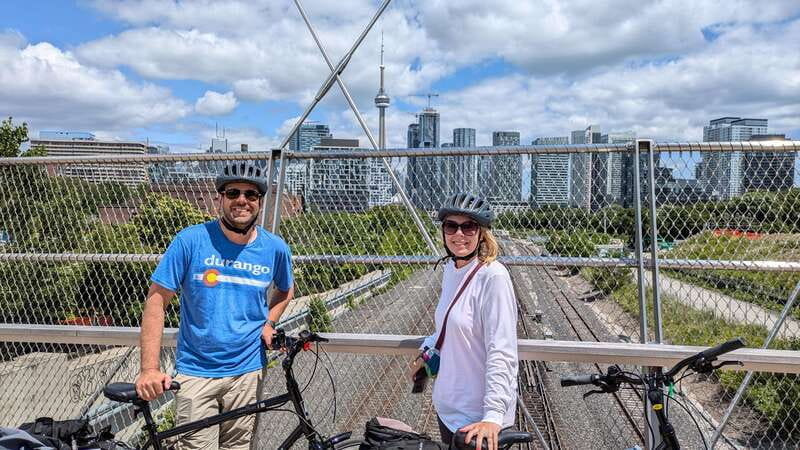
- A citywide route in 210 minutes: You travel through several very different parts of Toronto rather than seeing only one central district.
- Electric assistance saves your legs: The e-bike helps you cover more ground with less effort, though you still need to ride confidently in the city.
- Mariana has earned special praise: She is noted for clear bike instruction, useful local context, and an easygoing manner.
- The route looks beyond postcard Toronto: St. James Town, CAMH, Lower Ossington, and Rosedale each show a different side of local life.
- The group is capped at eight: That keeps the ride more personal and makes questions easier than on a large bus tour.
- The coffee stop costs extra: Water and a granola bar are included, but you pay for any drink yourself.
Why an e-bike is a smart way to see Toronto
At $107 per person, this is not the cheapest way to move around Toronto. It is, however, a fairly efficient use of half a day if you want context as well as sightseeing. In three and a half hours, you can reach neighborhoods that would take much longer to connect on foot, while avoiding the delays of a vehicle tour.
The electric motor matters most because the route is broad. You are not simply cycling around one park or a short waterfront path. You move from central streets to residential areas, cultural districts, and the lakefront. The motor reduces the effort required, but it does not remove the need to pay attention, steer, brake, and ride with confidence.
I would choose this tour early in a Toronto visit. It gives you a working map of the city and may help you decide where to return later for a meal, museum, walk, or evening drink. If you have only one day in town, the route also gives you more variety than a short walking tour based around the main sights.
The tour includes the electric bike, helmet, water, and a granola bar. That is useful because you are on the move for 210 minutes. Any drinks bought during the coffee stop are extra, so bring a payment method and treat that pause as an optional personal purchase rather than an included refreshment.
More bike days around Toronto:
- Toronto: Heart of Downtown 3.5-Hour Bike Tour
★ 4.9 · 419 reviews - Downtown Toronto Bike Tour
★ 5.0 · 336 reviews - Toronto Islands: Morning or Twilight 3.5-Hour Bike Tour
★ 4.8 · 304 reviews
Starting underground on St. Patrick Street
The meeting point is at 124 St. Patrick Street, about 50 meters south of Dundas on the west side of the street. It is inside a parking garage, just north of a salon, which is not the sort of place you may expect when looking for a bike tour office.
If the garage door is closed, step closer and it should open automatically. Enter the garage, follow the ramp down, and use the yellow signs to reach the P2 level, section H. That detail is worth saving before you leave your hotel. A first-time visitor could easily walk past the entrance or wonder if the garage is the correct place.
Arrive ready to ride in comfortable clothing. The operator provides the helmet and bike, and the guide handles the basic orientation. If you have never used an e-bike, the guide can help you get comfortable with the controls. Still, you should not treat the motor as a substitute for basic cycling ability.
The group limit of eight is one of the better features here. You can hear the guide more easily, ask questions without holding up a large crowd, and get a more flexible introduction to the neighborhoods. On one particularly small departure, the tour became a personal ride, though you should not assume that will happen on your date.
Lower Ossington and Trinity Bellwoods
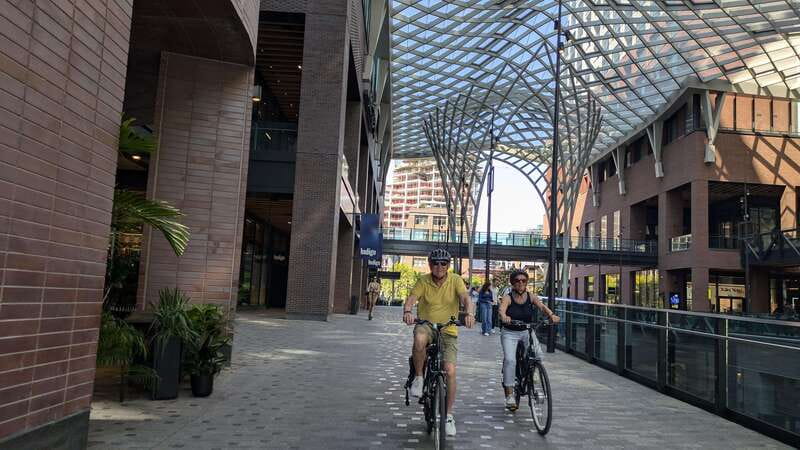
Lower Ossington is one of the tour’s most revealing stops because it shows how quickly a city district can change. Once overlooked, the area has gained an international reputation for restaurants, bars, and independent businesses. The point is not simply to admire a fashionable street. You get to consider how a neighborhood shifts from an ordinary local area into a place that attracts attention far beyond Toronto.
That change also gives the guide something useful to explain. A good stop here can help you read the city as a place that is constantly adjusting to new tastes, new businesses, and new pressures. You are seeing the result of urban change rather than a preserved historic display.
Trinity Bellwoods offers a different pace. The park is a place to slow down, watch people, and see how residents use open space in the middle of the city. After riding through busy streets, the park gives the route some breathing room.
I like this contrast. Lower Ossington shows Toronto’s social and commercial energy, while Trinity Bellwoods shows how residents reclaim time and space for everyday life. The drawback is that neither stop is designed as a long, leisurely visit. You are making a broad circuit, so expect an introduction and a chance to observe, not an afternoon spent lingering.
Graffiti Alley and the Bloor Street Cultural Corridor
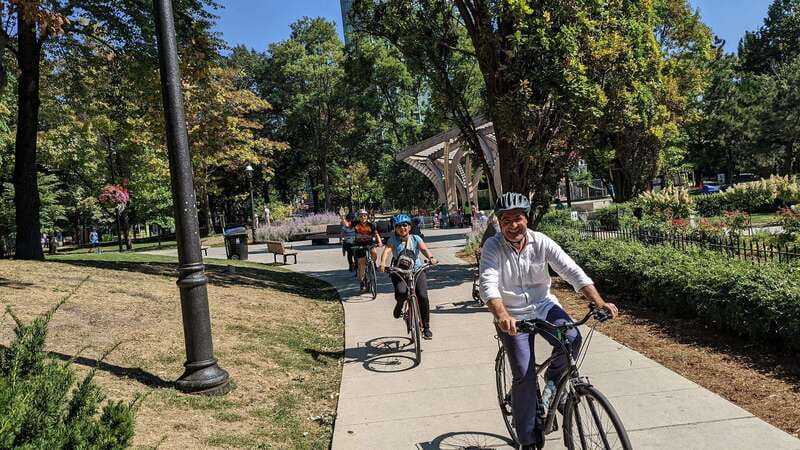
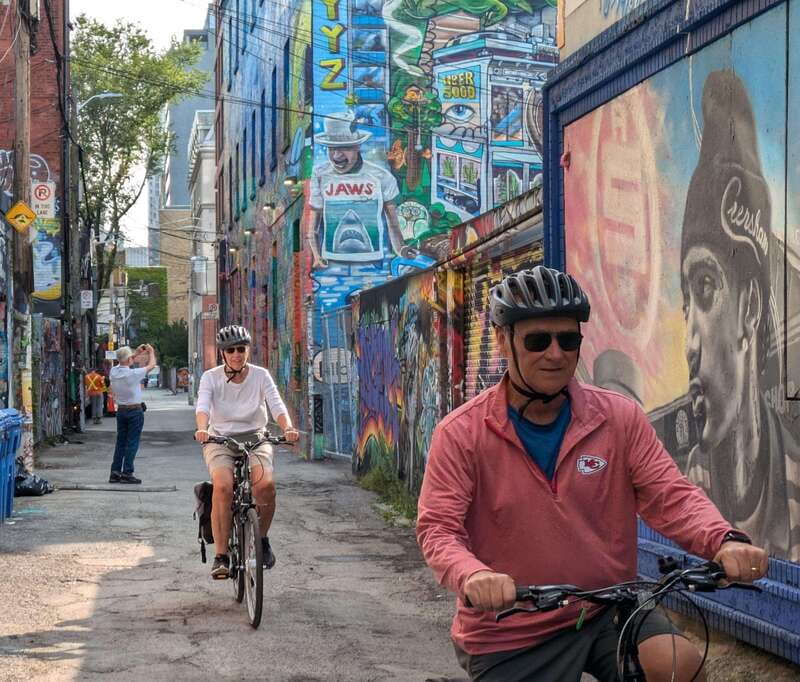
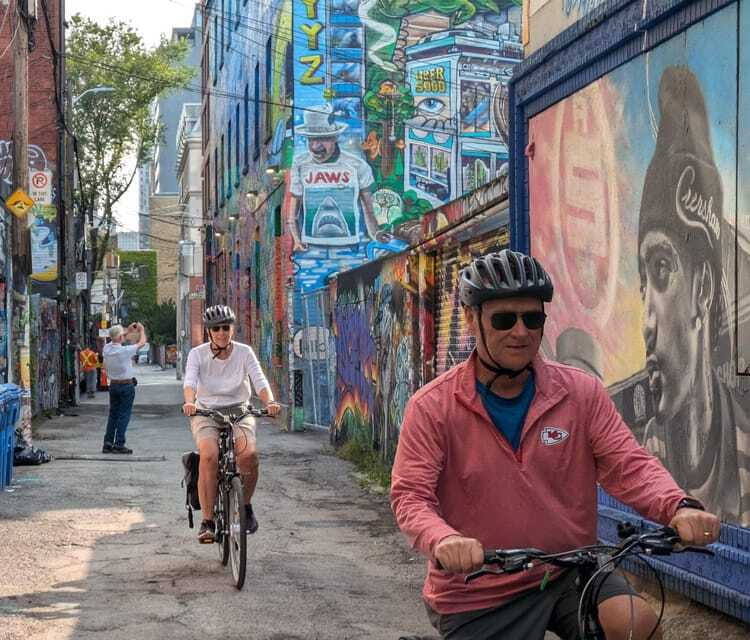
Graffiti Alley brings a more visual look at Toronto. Its street art changes over time, so the scene is not fixed in the way a museum collection is. The walls show the city’s creative pulse in a direct, public form, and the narrow setting makes a useful change from parks and broad avenues.
You should expect the artwork to vary from one visit to the next. That is part of the appeal, but it also means you are not coming for one permanent masterpiece. The guide helps place the alley within the city’s wider creative life, rather than treating it as a quick photo stop alone.
The Bloor Street Cultural Corridor adds museums, performance venues, and food from many parts of the world. It is a good reminder that Toronto’s culture is not confined to one official arts district. The route uses this area to connect the city’s public institutions with the communities and businesses around them.
This portion will suit you if you like seeing how a city expresses itself through both formal and informal culture. If you prefer a tour built around long museum visits, this ride will feel too brief. The value comes from seeing several cultural areas in one connected trip and learning how they relate to the surrounding neighborhoods.
More e-bike rides in Toronto:
- Epic Electric Bike Tour by Cycle City Tours
★ 5.0 · 848 reviews - Montreal eBike Sightseeing Tour
★ 5.0 · 573 reviews - eBike Adventure in Whistler
★ 5.0 · 365 reviews - Montreal: E-Bike Sightseeing Tour
★ 4.8 · 365 reviews
St. James Town and CAMH
St. James Town may be the most important stop for understanding Toronto beyond its polished image. It is one of the city’s most culturally diverse communities, and the tour looks at local efforts involving food, healthcare, and social services.
That focus gives the route more substance than a simple list of attractive streets. You are asked to think about how people live in a dense urban setting and how communities respond to practical problems. The guide can help connect the visible neighborhood to the work taking place within it.
CAMH, the Centre for Addiction and Mental Health, continues that theme. The tour presents Toronto’s changing approach to mental health and the institution’s efforts to make its surroundings more open and progressive. This is not a conventional sightseeing stop, but it is valuable if you want to understand the city’s public priorities.
I appreciate the inclusion of both St. James Town and CAMH because they keep the tour from becoming a parade of fashionable addresses. They show Toronto trying to become more livable and more responsive to residents. Some people may prefer a lighter route focused only on parks, shops, and scenic views. If that is your preference, these stops may feel more serious than expected.
Ontario Place and Trillium Park by the waterfront
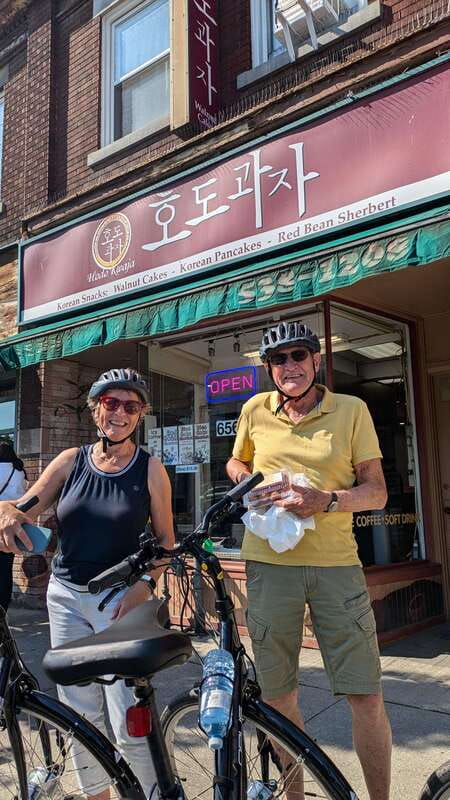
The ride toward Ontario Place and Trillium Park shifts the mood again. Here you see Toronto from the waterfront and consider the future of a much-loved public venue that is undergoing change.
The stop is useful because it shows the city in transition. Ontario Place is not presented as a finished attraction with one settled identity. Instead, you see a public space at a turning point, with questions about how the waterfront should be used and what kind of place Toronto wants to build for the future.
Trillium Park gives you a chance to enjoy the lakefront setting while taking in that wider issue. The ride itself is part of the appeal, since an e-bike lets you connect the central neighborhoods with the waterfront without relying on a car or spending much of the afternoon on public transport.
Do not expect a full waterfront day here. This is one stage in a long route, not a dedicated Ontario Place tour. You may want to return later if the lakefront becomes a favorite part of your visit.
Rosedale, where the city becomes quieter
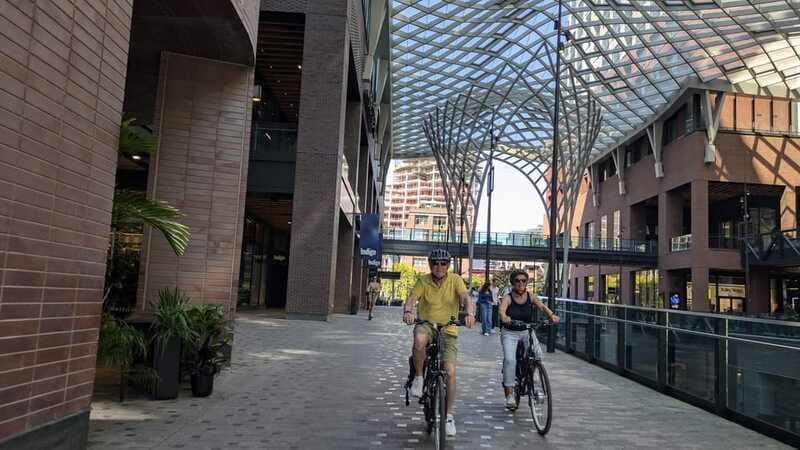
Rosedale provides one of the sharpest contrasts on the route. After the street art, dense communities, cultural venues, and waterfront redevelopment, you glide through one of Toronto’s most affluent neighborhoods.
Its picturesque streets invite a surface-level reading: quiet, leafy, and expensive. The tour goes further by looking at the stories behind the neighborhood and how it fits into Toronto’s larger social picture. That contrast is precisely why the stop belongs on this route.
Rosedale also lets you see how quickly Toronto’s character can change from block to block. The city is not one uniform place. A few minutes of riding can take you from an area shaped by public services and cultural exchange to a district known for wealth and privacy.
The tradeoff is that residential areas may be less immediately exciting than Graffiti Alley or Lower Ossington. Their value comes from comparison. Rosedale works best as part of the full circuit, where its quiet streets become a piece of the city’s larger story.
The guide makes the difference
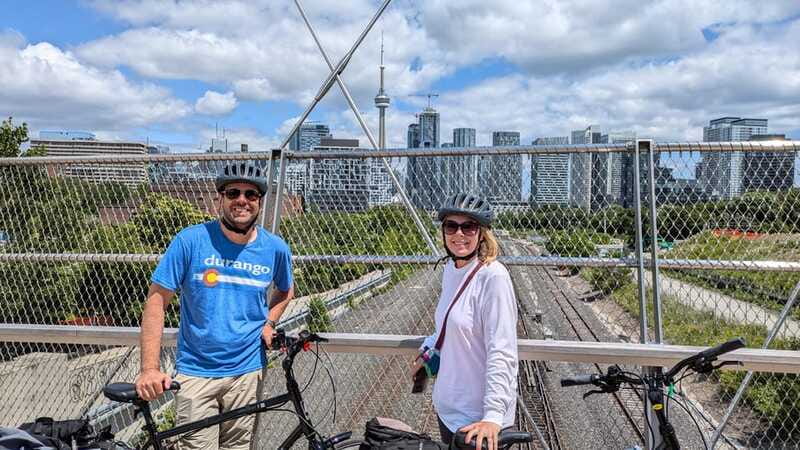
The guide is central to the experience because the route covers topics that are not obvious from the saddle. Mariana has received especially strong praise for being pleasant, clear, and well prepared. She is also noted for explaining the bikes carefully, which matters if an e-bike is new to you.
Her role is not only to point out streets. The best parts of this route depend on explaining how neighborhoods have changed, how services work, and why some places matter to residents. A guide who can handle both bike technique and local context makes the ride easier and more rewarding.
The small group helps here. With no more than eight participants, you can ask about a neighborhood, pause for clarification, and keep the conversation more direct. A larger group would make the route less personal and could make riding through city streets harder.
English is the tour language. If you need another language, this experience is not set up for that.
Who will get the most from this ride
I would recommend the tour to a curious first-time visitor who wants a broad introduction to Toronto. It is also a good fit for a returning visitor who has already seen the major downtown sights and wants to understand the city’s neighborhoods.
You will get the most from it if you enjoy:
- Comparing very different parts of one city
- Learning about current urban issues as well as past events
- Riding outdoors for several hours
- Seeing street art, parks, cultural venues, and residential areas in one outing
- Asking questions in a small group
You should think twice if you cannot ride a bike comfortably. The electric assistance makes the journey easier, but you still need to control the bike. The activity is not suitable for children under 16.
The route may also disappoint you if you want a relaxed food tour or a long series of photo breaks. There is a coffee stop, but drinks are not included, and the main purpose is to keep moving between districts.
Is $107 a fair price?
The price makes the most sense when you compare it with what is included in the 210-minute route. You receive the e-bike, helmet, water, snack, and a guide who covers a large section of Toronto. The small group adds real value because you are not simply following a guide at the back of a large procession.
A self-guided ride could cost less, but you would need to plan the route, understand the neighborhoods, find the right streets, and supply the local context yourself. Public transport might also be cheaper, but it would not give you the same continuous view of how one area changes into another.
The price is less attractive if you only want a short bike ride or a single district. In that case, you may be paying for coverage you do not need. For a first orientation to Toronto, though, the combination of transport and interpretation makes the cost reasonable.
Free cancellation up to 24 hours before departure and the option to reserve now and pay later make planning easier. One caution deserves attention: at least one booking was cancelled close to departure because of staff and scheduling problems. That appears to be an exception rather than the usual pattern, but you should avoid placing an important, unchangeable plan immediately after the tour.
Practical details that shape the day
Wear comfortable clothes that allow you to sit and ride for several hours. Bring anything you personally need for the weather, since the supplied information only specifies comfortable clothing, water, and a granola bar.
The meeting point is not a street-side shop. Save the address, follow the garage instructions, and allow enough time to reach the P2 level, section H. If you need help finding it, the provided phone number is 416-477-2184.
The tour runs for 210 minutes, with starting times based on availability. Check the departure time carefully, especially if you have a train, flight, dinner reservation, or another timed activity later in the day.
Should you book this Toronto e-bike tour?
Book it if you want to understand Toronto through its neighborhoods rather than collect only its famous sights. The route’s strongest feature is its range: Lower Ossington, St. James Town, Trinity Bellwoods, the Bloor Street Cultural Corridor, Graffiti Alley, CAMH, Ontario Place, Trillium Park, and Rosedale all offer a different view of the city.
I would especially choose it for a first visit lasting only a day or two. You cover enough ground to form a useful picture of Toronto, and guides such as Mariana add the local explanation that a map cannot provide.
Skip it if you cannot ride a bike, are under 16, or want a slow, food-focused outing. Also keep a little flexibility in your schedule because of the possibility of a last-minute cancellation. For everyone else, the e-bike is a practical way to see how Toronto’s neighborhoods connect, change, and function beyond the standard tourist route.
FAQ
How long does the Toronto e-bike tour last?
The tour lasts 210 minutes, or three and a half hours.
How many people can join the tour?
The group is limited to a maximum of eight participants.
What is included in the price?
The $107 price includes an electric bike, helmet, water, and a granola bar snack.
Are drinks at the coffee stop included?
No. Any drinks purchased at the coffee stop are paid for separately by you.
Where does the tour meet?
The meeting point is inside the parking garage at 124 St. Patrick Street in Toronto, about 50 meters south of Dundas on the west side of the street. Enter the garage, follow the ramp to P2, and look for section H and the yellow signs.
Can children or people who cannot ride bikes join?
Children under 16 are not suitable for this activity, and you must be able to ride a bike.
Just added around Toronto
- Toronto: Winter Niagara Falls Tour with Attractions Package★ 4.7 · 43 reviews
- Toronto: Toronto Raptors NBA Game Ticket at Scotiabank Arena★ 4.6 · 88 reviews
- Toronto Waterfront and Islands Guided Bicycle Tour★ 4.9 · 80 reviews
- Toronto: Toronto Zoo Entry Ticket★ 4.1 · 68 reviews
- Toronto: Splendours of Niagara Falls Small Group Tour w/Boat★ 4.8 · 5 reviews
- Toronto: Toronto Maple Leafs Game Ticket at Scotiabank Arena★ 4.6 · 43 reviews
- Toronto: Must Do NonTouristy Street Art Tour by local Artist★ 4.9 · 30 reviews
- Toronto Highlights Walking Tour with Tower Entry★ 4.8 · 53 reviews
Toronto Tours, compared.



Niagara Falls Canada Day Tour From Toronto + Boat Cruise Option
Read our review →

Niagara Falls from Toronto: Skip-the-Line Boat & Skylon Tower
Read our review →
Niagara Falls Tour + Boat Ride and/or Journey
Read our review →
Falls Day Tour with Boat Cruise & Niagara-the-Lake
Read our review →Browse the lists this tour appears in