
Review · VANCOUVER
Ancient Trees of Vancouver Walking Tour
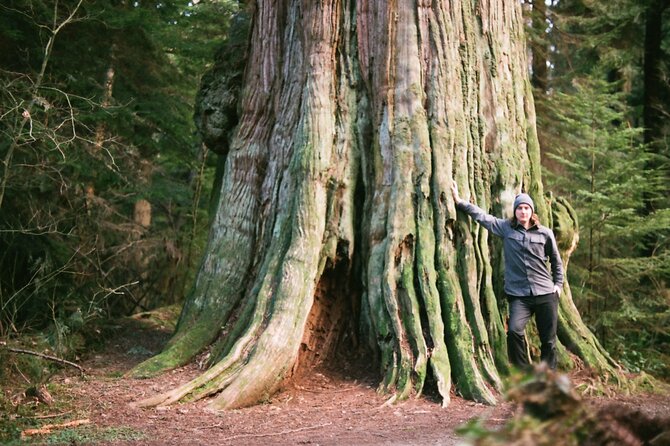
Some of Vancouver’s oldest living things are tucked inside Stanley Park, only minutes from the city’s streets and high-rises. On this small-group walk, you follow Colin Spratt to ancient western red cedars, towering Douglas firs, and remarkable maples that survived the park’s urban transformation.
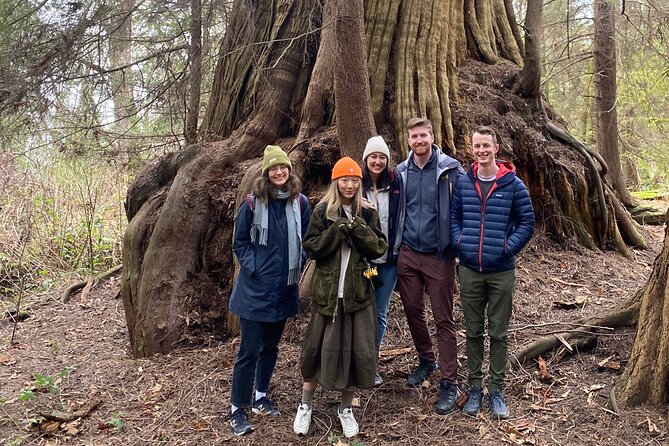
I like two things right away: the group is limited to 10 people, so you can hear the guide and ask questions without shouting, and Colin brings old maps, photographs, and 120-year-old postcards that make the trees part of a much larger story. The tour also connects forest ecology with Coast Salish culture, logging, conservation, and Vancouver’s development.
The main consideration is time and pace. Three hours is a serious commitment for a walking tour, and this is not a quick photo stop in Stanley Park. The trails are described as easy, but you should still be ready to walk outdoors for the full morning or afternoon.
Key points to know before booking
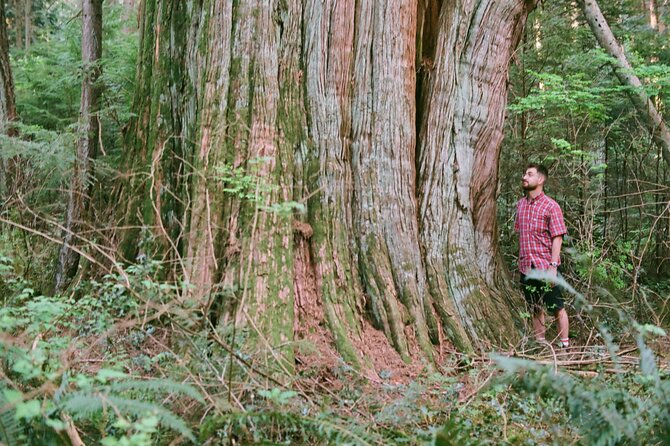
- See trees that can be hundreds or more than 1,000 years old, including huge western red cedars and old Douglas firs.
- Colin Spratt leads the walk, bringing his work as a big-tree seeker and BC Big Tree Committee member to the experience.
- Old maps, photographs, and postcards help explain how Stanley Park and Vancouver changed over time.
- The tour links nature with Coast Salish culture, including the cedar’s role in canoes, longhouses, clothing, rope, and daily life.
- A maximum of 10 participants keeps the walk personal and less crowded.
- Morning and afternoon departures make it easier to fit the tour into a Vancouver sightseeing day.
Why ancient trees make Stanley Park feel different
Stanley Park is often treated as Vancouver’s big outdoor playground, a place for seawall walks, bike rides, gardens, and city views. This tour asks you to slow down and look into the forest instead.
The focus is the remaining old growth within the park. You are not simply shown the tallest tree and sent on your way. Colin explains how old trees function, how their ages are estimated, and how a forest can contain several generations of life in one small area.
That detail matters. A fallen trunk may become a nurse log, supporting seedlings and fungi as it breaks down. A hollow cedar is not necessarily a dead or useless tree. Its empty interior can provide shelter for wildlife, while the living outer layers continue to carry water and nutrients.
You also learn to recognize signs of great age. Ancient cedars may develop unusual crown shapes, including branching forms compared with candelabras. Fallen wood, hollows, exposed roots, and new seedlings become clues in a continuing cycle rather than random features on the forest floor.
I appreciate this approach because it changes the way you see an ordinary city park. After three hours, a tree is no longer just something tall and green beside a trail. It becomes a record of fire, rot, growth, human use, and survival.
More walking tours in Vancouver:
- Gastown Historic Walking Food Tour
★ 5.0 · 1,863 reviews - Vancouver Lost Souls of Gastown Walking Tour
★ 5.0 · 1,273 reviews - A Wok Around Chinatown: Culinary and Cultural Walking Tour Led by a Chef
★ 5.0 · 610 reviews
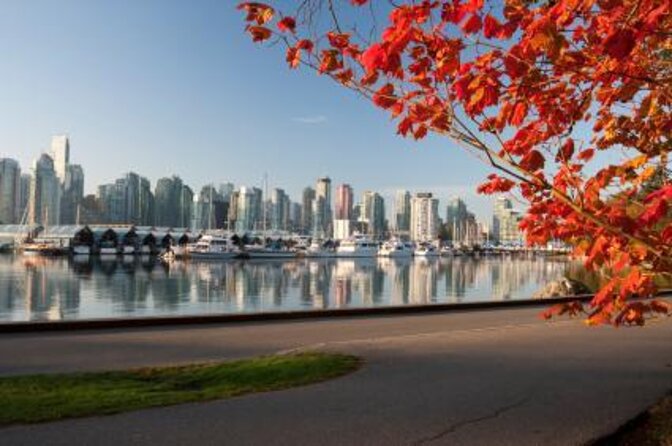
Starting at Ferguson Point in Stanley Park
The meeting point is Ferguson Point, at 7501 Stanley Park Drive. The activity begins and ends there, with no pickup or drop-off service included, so you need to make your own way to the park and back.
Starting within Stanley Park is useful. You do not spend the first part of the tour sitting in a vehicle or waiting for a transfer. The walk begins in the setting that gives the experience its meaning: a historic urban park holding fragments of the region’s original forest.
Your guide uses the trails to reach the notable trees and forest features. Exact tree sightings can vary, but the route is built around ancient western red cedars, old Douglas firs, and impressive maples. The tour description highlights Douglas firs estimated at roughly 600 to 800 years old, cedars said to reach 1,000 years, and the largest known maple tree in Canada.
Those numbers are exciting, but I would not treat the walk as a contest to collect exact ages. Tree dating and age estimates can be complicated, especially for living trees. The value is in understanding what makes these specimens exceptional and how they managed to remain in a heavily visited city park.
The easy trail setting also makes this a good choice if you want nature without a demanding backcountry outing. Still, it is a three-hour walk, not a short stroll. Wear practical shoes and dress for changing outdoor conditions. The supplied details do not promise a specific weather policy or route length, so ask the provider if you have concerns about conditions on your date.
Meeting the giant cedars and Douglas firs
The western red cedar is one of the stars of this experience. Some of the trees you encounter may be around 1,000 years old, and one described in the tour material is affectionately known as the grandfather tree.
Colin explains why these cedars can survive for so long. Their wood naturally resists fire and rot, and their hollow sections can still be part of a living tree. That is a useful correction to the common idea that a hollow trunk must be failing. In an ancient forest, decay and renewal often happen at the same time.
The cedar also carries major cultural importance. The walk discusses how Coast Salish peoples used cedar for longhouses and canoes, while bark and fibers served for clothing, rope, and textiles. The tree was not simply a resource in the modern commercial sense. It was central to daily life and treated as a tree of life.
You may also see evidence of overlapping generations, with younger trees growing from or on top of older fallen trunks. That scene makes the forest’s long time scale easier to grasp. A seedling can begin life in material that once belonged to a tree already centuries old.
The Douglas firs add a different kind of drama. They rise high above the forest and provide a sense of vertical scale that photographs often fail to capture. The experience includes examples described as 600 to 800 years old, giving you a chance to compare the tall, straight firs with the broad, weathered cedars.
The tour also includes a hollow red cedar stump estimated at about 700 years old. Features like this help keep the walk from becoming a parade of giant trunks. You are looking at living trees, fallen trees, stumps, seedlings, and the links between them.
Colin Spratt’s mix of science, history, and stories
The guide is Colin Spratt, identified with the BC Big Tree Committee and known for seeking out large and old trees. His role is central to the experience. The information is not delivered as a standard list of species and measurements. Colin combines tree science with Vancouver’s past, local stories, photographs, and personal observations.
That mix is one of the tour’s strongest features. You might learn how an old tree’s age is estimated, then shift to the history of Stanley Park or the way logging and conservation shaped what remains. The old maps and postcards give you something concrete to study while Colin explains how the area changed.
The historical focus also includes the original Coast Salish inhabitants, who lived in this area for thousands of years before Stanley Park became an urban park. That context is important. It prevents the forest story from beginning with the arrival of Vancouver’s modern city.
Colin’s teaching style is described as energetic, patient, and able to handle questions from children. That makes the tour workable for families with kids aged 7 to 11, especially if your children enjoy asking why, how, and what happens next.
I would choose this tour if you like guides who care strongly about their subject. Colin’s passion for protecting old trees is not a small extra. It shapes the whole walk and gives the facts a clear purpose: you are learning what these trees do, what they mean, and why remaining old growth deserves attention.
A few more Vancouver half-days to weigh up
- Vancouver Half-Day Whale Watching Adventure with Free Photos
★ 5.0 · 5,000 reviews - Big Bus Vancouver Hop-On Hop-Off Sightseeing Tour
★ 3.5 · 3,028 reviews - Victoria & Butchart Gardens Tour with Ferry from Vancouver
★ 4.5 · 2,703 reviews - Vancouver: Covered Whale Watching Adventure with Free Photos
★ 4.8 · 2,260 reviews
The human story beneath the forest
Stanley Park’s trees cannot be separated from Vancouver’s history. The walk explores how the city, the park, logging, and conservation efforts affected the forest.
The old maps and early postcards are especially useful here. A giant tree can seem timeless, but the park around it has been planned, altered, visited, and managed by people. Historical images help show that the forest is not outside history. It has been part of the city’s story from the beginning.
The tour also offers a chance to think about what was lost. The remaining old growth is valuable partly because so little ancient forest survives within an urban setting. Seeing a 1,000-year-old cedar in a city park gives you a physical sense of time that museums and plaques rarely provide.
I like that the conservation message is tied to specific trees rather than delivered as a general lecture. When you stand beside an ancient cedar, learn how it regenerates, and see new life growing from old wood, the question of forest protection becomes more immediate.
The walk appears to keep a respectful focus on Coast Salish knowledge and use of cedar. The details include testing trees with antlers before carving canoes, using cedar bark and fibers for practical goods, and recognizing the tree’s role in community life. These examples show skill and care, not just extraction.
What the three-hour format gives you
Three hours may sound long if you are trying to pack several Vancouver attractions into one day. I think the length makes sense for this subject.
A shorter tour could point out two large trees, give you a few dates, and move on. This one has room to explain forest ecology, cultural use, Vancouver’s development, tree identification, conservation, and the stories attached to individual specimens.
The small group helps. With no more than 10 participants, you should have a better chance to stop, look upward, examine a stump, and ask a question. A large group would make that kind of forest conversation harder.
Morning and afternoon options add useful flexibility. You can pair the walk with another Stanley Park activity or fit it into a broader city itinerary. Just remember that the tour starts and ends at Ferguson Point, so allow time to reach the meeting point and continue on afterward.
The trade-off is that this is not designed for people who want constant movement or a fast checklist. Colin may pause to explain a detail, show a historic image, or discuss a tree’s structure. That is the point, but it requires attention and curiosity.
Price, group size, and overall value
At $56.33 per person, this costs more than wandering through Stanley Park on your own. The park admission for the walking portion is free, and you can certainly see impressive trees without a guide.
The question is what you would miss. Without Colin, you might walk past a hollow cedar, an old stump, or a nurse log without understanding its role. You would also lack the maps, postcards, archival photographs, tree-age explanations, and Coast Salish context that turn the outing into a focused experience.
For me, the price is reasonable if you want a specialist-led walk rather than a general park tour. The maximum group size is another part of the value. A 10-person limit means your money is buying access to a personal conversation, not simply a place in a crowd.
It is an especially good use of your budget if you have already seen the main city sights and want something quieter and more specific. It is less compelling if you are only looking for a casual hour outdoors or if you prefer to explore independently.
Group discounts are available, so the price may work better for families or small parties booking together. Confirmation is provided at booking, and free cancellation is available if you cancel at least 24 hours before the local start time. Cancellations or changes inside that window are not accepted for a refund.
Who will enjoy this walk most
I would recommend the tour to anyone who likes forests, conservation, local history, or unusual city experiences. You do not need to be a botanist. Colin explains the subject for general visitors, and the historical material gives the walk several points of entry.
Families can benefit from the hands-on nature of the subject. Children may connect with hollow trees, enormous trunks, fallen logs, and the idea that a tiny seedling can begin life on the remains of a much older tree.
It also suits solo visitors. A small group and a focused guide make it easier to ask questions and take part in the discussion. Couples and friends who want a break from urban attractions should find the setting refreshing without needing to plan a full day outside the city.
I would hesitate only if you dislike guided walks, have trouble walking for three hours, or want guaranteed access to a particular named tree. The supplied details do not promise a fixed list of individual trees or a route adapted to every mobility need. Most people can participate, and service animals are allowed, but anyone with specific access concerns should confirm details before booking.
Should you book the Ancient Trees of Vancouver tour?
Book it if you want Stanley Park to become more than a scenic backdrop. Colin Spratt’s expertise, the small group, and the old maps and photographs give you a fuller understanding of the forest and the city around it.
This is not the right pick for a quick sightseeing stop. It asks for three hours and rewards patience. But if you want to meet trees that have lived for centuries, learn how Coast Salish communities used cedar, and understand why old growth matters, I think it is one of Vancouver’s strongest nature-focused activities.
Bring time to look up, listen, and let the scale of the trees sink in. You may leave seeing every old cedar in the city a little differently.
FAQ
Where does the Ancient Trees of Vancouver tour start?
The tour starts at Ferguson Point, 7501 Stanley Park Drive, Vancouver, British Columbia, V6G 3E2.
Where does the tour end?
The activity ends back at the meeting point at Ferguson Point.
How long does the walking tour last?
The tour lasts approximately three hours.
How many people can join the tour?
The tour has a maximum of 10 participants.
Is the tour available in English?
Yes. The experience is offered in English.
Can I cancel for a full refund?
Yes, if you cancel at least 24 hours before the experience start time. Cancellations or changes made less than 24 hours before the start time are not accepted for a refund.
Just added around Vancouver
- The Ultimate Stanley Park E-Bike Tour★ 4.9 · 33 reviews
- Vancouver: The Supernatural TV Show Locations Tour★ 4.9 · 32 reviews
- The Haunting of Vancouver Film Tour★ 4.9 · 9 reviews
- Sunset Bus Tour: Stanley Park & English Bay Photostops★ 4.5 · 181 reviews
- Stanley Park CarTour:SmallGroup/Comfort&CheaperThan BikeTour★ 4.9 · 46 reviews
- Stanley Park Self Guided Bike Tour★ 4.1 · 12 reviews
- Snowshoeing At The Top Of The Sea To Sky Gondola★ 5.0 · 6 reviews
- Vancouver: North Shore Mountains Snowshoeing with Transfer★ 5.0 · 6 reviews
Vancouver Tours, compared.
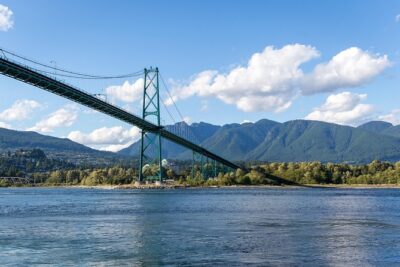
Vancouver Half-Day Whale Watching Adventure with Free Photos
Read our review →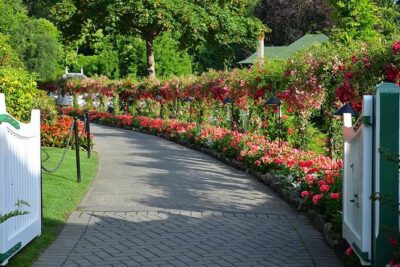
Victoria & Butchart Gardens Tour with Ferry from Vancouver
Read our review →
Covered Whale Watching Adventure with Free Photos
Read our review →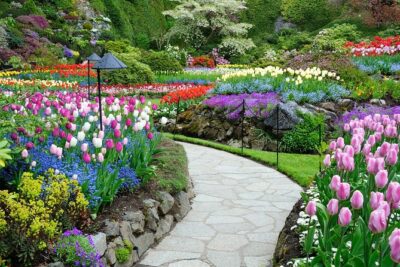
Victoria and Butchart Gardens Day Trip from Vancouver
Read our review →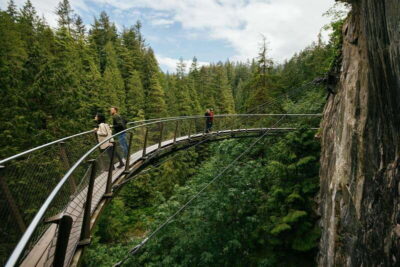

Browse the lists this tour appears in