
Review · MONTREAL
Old Montreal Small-Group Walking Tour | Max 10 | by MTL Detours
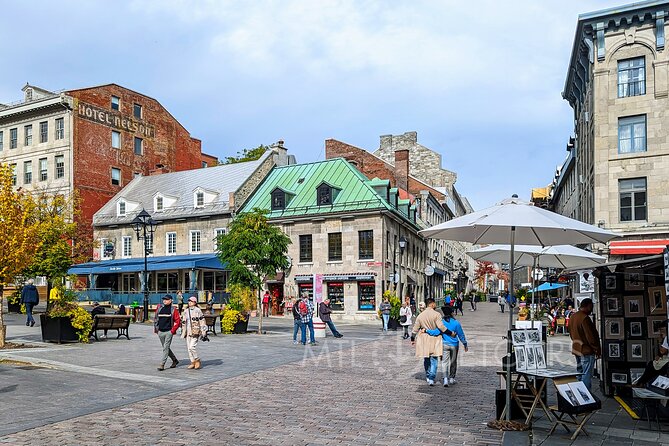
Old Montreal makes a poor first impression on a map. Its streets bend, narrow, and change names, while its stone buildings reveal their stories only if you know where to look. This two-hour walk turns that maze into a clear introduction to the city, linking the Old Port, churches, banks, public squares, and old political buildings.
I like the small cap of 10 people, which makes it easier to hear your guide and ask questions. I also like the practical handout of places to eat, shop, and explore, plus the maple candy or other small local gift at the end. The main drawback is simple: you spend most of the two hours walking or standing outdoors, often on uneven cobblestones, so this is not the right pick if you need frequent seats or a slow pace.
Key points to know before you book
- Ten people maximum: You get a more personal walk, with room for questions and better access to the guide.
- A strong first-day activity: The route gives you a useful map of Old Montreal and ends near Place Jacques-Cartier and Bonsecours Market.
- Guides with different personalities: Louise is praised for warm storytelling, while Amelie, Darren, Elise, Silvia, and others bring their own style to the route.
- Major landmarks are viewed from outside: The tour includes the exterior of Notre-Dame Basilica, but interior admission is not included.
- Winter is possible: The tour runs in rain, snow, or cold weather, with some indoor warm-up stops along the way.
- Useful extras: You receive local food and sightseeing suggestions, a small treat, and a parting gift.
Why this two-hour walk works well in Old Montreal
Old Montreal is compact, but it is not always easy to understand. The oldest streets do not follow a modern grid, and the same short walk can take you from colonial Montreal to the city’s banking era, then on to the Old Port and present-day cafés.
That is where this tour earns its price. You are not simply walking past old façades and taking photos. Your guide explains why the streets developed as they did, how Montreal grew from a small settlement into a major commercial centre, and how religion, trade, politics, shipping, and finance shaped the district.
The pace is meant to cover a lot in a short time. Most of the walk involves moving between stops, then pausing for a story or explanation. Louise is especially well regarded for making the past feel lively and personal, while guides such as Amelie, Darren, Elise, and Silvia have also received praise for clear storytelling and local insight.
I would book this early in your Montreal stay. It gives you the basic layout of Old Montreal, then points you toward places worth revisiting on your own. The handout is useful here because it extends the value of the tour beyond the two-hour route.
More Old Montreal walks:
- Old Montreal: Traditional Ghost Walk of the Haunted City
★ 4.7 · 746 reviews - Old Montreal Ghost Walking Tour
★ 4.5 · 726 reviews - Montreal: Top Rated Small Group Old Montreal Walking Tour
★ 4.9 · 611 reviews
Starting at Marché Saint Laurent on Place d’Armes
The meeting point is Marché Saint Laurent at 503 Place d’Armes, near the centre of Old Montreal. You will be close to several major sights from the start, so the tour gets into the historic core quickly instead of spending much time on transfers.
The route begins in the area around Place d’Armes, one of the district’s key public spaces. From here, your guide can frame the story of Old Montreal before leading you through the streets. That opening context matters. Without it, the buildings can seem like a collection of attractive but unrelated façades.
You should arrive ready to walk, not wait for transport. There is no hotel pickup or drop-off, and the activity is conducted in English. Public transit is nearby, but you need to make your own way to the starting point.
Bonsecours Market and Montreal’s civic story
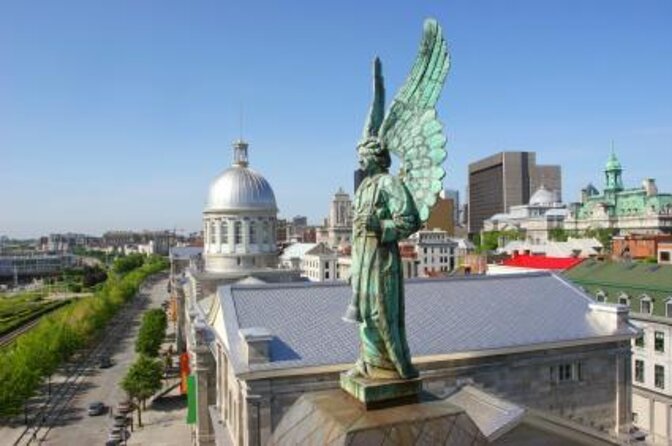
One of the early sights is the silver-domed Bonsecours Market. Its large dome makes it easy to spot, but the building matters for more than its appearance. Your guide explains how it influenced civic life in Old Montreal and why it became an important part of the district.
This is a useful example of the tour’s approach. You are not just told the building’s name. You get a sense of how a public structure could connect commerce, city life, and the identity of the neighbourhood.
Bonsecours Market also helps orient you for the end of the walk. The tour finishes nearby, around Place Jacques-Cartier and the market, so you can return later if you want more time in the area.
Rue Saint-Paul and the oldest streets
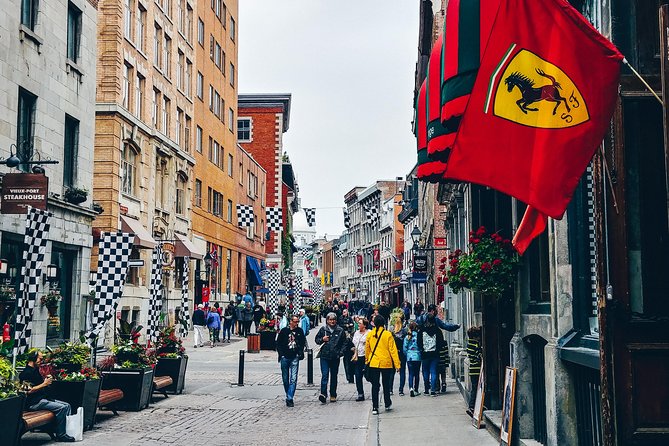
Rue Saint-Paul is one of the most atmospheric parts of Old Montreal. Its cobbles and historic façades make it an obvious photo stop, but the guide’s explanation gives the street more meaning than its looks alone.
Walking here also shows why a local guide is handy. The street is attractive, but it can be busy and uneven, with changing surfaces underfoot. You may find yourself looking up at stone buildings while also watching each step.
The route uses these older streets to explain how Montreal was laid out before modern city planning. You hear about the city’s early boundaries and the people who helped shape it, rather than receiving only a list of construction dates.
More walking tours in Montreal:
- The Original Old Montréal Walking Tour by Guidatour
★ 4.5 · 2,217 reviews - Montréal: The Original Old Montréal Walking Tour
★ 4.8 · 911 reviews - The Essential 101 Non-Touristy Walking Tour by Spade & Palacio
★ 5.0 · 716 reviews - Walking tour of Old Montreal – 16/42 Tours
★ 5.0 · 592 reviews
Place Jacques-Cartier and the Old Port connection
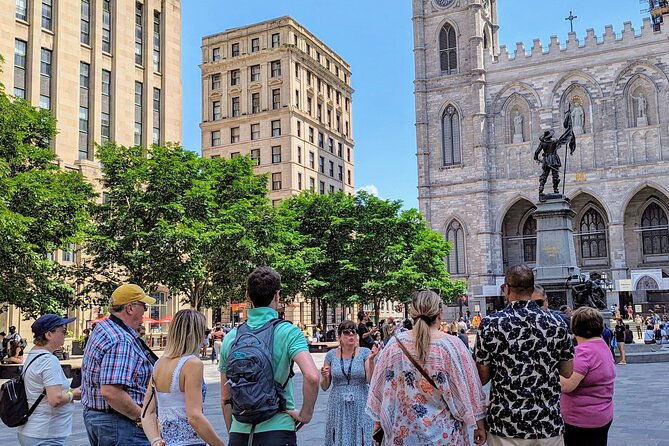
Place Jacques-Cartier is one of Old Montreal’s most animated historic squares. It slopes toward the Old Port and links the older city with the waterfront, making it a natural place to discuss trade, public life, and the movement of people through Montreal.
Your guide uses the square to connect the district’s past with what you see today. The setting is lively, but the tour does not treat it as a quick photo backdrop. You learn why the space became important and how its position near the port affected Montreal’s growth.
This is also one of the better points on the walk for getting your bearings. From here, it is easier to understand how the major streets, public buildings, and waterfront fit together.
Montreal City Hall and the city’s political past
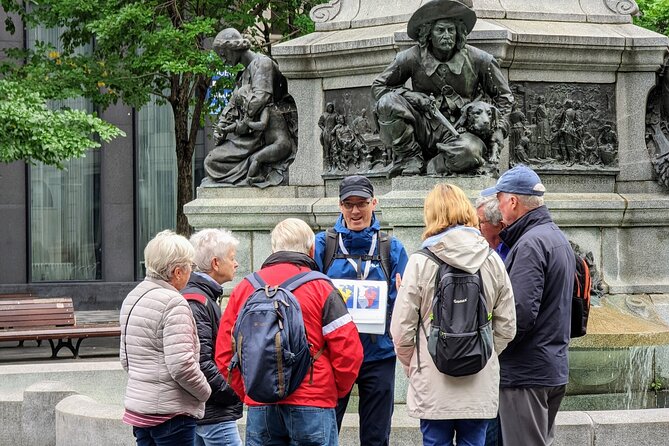
The route includes the grand Second Empire building of Montreal City Hall. Its scale and formal design give you a sharp contrast with the narrower older streets around it.
The building provides a chance to discuss key moments in the city’s political history. You also get a look at how architecture was used to express civic confidence and authority during a later period of Montreal’s development.
This stop is valuable because the tour does not present Old Montreal as a frozen colonial set. The district changed over time, and the buildings reflect different stages of that change. A good guide helps you see those layers without turning the walk into a lecture.
Notre-Dame Basilica from the outside
Notre-Dame Basilica is one of Montreal’s best-known landmarks, and the tour visits its exterior. Your guide explains the story behind its creation and places it within the wider history of Old Montreal.
Be clear about what you are buying here: interior entry is not included. If you want to see the inside, you will need to arrange that separately and allow extra time after the tour.
Even from outside, the basilica is an important stop because it anchors the religious and architectural story of the district. The guide can explain why this building became such a powerful symbol of Montreal, while also pointing out details that are easy to miss when you are standing there alone.
The Bank of Montreal and Canada’s Wall Street
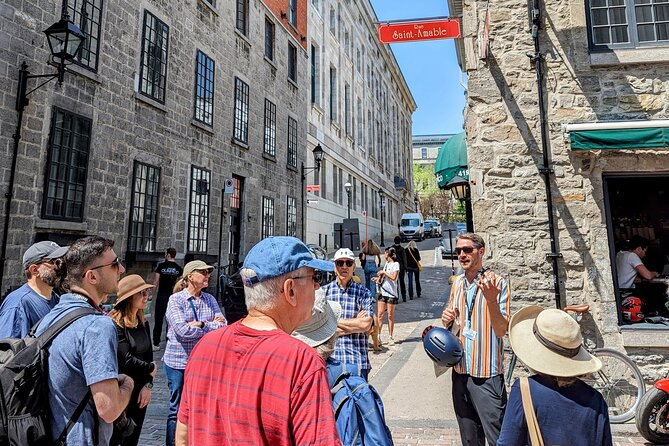
The former financial district reveals a side of Montreal that many first-time visitors overlook. The route includes Canada’s oldest bank and explains how the city became the country’s financial centre.
You also walk along the area once known as Canada’s Wall Street. That name helps make sense of the formal stone banks and commercial buildings in this part of town. Old Montreal was not only a church quarter or port neighbourhood. It was also a place where money, shipping, insurance, and business decisions shaped the country.
This section is especially useful if you want more than architecture. The guide links buildings to the economic forces that made Montreal important, giving you a better sense of the city’s changing role.
Château Ramezay and the colonial era
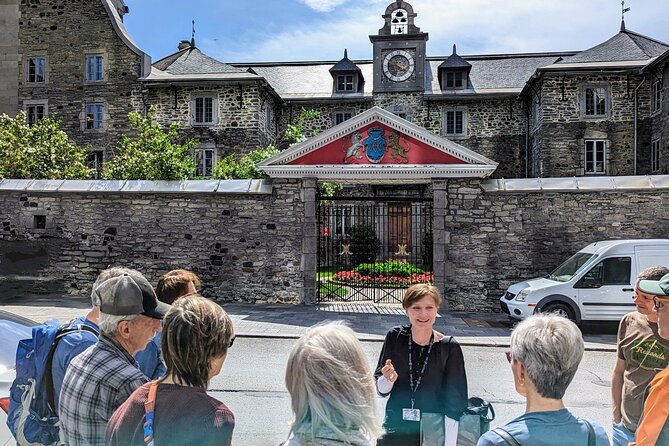
The former governor’s residence, Château Ramezay, brings the tour back to Montreal’s colonial past. The 18th-century building gives your guide a concrete setting for stories about government, authority, and the early settlement.
This stop also helps break up the grand civic and financial buildings. You see how power worked at an earlier stage, before Montreal became the major commercial city described later in the route.
The tour does not promise a museum visit here, so treat this as an exterior and street-level history stop. The value comes from the guide’s explanation and the way the building fits into the wider story.
The Sailors’ Church and the Old Port
Notre-Dame-de-Bon-Secours Chapel is known as the Sailors’ Church, and its connection to the Old Port gives the religious history a clear local link. Your guide explains why sailors and the waterfront were associated with this chapel.
This is one of the more distinctive stops because it connects faith with daily life. The church was not simply an isolated place of worship. Its story belongs to the port, the people who worked there, and the risks tied to travel and shipping.
You should not assume the tour includes entry. The advertised experience focuses on the walking route and exterior sights, so ask the guide on the day if you are curious about visiting inside later.
The birthplace of Montreal at Place Royale
Near the city’s birthplace, the guide explains how Montreal was founded. This is where the early story of the settlement becomes more tangible.
The location also shows how much the city has changed. Modern streets, restored buildings, port activity, and tourist businesses now occupy an area tied to the earliest days of Montreal. A guide helps you separate the original story from the later layers.
This stop is less about one spectacular building and more about location. You are standing near the point where the city’s story began, which gives the rest of the walk a useful foundation.
What the small group changes
A maximum of 10 people is a real advantage on a walking tour. You can stay close to the guide, hear explanations more clearly, and ask questions without holding up a large crowd.
The small size also helps on narrow streets and around busy squares. A large group can become a moving line that blocks doorways and loses people at crossings. Here, the route should feel easier to manage.
The tradeoff is that the experience depends somewhat on the guide assigned to your departure. Louise is repeatedly praised for her enthusiasm, storytelling, and care with the group. Amelie is described as funny and personable, Darren as entertaining, and Elise as attentive and well prepared. Silvia is praised for knowing the buildings and the city’s original boundaries.
You cannot choose from all of those guides based on the information provided, so book for the route and format rather than expecting a particular person. The company uses licensed local guides with the required City of Montreal permit, which is a useful quality signal.
Winter walking, cobblestones, and the pace
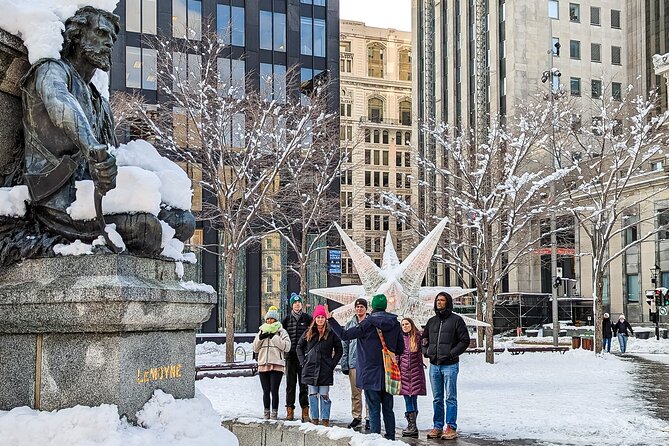
Montreal’s winter can be severe, and this tour operates in rain, snow, or cold weather. Dress for the forecast, with warm layers and shoes that handle wet or uneven ground.
The route includes cobblestones, stairs, and a moderate amount of walking. Most of the two hours are spent outside, walking or standing, with limited seating. One person found the guide’s pace fast, while other comments describe the walking as manageable or just right for people who cannot move quickly.
That tells you to be realistic about your own comfort. The guide may adjust the pace to the group and weather, but this is still a walking tour, not a sightseeing ride. Significant mobility restrictions or difficulty walking steadily are reasons to choose another activity.
Winter does have one advantage. The guides have used indoor warm-up spots when conditions were bitterly cold, and hand warmers have been provided on especially frigid days. Those touches are welcome, but they should not replace proper clothing.
The handout, maple candy, and local advice
The paper handout is one of the most practical parts of the experience. It lists places to eat, drink, shop, visit, and explore, selected by the MTL Detours team.
You can use the tour to decide what deserves more of your time later. Ask about restaurants or museums that match your interests, then keep the handout for the rest of your stay.
A small local treat is also included, often maple candy, along with a unique parting gift. Some departures have included postcards, and winter walks have included hand warmers. These are modest extras, but they give the ending a friendly local touch.
Is $44.40 a fair price?
At $44.40 per person, the tour is not the cheapest way to walk through Old Montreal. You are paying for a licensed guide, a small group, a planned route, local recommendations, and the ability to ask questions as you go.
I think the value is strongest if this is your first visit or your first day in the city. Two hours is long enough to cover the major historic areas without using half a day, and the small group makes the instruction more useful than a large group format.
The value is weaker if you already know Old Montreal well, prefer exploring silently, or mainly want interior visits. Notre-Dame Basilica entry is not included, and the tour does not provide hotel transportation.
The booking pattern suggests people often reserve about four weeks ahead, so popular departure times may fill early. Confirmation is provided at booking, and free cancellation is available up to 24 hours before the start time. If the minimum number is not reached or poor weather causes a cancellation, you are offered another date or a refund.
Who should book this Old Montreal walk?
I would choose it for first-time visitors, couples, solo visitors, families with children age 12 or older, and anyone who wants a useful overview before exploring alone.
It also suits people who enjoy stories about buildings, civic life, religion, finance, and local culture. The route is not only about taking pictures. It asks you to listen, walk, and notice how the district developed.
Families should note that every person needs a paid ticket, and minors must be with an adult. Anyone who needs frequent rest stops should think carefully before booking.
Should you book it?
Book this tour if you want Old Montreal explained rather than simply photographed. The two-hour route covers the district’s major themes, the group stays small, and guides such as Louise, Amelie, Darren, Elise, and Silvia bring strong local storytelling to the walk.
Skip it if you need a seated activity, want included entry to Notre-Dame Basilica, or already have a firm grasp of Montreal’s old city. For most first visits, though, $44.40 is a fair price for a focused introduction, practical recommendations, and a better sense of where to spend the rest of your time.
FAQ
How long is the Old Montreal walking tour?
The tour lasts approximately two hours.
How many people can join the tour?
The group is capped at a maximum of 10 participants.
What language is the tour conducted in?
The tour is conducted in English.
Where does the tour begin?
It begins at Marché Saint Laurent, 503 Place d’Armes, Montreal, Quebec.
Where does the tour end?
The tour ends near Place Jacques-Cartier square and Bonsecours Market at 350 Rue Saint-Paul East.
Is entry to Notre-Dame Basilica included?
No. The tour views Notre-Dame Basilica from outside, and interior entry is not included.
Is the tour suitable for children?
The minimum age is 12. Every participant needs a paid ticket, and minors must be accompanied by an adult.
What should I wear for the tour?
Dress for the weather because the tour operates in rain, snow, and cold conditions and takes place mostly outdoors. Comfortable footwear is important because the route includes cobblestones, uneven surfaces, and stairs.
Can I cancel for a refund?
Yes. You can cancel at least 24 hours before the start time for a full refund. Cancellations or changes made within 24 hours are not refunded or accepted.
Just added around Montreal
- Winter Express: Old Montreal Highlights Walking Tour★ 5.0 · 119 reviews
- Under the Surface of Montreal’s Chinatown: Guided Food Walking Tour★ 5.0 · 23 reviews
- Full Day Family Bike Rental★ 5.0 · 17 reviews
- Montreal Premium Driving Tour with River Cruise and Notre Dame★ 4.5 · 164 reviews
- Immersive Virtual Reality Game Activity★ 5.0 · 19 reviews
- Montréal Downtown and Underground City Private Walking Tour★ 5.0 · 47 reviews
- Day at Mont-Tremblant National Park★ 4.0 · 5 reviews
- In the Shadow of the Mountain: Montreal Jewish History Walking Tour★ 4.5 · 33 reviews
Montreal Tours, compared.


Montreal Mile End Authentic Food Tour with 7 Delicacies Tastings
Read our review →
Quebec City and Montmorency Falls Day Trip from Montreal
Read our review →
The Original Old Montréal Walking Tour by Guidatour
Read our review →
Montreal City Sightseeing Tour with Live Commentary
Read our review →

Le Bateau-Mouche St. Lawrence Sightseeing Cruise
Read our review →Browse the lists this tour appears in