
Review · MONTREAL
Leather belt making workshop
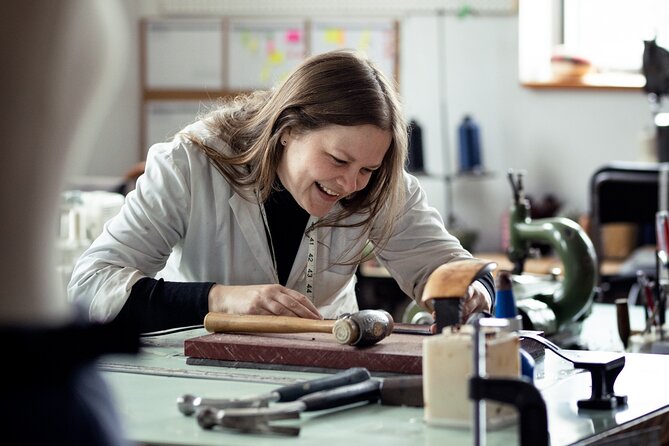
Making a leather belt by hand gives you something better than a souvenir: a useful object you shaped yourself. At Flechr studio in Montreal’s Plateau Mont-Royal, designer Kimberly Fletcher teaches the process from choosing leather to finishing the final belt.
I like the small group of no more than four people and the direct guidance from Kimberly. Her patience and humor also matter here, since working with leather calls for care, and a few hammer blows are part of the job.
The main consideration is noise. This is not a quiet craft session, and anyone highly sensitive to sound should know that hammering is needed. The workshop is also recommended for ages 13 and up.
Key Points About the Montreal Leather Belt Workshop
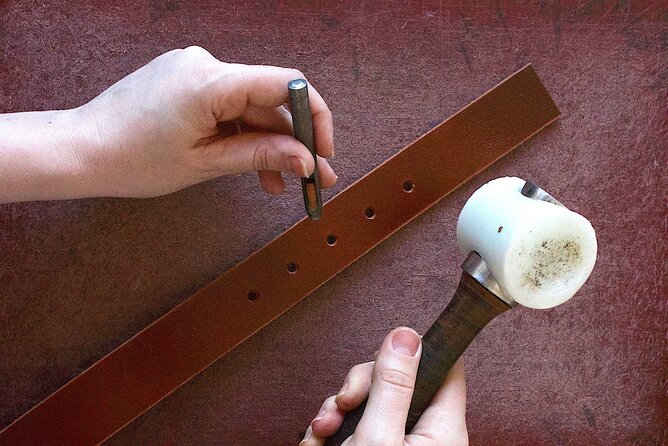
- Make a wearable belt from start to finish: You learn the main stages of leathercraft and leave with a personal accessory.
- Work with designer Kimberly Fletcher: Her patient, good-humored teaching style helps first-time crafters handle each step.
- Learn in a tiny group: The class has a maximum of four participants, allowing close guidance.
- Spend about two and a half hours at Flechr studio: The session has enough time for instruction and hands-on work without taking a full day.
- Visit the Plateau Mont-Royal district: The workshop puts a creative activity into your Montreal plans rather than offering another passive sightseeing stop.
- Expect some hammering: A few blows are necessary to make the belt, so this matters if you are sensitive to noise.
Why Making a Belt Beats Buying Another Souvenir
Montreal has no shortage of things to buy. A handmade leather belt gives you a different kind of memento. You are not simply carrying home an object made somewhere else. You are learning how its parts come together and taking home an accessory with a direct connection to your time in the city.
I like this format because the result is practical. A belt is not a fragile trinket that sits on a shelf. It is something you can wear, and the finished piece can feel more personal because you took part in shaping it.
The class also gives you a clear introduction to leatherworking without asking you to commit to a long course. In roughly two hours and 30 minutes, you get a focused look at a traditional craft. That makes the workshop a good choice for someone curious about making things but unsure about investing in tools or a longer program.
You should keep your expectations sensible. The supplied details describe a beginner class covering the core stages of belt making. This is not presented as an advanced leatherworking course or a full professional apprenticeship. Its appeal is the chance to learn the basics and complete one substantial project with help.
More hands-on workshops in Montreal:
- The Bagel Class presents : Montreal Bagel Making Workshop!
★ 5.0 · 463 reviews - Montreal: Cooking Class & Lunch with Michelin-Trained Chef
★ 4.4 · 32 reviews - Montreal Cooking Class & Wine Tasting with Michelin Chef Robert
★ 4.5 · 14 reviews
Inside Flechr Studio on Rue de Bordeaux
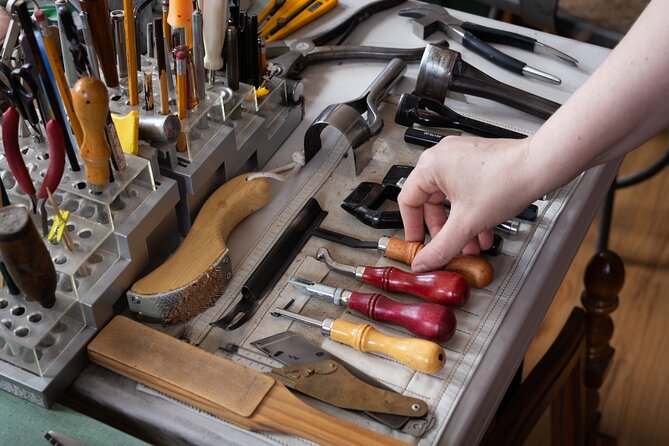
The meeting point is Flechr studio at 5450 Rue de Bordeaux, Montréal, QC H2H 2A8. The workshop takes place in the Plateau Mont-Royal district, an area well suited to a hands-on design experience.
The activity starts and ends at the same address. That simple arrangement is useful if you are fitting the class between other Montreal plans. You do not need to keep track of a separate finishing point, and you can collect your belongings and move on from the studio when the belt is complete.
Public transportation is nearby, which helps if you are exploring Montreal without a car. The experience is offered in English, so you can follow the instructions without relying on translation.
The group limit is four people. That is one of the strongest practical features of the workshop. Leatherwork involves tools, materials, and small decisions, so a crowded class could leave you waiting for help. With such a small group, you have a better chance to ask questions and receive guidance when you need it.
The studio setting also keeps the experience personal. You are not being moved through a large commercial attraction. You are spending time with a Montreal designer in her own workshop, learning a craft directly from the person leading the class.
Choosing Leather and Understanding the Material
The first part of the class covers how to select the right type of leather. This is more useful than it may sound. Leather is not simply one uniform material, and a belt needs to be both attractive and durable.
Kimberly introduces the basics so you can understand why one piece may work better than another for this project. You learn to think about the material before cutting it, rather than treating leather like ordinary fabric.
That step gives the workshop some lasting value. Even if you never make another belt, you leave with a better sense of what goes into a well-made leather item. If you do become interested in leathercraft later, knowing how to assess the starting material is a sensible foundation.
You should also expect some decisions about appearance. The course includes ways to make the belt unique, so the goal is not simply to reproduce an identical example. Your choices help give the finished accessory its own character.
The available information does not specify the full range of leather colors, finishes, or hardware offered during a particular class. I would not book this expecting a guaranteed selection of a certain shade or style unless Flechr confirms it before your visit.
Cutting and Shaping Your Belt
Once the material is selected, the class moves into cutting and shaping the leather. This is the point where the project begins to look like a belt rather than a piece of raw material.
Cutting leather requires attention. A clean shape affects the final appearance, and an uneven cut can make the finished piece look less polished. For a beginner, the value of having Kimberly present is clear. You are not left to guess your way through an important stage.
The class is designed for people with no previous leatherworking experience. That makes the tone less intimidating. You do not need to arrive with a craft background or special technical knowledge.
I like that the process is hands-on from the start. You are not spending the whole session watching a demonstration while someone else does the difficult work. The purpose is to learn by making, with guidance available when you need it.
Still, this is a craft workshop, not an instant-results activity. You may need to work carefully and listen closely. If you prefer fast entertainment with little concentration, a belt-making class may feel slower than a standard Montreal attraction.
A few more Montreal half-days to weigh up
- Montreal: Guided Bus Tour
★ 4.4 · 3,064 reviews - Montreal: Hop-On Hop-Off Double-Decker Bus Tour
★ 4.1 · 2,760 reviews - From Montreal: Quebec City and Montmorency Falls Day Trip
★ 4.5 · 2,669 reviews - Montreal Mile End Authentic Food Tour with 7 Delicacies Tastings
★ 5.0 · 2,598 reviews
Assembly, Hammering, and the Work of the Hands
The next stage is assembling the belt pieces. This is where the separate parts become a working accessory, and it gives the session a satisfying sense of progress.
A few hammer blows are necessary to create the belt. That detail deserves attention because it affects both comfort and accessibility. The workshop is not a silent studio session. If you have high sensitivity to noise, consider this before booking.
The hammering is also part of what makes the activity feel like real craftwork. You are using your hands and tools to join the pieces, rather than simply decorating a finished product. The sound may be brief, but it is part of the process.
The small group helps here as well. Beginners often need reassurance during assembly, especially when a tool or technique feels unfamiliar. With no more than four people, Kimberly can guide the work without the class becoming impersonal.
You should follow her instructions closely and avoid rushing. The point is not to finish first. The point is to make a durable belt while learning why each stage matters.
Finishing the Belt and Adding Your Own Style
The final portion focuses on finishing techniques that make the belt unique. This is where the project moves beyond basic construction and becomes more personal.
The exact finishing options are not specified, so I would avoid promising a particular decorative treatment. What is clear is that the class gives you ways to create a belt that does not feel entirely generic.
That personal element is central to the experience. You may start with the same basic project as the other participants, but your choices can give the finished item a different look and feel.
The strongest praise attached to this experience focuses on the sense of making wearable art. That phrase captures the appeal well. The belt is useful, but it also carries the marks of your decisions and effort.
Kimberly’s patience and humor are especially important at this stage. Finishing work can be fiddly, and a calm instructor can keep a first-time maker from becoming frustrated. The experience is best approached with curiosity rather than perfectionism.
Kimberly Fletcher’s Teaching Style
Kimberly Fletcher leads the workshop and is also the designer behind Flechr. The class depends heavily on her ability to explain each step clearly, since beginners are learning both the material and the tools at the same time.
The available feedback gives special emphasis to her patience, skill, and humor. Those qualities are not minor extras in a craft class. They shape the entire experience.
A skilled craftsperson can sometimes move too quickly because the techniques have become second nature. A patient instructor takes time to help a beginner understand what to do and why. That is the teaching style you want when your finished belt depends on careful cuts and accurate assembly.
Her humor adds a lighter touch. Leatherwork can require concentration, and a little warmth helps keep the class from feeling stiff or overly formal.
You should still expect to participate fully. Kimberly guides you, but she does not make the belt for you. The reward comes from doing the work yourself, with expert help nearby.
Is Two and a Half Hours Enough?
The approximate duration is two hours and 30 minutes. That is long enough for a meaningful project, while still fitting comfortably into a day of sightseeing in Montreal.
I see the timing as a strength for visitors. You get more than a short demonstration, but you do not have to surrender an entire day. The workshop has a clear beginning and end at the same studio, which makes planning easier.
The pace may vary depending on the group and the amount of help each person needs. Since the class is practical, you should allow the full stated time rather than planning another activity immediately afterward.
A two-and-a-half-hour class also gives you time to absorb the basic methods. You learn about leather selection, cutting, shaping, assembly, and finishing instead of focusing on only one isolated technique.
If you are traveling with a family, the age recommendation is 13 and over. The activity may suit teenagers who enjoy making things, but the tools and hammering mean it is not aimed at young children.
Value: A Skill, a Belt, and Personal Time
No price is provided here, so I cannot judge the exact cost against similar Montreal activities. I can still explain what you are paying for: instruction from a working designer, a small group setting, hands-on use of leatherworking techniques, and a finished belt.
That package can offer good value if you want an activity with a lasting result. You are not only buying admission to a place. You are buying time, instruction, materials, and the chance to make something useful.
The value is lower if you want a guaranteed luxury product or a polished professional finish without much effort. Your belt is a beginner project, and the handmade quality may include small signs that you made it yourself. For many people, that is the point. If you want factory-perfect uniformity, buy a belt in a shop instead.
I would also compare the workshop with other creative activities based on your interests. If you enjoy learning by hand and like taking home something connected to a place, this has a clear advantage. If you prefer museums, food tours, or outdoor sightseeing, it may not be the best use of your limited Montreal time.
Who Should Book This Montreal Workshop?
I think this class suits:
- Beginners who want a gentle entry into leathercraft
- Visitors looking for a practical Montreal souvenir
- Teenagers aged 13 and over who enjoy hands-on projects
- Couples, friends, or small groups who like making something together
- Craft enthusiasts who want to learn from a working designer
- People who prefer a small class to a large group activity
It may not suit you if you are highly sensitive to noise, since hammering is required. It is also not the right choice if you want an entirely passive activity or a class aimed at advanced leatherworkers.
Service animals are allowed, and most people can participate. The activity is near public transportation, which makes it easier to reach from other parts of Montreal.
The English-language format is another practical advantage for English-speaking visitors. You can concentrate on the work rather than worrying about missing technical instructions.
Booking and Cancellation Details
Confirmation is provided at the time of booking. The activity requires a minimum number of participants, so it can be canceled if that minimum is not reached. In that case, you are offered another date or experience, or a full refund.
Free cancellation is available if you cancel at least 24 hours before the start time. Cancellations made less than 24 hours in advance are not refunded, and changes are not accepted inside that same 24-hour window.
The cut-off is based on local Montreal time. I would check your schedule carefully before booking, especially if your visit includes changing transport plans or a tight departure day.
Should You Book the Flechr Belt-Making Class?
I would book this workshop if you want a small, personal Montreal activity with a useful result. The combination of Kimberly Fletcher’s patient instruction, a maximum of four participants, and a complete beginner project gives the class a strong practical appeal.
The most important question is whether you enjoy making things with your hands. If you do, the belt becomes more than a souvenir. It is a reminder of time spent learning a new skill in the Plateau Mont-Royal district.
Skip it if you are sensitive to hammering or want a quiet session. Also skip it if your main goal is advanced leatherworking. For a first step into the craft, though, this is a focused and friendly choice, with enough time to learn the basics and leave with something you can wear.
FAQ
Where does the leather belt workshop take place?
The workshop takes place at Flechr studio, 5450 Rue de Bordeaux, Montréal, Quebec H2H 2A8, Canada.
How long does the activity last?
The workshop lasts approximately two hours and 30 minutes.
Does the workshop start and end at the same location?
Yes. The activity ends back at the meeting point on Rue de Bordeaux.
Who teaches the leatherworking class?
The class is taught by Montreal designer Kimberly Fletcher, who operates Flechr.
Is the workshop available in English?
Yes. The experience is offered in English.
Do I need previous leatherworking experience?
No. The class is designed for beginners, and no previous leather crafting experience is required.
What will I learn during the class?
You learn how to select leather, cut and shape it, assemble the belt, and use finishing techniques to make it personal and durable.
How many people can join the workshop?
The activity has a maximum of four participants.
Is the workshop suitable for teenagers?
The recommended minimum age is 13.
Is the workshop noisy?
Some hammering is required to make the belt. Anyone with high sensitivity to noise should take this into account before booking.
Just added around Montreal
- Winter Express: Old Montreal Highlights Walking Tour★ 5.0 · 119 reviews
- Under the Surface of Montreal’s Chinatown: Guided Food Walking Tour★ 5.0 · 23 reviews
- Full Day Family Bike Rental★ 5.0 · 17 reviews
- Montreal Premium Driving Tour with River Cruise and Notre Dame★ 4.5 · 164 reviews
- Immersive Virtual Reality Game Activity★ 5.0 · 19 reviews
- Montréal Downtown and Underground City Private Walking Tour★ 5.0 · 47 reviews
- Day at Mont-Tremblant National Park★ 4.0 · 5 reviews
- In the Shadow of the Mountain: Montreal Jewish History Walking Tour★ 4.5 · 33 reviews
Montreal Tours, compared.



Montreal Mile End Authentic Food Tour with 7 Delicacies Tastings
Read our review →
Quebec City and Montmorency Falls Day Trip from Montreal
Read our review →
The Original Old Montréal Walking Tour by Guidatour
Read our review →
Old Montreal Small-Group Walking Tour | Max 10 | by MTL Detours
Read our review →
Montreal City Sightseeing Tour with Live Commentary
Read our review →
Browse the lists this tour appears in