
Review · MONTREAL
Discover Montreal’s Underground City – Reso
Montreal’s Underground City is not one secret tunnel. It is a huge web of connected passages, malls, stations, public spaces, and businesses beneath downtown. This tour helps you make sense of it, with stops including the Berlin Wall, the Statue of Amphitrite, Lipstick Forest, an indoor skating rink, and Montreal’s main train station.
I like two things right away: Misha’s practical guidance and the small group size, capped at 10 people. You learn how the RESO connects with the Metro and major downtown sights, and you get tips you can use for the rest of your visit. The main consideration is the amount of walking, including stairs, escalators, and a subway ride, so this is not a sit-back sightseeing trip.
Key points at a glance
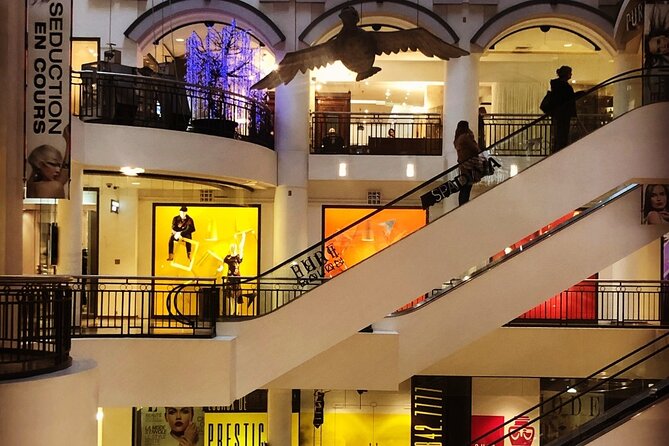
- The RESO becomes easier to use: Learn how Montreal’s underground passages connect malls, food spots, stations, and the Metro.
- Misha leads the walk: Expect a friendly, informative guide who shares local history, culture, and useful city advice.
- The route has surprising variety: See the Berlin Wall, Amphitrite, Lipstick Forest, an indoor skating rink, and the main train station.
- A winter-smart activity: Much of the route stays indoors, making it useful in cold or wet weather.
- Small groups matter: With no more than 10 people, it is easier to ask questions and keep up with the guide.
- Plan for movement: The two-hour walk uses stairs, escalators, and the Metro, with no promise of a completely level route.
Why Montreal’s underground network is worth understanding
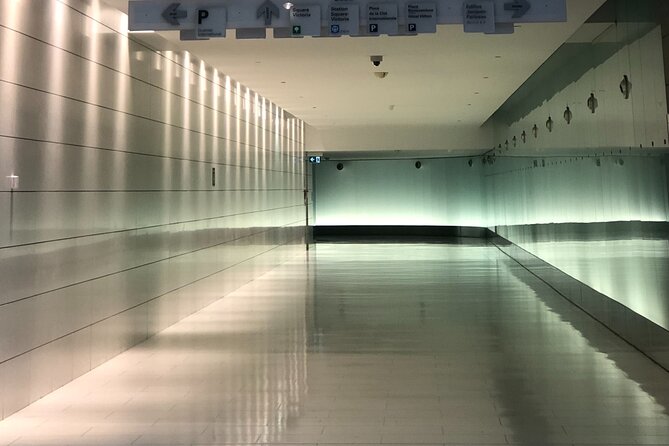
Montreal’s RESO is easy to misunderstand. The name suggests one continuous underground city, but the system is really a collection of linked passages spread through central Montreal. Shops, hotels, offices, malls, Metro stations, train connections, restaurants, and public art all tie into the network.
That makes the RESO useful, but not always simple. A first visit can feel like a hunt for the right sign or corridor. You may know that two places connect underground, yet still have trouble finding the correct entrance. This walk gives you a working picture of how the pieces fit together.
I especially like this as an early-in-your-stay activity. Once Misha has shown you the route, you can use the passages to move through downtown with less exposure to winter cold, rain, or heavy traffic. Several people also found the Metro instruction helpful, since the tour is not only about looking at underground spaces. It teaches you how to get around.
The tour has a practical edge that many sightseeing walks lack. You are not simply shown a collection of places and then sent away. You learn how the RESO links to key sights, shopping areas, food halls, and public transport, which can save time later.
A few more Montreal half-days to weigh up
- Montreal: Guided Bus Tour
★ 4.4 · 3,064 reviews - Montreal: Hop-On Hop-Off Double-Decker Bus Tour
★ 4.1 · 2,760 reviews - From Montreal: Quebec City and Montmorency Falls Day Trip
★ 4.5 · 2,669 reviews
Meeting outside Cathcart Market
The tour begins at 175 Boulevard René-Lévesque O, outside the Cathcart area in central downtown. Time Out Market is right beside the meeting point, giving you a clear nearby reference before the walk begins.
That location is convenient if you are already exploring central Montreal or using public transportation. Still, read the meeting instructions carefully. Downtown has several connected entrances, and the whole point of the tour is that the underground network can be confusing at first.
The tour ends at The Ring, listed at 1048 Montreal, Quebec H7R 5Z3. The supplied meeting details describe the finish as The Ring. Since the RESO covers a large area and the end point is separate from the start, allow a little time afterward before making a tight restaurant, train, or appointment booking.
You receive confirmation when you book, and the ticket is mobile, so you do not need to print anything. The tour is booked, on average, about 26 days ahead, which suggests that reserving early is sensible if your Montreal dates are fixed.
Berlin Wall and Amphitrite: an unusual opening
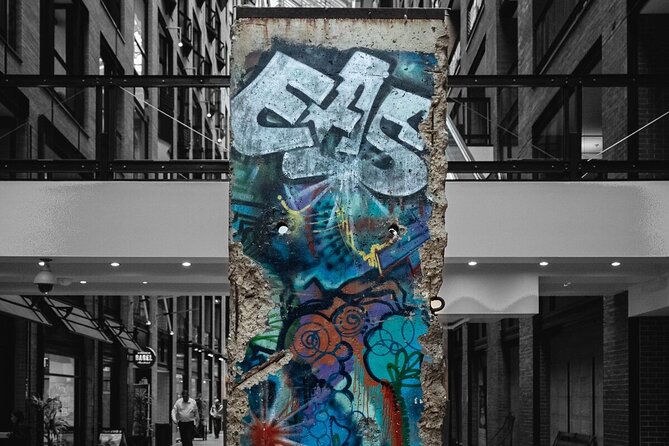
The first part of the route includes a section of the Berlin Wall and the Statue of Amphitrite, wife of Poseidon. These are not the standard sights most people associate with Montreal, and that is part of the appeal.
The Berlin Wall piece adds a reminder that the RESO is not only about retail and weather protection. The network contains public art and unexpected cultural markers, many of which are easy to miss when you are hurrying from one address to another.
The Amphitrite statue brings another kind of surprise. It gives the route a visual stop early on, before the walk moves into shopping, transit, and larger public spaces. I like that the itinerary does not treat the underground as a plain corridor. You get a mix of art, history, architecture, and everyday city life.
Do not expect a traditional museum visit at either stop. The tour is moving through a working part of downtown, not pausing for long formal presentations. The value comes from seeing how these pieces sit within the larger network.
Marché Saint-Laurent and Lipstick Forest
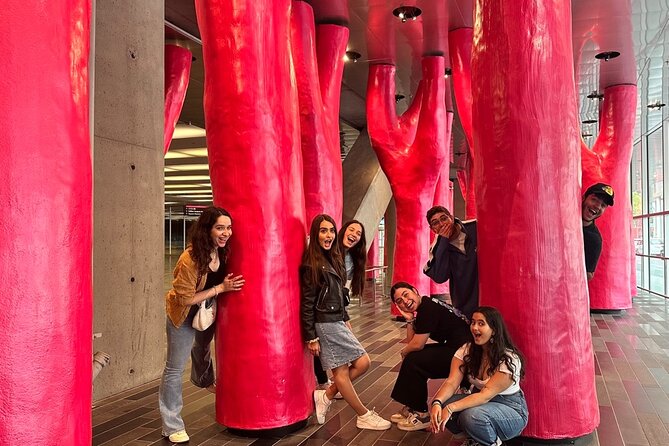
The route continues to Marché Saint-Laurent and Lipstick Forest. Together, these stops show the range of Montreal’s underground spaces, from places connected with food and daily use to an installation with a more playful visual character.
Lipstick Forest is the kind of stop that works well on a walking tour because it gives you a strong photo opportunity and a break from the repetitive look of underground corridors. Marché Saint-Laurent adds a more functional side to the route, with food and shopping forming part of the city’s daily rhythm.
I appreciate this combination because it keeps the two-hour outing from becoming a lesson in maps alone. You are learning directions, but you are also seeing why people use these passages. The RESO is not simply a tourist attraction. It supports work, shopping, meals, errands, and transport.
The tradeoff is that underground commercial spaces can feel less atmospheric than Old Montreal’s streets or historic buildings. If you want grand churches, cobbled lanes, and open-air views, this is the wrong tour. If you want to understand a different side of Montreal, it offers something you will not get from a standard surface walking route.
Same base, a completely different sort of day:
- Montreal Mile End Authentic Food Tour with 7 Delicacies Tastings
★ 5.0 · 2,598 reviews - Quebec City and Montmorency Falls Day Trip from Montreal
★ 4.0 · 2,437 reviews - The Original Old Montréal Walking Tour by Guidatour
★ 4.5 · 2,217 reviews - Old Montreal Small-Group Walking Tour | Max 10 | by MTL Detours
★ 5.0 · 2,088 reviews
The indoor skating rink and Montreal’s main train station
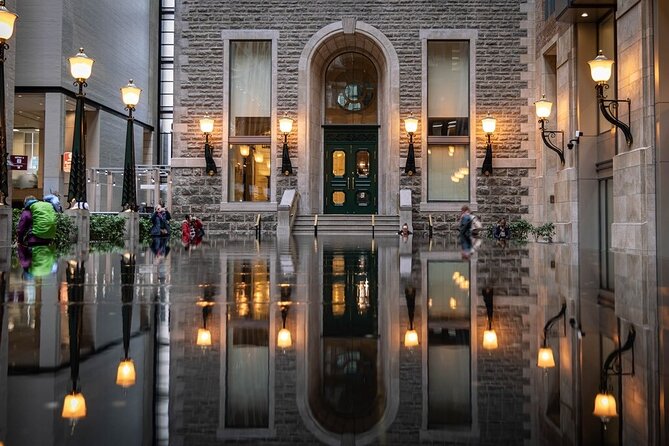
An indoor skating rink adds another change of pace. It helps explain the cruise ship vibe that some people associate with the RESO: a large enclosed world where you can eat, shop, move between attractions, and find entertainment without stepping outside.
That comparison is useful, but do not take it too literally. The Underground City is not a single ship-shaped complex or one enclosed resort. It is a downtown network with many different sections. Some areas are polished and commercial, while others are mainly passageways designed to move people from one building or station to another.
Montreal’s main train station is another important stop because it connects the underground system with long-distance and regional transport. Seeing the station as part of the RESO gives you a better sense of how the network works beyond shopping.
This is one of the tour’s strongest practical features. You are shown links between destinations that might otherwise seem separate. If you plan to use the station or Metro during your stay, the route can help you feel less lost when you return on your own.
Learning the RESO and Metro together

The most useful part of the experience may be the passage itself. Misha explains how to move through the RESO and how it connects with the Metro, shopping areas, and central sights.
The tour includes a mix of stairs, escalators, and subway travel. That variety matters because the underground is not just a long, flat pedestrian tunnel. You need to change levels, watch signs, and understand where a passage leads before choosing a direction.
I like that the guide teaches both orientation and context. You get information about the network’s origins and expansion, along with current advice about using it. That combination helps you remember the route instead of simply following someone for two hours.
Misha also communicates in both English and French, which can be useful for mixed-language groups. Her style comes across as friendly, energetic, and attentive. She has also been praised for sending meeting details ahead of time, handing out small maps, answering questions, and offering suggestions for further exploring the city.
Those details make a real difference. A map is useful after the tour, when you are trying to repeat the route without a guide. Local suggestions can also add value, especially when they lead you to a good brunch or another place you might not have found quickly on your own.
What the two-hour format feels like
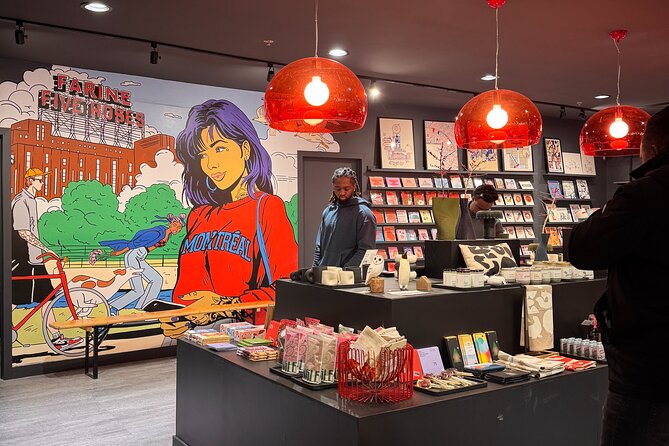
Two hours is a good length for this subject. The RESO is too large to cover every passage, but a shorter walk would not give you enough time to understand the connections.
The route appears active rather than slow. You move through several spaces, change levels, and use public transport. Wear comfortable shoes and expect a moderate level of physical activity. The official guidance asks for a moderate fitness level, and that is worth taking seriously if stairs or extended walking are difficult for you.
The small group limit is one of the better features. With up to 10 people, Misha can keep the group together without turning the walk into a crowded procession. You can ask about Montreal, the Metro, local customs, or places you see along the way.
A small group also makes a difference underground, where it is easy to lose sight of a guide at a junction. Still, stay alert and keep close during transitions. The route includes public areas and transit, so this is a city walk rather than a closed attraction with controlled entry.
Price and practical value at $30.04
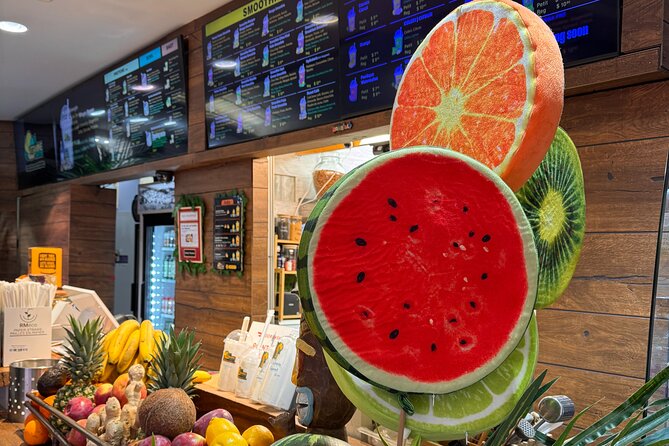
At $30.04 per person, this is not the cheapest way to spend two hours in Montreal, since you can walk through some public parts of the RESO without paying. The question is what you gain from having a guide.
For me, the value lies in the orientation lesson. You are paying for a route through places that can be difficult to connect on your own, plus explanations about the network, the Metro, Montreal culture, and useful places to continue exploring.
The price also looks better if you take the tour near the start of your visit. Use the knowledge afterward and it becomes a city orientation walk, not just a one-time attraction. If you already know downtown Montreal well and can navigate the RESO confidently, the value is lower.
A mobile ticket keeps the booking simple, and free cancellation is available if you cancel at least 24 hours before the start time. Cancellations or changes made less than 24 hours ahead are not accepted for a refund, so watch the local cut-off time.
Who should book this Montreal walk?
I would recommend it most strongly to first-time visitors, winter visitors, solo explorers, and anyone who finds underground maps frustrating. It is also a smart choice for people staying downtown who plan to use the Metro, train station, shopping centers, or indoor food spots.
Families can enjoy the changing sights, though the amount of walking and the need to keep moving may not suit very young children. The small group format is helpful for questions and interaction, and it gives the outing a more personal feel than a large city tour.
Couples and solo visitors may also like the social side. The compact group makes it easier to chat with Misha and with the other people on the walk, while still leaving plenty of room to focus on Montreal itself.
I would skip it if your main goal is outdoor architecture, Old Montreal, or a slow food-focused experience. The RESO can feel practical and modern rather than historic and picturesque. It is also not the best pick if stairs, escalators, or a moderate amount of walking will be a problem.
My verdict: book it early in your stay
I think this tour earns its strong reputation because it solves a real problem. Montreal’s Underground City is useful, but it can be confusing, and many of its most interesting sections are easy to pass without understanding what you are seeing.
Misha’s route adds context to the Berlin Wall, Amphitrite, Marché Saint-Laurent, Lipstick Forest, skating rink, train station, and RESO passages. More important, it shows you how to use the system after the tour.
Book it if you want practical city skills along with unusual sights. Schedule it early, wear comfortable shoes, and treat the two hours as an orientation to Montreal’s underground life. If you prefer classic outdoor sightseeing, choose another tour instead. For a winter visit or a first stay, this is a smart way to get your bearings fast.
FAQ
Where does the Discover Montreal’s Underground City tour start?
The tour starts at 175 Boulevard René-Lévesque O, Montréal, Quebec H2X 3Y2, outside the Cathcart area in central downtown. Time Out Market is right beside the meeting point.
Where does the tour end?
The listed end point is The Ring, at 1048 Montreal, Quebec H7R 5Z3.
How long does the tour last?
The experience lasts approximately two hours.
How much does the tour cost?
The listed price is $30.04 per person.
How many people can join the tour?
The tour has a maximum of 10 people.
What places are included on the route?
The route includes the Berlin Wall, the Statue of Amphitrite, Marché Saint-Laurent, Lipstick Forest, an indoor skating rink, Montreal’s main train station, and passages through the RESO.
Does the tour include Metro travel?
Yes. The route includes a subway ride and explains how the Metro connects with Montreal’s underground network.
What level of fitness is needed?
A moderate level of physical fitness is recommended. The walk includes stairs, escalators, and a fair amount of walking.
Is the ticket available on a phone?
Yes. The experience provides a mobile ticket, and booking confirmation is received at the time of booking.
Can I cancel for a full refund?
Yes, if you cancel at least 24 hours before the experience start time. Cancellations or changes made less than 24 hours before the start time are not accepted for a refund.
Just added around Montreal
- Winter Express: Old Montreal Highlights Walking Tour★ 5.0 · 119 reviews
- Under the Surface of Montreal’s Chinatown: Guided Food Walking Tour★ 5.0 · 23 reviews
- Full Day Family Bike Rental★ 5.0 · 17 reviews
- Montreal Premium Driving Tour with River Cruise and Notre Dame★ 4.5 · 164 reviews
- Immersive Virtual Reality Game Activity★ 5.0 · 19 reviews
- Montréal Downtown and Underground City Private Walking Tour★ 5.0 · 47 reviews
- Day at Mont-Tremblant National Park★ 4.0 · 5 reviews
- In the Shadow of the Mountain: Montreal Jewish History Walking Tour★ 4.5 · 33 reviews
Montreal Tours, compared.



Montreal Mile End Authentic Food Tour with 7 Delicacies Tastings
Read our review →
Quebec City and Montmorency Falls Day Trip from Montreal
Read our review →
The Original Old Montréal Walking Tour by Guidatour
Read our review →
Old Montreal Small-Group Walking Tour | Max 10 | by MTL Detours
Read our review →
Montreal City Sightseeing Tour with Live Commentary
Read our review →
Browse the lists this tour appears in