
Review · MONTREAL
The Essential 101 Non-Touristy Walking Tour by Spade & Palacio
Montreal packs a lot into this walk. In about 2 hours and 45 minutes, you move from the grand stonework of Notre-Dame Basilica through Old Montreal, Chinatown, Saint-Laurent Boulevard, and the artsy Plateau. It is not just a march between famous sights. The route shows how the city shifts from old port town to immigrant neighborhood to modern street-art capital.
I like the mix of classic sights and everyday Montreal, especially the bao snack in Chinatown and the murals along Saint-Laurent Boulevard. I also like the small group, capped at 10 people, and the useful list of places to eat, drink, and explore after the walk. The main catch is simple: you need comfortable shoes and a fair amount of energy, since the route covers a wide stretch of the city and includes an uphill section.
Key points to know
- A strong first-day introduction: The route links Old Montreal, Chinatown, the entertainment district, and Plateau Mont-Royal.
- Notre-Dame Basilica included: You get time to look inside one of Montreal’s most ornate churches.
- Food and drink are part of the walk: Expect a Chinatown snack, beverages, and locally roasted coffee.
- Street art gets real attention: Saint-Laurent Boulevard and the Plateau provide a look at Montreal’s creative side.
- Small groups feel personal: The maximum is 10 people, and guides make an effort to speak with each person.
- Plan for active city walking: You cross streets, walk at a steady pace, and go uphill in places.
Starting at Maisonneuve Monument in Old Montreal
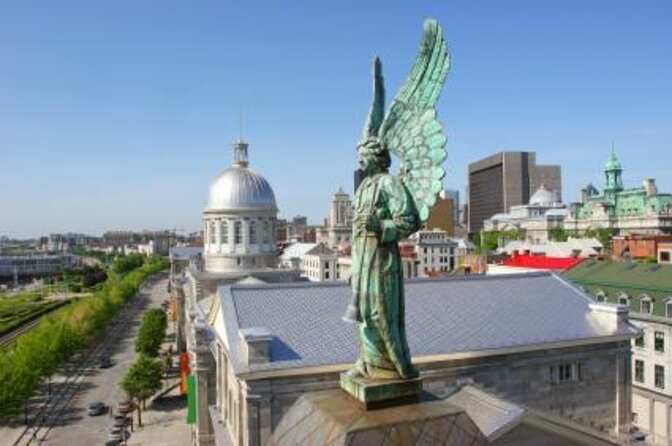
The meeting point is the Monument to Paul de Chomedey, Sieur de Maisonneuve, at 512 Place d’Armes. This puts you right in the heart of Old Montreal, surrounded by some of the city’s most striking architecture.
The opening talk focuses on the square and its mix of buildings. That is a good choice. Before you enter the basilica, you get a quick sense of how Montreal grew around its old religious, commercial, and civic center.
The first stop lasts about 10 minutes. It is brief, but it sets up the rest of the walk well. You are not spending the whole morning on one monument. Instead, you get a short historical frame before moving on.
More walking tours in Montreal:
- The Original Old Montréal Walking Tour by Guidatour
★ 4.5 · 2,217 reviews - Old Montreal Small-Group Walking Tour | Max 10 | by MTL Detours
★ 5.0 · 2,088 reviews - Montréal: The Original Old Montréal Walking Tour
★ 4.8 · 911 reviews
Inside Notre-Dame Basilica
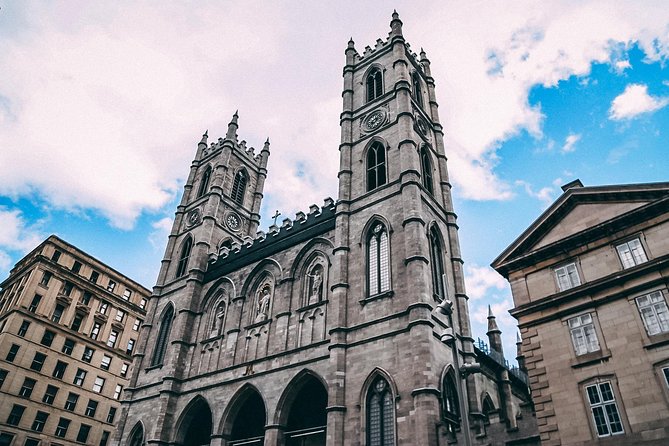
The basilica is the first major stop, and it is one of the best reasons to book this particular route. You learn about the church’s history and ornate interior, then receive about 15 minutes to look around on your own.
That free time matters. A guide can explain what you are seeing, but the basilica rewards a quiet look at its carvings, colors, and dramatic decoration. I would not treat this as a rushed photo stop. Take a few minutes to look upward and notice the details.
The stop is listed as included, though the itinerary marks admission as free. Since the tour information uses both descriptions, check the exact booking details before you go if basilica entry costs are a concern.
Reading Old Montreal beyond the postcard streets
The Old Montreal section lasts about an hour, making it the longest part of the experience. You walk the elegant streets, hear about the foundations of the city, and visit the area once associated with Canada’s old financial center, sometimes called the Wall Street of Canada.
This is where the guide can add the most value. Old Montreal is easy to admire on your own, but its stone façades and grand squares can blur together without context. A good guide helps you connect the architecture to trade, religion, money, immigration, and the city’s growth.
You also hear about cultural events and things happening in the area. That keeps the stop from feeling frozen in the past. Montreal’s old quarter is not only a historic district. It is also an active part of the city, and the walk points you toward events and places you can return to later.
The one limitation is pace. An hour sounds generous, but Old Montreal has a lot to see. You will get an introduction rather than a full study of every building. If you want long stops for photography or detailed church architecture, plan extra time on your own.
A short walk through the Underground City
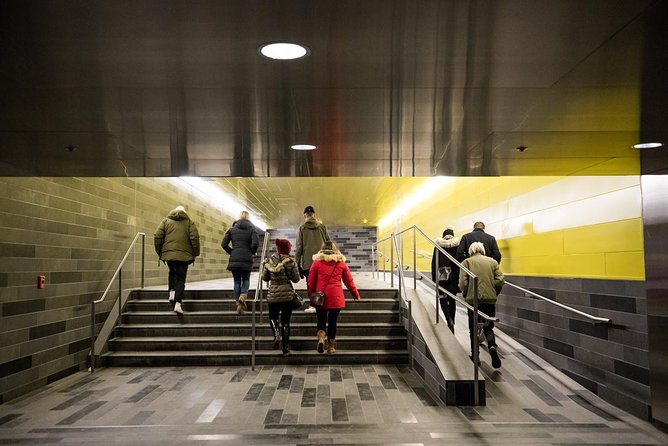
The route then shifts indoors for about 15 minutes, moving from the World Trade Center toward Chinatown through part of Montreal’s famous Underground City.
This is a useful change of mood, particularly in poor weather or during a cold season. The Underground City is not one single attraction with a dramatic entrance. It is a large network of interior passages, shopping areas, offices, and connections beneath downtown. A guide helps you understand how the pieces fit together.
You see only a stretch of the network, not the whole system. That is enough for orientation without turning the tour into a long indoor detour. The stop also helps explain how Montreal residents move through the city in winter.
A few more Montreal half-days to weigh up
- Montreal: Guided Bus Tour
★ 4.4 · 3,064 reviews - Montreal: Hop-On Hop-Off Double-Decker Bus Tour
★ 4.1 · 2,760 reviews - From Montreal: Quebec City and Montmorency Falls Day Trip
★ 4.5 · 2,669 reviews - Montreal Mile End Authentic Food Tour with 7 Delicacies Tastings
★ 5.0 · 2,598 reviews
Chinatown, bao, and a pedestrian mall
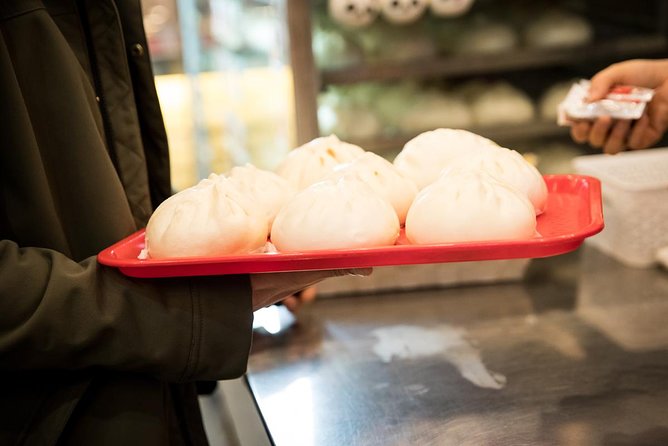
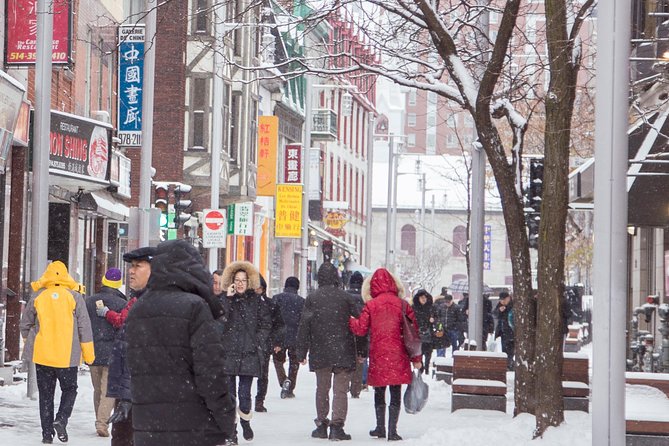
In Chinatown, the group stops at a local bakery for a snack to go, with bao specifically mentioned in the tour details and guest comments. The stop lasts around 15 minutes and includes the food tasting.
This is one of the most appealing parts of the tour because it gives you something small but concrete to remember. You are not only hearing about Montreal’s communities. You are tasting one of the foods connected with the neighborhood.
You also walk along Chinatown’s pedestrian mall. It is a quick visit, so do not expect a full food tour or a long meal. Think of it as an introduction, plus a snack that keeps you moving.
Tell the provider about dietary requirements when booking. The tour includes food, snacks, and drinks, but the supplied information does not spell out substitutions for every diet.
Saint-Laurent Boulevard and Montreal’s changing identity
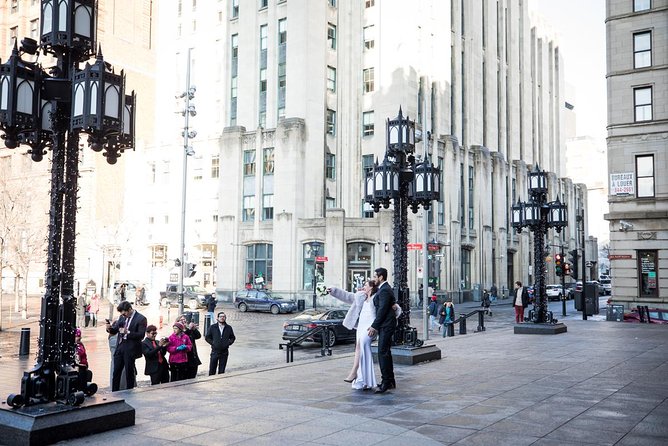
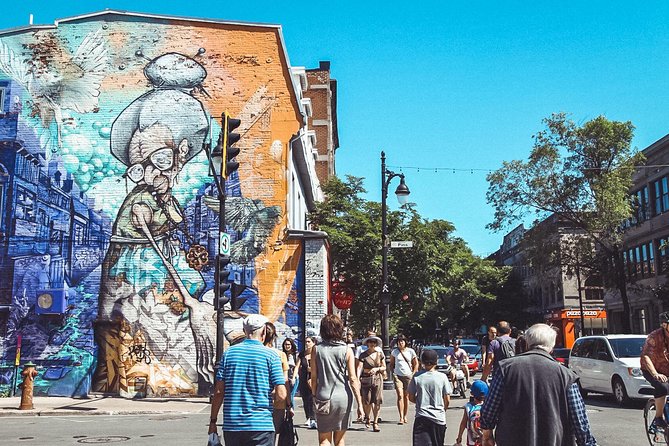
Saint-Laurent Boulevard brings the strongest contrast with Old Montreal. Here, the focus turns to street art, immigration, independent shops, and the old Red Light area that has become part of the city’s entertainment district.
The walk includes murals and works connected with a large street-art festival. The route is not simply a search for pretty walls. You also learn how different waves of immigration shaped Saint-Laurent Boulevard and the neighborhoods around it.
That combination gives the art more meaning. A mural is interesting on its own, but it becomes more memorable when you understand the street’s social and cultural changes.
The stop is about 20 minutes, so you will see a selection of works rather than every major mural. The guide may point out places worth returning to, but you should not expect a long gallery-style discussion at each wall.
The old Red Light area is another useful piece of context. You see how a district’s reputation and role can change over time, from nightlife and vice to festivals, restaurants, art, and entertainment. It is one of the route’s best examples of Montreal’s past and present sitting close together.
Ten minutes at Eva B
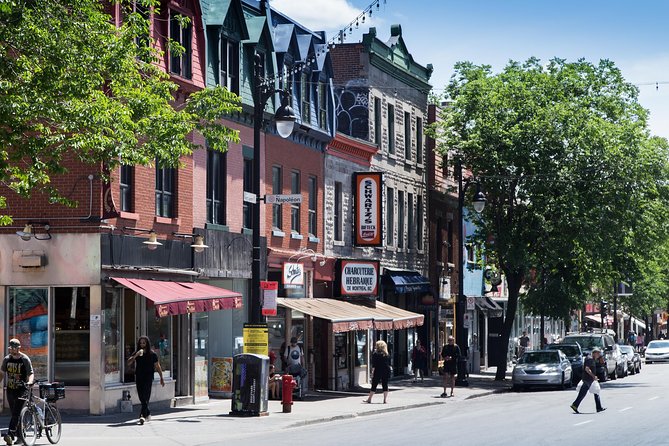
Eva B is a three-floor thrift store with a deliberately wild interior. The tour includes about 10 minutes of free time there, enough to look around before the group moves on.
This is not a standard monument, and that is the point. The stop gives the walk a bit of local character and breaks up the history. You might find clothing, odd décor, or simply an entertaining shop to browse. The exact inventory changes, so the appeal is the atmosphere as much as any one purchase.
Ten minutes is short. If you love thrift stores, you may want to return after the tour when you can take your time. The guide points out the shop so you know where it is, then leaves you with the option of coming back independently.
Finishing in Plateau Mont-Royal
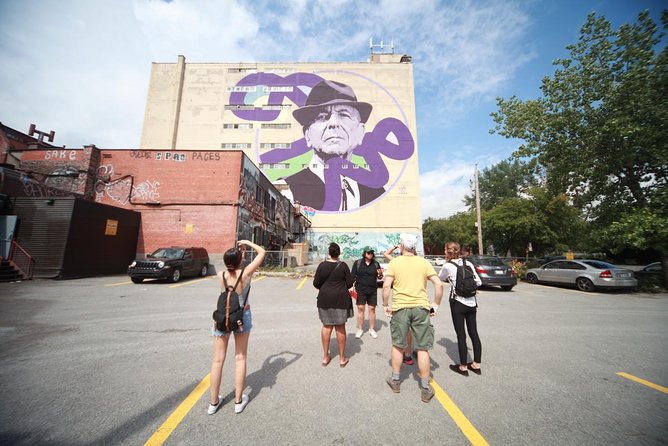
The tour ends in Plateau Mont-Royal, an area known for its concentration of artists, murals, cafés, and independent shops. You see roughly a dozen murals and other works of art while walking through the borough.
This final stretch gives the tour a satisfying change of tone. You began with monuments and old masonry. You finish among creative spaces and neighborhood streets that feel more connected to Montreal today.
The guide also points you toward shops and other places to visit later. The tour ends at Dispatch Coffee, 4021 Boulevard Saint-Laurent, where you sit down for locally roasted coffee and receive a list of recommendations.
That handout can be more useful than it sounds. A short tour cannot cover every restaurant, bar, museum, market, or viewpoint in Montreal. A list from a local guide gives you a starting point for the rest of your stay, especially if you take the tour near the beginning of your visit.
The listed end point is in the Plateau, not back in Old Montreal. That is convenient if you want to continue exploring the neighborhood or find a meal nearby. It also means you should plan your next move from the Plateau rather than assuming you will finish where you started.
What the guides add to the route
The experience uses several guides, including Gabriella, Danny, Mel, Pax, Chris, Jeff, Rod, Rufus, Marie, and Marie Pier. The strongest pattern across the tour is the guide’s role in keeping the group engaged while covering a lot of ground.
Gabriella is described as attentive to different needs and abilities, while Danny is noted for humor and energy. Pax has adapted the route during heavy rain by using indoor spaces, and Jeff has a habit of recapping the sights at the end. These details suggest that the experience depends partly on who leads your departure, but the guide team has a clear focus on conversation, local tips, and flexible pacing.
I would not expect a scripted lecture. The format works best when you ask questions. Guides are encouraged to discuss Montreal, Quebec, and Canada more broadly, so you can use the walk to fill in gaps about the city and shape your plans for later.
The small group helps. With no more than 10 people, it is easier to hear, stay together, and get individual suggestions. Several comments also point to guides speaking with each person rather than addressing only the group as a whole.
Walking pace, weather, and comfort
This is a real city walk, not a sightseeing loop with long vehicle transfers. You should expect a steady pace, street crossings, and an uphill section toward the Plateau.
The route is described as moderately active rather than strenuous. Still, comfortable shoes are essential. You cover a wide area in less than three hours, and stopping often does not remove the need to keep moving between neighborhoods.
The tour operates in different weather conditions, so dress for the forecast. Rain has not necessarily ruined the experience, since guides may use indoor spaces for short dry spells, but the cancellation policy also says poor weather can lead to a new date or a full refund. If weather is uncertain, check the departure status and bring appropriate layers or rain gear.
The minimum age is 5, and participants should have a moderate level of physical fitness. The supplied information does not promise step-free access or a specific accommodation plan, so contact Spade & Palacio Tours in advance if you have mobility needs.
Is $51.92 a fair price?
At $51.92 per person, the value comes from the amount packed into one small-group walk. You get a local guide, basilica time, several neighborhoods, a Chinatown snack, beverages, coffee, street art, and a recommendation list.
You are also paying for the route design. Old Montreal and the Plateau are easy to visit separately, but linking them with Chinatown, the Underground City, Saint-Laurent Boulevard, and the entertainment district gives you a wider view of Montreal in one outing.
The price is less attractive if you prefer slow sightseeing or plan to explore only Old Montreal. In that case, you may spend too much time moving between areas you do not intend to visit. But for a first visit, the range is a strength. You can decide where to return once you know which neighborhoods fit your interests.
The tour is booked, on average, about 30 days ahead, so popular dates may fill early. Free cancellation is available until 24 hours before the start time for a full refund. Cancellations or changes inside that window are not refunded or accepted, and poor weather or an insufficient number of bookings may lead to a new date or full refund.
Who should book this Montreal walk?
I would choose this for a first visit, a short stay, or the opening day of a longer trip. It gives you enough history to understand Old Montreal, enough street life to see how the city feels now, and enough practical advice to plan the next few days.
It also suits solo visitors and families with older children who like variety. The route shifts often, and the food stop, murals, thrift store, and coffee break keep the experience from becoming one long architecture lesson.
You may want a different experience if your priority is a full food tour, an in-depth basilica visit, or a slow photography walk. This is a broad introduction. Its strength is range, not exhaustive time at any one stop.
Should you book the Essential 101 Non-Touristy Walking Tour?
Book it if you want Montreal in quick, well-connected strokes: historic squares, an ornate church, immigrant neighborhoods, underground passages, street art, a quirky shop, coffee, and useful local advice.
The best reason to go is the contrast. You begin among Old Montreal’s grand buildings and end in the Plateau’s creative streets, with Chinatown and Saint-Laurent filling in the middle. Just bring good shoes, allow for an uphill walk, and take the tour early enough in your stay to use the recommendations afterward.
FAQ
How long is the Essential 101 Non-Touristy Walking Tour?
The tour lasts approximately 2 hours and 45 minutes.
Where does the tour begin?
It begins at the Monument to Paul de Chomedey, Sieur de Maisonneuve, at 512 Place d’Armes in Montreal.
Where does the tour end?
The walk ends at Dispatch Coffee, 4021 Boulevard Saint-Laurent, in the Plateau district.
What is included in the price?
The experience includes a local guide, beverages, snacks, a food tasting, and coffee.
Is Notre-Dame Basilica included?
The route includes a visit to Notre-Dame Basilica, with about 15 minutes to learn about the church and look around independently. The supplied details describe admission as free and also mark it as included.
How many people can join the tour?
The group has a maximum of 10 participants.
What should I wear?
Wear comfortable shoes and dress appropriately for the weather. A moderate amount of walking is involved, including street crossings and an uphill section.
Just added around Montreal
- Winter Express: Old Montreal Highlights Walking Tour★ 5.0 · 119 reviews
- Full Day Family Bike Rental★ 5.0 · 17 reviews
- Under the Surface of Montreal’s Chinatown: Guided Food Walking Tour★ 5.0 · 23 reviews
- Montreal Premium Driving Tour with River Cruise and Notre Dame★ 4.5 · 164 reviews
- Immersive Virtual Reality Game Activity★ 5.0 · 19 reviews
- Montréal Downtown and Underground City Private Walking Tour★ 5.0 · 47 reviews
- Day at Mont-Tremblant National Park★ 4.0 · 5 reviews
- In the Shadow of the Mountain: Montreal Jewish History Walking Tour★ 4.5 · 33 reviews
Montreal Tours, compared.


Montreal Mile End Authentic Food Tour with 7 Delicacies Tastings
Read our review →
Quebec City and Montmorency Falls Day Trip from Montreal
Read our review →
The Original Old Montréal Walking Tour by Guidatour
Read our review →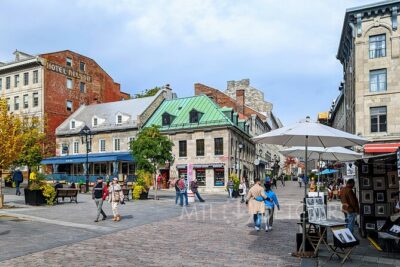
Old Montreal Small-Group Walking Tour | Max 10 | by MTL Detours
Read our review →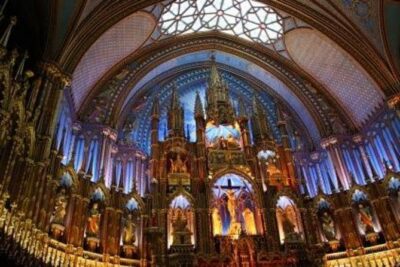
Montreal City Sightseeing Tour with Live Commentary
Read our review →
Browse the lists this tour appears in