
Review · JASPER
Planetarium and Telescope Combo Tour
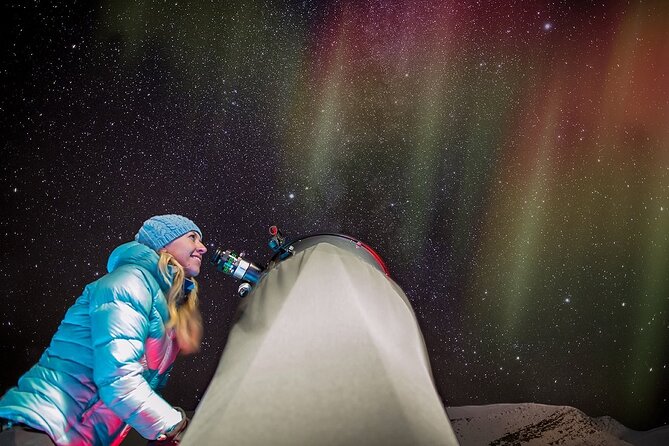
Jasper’s night sky is the main attraction here, but the clever part is that the evening does not depend entirely on clear weather. You begin beneath a dome with a guided astronomy show, then head outside for telescope viewing, aurora lessons, and a look at Moon and Mars rocks.
I like the mix of science and First Nations stories, and I like that the guides leave time for questions rather than simply pressing play and sending you home. Free parking and several evening start times also make this easy to fit into a stay at Fairmont Jasper Park Lodge. The catch is simple: the experience is highly weather-dependent, and the dome may be a tent rather than the solid building some people expect.
Key points to know before booking
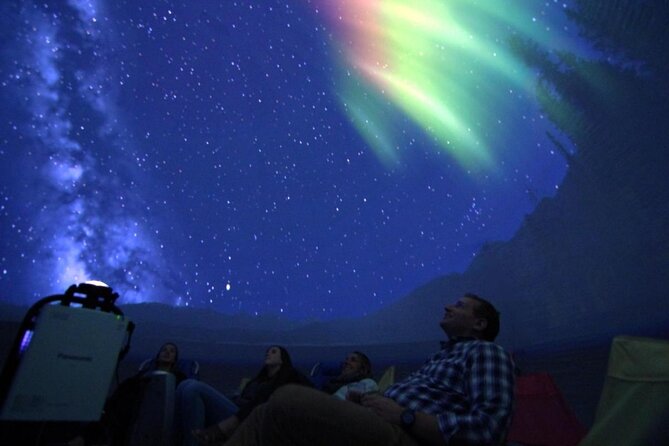
- The 35-minute dome show comes first: You’ll see Indigenous constellations, the Aurora Borealis, Rocky Mountain glaciers from space, and the edge of the universe.
- The telescope portion lasts about 45 minutes: Clear skies may bring guided views through powerful Rocky Mountain telescopes, while clouds mean recorded 4K views instead.
- Aurora viewing is never guaranteed: The guides explain the science and show you how to photograph auroras, but the actual display depends on conditions.
- Dress for a cold, long outdoor session: You may be standing outside for much of the telescope segment, with limited seating noted by some visitors.
- The dome is a temporary setup: The 38-seat theater is described as a dome, but some recent visitors found it housed in a tent and less polished than expected.
- A two-year rain check softens cloudy nights: This is useful if you can return to Jasper, but less useful on a once-in-a-lifetime trip.
A Jasper astronomy evening with two very different acts
This is not simply a film followed by a quick look through a telescope. The evening has two parts, and they work best together.
Inside, you get a controlled, weatherproof introduction to the sky. Outside, you have the chance to see real celestial objects through telescopes and to connect the science with the sky above Jasper. If clouds roll in, the first part still works, but the second becomes more of a lesson than a viewing session.
That distinction matters at $68.61 per person. I see the price as reasonable for an active astronomy program with guides, a dome presentation, telescope access, free parking, and a question period. I would not book it solely as a guaranteed Northern Lights outing. For that, you are paying for a chance, not a promise.
The group is capped at 34 people, which is small enough to keep the presentation manageable, though the outside telescope portion can feel less orderly when several groups gather in the same dark area. Plan to arrive early and listen carefully when your guide explains where to go.
A few more Jasper half-days to weigh up
- Jasper: Columbia Icefield Skywalk and Ice Explorer Ticket
★ 4.6 · 2,444 reviews - Jasper National Park: Maligne Lake Cruise With Guide
★ 4.7 · 896 reviews - Jasper Evening Wildlife Tour
★ 4.5 · 710 reviews
Starting at Fairmont Jasper Park Lodge
The meeting point is 1 Old Lodge Road, at the Main Lodge of Fairmont Jasper Park Lodge. The dome is only steps away, and free parking is included, so this is one of the easier evening activities to reach if you are already staying at the resort or driving there.
The check-in arrangement deserves attention. Some people have found the directions unclear, particularly when several evening sessions overlap. Your confirmation gives a scheduled start time, so check it closely and arrive about 10 minutes early. A delay on the highway, even something as quintessentially Jasper as elk stopping traffic, can create confusion if you reach the area after another session has begun.
There are several evening start times, which helps families and couples work the activity around dinner. Still, the later the start, the colder and darker the outdoor portion may feel. If you book an early slot in summer, the telescope session could begin before full darkness. That does not ruin the experience, but you will get less traditional stargazing.
Inside the 38-seat dome: sky stories with a Jasper connection
The first section lasts about 35 minutes in a climate-controlled dome theater. You remain seated while the guide takes you from the local night sky to the outer edge of the universe and back.
The program covers a broad range of subjects:
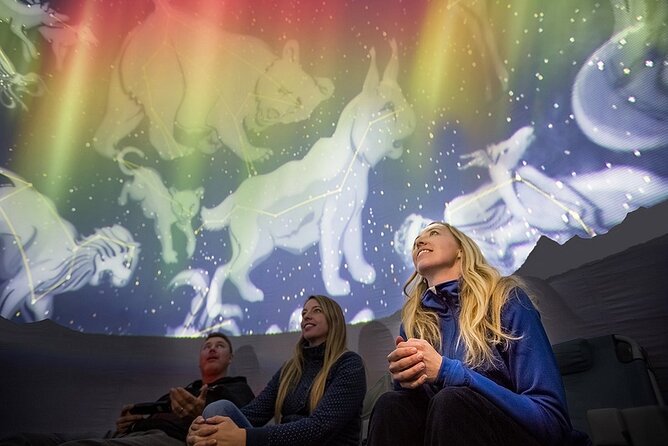
- Indigenous constellations and stories
- The Aurora Borealis over mountain peaks
- The science behind northern lights
- Rocky Mountain glaciers viewed from space
- Stars, planets, and the scale of the universe
This wide scope makes the dome useful for beginners. You do not need to arrive with a working knowledge of astronomy. The guides explain the basic ideas in an approachable way, while the question period lets you ask about anything from stars to aurora forecasts.
The First Nations material is an especially welcome part of the program. It gives you a different way to think about the sky, rather than treating constellations only as a set of European diagrams. The presentation has also been described as fairly technical at times, so you can get more from it than a simple children’s show.
That said, the tone may lean young for adults who want a formal observatory lecture. Families often find the visual format easy to follow, while some adults may find the script a little basic or polished less like a major city planetarium.
The physical setting is another point to clarify. The experience is promoted as a 38-seat dome theater, but recent descriptions indicate a pop-up tent with a projector rather than a permanent planetarium building. If you picture a large civic science center, adjust that expectation. Think of it as a compact traveling dome near the lodge.
The presentation itself can still be worthwhile. The dome format puts the sky above you and makes the scale of the subject easier to grasp. Just do not pay expecting a grand architectural attraction.
Outside with telescopes, meteorites, and aurora advice
After the dome show, you spend about 45 minutes outside. This is the part that makes the combo more than a standard planetarium visit.
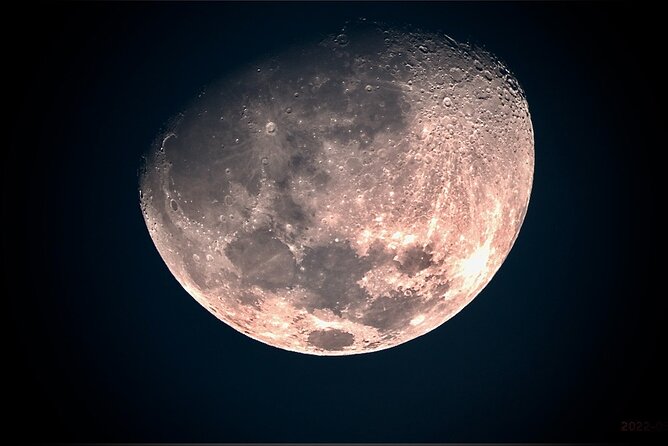
On a clear night, guides set up powerful telescopes used for viewing objects in the sky. The best moments depend on what is visible at that time. Saturn and its rings have provided a particularly memorable sight, while other sessions may focus on stars, planets, or distant features.
You may also learn how to identify certain stars and constellations. The guides explain what you are looking at instead of leaving you alone with an eyepiece. That makes the telescope time much more useful for beginners, especially if you have never handled a telescope before.
The outside station also includes a hands-on look at a Moon rock and a Mars rock. These small samples give the science a physical connection. You are not only watching a projected image of space. You can handle pieces of other worlds and ask questions about them.
Aurora instruction is another strong feature. The guides explain the science behind the Northern Lights and offer tips for photographing them. That is useful even if the lights do not appear during your scheduled session, because you leave with a better idea of what to watch for and how to prepare your camera.
Kaitlyn has been praised for an engaging narration style, while Tyler and Emma have been singled out for making the evening personable and clear. The wider guide team is made up of enthusiastic astronomy presenters, and that energy matters. A cloudy night can still feel worthwhile when the person explaining it clearly cares about the subject.
Same base, a completely different sort of day:
- Jasper National Park: Evening or Morning Wildlife Watch Tour
★ 4.6 · 691 reviews - Jasper Wildlife & Sightseeing Tour with Maligne Lake Cruise
★ 5.0 · 603 reviews - Jasper SkyTram Roundtrip Flight Ticket
★ 4.7 · 567 reviews - Maligne Lake Cruise
★ 4.5 · 502 reviews
What happens when clouds cover Jasper
Clouds are the biggest practical risk. If the sky is overcast, you may not see stars, planets, or the Northern Lights through the telescopes. Instead, the team can show 4K replays of views captured on clear nights.
This keeps the session educational, but it cannot reproduce the thrill of seeing Saturn or an aurora in real time. Several people have felt that a video and a rain check were a poor substitute for the outdoor viewing they had paid for. That is a fair concern, especially if Jasper is one stop on a long Canadian trip and you will not return.
The included two-year rain check is generous in duration but limited in usefulness. It works well for local residents, repeat visitors, or anyone planning another trip to Jasper. It does little for someone leaving Alberta the next morning.
The cancellation terms offer another layer of protection. You can cancel up to 24 hours before the scheduled start for a full refund. If the operator cancels because of poor weather or because the minimum group size is not met, you are offered another date, another experience, or a full refund. Within 24 hours, cancellation normally receives no refund.
Because weather affects the value so strongly, I would check the forecast before the 24-hour cutoff. A clear, cold night is the ideal target. A cloudy night may still be worthwhile for the dome and science lesson, but book it with realistic expectations.
The cold, dark, and sometimes untidy outdoor setup
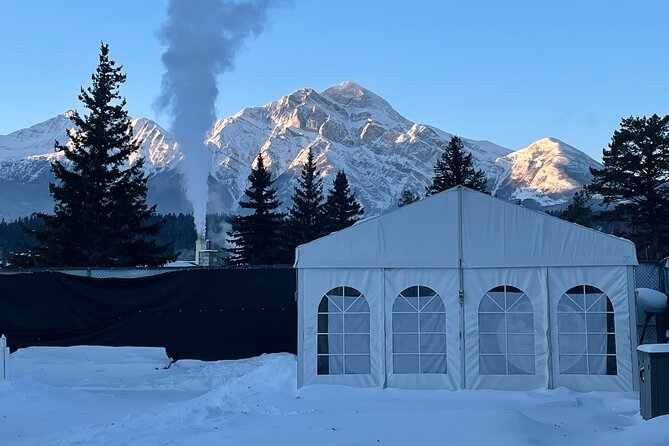
Bring your warmest clothing, including gloves. The Jasper setting can be chilly, and the telescope portion involves time outside. The experience is not recommended for anyone who cannot stand for long periods.
The outdoor organization can also vary. In total darkness, several groups may be moving around, and it may be hard to identify the correct guide. Follow instructions closely, stay with your group, and keep a small light available if permitted by the staff. Bright phone screens can interfere with other people’s viewing, so use one only when needed.
Seating may be limited outside. If you need regular opportunities to sit, this could be uncomfortable. The dome itself provides a seated break, but the telescope segment is designed around moving between viewing points and listening to explanations.
These are not reasons to avoid the tour, but they are reasons to dress and plan properly. You will have a better evening in a bulky coat and warm gloves than in stylish but thin resort clothing.
Service animals are allowed, and most people can participate. Food and drinks are not included, so eat beforehand or plan a meal separately at the lodge.
How the $68.61 price measures up
At $68.61 per person, this is not a cheap filler activity. The value rests on the combination of a dome program, live guides, telescope equipment, aurora photography advice, meteorite samples, free parking, and the chance to see a rare object such as Saturn’s rings or an active aurora.
I think the price is easier to justify on a clear night. You receive a structured introduction, guided viewing, and access to equipment that most people do not carry on vacation. The question period also adds value, since you can ask about the exact sky above Jasper rather than listening to a fixed recording.
On a cloudy night, the calculation changes. You still receive the dome program, explanations, and recorded telescope views, but the most exciting part becomes hypothetical. A two-year rain check helps only if you can realistically return.
If seeing the Northern Lights is your sole aim, I would treat this as one part of an aurora plan, not the whole plan. Jasper’s dark sky improves your chances, but no scheduled tour can control cloud cover or auroral activity. You may even see better lights later from your lodge or another dark spot.
The most satisfied customers tend to be people who enjoy astronomy itself. They appreciate the stories, science, equipment, and chance to learn. Someone seeking a guaranteed spectacle may find the price harder to accept.
Who will enjoy this Jasper experience most
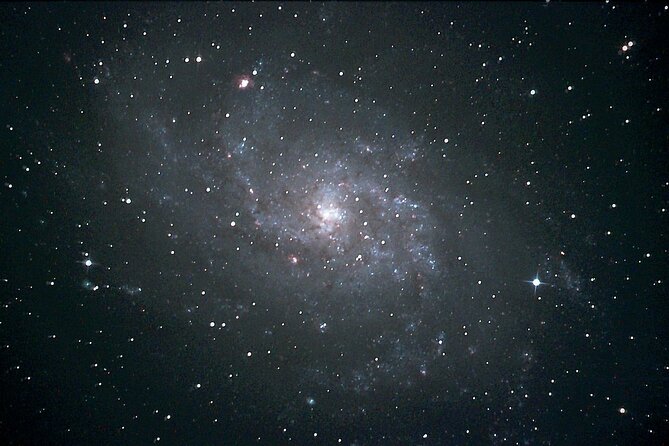
I would recommend it to families with curious children, couples looking for a different evening, and adults who enjoy science but do not want a highly academic lecture. The dome makes the subject accessible, while the telescope session gives the evening a hands-on purpose.
It is also a good bad-weather option because the first portion takes place under cover. You can still learn about auroras, planets, and galaxies when Jasper’s sky refuses to cooperate.
I would be more cautious if you have limited mobility, dislike standing, or are sensitive to cold. I would also think twice if your schedule leaves no chance to use the rain check. The activity ends back at the meeting point, so you arrange your own return transport if you are not driving.
The tone may suit children better than adults looking for a polished observatory. The group limit of 34 keeps the event from becoming enormous, but the outside portion can feel crowded when multiple groups use the same area.
Small details that can make the evening better
Book well ahead if this is important to your Jasper plans. The activity is often reserved about 53 days in advance, which suggests that popular dates can fill before arrival.
Choose the latest practical start time if your main goal is stargazing, while remembering that late sessions can be colder. If you choose an early evening, ask what daylight will mean for the telescope portion.
Arrive 10 minutes early and confirm the exact session time at check-in. Several evening programs can make the meeting area confusing, especially around the lodge and temporary dome.
Eat before you go, bring your warmest layers, and keep your expectations flexible. The best night may include Saturn, a clear Milky Way, or an aurora. Another night may offer a thoughtful dome presentation and recorded views under a blanket of cloud.
Should you book the Planetarium and Telescope Combo Tour?
Book it if you want a guided introduction to Jasper’s sky, enjoy science and First Nations stories, and can accept that the outdoor viewing is not guaranteed. The combination of dome theater, telescopes, meteorites, and aurora photography advice gives you more than a standard film.
I especially like it for families and curious first-time stargazers. The guides bring warmth and enthusiasm, and the question period helps turn a short show into a real lesson.
Skip it if you expect a permanent observatory building, guaranteed Northern Lights, or a comfortable indoor event from start to finish. On a cloudy night, the two-year rain check may not help if you are unlikely to return.
For the best chance at a memorable evening, pick a clear forecast, dress like you are heading into a Canadian winter, and book the tour as an astronomy experience first and an aurora hunt second.
FAQ
How long does the Planetarium and Telescope Combo Tour last?
The experience lasts approximately 1 hour and 30 minutes. The dome presentation takes about 35 minutes, followed by approximately 45 minutes outside with the telescopes and astronomy activities.
Where does the tour begin?
The meeting point is 1 Old Lodge Road, Jasper, Alberta, at the Main Lodge of Fairmont Jasper Park Lodge. The activity ends back at the same meeting point.
Is parking included?
Yes. Free parking is included with the experience.
What happens inside the planetarium dome?
You learn about Indigenous constellations, the Aurora Borealis, glaciers in the Rocky Mountains as seen from space, stars, planets, and the edge of the universe. The dome section is climate-controlled and includes a question period with the astronomy guides.
Can I see the Northern Lights?
You might see the Northern Lights, but viewing is not guaranteed. Aurora activity depends on the sky and weather conditions. The tour also explains the science behind auroras and provides photography tips.
What happens if it is cloudy?
When clouds prevent live telescope viewing, the team can show 4K replays of views captured during clear nights. A two-year rain check is included.
Are telescopes included in the admission?
Yes. Admission includes the telescope portion of the combo tour. On clear nights, guides provide viewing through the telescopes.
Will I be outside for long?
The telescope portion lasts about 45 minutes and takes place outside. You may need to stand for much of this time, so warm clothing and comfortable footwear are important.
Is food included?
No. Food and drinks are not included.
What is the cancellation policy?
You can cancel at least 24 hours before the start time for a full refund. Cancellations within 24 hours are not refunded. If the operator cancels because of poor weather or insufficient numbers, you are offered a different date, another experience, or a full refund.
Just added around Jasper
- Wildfire Peak Nic★ 5.0 · 5 reviews
- Sunwapta Challenge Whitewater Rafting: Class III Rapids★ 5.0 · 139 reviews
- Ultimate Jasper Nature Walk★ 4.5 · 9 reviews
- Whitewater Rafting on Jasper’s Fraser River★ 5.0 · 59 reviews
- Winter Wildlife Discovery Tour★ 4.5 · 68 reviews
- Jasper to Lake Louise One-Way Tour★ 5.0 · 19 reviews
- Wild Current Canoe Adventure Join a small group★ 5.0 · 177 reviews
- Morning Jasper National Park Wildlife Tour★ 4.5 · 47 reviews
Jasper Tours, compared.
Columbia Icefield Skywalk and Ice Explorer Ticket
Read our review →
Jasper National Park: Maligne Lake Cruise With Guide
Read our review →
Jasper National Park: Evening or Morning Wildlife Watch Tour
Read our review →
Jasper Wildlife & Sightseeing Tour with Maligne Lake Cruise
Read our review →
Wildlife and Waterfalls Tour with Maligne Cruise
Read our review →Browse the lists this tour appears in