
Review · CANADA
Intro Survival Course Rockies
The most useful part of this two-day Rockies survival course is that you practice skills in the very setting where you may need them. After meeting at Nordegg, you head about 40 kilometers toward Kootenay Plains and Abraham Lake to learn fire-making, shelter building, knots, navigation, and backcountry safety.
I like the private format, since your group can shape the course around its interests. I also like that equipment is supplied, from tents and hatchets to compasses and GPS units. The main caution is simple: transportation to and from the program is not included, and the camping setup is practical rather than polished.
Key points to know before booking
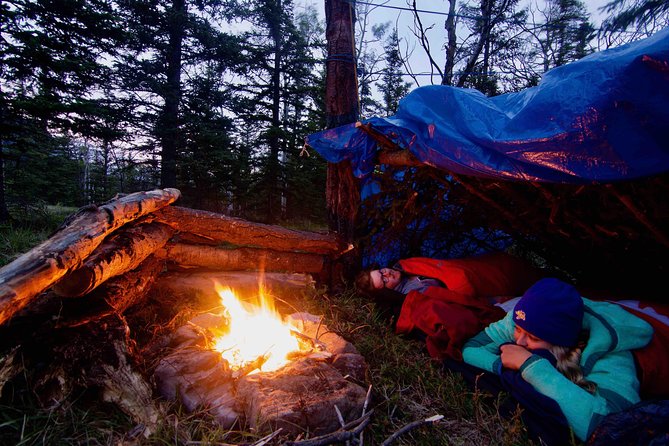
- Spend one night in your own survival shelter, with the option to sleep in the shelter you build.
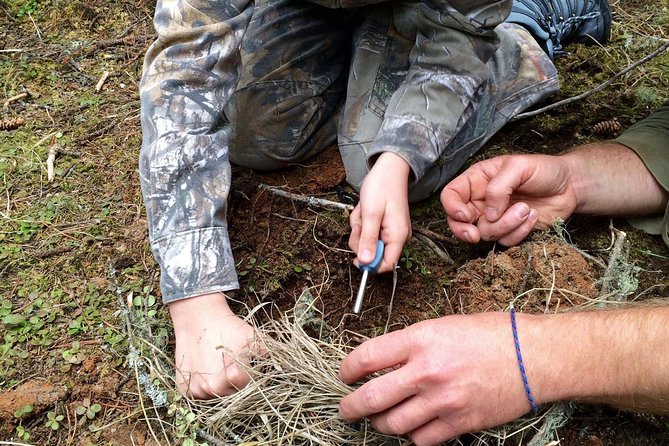
- Practice instead of just listening, including fires, shelters, knots, navigation, plants, cordage, and other bushcraft skills.
- Travel into the Rockies from Nordegg, with training based around Kootenay Plains and Abraham Lake.
- Bring a group of at least four, since this private course has a minimum booking requirement.
- Expect a beginner-friendly course, with instructors Marc, Mark, and Joel named in the available feedback.
- Meals and course gear are supplied, but you must arrange your own transportation to and from HI Nordegg Shunda Creek Wilderness Hostel.
Why this Rockies survival course is worth your weekend
This is not a sightseeing trip with a survival lecture added on. It is a hands-on introduction to staying calm, organized, and useful outdoors. The course focuses on priorities during an emergency, proper equipment, common dangers, fire-making, shelters, knots, navigation, and plant identification.
That focus gives the weekend a practical shape. You are not simply collecting dramatic tales about wilderness survival. You are learning how to think through a problem, use basic tools, and make sensible choices in the backcountry.
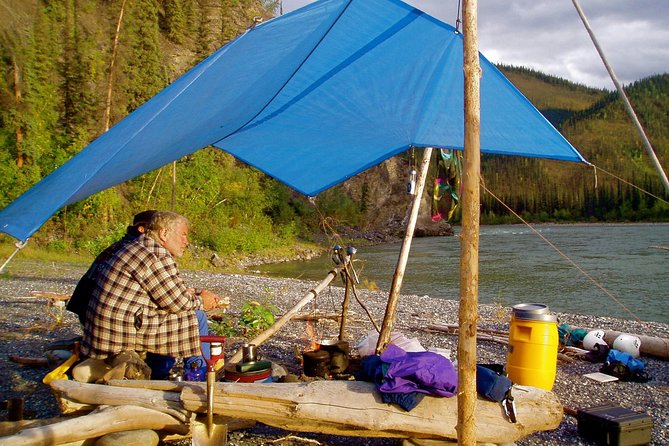
The setting helps. The course begins at HI Nordegg Shunda Creek Wilderness Hostel in Alberta, then moves roughly 40 kilometers into the Rocky Mountains. Training takes place around Kootenay Plains and Abraham Lake, with a second-day hike near Cline River.
I would call this a beginner course with room to stretch. It suits someone starting from zero, a family with an older child, or a camper who has used tents and stoves but has never thought much about emergency priorities. If you already practice advanced bushcraft, traps, wild food gathering, or wilderness navigation, you may find the introductory pace slow.
The course has a rating of 4 out of 5 from five published ratings. The strongest praise centers on the instructors, the useful material, the mountain setting, and the way participants get to apply skills in real time. One family described an especially enjoyable weekend with Marc, including good meals and plenty of chances to ask questions.
There is also a clear caution in the record. One group felt the food and instruction did not match the price and was frustrated about finding a camping spot. The provider replied that transportation and site reservations were not part of the course, and that food service had been altered during public health restrictions. I would read that as a reason to check the exact arrangements before booking, not as a reason to dismiss the course.
Other Alberta days people book on the same trip:
- Wild Water Adventures
★ 5.0 · 581 reviews - Moraine Lake, Lake Louise Johnston Canyon Banff National Park
★ 4.5 · 243 reviews - Icefields Parkway: a Smartphone Audio Driving Tour
★ 4.0 · 118 reviews
9:30 a.m. at Nordegg, then into the Rocky Mountains
Your morning begins at the HI Nordegg Shunda Creek Wilderness Hostel at 9:30 a.m. This is the meeting point, introduction, and starting line for the course. You meet the instructor or instructors, then travel toward the training area.
The drive matters because the program quickly leaves the ordinary hostel setting behind. The course description places the training site in the heart of the Rockies, near Kootenay Plains and Abraham Lake. Transportation to and from the program is not included, so you need to arrive at the meeting point under your own arrangements.
The course is private, so only your group takes part. That can be a real advantage. You can ask basic questions without worrying about slowing down strangers, and the instructor can adjust the material to your group. The tradeoff is the minimum of four people per booking. Solo visitors and couples cannot simply book an individual place unless they form a group that meets the requirement.
The start time is early enough to make the first day feel full, but not punishing. Plan to be ready at 9:30 a.m., with whatever personal clothing and camping items the provider tells you to bring. The course supplies its main equipment, but the information does not give a complete personal packing list.
Kootenay Plains and Abraham Lake: six hours of practical work
By about 10:30 a.m., the group sets up a base camp around Kootenay Plains near Abraham Lake. The first lesson is not about dramatic tricks. It begins with precautions, dangers to avoid, equipment, and priorities during emergencies.
That order is sensible. In a real problem, knowing what not to do can matter as much as knowing how to tie a knot. A course that begins with priorities gives you a framework for the later tasks. You learn to consider safety and resources before rushing into action.
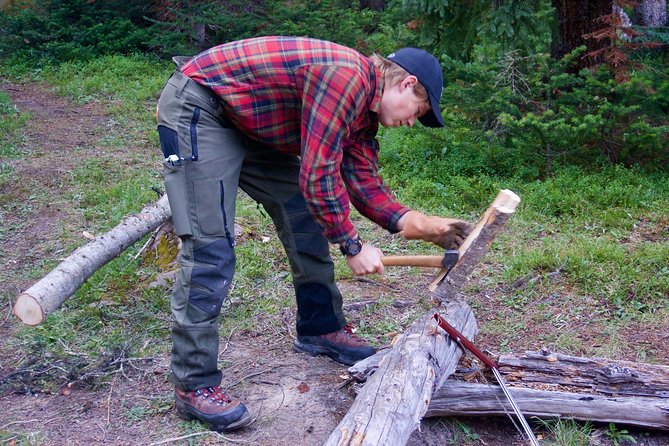
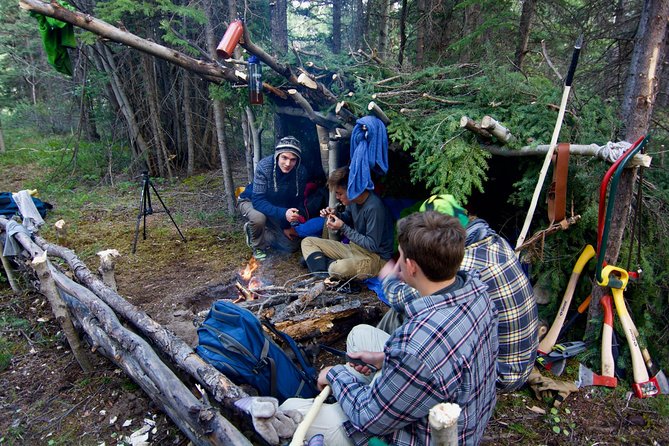
The afternoon then turns to practical work. You learn how to make survival fires and construct shelters under adverse conditions. Useful knots are also part of the program. These are basic skills, but they are not merely decorative camping knowledge. Fire and shelter affect warmth, morale, food preparation, and protection from weather. Knots and cordage can help you secure equipment or build simple structures.
The emphasis is on bushcraft and overall outdoor skills. You should expect instruction aimed at useful basics rather than a theatrical survival stunt. The supplied equipment includes tents, hatchets, knives, compasses, GPS units, and other course gear. Having these tools ready lets you focus on learning instead of arriving with a specialized kit.
The most memorable option comes at night: you may sleep in the survival shelter you built. That choice gives the lessons some weight. A shelter looks different when it is only an afternoon project than when you must spend the night in it.
Still, this is camping. The included accommodation is one night outdoors, not a heated room at the hostel. If you prefer a soft bed and indoor plumbing, this program will test your enthusiasm. If you want to understand how shelter design works in practice, the overnight option is one of the course’s strongest features.
Day two begins with a second look at the basics
The second day starts at 9 a.m. and continues until 11 a.m. with topics introduced the previous afternoon. This review is useful for beginners. You get a chance to revisit skills after a night outside, when the purpose of shelter, warmth, and organization feels less theoretical.
The available details do not specify exactly which lessons are repeated or how much time goes to each one. That is where the private format helps. If your group needs more work with knots, fire, shelters, or equipment, you can ask the instructor to spend more time there.
The morning schedule is short, but the whole day remains active. After the early session, the group heads out for a hike in the afternoon. The hike is not just a scenic walk. It is used to teach outdoor navigation and plant identification, including useful and medicinal plants.
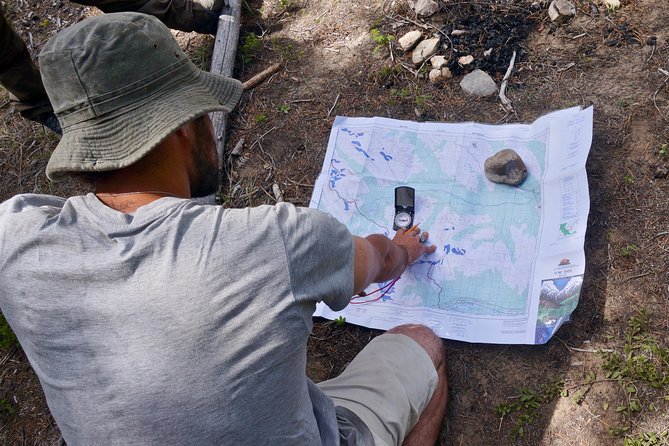
Navigation is a particularly valuable addition for new backcountry visitors. Compasses and GPS units are supplied, so you can work with both traditional and electronic tools. The course information does not promise a particular route or mileage, so do not book this expecting a fixed sightseeing hike. The point is learning how to find your way outdoors.
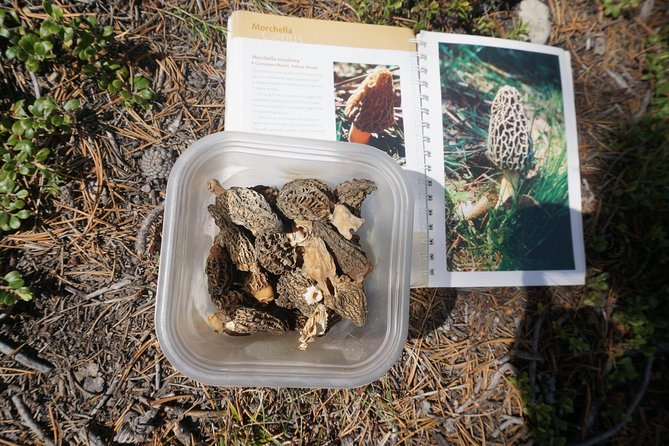
Plant identification adds another layer. You are introduced to useful and medicinal plants, but this should not be confused with a license to eat anything you find. The supplied information does not promise a wild-food meal or advanced foraging certification. Treat the lesson as an introduction and follow the instructor’s guidance carefully.
Same base, a completely different sort of day:
- Lake Louise Summer Gondola Experience
★ 4.0 · 65 reviews - Calgary Airport Shuttle to Banff & Lake Louise
★ 4.5 · 54 reviews - Adrenaline Canyoning Tour
★ 5.0 · 39 reviews - Self-Guided Audio Driving Tour in Icefields Parkway
★ 5.0 · 24 reviews
Cline River and the optional advanced topics
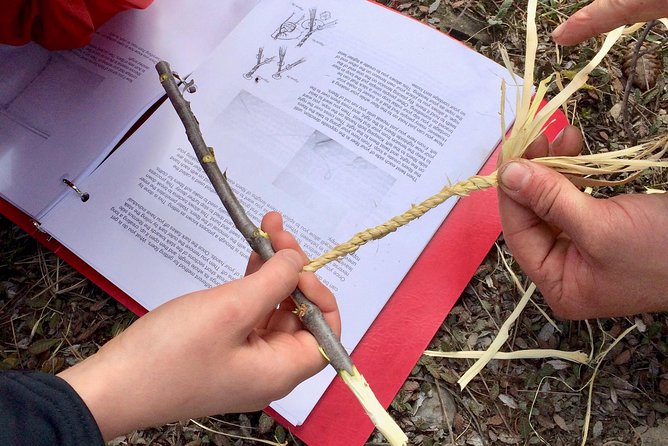
The afternoon portion near Cline River lasts about six hours and can include more advanced subjects if time allows. Possible topics include alternative food sources, basic traps and snares, improvised rope or cordage, and survival saws.
The words if time permits matter. These subjects are not guaranteed in full. The schedule depends on the earlier lessons, the group, conditions, and the pace of the hike. If traps, cordage, or saws are your main reason for booking, ask the provider how much time is normally devoted to them.
Cordage is a useful progression from knot work. You move from tying available rope to thinking about how rope itself might be improvised. Survival saws and simple traps add tool and planning skills, though the course is still presented as an introduction.
The day wraps up in the late afternoon or early evening, and the activity ends back at the meeting point. That return is important for planning. You are not left at Cline River, and you do not need to arrange a separate finish point. You should still allow some flexibility in your own schedule because the end time is not exact.
Meals, equipment, and what you are really paying for
The price listed is $205.56 per person. For two days of instruction, one night of camping, meals, and equipment, that can be fair value, particularly if you do not already own outdoor tools or want a private session for your group.
The value is less clear if you already have a full camping kit and solid bushcraft skills. You may be paying mainly for the instructor, the setting, and the organized practice. Beginners are likely to get more from the package than experienced campers.
The included food is described as breakfast, lunch, and dinner during the course, with one dinner, one breakfast, and two lunches also specified in the inclusions. The wording is a little repetitive, so I would confirm the exact meal plan when booking. Vegetarian food is available if you request it in advance, and you should share other dietary needs before the course.
One family specifically enjoyed the meals and singled out honey garlic sausages. Another group described receiving wet sandwiches and pasta and felt the food was not worth the cost. Expectations may depend on the conditions and the food service arrangements in place at the time. This is camp food, not a restaurant experience, and the provider noted that meal preparation had changed under public health rules.
The course equipment is a strong practical benefit. Tents, hatchets, knives, compasses, GPS units, and other necessary course items are supplied. That lowers the entry cost for someone curious about survival skills but not ready to buy a hatchet, navigation tools, and shelter equipment.
You still need to clarify what personal items are required. The supplied information does not list clothing, footwear, toiletries, or personal sleeping gear. Ask before departure so you do not mistake course equipment for a complete personal packing list.
The instructors and teaching style
The available feedback names Mark and Joel as friendly teachers, while another account names Marc as the instructor. The comments consistently point to an approachable teaching style, with plenty of room for questions. One group of six described Marc as able to handle questions throughout the weekend.
That matters on a beginner course. Survival skills can feel intimidating when an instructor assumes you already know how to use a compass or build a safe fire. A patient teacher makes it easier to admit what you do not know and correct mistakes early.
At the same time, you should approach the course as an introduction, not a professional qualification. The program aims to build confidence for backcountry travel and camping. It does not claim to certify you as a wilderness guide, medical responder, or advanced survival expert.
One participant felt the instructor could not answer some basic questions. The provider responded by pointing to more than 20 years of guiding and outdoor instruction experience and invited the group to raise concerns directly during the course. That exchange suggests a useful booking habit: if your group has a specific goal, such as navigation, winter shelter, or food identification, ask about it beforehand.
Who will enjoy the private two-day format
I would recommend this course most strongly to:
- First-time backcountry campers who want guided practice
- Outdoor enthusiasts who want to build confidence before longer trips
- Families with children who meet the age and adult supervision requirements
- Small groups that want a private lesson rather than a public class
- Campers curious about bushcraft tools and emergency planning
Children must be accompanied by an adult, and a child rate applies only when sharing with paying adults. The information says most people can participate, but it does not give a detailed fitness standard or age range.
The hiking component means you should be comfortable spending time outdoors. The program also requires camping overnight and working with tools such as hatchets and knives under instruction. Ask the provider about suitability if a member of your group has a mobility limitation or other concern.
Service animals are allowed. English is the offered language.
This course is less suitable if you want a luxury camp, a short scenic outing, or a highly advanced survival school. It is also a poor match if you expect the provider to arrange your transport to Nordegg or secure a separate camping reservation for you. Those details are outside the listed package.
Booking timing, weather, and cancellation
The course is commonly booked about 103 days ahead, which is a useful sign to plan early if your dates are fixed. The operating period listed runs from July 9, 2021, through January 3, 2027, with hours shown daily from 9 a.m. to 6 p.m.
The activity requires good weather. If poor weather causes cancellation, you are offered another date or a full refund. You can cancel for a full refund up to 24 hours before the start time. Changes or cancellations inside that window are not accepted, and the cutoff uses local time.
Because this is a remote, outdoor program, I would confirm the meeting point, meal plan, personal packing list, and transportation arrangements before setting out. Those few questions can prevent the sort of misunderstanding that turns a good course into an expensive frustration.
Should you book Intro Survival Course Rockies?
Book it if you want a beginner-friendly, hands-on weekend in the Alberta Rockies and you have at least four people for a private booking. The combination of supplied equipment, overnight shelter practice, navigation, plant identification, and instructor-led drills gives you more useful preparation than a simple campout.
The price makes the most sense if you would otherwise need to buy equipment or arrange separate instruction. I would be cautious if you are an experienced bushcrafter, want guaranteed advanced topics, or expect restaurant-style food and effortless transportation.
Before paying, ask three things: what personal gear you must bring, exactly which meals are included, and how your group’s priorities can shape the private course. If the answers suit your plans, this is a sensible way to gain confidence before heading farther into the backcountry.
FAQ
Where does the course begin?
It begins at HI Nordegg Shunda Creek Wilderness Hostel, 321 Shunda Creek Road, Nordegg, Alberta.
How long does the experience last?
The course lasts approximately two days and includes one night of camping.
What time does the first day start?
The first day begins at 9:30 a.m. with a meeting and introduction at Nordegg.
Is transportation to the course included?
Transportation to and from the program is not included. The group does travel about 40 kilometers from Shunda Creek to the training location.
What equipment is supplied?
Course equipment includes tents, hatchets, knives, compasses, GPS units, and other necessary equipment.
Are meals included?
Breakfast, lunch, and dinner are listed as included during the course. Vegetarian food is available if requested in advance.
Is the course private?
Yes. Only your group participates, and a minimum of four people per booking is required.
Can children take part?
Children can participate when accompanied by an adult. A child rate applies only when sharing with paying adults.
What happens if bad weather cancels the course?
You are offered a different date or a full refund if the experience is canceled because of poor weather.
Just added around Alberta
- Official SkiByk Rentals in Banff & The Canadian Rockies★ 5.0 · 9 reviews
- Smartphone Audio Driving Tour between Lake Louise and Calgary★ 4.0 · 15 reviews
- Discover the Lake Agnes Tea House Trail with an Audio Nature Tour★ 4.0 · 7 reviews
- Icefields Parkway: a Smartphone Audio Driving Tour★ 4.0 · 118 reviews
- Lake Louise to Jasper One-Way Tour★ 5.0 · 17 reviews
- Lake Louise Summer Gondola Experience★ 4.0 · 65 reviews
- Moraine Lake and Lake Louise Sightseeing Half Day Tour★ 5.0 · 23 reviews
- Lake Louise to Calgary YYC Airport – Private Shuttle★ 5.0 · 5 reviews