Review · BANFF
Banff: Introduction to Ice Climbing for Beginners
A frozen waterfall is a fine place to try a new sport. This seven-hour beginner course takes you from basic safety and crampon walking to climbing real ice with a rope above you, all in the winter country around Banff, Lake Louise, or Field, British Columbia.
I like the practical setup: technical gear is included, and certified guides teach the skills rather than simply hauling you up a wall. I also like the chance to try different levels of climbing. Guide Shea, for example, set up two rope lines on a very cold day, giving his group an easier route and a tougher option.
The main catch is the cold and the logistics. You need to bring serious winter clothing, food, and drinks, then drive yourself to the climbing site. The exact location can change with conditions, and the group booking needs at least four people before it can go ahead.
Key points for your ice climbing day
- Climb a frozen waterfall: You move beyond a dry climbing wall and learn on actual winter ice.
- Learn from certified guides: Guides hold ACMG and, in some cases, IFMGA and Canadian Avalanche Association certifications.
- Use proper climbing equipment: Helmet, harness, boots, crampons, and ice axe are supplied.
- Practice top-rope belaying: You learn how the rope system works before tackling the ice.
- Expect a full winter day: Meet around 8 or 9 a.m. and finish around 3 or 4 p.m.
- Plan your own transport: You meet at Alpine Air Adventures in Banff, then drive to the climbing area.
What the Banff ice climbing course really offers
This is not a sightseeing trip with a short climbing photo stop. It is an introduction to ice climbing as a sport, with the day built around learning, practice, and repeated attempts.
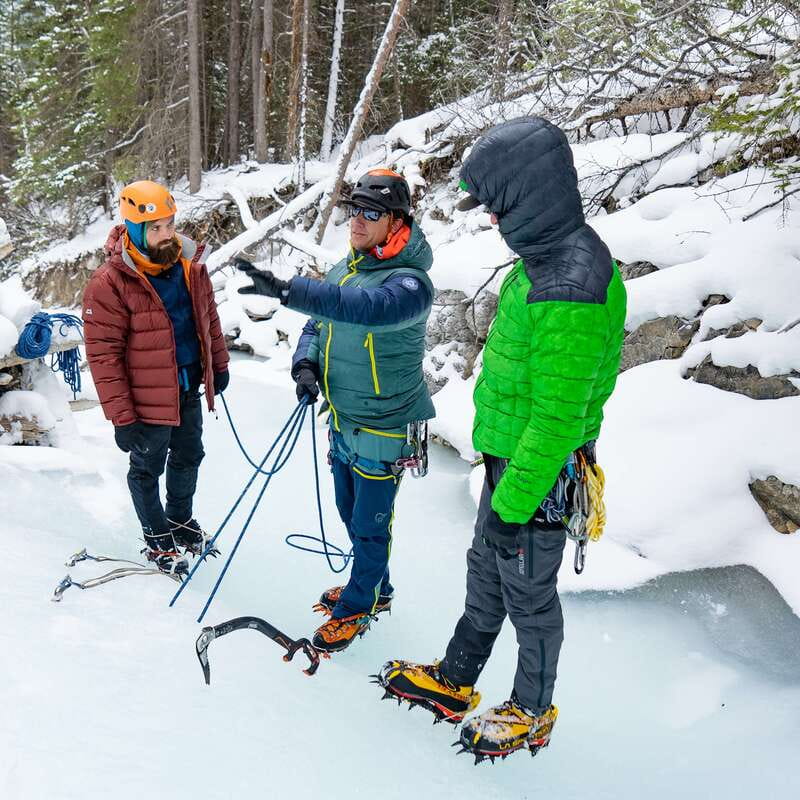
You begin with the foundations. The guide covers safety, equipment, and the basic movements needed to climb frozen water. That includes learning to walk in crampons, use an ice axe, manage your body position, and understand how a top-rope belay works.
That order matters. Ice climbing feels strange at first because your feet and hands do different jobs from ordinary hiking or rock climbing. Crampons need a deliberate step. Your ice axe needs controlled placement. Your body has to stay balanced instead of simply pulling upward with your arms.
The course gives you time to become familiar with those movements before the climbing gets harder. I see this as a better introduction than being placed on a route without context. You leave with a clearer sense of what the sport demands, even if you decide one day is enough.
More Banff and Bow Valley days:
- Banff: Banff Gondola Admission Ticket
★ 4.7 · 3,698 reviews - Lake Louise, Moraine Lake, Banff Tour from Calgary/Canmore/Banff
★ 5.0 · 2,792 reviews - Banff Gondola Ride Admission
★ 4.5 · 2,688 reviews
Meeting at Bear Street before heading into the mountains
Your day begins at the Alpine Air Adventures office at 229 Bear Street, on the lower level beneath the movie theatre in Banff.
You do not stay there for the activity. The office is the meeting point, and you need your own vehicle for the trip to the climbing site. The field location may be in the Banff area, near Lake Louise, or around Field, British Columbia, depending on conditions.
You receive a detailed course package by email three days before the course starts. Read it carefully. It should provide the final timing and location information, which matters here because the meeting area and the climbing area are not the same place.
Plan for an early start, generally around 8 or 9 a.m. The day is expected to end around 3 or 4 p.m. That is a substantial block of time, so treat it as your main activity for the day rather than something you can fit between other Banff plans.
The changing location is sensible for an ice activity. Frozen routes depend on weather and conditions, and a good guide needs room to choose an appropriate site. The tradeoff is less certainty when you make your schedule.
Learning to walk on crampons and hold an ice axe
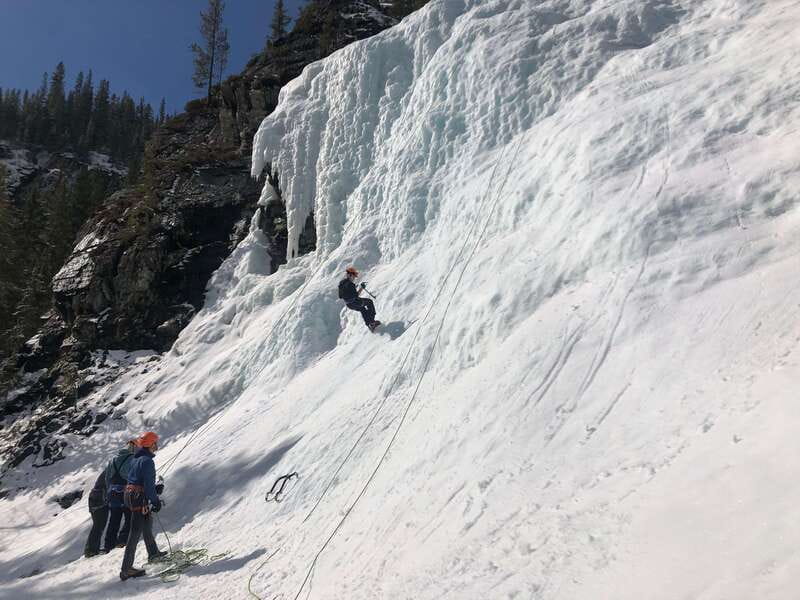
The first physical lesson is often the most useful: walking in crampons.
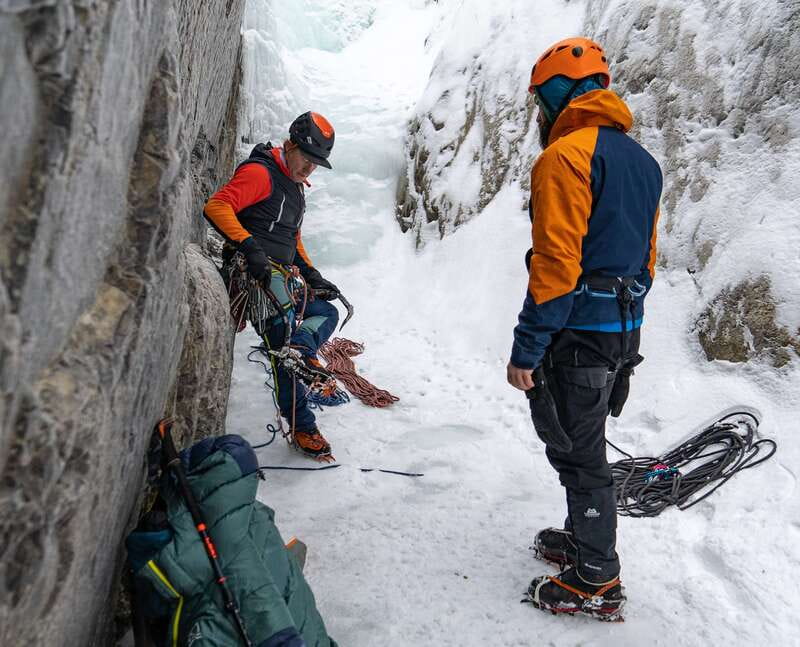
Crampons are metal spikes attached to your boots. They give you grip on ice, but they also change your stride. You need to lift your feet clearly and place them with care. The guide works on this basic movement before you are asked to climb, helping you become aware of where your feet are and how your body is positioned.
You also learn to handle an ice axe. The goal is not simply to swing hard. You need accurate placement and a stable stance. The course focuses on movement skills and body awareness, which can make the difference between an exhausting climb and a controlled one.
I like this part because it gives you something concrete to practice. Ice climbing can look like a sport powered by upper-body strength, but efficient movement is the real lesson. Good positioning helps you conserve energy and use the crampons and tools properly.
You should still expect physical work. The description does not promise an easy climb, and the activity is not suited to people with mobility impairments or wheelchair users. Children under 14 cannot take part, and pregnant women should not book it.
How top-rope climbing makes the first ascent approachable
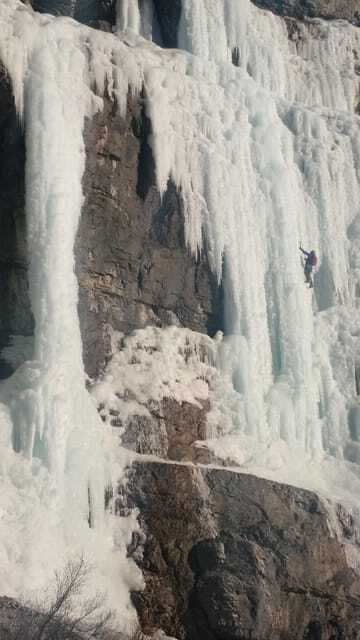
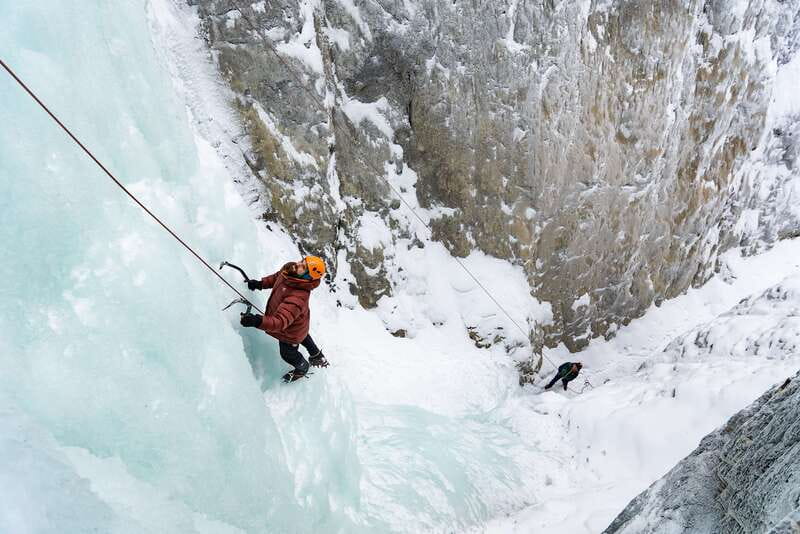
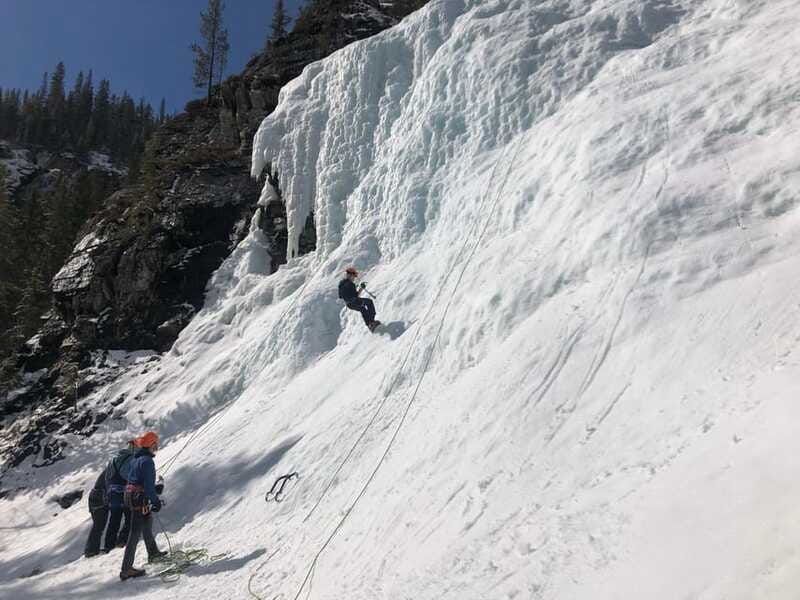
The climbing is done on a top-rope system, a common format for instruction. The rope is secured above the climber, and the guide manages the belay from below.
Before you climb, you learn how this system works. That gives you a clearer understanding of the safety setup and your role on the rope. You are not expected to solve the full technical side of ice climbing in one day, but you do get an introduction to the basic belay process.
Once the route is ready, you climb under the guide’s direction. The rope provides protection while you focus on foot placement, axe use, and body position. For a first experience, that lets you pay attention to movement instead of worrying about leading a route or placing protection.
The exact route difficulty can depend on the site and conditions. One useful example comes from a day with guide Shea in temperatures around minus 20 degrees Celsius. He set up two rope lines, one easier and one more challenging. That arrangement gave the group more options and more climbing attempts while helping people stay active and warm.
You should not assume every course will have the same two-route setup. Still, the example shows what a thoughtful instructional day can look like: adjust the difficulty, keep people moving, and avoid letting the cold spoil the lesson.
Same base, a completely different sort of day:
- Columbia Icefield Tour with Glacier Skywalk
★ 4.5 · 1,860 reviews - Emerald Lake, Moraine, Louise, Johnston Canyon & Banff Town
★ 4.9 · 1,554 reviews - Lakes Moraine, Louise, Emerald, Johnston Canyon & Yoho Tour
★ 4.8 · 1,023 reviews - Jasper: Columbia Icefield Skywalk
★ 4.3 · 916 reviews
A real winter day, not a warm indoor lesson
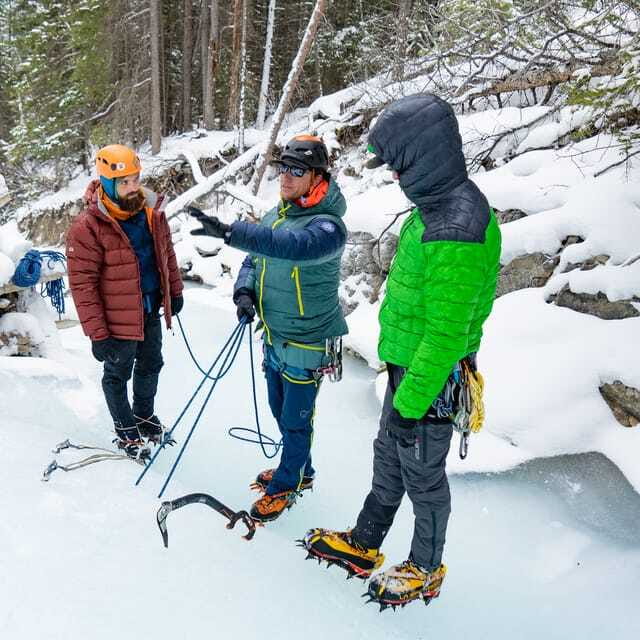
The cold is part of the attraction, but it is also the biggest practical concern.
One group completed the course at about minus 20 degrees Celsius. The guide worked to keep people warm and gave tips throughout the day. At those temperatures, the pace and organization of the day matter. Standing still for long periods can become uncomfortable quickly, especially when you are waiting for your turn on the rope.
Bring warm clothing, snow clothing, a jacket, gloves, and enough food and drinks for the full day. The provided equipment covers the technical side, but it does not replace your personal winter layers.
You might find that climbing helps you stay warm, especially if the guide keeps the group active. Still, you should prepare for cold hands, cold feet, and changing comfort levels. Pack with the assumption that you will spend many hours outside, not just a few minutes beside the ice.
This is also why the seven-hour duration has value. You have time to learn, climb, take breaks, and try again. The downside is that a full day in severe cold may be too much for someone who only wants a quick taste of the sport.
What is included for the $179 price
The cost is $179 per person. You receive the climbing experience, safety briefing, instruction, a certified mountain guide, and technical equipment.
The supplied equipment includes:
- Helmet
- Harness
- Mountaineering boots
- Crampons
- Ice axe
That package removes a major barrier for beginners. Ice climbing gear is specialized, and buying or renting each item separately can make a first attempt complicated. You can arrive without owning the technical kit and still take part.
Transportation to the climbing site is not included. Food and drinks are also your responsibility. Since you need to drive from the Banff meeting point, factor in fuel, vehicle suitability, and the extra planning required by a location that may change.
I consider the price reasonable if you want a proper introduction rather than a brief novelty activity. You are paying for a long instructional day, certified supervision, and equipment that would otherwise be difficult to arrange. The value is weaker if you dislike cold weather, do not want to drive, or hope to spend most of the day sightseeing.
Safety and guide qualifications
Safety is built into the course from the beginning. You receive a briefing and instruction before climbing, and the activity is led by guides certified through the Association of Canadian Mountain Guides, with some also holding IFMGA and Canadian Avalanche Association certifications.
Those qualifications do not remove every risk from ice climbing. They do mean the course is being led within a professional mountain-guiding framework, which is important when conditions, ice quality, and weather can change.
The focus on body positioning and basic movement is another safety benefit. Beginners often use too much force when they feel uncertain. Learning how to stand on crampons, place tools, and manage the rope helps make your actions more controlled.
You should be honest about your comfort and fitness at the start of the day. The course is for beginners, but beginner-friendly does not mean effortless. You will be outside for most of the day and may need to climb repeatedly.
Who will enjoy this most
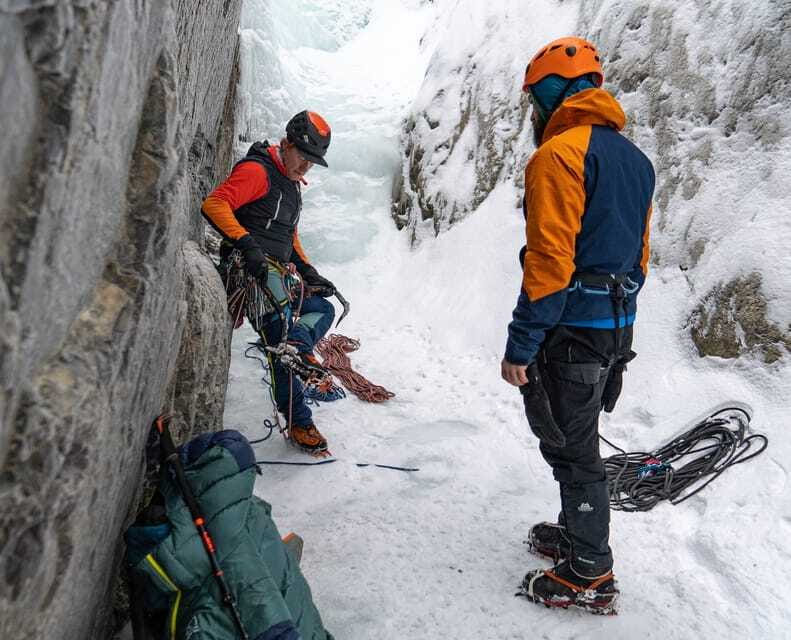
I would recommend this experience to adults and families with children aged 14 or older who want an active winter day and are curious about mountain sports.
It is a good fit if you:
- Want to try ice climbing without buying technical gear
- Enjoy learning physical skills outdoors
- Are comfortable spending seven hours in winter conditions
- Can drive to the climbing site
- Prefer guided instruction to figuring out a new sport alone
- Want an activity to share with friends or older teenagers
It is less suitable if you need wheelchair access, have mobility limitations, are pregnant, or strongly dislike cold-weather exertion. It is also not the best choice if your schedule is tight, since the day may run from morning until late afternoon and the site may be outside Banff.
The English-language instruction should be considered too. All guiding is in English, so you need to be able to follow safety directions and communicate with the guide on the rope.
Booking details that can affect your plans
The group booking needs at least four bookings before it can move forward. The course is not guaranteed until that number is reached, so check with the Alpine Air Adventures office if you are planning around fixed dates.
You can reserve now and pay later, which helps if you are arranging a winter trip before every detail is settled. You can also cancel up to 24 hours before the activity for a full refund.
The final course information arrives by email three days before the start. Keep an eye out for it, especially because the exact field location may change. You need to be ready for the meeting time and have your own transport arranged before the day begins.
If you feel your guide gave you an exceptional day, a customary tip is 10 to 15 percent. You can pay in cash or contact the office to arrange it.
Should you book the Banff beginner ice climbing course?
Book it if you want a serious first lesson in ice climbing, not a passive winter outing. The combination of a certified guide, technical gear, top-rope practice, and a full day on frozen ice gives you a useful introduction to the sport.
I especially like the chance to work on movement and body position. I also value the practical flexibility shown by the use of different rope difficulties when conditions and group needs allow it. Those details can turn a cold day into a productive one.
Think twice if you do not have a vehicle, cannot handle a long outdoor day, or are visiting during a packed schedule. The $179 price is fair for instruction and equipment, but you still need to provide transport, food, and proper winter clothing.
For an active winter trip with friends or a family with teenagers 14 and older, this is a memorable way to meet the ice on its own terms. Just pack warmly, read the final course email, and leave your afternoon open.
FAQ
How long does the ice climbing experience last?
The activity lasts about seven hours. You generally meet around 8 or 9 a.m. and finish around 3 or 4 p.m.
Where does the course take place?
The field day takes place in the Banff, Lake Louise, or Field, British Columbia regions. The exact location may change based on conditions.
Where do I meet the guide?
You meet at the Alpine Air Adventures office at 229 Bear Street in Banff, on the lower level beneath the movie theatre.
Do I need to arrange transportation?
Yes. You need to drive to the meeting location and to the climbing site. Transportation to the climbing site is not included.
What climbing equipment is provided?
The course provides a helmet, harness, boots, crampons, and an ice axe, along with the climbing instruction and safety briefing.
What should I bring?
Bring warm clothing, snow clothing, a jacket, gloves, food, and drinks. You are responsible for your own meals and refreshments during the day.
Is the course suitable for children?
The course is suitable for children aged 14 and older. It is not suitable for children under 14, pregnant women, people with mobility impairments, or wheelchair users.
Just added around Banff
- Jasper to Banff One-Way Tour★ 5.0 · 76 reviews
- Sunset at Moraine Lake & Stargazing Tour from Canmore/Banff★ 5.0 · 95 reviews
- 2 Day Banff Lake Louise Johnston Canyon Gondola Cave Basin tour★ 4.5 · 8 reviews
- Banff/Canmore Moraine Lake & Lake Louise– Hike, Canoe or Sightsee★ 5.0 · 104 reviews
- Full Day Private Tour Banff/Yoho Customized Sightseeing★ 4.5 · 31 reviews
- Shared Tour: Lake Louise & Emerald Lake from Canmore/Banff★ 4.5 · 5 reviews
- Sunrise at Moraine Lake & Lake Louise from Calgary/Canmore/Banff★ 4.5 · 13 reviews
- Moraine Lake and Lake Louise day Tour from Canmore and Banff★ 5.0 · 9 reviews
Banff Tours, compared.
Lake Louise, Moraine Lake, Banff Tour from Calgary/Canmore/Banff
Read our review →
Emerald Lake, Moraine, Louise, Johnston Canyon & Banff Town
Read our review →
Lakes Moraine, Louise, Emerald, Johnston Canyon & Yoho Tour
Read our review →
Lake Louise, Moraine Lake and the Icefields Parkway Full-Day Tour
Read our review →
Lake Louise, Moraine, Emerald Lake & Johnston Canyon
Read our review →