
Review · NIAGARA FALLS
Niagara Parks: Power Pass + Falls Incline Railway
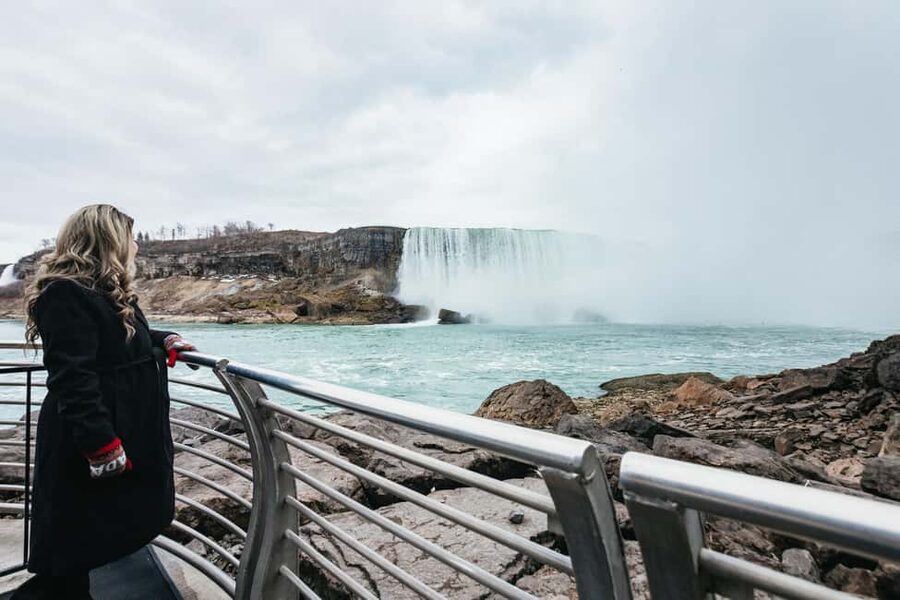
Niagara’s best view may come after a long walk underground. This pass takes you through the old Power Station, down 180 feet in a glass-paneled elevator, and along a 2,200-foot tunnel to a platform beside the river. From there, Horseshoe Falls thunder above you.
I like the freedom to visit the Power Station by day and return after dark, and I like that the tunnel connects engineering history with a direct view of the falls. The main drawback is value: at $26 per person, some visitors may find a self-guided experience a little pricey, especially if they do not stay for the nighttime program.
Key points to know before you go
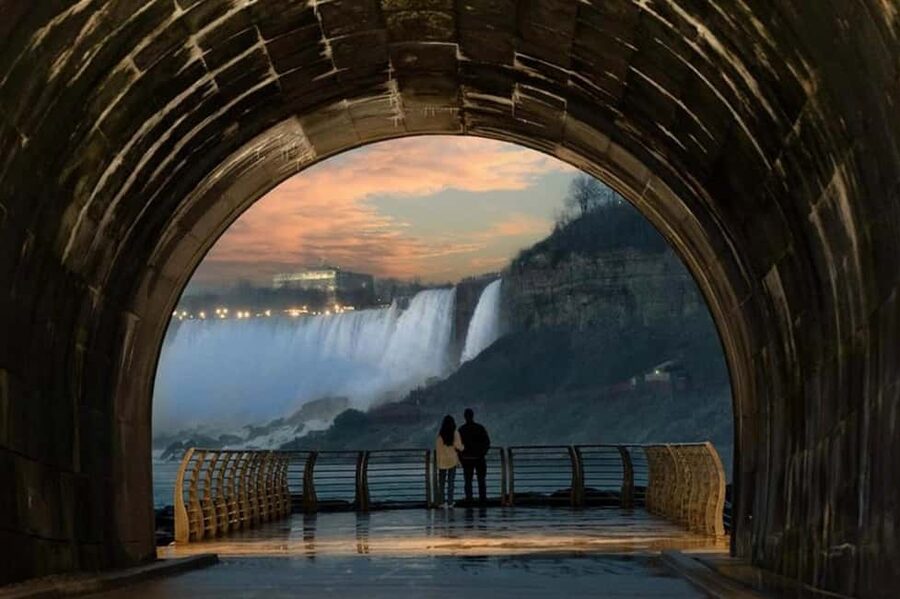
- The tunnel ends at a river-edge observation deck, giving you an unusual upward view of Horseshoe Falls.
- The Power Pass covers both daytime and nighttime entry, so you can split the experience across the day.
- A glass elevator drops 180 feet from the Power Station to the underground tunnel.
- The tunnel walk takes about 10 to 15 minutes each way, with a total visit of roughly two hours, or three if you take your time.
- The Falls Incline Railway is included, linking the Fallsview Tourist Area with Table Rock Centre.
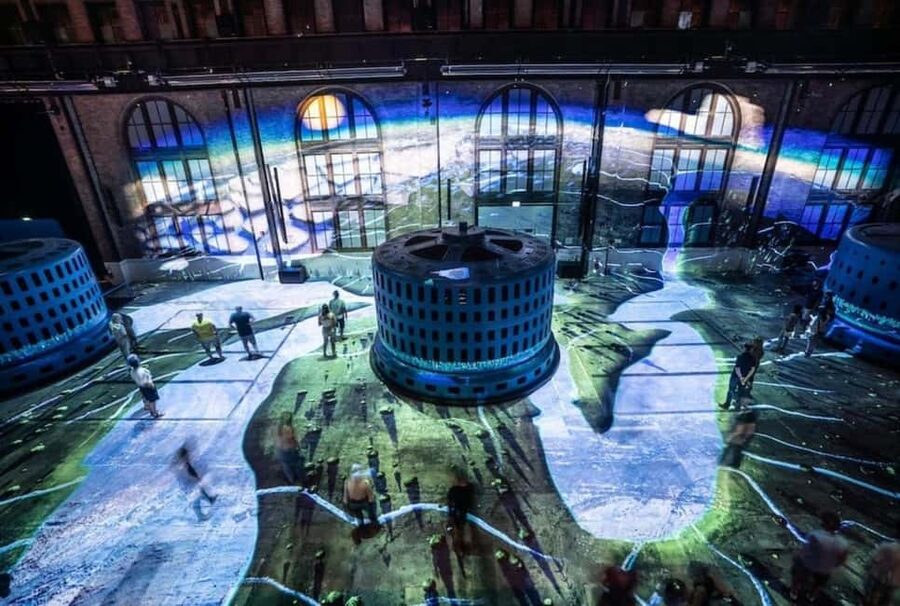
- Currents runs in the generator hall at night, with sound, light, and changing lighting effects in the station and tunnel.
Inside Niagara Parks Power Station, where electricity becomes the story
The Niagara Parks Power Station is not simply a place to wait for a view of the falls. It is the first major power plant built on the Canadian side of the Niagara River, and the building lets you see the scale of early hydroelectric production.
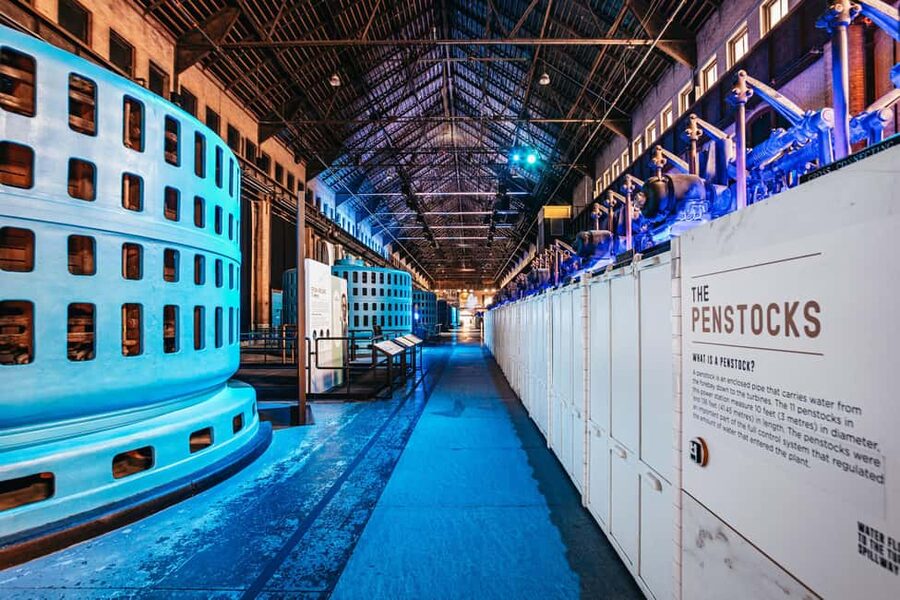
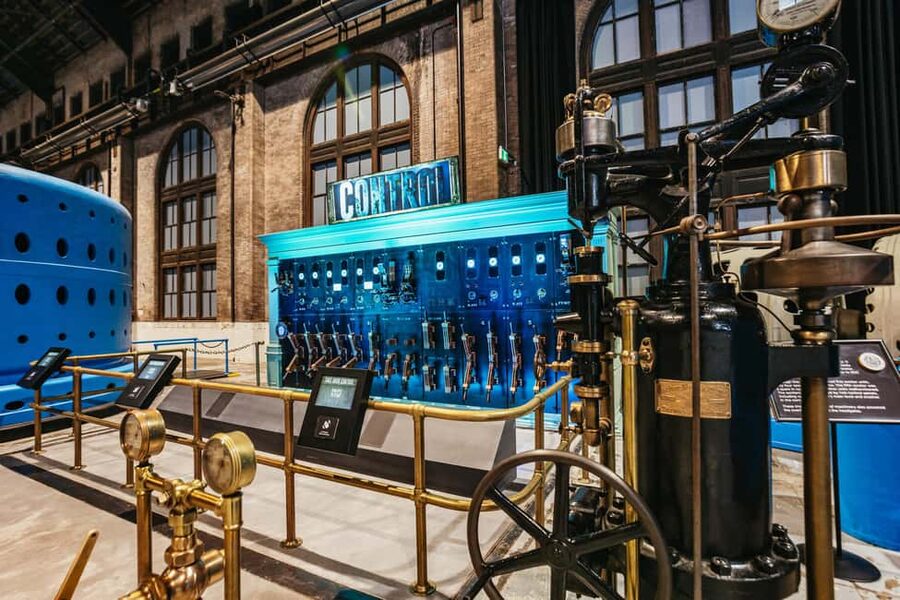
You begin in the old generator hall, surrounded by restored artifacts, interactive exhibits, and large industrial equipment. The machinery matters here. Instead of treating the plant as a blank backdrop, the exhibits explain how water was turned into electricity and what it took to keep a plant like this working for more than a century.
I especially like the sense of scale. The turbines are enormous, yet the story also reaches down to small working details. You get a better idea of what it meant to turn a switch and send power into homes, businesses, and public systems. The displays connect the mighty falls with something practical: the electricity that could be produced from their force.
The visit is self-guided, so you set the pace. Complimentary audio tours add context as you walk through the station. This suits you if you prefer to pause at the displays that catch your eye rather than follow a group on a fixed schedule. It also means you should take responsibility for your own timing. There is no guide to gather everyone, explain each room, or answer questions along the way.
Plan about two hours for the Power Station and tunnel together. If you want to read the exhibits carefully, listen to the audio content, enjoy the underground route, and watch the evening show, allow closer to three hours.
More rail days around Niagara Falls:
- Bicyle Tour on Historical Kettle Valley Railway from Myra Canyon to Penticton
★ 5.0 · 62 reviews - Guided Bike Tour on Historical Kettle Valley Railway at Myra Canyon & Wine Tour
★ 5.0 · 19 reviews - Exporail, the Canadian Railway Museum
★ 4.2 · 5 reviews
The 180-foot glass elevator and the route below the falls
After the Power Station, you descend 180 feet in a glass-paneled elevator. The elevator ride gives you a clear sense that this is more than a museum with a few old machines. You are moving into the working space beneath the plant and toward the water that powered it.
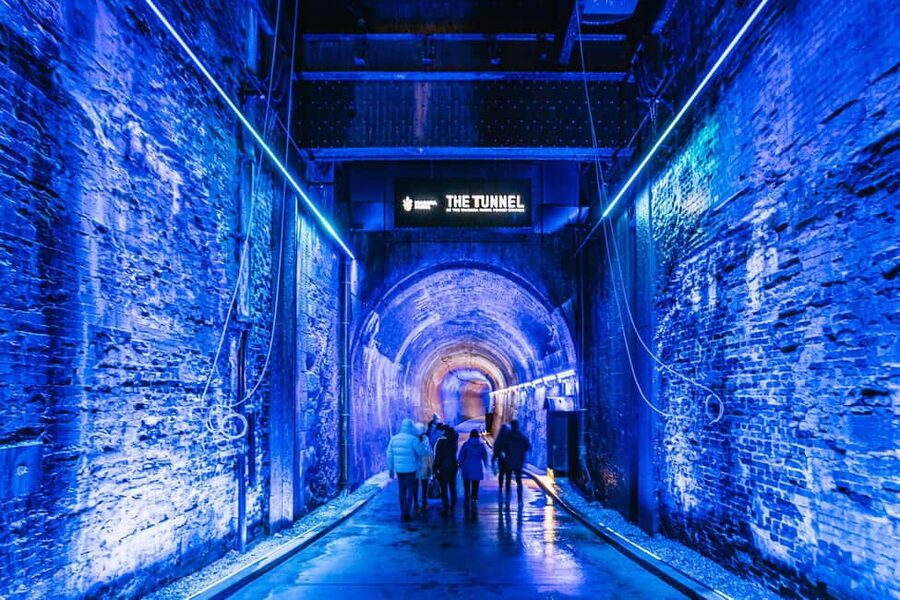
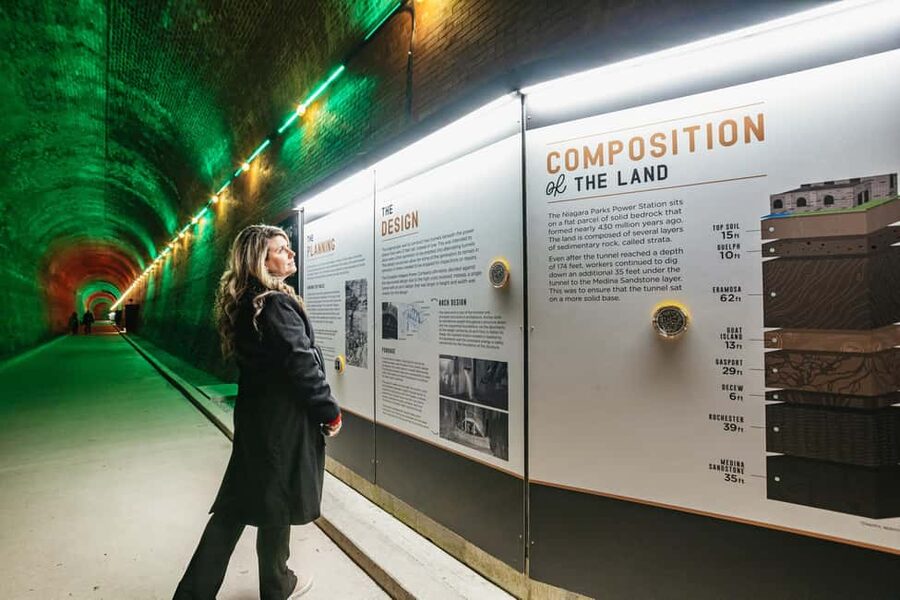
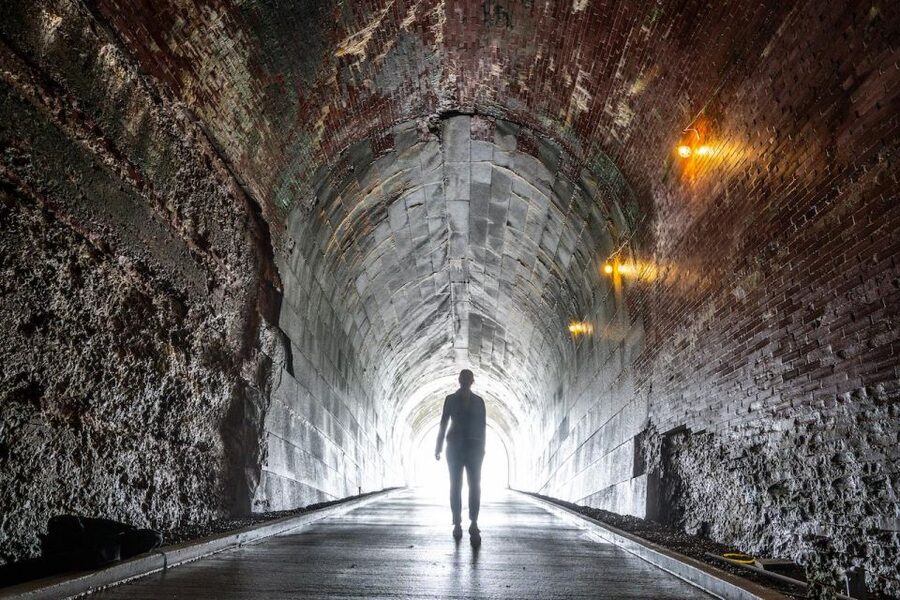
The tunnel is 2,200 feet long. It was excavated with lanterns, basic dynamite, pickaxes, and shovels, which makes the route more meaningful than a standard underground passage. As you walk, the displays and audio material explain the work involved in cutting through the rock and creating a route toward the river.
The tunnel is self-guided only. You should not expect a staff member to lead you from stop to stop. That is a plus for people who like quiet time and a slower pace, but it can feel less structured if you want a traditional guided tour.
Allow 10 to 15 minutes to reach the observation deck at the end. That estimate is for the walk itself, not the time you spend stopping, listening, taking photographs, or looking at the exhibits. The tunnel is part of the experience, not just a hallway between the power plant and the view.
The length also affects accessibility and comfort. The attraction is wheelchair accessible, and a poncho is provided for the observation deck. Even so, you should allow enough time for the full route rather than trying to squeeze it into a short gap between other Niagara stops.
The river-edge platform and a different view of Horseshoe Falls
At the end of the tunnel, you step onto a new observation deck at the river’s edge. This is the payoff, and it is a good one. Instead of seeing Niagara Falls from a distant overlook, you look up toward the water from a low position beside the river.
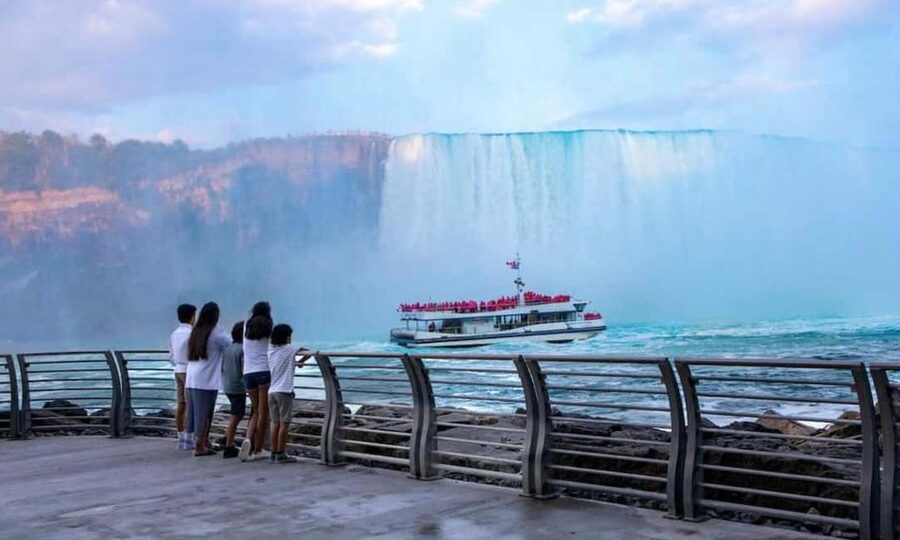
The perspective changes what you notice. From above, the falls read as a broad wall of moving water. From this deck, the sound and height become more immediate. The view is especially useful if you have already seen the falls from Table Rock or another upper viewpoint and want a different angle.
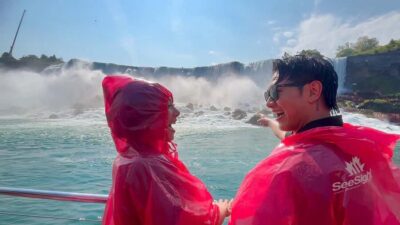
Expect spray. Niagara is not shy about making its presence felt, which is why the poncho is included. Keep your phone and camera protected as you approach the edge, and give yourself time to enjoy the view without treating the deck as a quick photo stop.
The observation platform is also the strongest reason to choose this attraction over a standard Power Station visit. The displays explain the engineering, but the deck connects that explanation to the actual river. You can see why the plant was built here and why the falls have long been tied to power production.
One practical point: the tunnel is not a shortcut to the falls. It is a roughly 10 to 15 minute walk to the platform, and you must make the same route back. If you have limited time, focus on the viewing deck and the key tunnel exhibits. If you have two or three hours, the route feels much more satisfying.
Return after dark for Currents and illuminated Niagara
The Power Pass includes both day and night admission, which is its most useful feature. You can visit in daylight to understand the building and tunnel, then return later for the nighttime program without buying a second ticket.
After dark, the generator hall changes mood. Currents is a sound and light show that runs continuously in the hall, so you are not tied to one narrow showtime. You can choose when to watch it, then spend time with the lighting effects in the generator hall and tunnel.
That flexible schedule makes the pass easier to fit into a Niagara day. You might visit the station in the afternoon, have dinner, and return for the illuminated falls. Or you might start in the evening and stay through the full nighttime experience. The exact opening times vary, so check availability for the date you want.
The nighttime tunnel leads to an illuminated view of Horseshoe Falls. It is not the same experience as seeing the falls in daylight. The darkness makes the lights and sound the focus, while the underground route gives the evening visit a clear sense of place.
I would not treat the night visit as a minor add-on. If you only visit during the day, you miss one of the pass’s main advantages. The day program explains the power plant and construction methods; the evening program changes the building and the falls into a visual show.
More Niagara Falls days:
- Niagara Falls: Premium Tour, Boat & Journey Behind the Falls
★ 4.8 · 4,207 reviews - Toronto: Niagara Falls Day Tour with Optional Boat Cruise
★ 4.6 · 3,178 reviews - Best of Niagara Falls Canada Premium Tour: Behind Falls and Boat
★ 5.0 · 3,139 reviews - Niagara Falls Day Tour from Toronto
★ 5.0 · 2,889 reviews
The Falls Incline Railway saves time between key Niagara stops
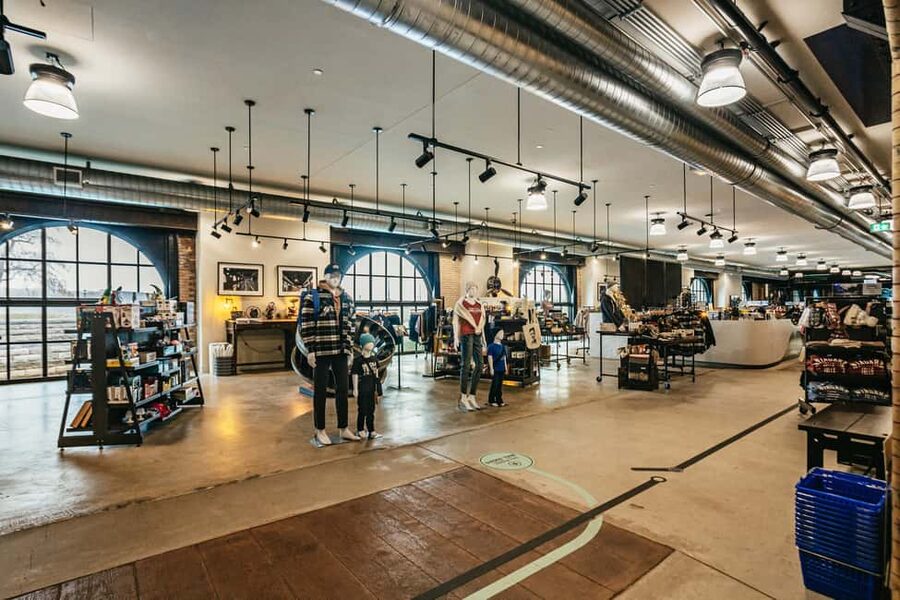
The ticket also includes the Niagara Parks Falls Incline Railway. This climate-controlled railway links the Fallsview Tourist Area with Table Rock Centre, providing a fast way to move between the upper tourist area and the falls.
The railway is useful because Niagara’s main sights are spread along a steep section near the falls. Instead of treating it as a separate attraction that needs a large block of time, use it as transportation with a view. The ride gives you a different angle on Horseshoe Falls as the car rises and descends along the incline.
It operates year-round and is fully accessible. That makes it especially handy in poor weather, when a short outdoor route can be uncomfortable, or when you want to avoid adding another steep walk to an already active day.
The railway does not replace seeing the falls from the river-edge platform. It serves a different purpose. The platform gives you a close, upward-facing view at the end of the tunnel, while the incline railway helps you get around the Niagara Parks area with less effort.
How much time should you set aside?
The official recommendation is about two hours for the Power Station and tunnel. I think that is a sensible minimum if you want to understand the exhibits and walk all the way to the deck.
Allow three hours if you plan to:
- Listen to much of the audio material
- Read the interactive displays
- Take photographs in the generator hall
- Spend time at the river-edge platform
- Watch Currents at night
- Enjoy the illuminated tunnel and falls without rushing
Because the pass lasts for one day and includes day and night admission, you can break up the visit. This is much better than trying to force the daytime and nighttime programs into one continuous stop.
The flexible entry also helps if the weather changes. The Power Station is indoors, and the railway is climate-controlled. The tunnel and observation platform are the more weather-sensitive portions, although the poncho helps with spray at the falls.
Price and practical value at $26
At $26 per person, the pass offers more than a basic museum admission. It includes the Power Station, tunnel, observation deck, day access, night access, the Currents show, audio tours, and the Falls Incline Railway.
The value depends on how much of that package you use. If you only walk through the generator hall and leave, the price may feel high for a self-guided visit. If you complete the tunnel, use the railway, and return for Currents and the illuminated falls, the cost becomes easier to justify.
The self-guided format keeps the experience flexible, but it also explains why some people may compare the price with a guided tour and expect more personal explanation. You are paying for access to a carefully prepared site, the underground route, the observation deck, and the nighttime program rather than for a guide who stays with you.
Children age two and under enter free with an accompanying adult. Food and drinks are not included, so plan meals separately.
You redeem your voucher at the Niagara Parks Power Station, at 7005 Niagara Parkway, between Table Rock Welcome Centre and the Floral Showhouse. Parking is available beside the building in the Falls Parking Lot. Niagara Parks also sells daily parking passes that allow unlimited parking at several Niagara Parks lots, which can be useful if you are making several stops by car.
The attraction is on the Canadian side of Niagara Falls. If you are crossing the international border during your day, allow time for that separately. The pass itself does not cover transportation across the border.
Who will enjoy this experience most?
I would choose this for anyone who wants more than a quick overlook of Niagara Falls. The combination of working machinery, underground construction, and the river-edge view gives the visit a clear progression.
It suits:
- Families with older children who can manage a long tunnel walk
- Adults interested in engineering and industrial history
- First-time visitors who want a close falls viewpoint
- Photographers looking for a less common angle
- People spending more than one day around Niagara and able to return at night
- Visitors who prefer self-guided touring and flexible timing
It may be less suitable if you want a live guide, a short attraction, or a simple falls viewpoint with no museum component. The audio guide is helpful, but it does not replace conversation with a specialist.
The walk also deserves honest attention. The full tunnel route takes time, and the observation deck is not reached immediately after the elevator. If you are traveling with anyone who tires easily, build in extra time and do not schedule another fixed activity right afterward.
Booking, access, and cancellation details
The Power Station is open year-round, and the attraction is wheelchair accessible. A host or greeter is available in English, while the audio content listed for the experience is also in English.
You can reserve now and pay later, which helps if your Niagara plans are still moving around. Cancellation is free up to 24 hours in advance for a full refund.
Starting times vary by availability. Since the ticket includes separate day and night access, check the schedule carefully and make sure you have enough time to return for the evening program.
Should you book the Niagara Power Pass?
Book it if you want the falls tied to a real story about machinery, water, and human effort. The strongest parts are the river-edge observation deck, the long underground tunnel, and the ability to see the Power Station change after dark.
I would make a point of using every major inclusion: visit the station in daylight, walk the full tunnel, ride the Falls Incline Railway, and return for Currents and the illuminated falls. Used that way, $26 is a fair price for a full day and night attraction.
Skip it if you are looking only for a quick falls photo or if you strongly prefer a live guided tour. For everyone else, allow two hours at minimum, three if you want the evening program, and bring a little patience for the walk. The final view is worth earning.
FAQ
Where is the Niagara Parks Power Station?
It is at 7005 Niagara Parkway in Niagara Falls, Ontario, between Table Rock Welcome Centre and the Floral Showhouse.
Does the pass include both daytime and nighttime admission?
Yes. The pass includes general admission to the Niagara Parks Power Station during the day and at night.
How long does the Power Station and tunnel visit take?
Niagara Parks recommends allowing about two hours. You may want two to three hours if you plan to take your time with the exhibits, tunnel, observation deck, and nighttime program.
How long is the underground tunnel?
The tunnel is 2,200 feet long. It takes roughly 10 to 15 minutes to walk to the observation deck at the river’s edge.
Is the Falls Incline Railway included?
Yes. The ticket includes the climate-controlled, fully accessible Falls Incline Railway between the Fallsview Tourist Area and Table Rock Centre.
Is the experience wheelchair accessible?
Yes, the experience is listed as wheelchair accessible. The Power Station is open year-round.
Just added around Niagara Falls
- Guided Craft Beer Tour in Niagara★ 4.5 · 6 reviews
- Niagara Falls Airport (IAG) Transportation★ 5.0 · 6 reviews
- 2 Hour Blacksmithing Experience in Niagara (Craft Class/Activity)★ 5.0 · 8 reviews
- Wine Tour in Niagara-on-the-Lake★ 5.0 · 41 reviews
- Wine Tour with Lunch in Niagara-on-the-Lake★ 5.0 · 25 reviews
- Whirlpool Adventure Course – Classic Course★ 4.0 · 8 reviews
- Guided Craft Cider Tour in Niagara★ 4.5 · 4 reviews
- Vine and Dine Bicycle Wine Tour with Lunch★ 4.5 · 103 reviews
Niagara Falls Tours, compared.
Premium Tour, Boat & Journey Behind the Falls
Read our review →
Best of Niagara Falls Canada Premium Tour: Behind Falls and Boat
Read our review →
Niagara Falls Canada Day Tour From Toronto + Boat Cruise Option
Read our review →
Niagara Falls from Toronto: Skip-the-Line Boat & Skylon Tower
Read our review →
Niagara Falls, Canada: Evening Fireworks Cruise
Read our review →
Niagara Falls, Canada: Skylon Tower Observation Deck Ticket
Read our review →
Niagara Falls Tour + Boat Ride and/or Journey
Read our review →Browse the lists this tour appears in